Table of Contents
- What Is Lavender Essential Oil?
- Which Lavender Benefits Have the Best Evidence?
- 1. Lavender May Support Better Sleep Quality
- 2. Lavender Aromatherapy May Help During Stressful Moments
- 3. Lavender Can Create a Consistent Relaxation Cue
- 4. Lavender Fits Properly Diluted Skin Care
- 5. Lavender Has Been Studied for Migraine Aromatherapy
- 6. Lavender Makes Massage Routines More Enjoyable
- 7. Lavender Shows Laboratory Antimicrobial Activity
- 8. Lavender Offers a Natural Home-Fragrance Option
- 9. Lavender Blends Across Aroma Families
- 10. Lavender Is Easy to Use Consistently
- Try It Tonight
- Sources
- How to Read Lavender Research Without Losing the Practical Value
- Turn the Evidence Into a Useful Routine
- What Lavender Should Not Replace
- Turning the Research Into a Realistic Routine
- Lavender Essential Oil Safety
- Continue Exploring Lavender
- How to Get the Most From Lavender
- What Lavender Cannot Replace
- FAQs
Lavender essential oil benefits are often summarized with one word—calming—but decades of research reveal a much more interesting picture. Some uses are supported by human trials, others remain promising laboratory findings, and a few popular claims have traveled much farther than the evidence.
Understanding that difference does not make Lavender less useful. It helps you choose the applications most likely to add value to your routine while avoiding exaggerated promises.
Quick answer: Human evidence is most encouraging for sleep quality and short-term anxiety support through aromatherapy. Topical, antimicrobial and headache applications have more limited or preliminary support.
What Is Lavender Essential Oil?
True lavender essential oil is steam distilled from Lavandula angustifolia. Northridge Oak’s oil comes from Bulgarian flowering tops and has a soft floral, fresh and lightly herbaceous profile. It is 100% pure, undiluted and third-party GC/MS tested.
If you want practical recipes as well as the evidence overview, visit our complete guide to 25 lavender essential oil uses.
Which Lavender Benefits Have the Best Evidence?
| Popular use | Evidence level | What that means |
|---|---|---|
| Sleep routines | Encouraging human evidence | Reviews of controlled trials report improved sleep-quality scores, although methods and study quality vary. |
| Anxious or stressful moments | Encouraging but mixed | Aromatherapy trials report favorable short-term results; it is not a substitute for anxiety treatment. |
| Headache-day aromatherapy | Limited human evidence | One small placebo-controlled migraine study reported benefit; replication is needed. |
| Skin and cosmetic use | Traditional/cosmetic use | Diluted lavender is widely used in body products, but it should not be presented as an acne treatment. |
| Antimicrobial activity | Laboratory evidence | Activity in a laboratory does not prove that a DIY product treats infection or disinfects a home. |
1. Lavender May Support Better Sleep Quality
A 2025 systematic review and meta-analysis included 11 randomized trials with 628 adults and found a statistically significant improvement in sleep quality. That is encouraging, but products, doses and methods varied. Use lavender as part of a repeatable wind-down routine: diffuse it before bed, use a personal inhaler, or try a properly formulated pillow spray. Read our lavender-for-sleep guide for a seven-night routine.
2. Lavender Aromatherapy May Help During Stressful Moments
Systematic reviews of lavender aromatherapy report reductions in anxiety measures in some settings. Results should not be stretched into a promise to treat an anxiety disorder. For everyday use, pair three slow breaths from a personal inhaler with a short break, or diffuse lavender while transitioning out of work mode.
3. Lavender Can Create a Consistent Relaxation Cue
Smell, setting and repetition can become connected. Using the same lavender routine while journaling, stretching or dimming the lights may help signal that the busy part of the day is ending. The ritual matters as much as the bottle.
4. Lavender Fits Properly Diluted Skin Care
For a simple 1% adult body oil, add 6 drops of lavender to 1 fluid ounce of fractionated coconut oil. Patch-test before broader use. Lavender can add a botanical aroma to body oil, cuticle oil and scrubs, but it should not be marketed as a cure for acne or infection.
5. Lavender Has Been Studied for Migraine Aromatherapy
A small placebo-controlled trial involving 47 people reported greater improvement after lavender inhalation. That single study is interesting, not conclusive. A personal inhaler may be a low-mess option during a quiet, low-light rest period; persistent or severe headaches deserve medical evaluation.
6. Lavender Makes Massage Routines More Enjoyable
Massage itself can ease ordinary muscle tension and create a pause. Add 6 drops of lavender to 1 ounce of fractionated coconut oil for an approximately 1% massage blend. The benefit comes from the whole routine—touch, time, setting and aroma—not from treating an injury.
7. Lavender Shows Laboratory Antimicrobial Activity
Laboratory findings help researchers understand the plant, but a petri-dish result is not proof that lavender treats toenail fungus, cold sores or skin infection. It also does not turn a homemade spray into a registered disinfectant.
8. Lavender Offers a Natural Home-Fragrance Option
Use lavender in a diffuser, clothespin diffuser, drawer sachet or correctly formulated room spray. This can reduce reliance on heavily perfumed products while giving you control over the ingredients and intensity.
9. Lavender Blends Across Aroma Families
Lavender softens Lemon and Bergamot, cools beautifully beside Peppermint, and gains depth from Frankincense, Cedarwood or Patchouli. Explore the full lavender pairing guide.
10. Lavender Is Easy to Use Consistently
Versatility may be its most practical benefit. One bottle can move from a morning diffuser blend to diluted body care and then an evening pillow-spray routine.
Try It Tonight
Diffuse 4 drops Lavender and 2 drops Frankincense for 30–60 minutes while you prepare for bed. Keep the rest of your routine steady so you can judge whether the ritual is useful for you.
Sources
- Lavender: Usefulness and Safety — NCCIH
- Sleep-enhancing effect of lavender essential oil in adults — PubMed
- Effects of lavender on anxiety — PubMed
- Lavender essential oil in migraine headache — PubMed
How to Read Lavender Research Without Losing the Practical Value
Studies may use inhalation, massage, topical preparations or standardized oral products, and those methods are not interchangeable. Evidence for one preparation cannot automatically be transferred to every homemade recipe.
The strongest discussion of lavender essential oil benefits identifies the method, the people studied and the outcome measured. Subjective sleep quality is different from laboratory-recorded sleep stages, just as feeling calmer is different from treating an anxiety disorder.
Turn the Evidence Into a Useful Routine
For sleep, use brief evening diffusion or a properly prepared linen spray alongside consistent bedtime habits. For short stressful moments, try a personal inhaler and slow breathing. For massage or body care, keep the oil properly diluted and treat the application as supportive comfort.
This balanced approach lets the research guide the choice without reducing Lavender to “just a scent.” The aroma is the delivery route in many studies, and the sensory experience can still be meaningful even when it is not medical treatment.
What Lavender Should Not Replace
Lavender does not replace professional care for persistent insomnia, severe anxiety, infection, hair loss, migraine or another ongoing condition. It also should not be used undiluted simply because it is widely considered gentle.
The most credible way to discuss lavender essential oil benefits is to be enthusiastic where the evidence is encouraging and honest where questions remain.
Turning the Research Into a Realistic Routine
The most useful way to think about lavender essential oil benefits is to separate promising evidence from guaranteed results. Human studies on inhaled lavender and standardized oral lavender preparations are not interchangeable with every homemade product, and a positive average result does not mean everyone will respond in the same way.
Choose one goal, one method and a reasonable trial period. For example, use a familiar diffuser routine before bed for a week while keeping your normal sleep schedule steady. That makes it easier to notice whether the aroma adds something meaningful. The practical lavender essential oil benefits often come from pairing an evidence-informed method with a repeatable ritual—not from using more drops.
Lavender Essential Oil Safety
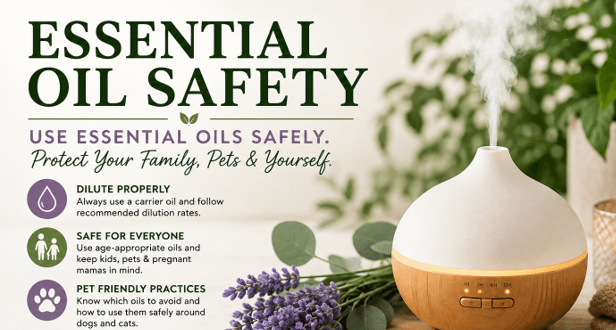
Lavender essential oil is concentrated. Dilute it before routine skin use, patch-test new topical blends, avoid eyes, mucous membranes and broken skin, and stop if irritation occurs. Diffuse with ventilation and follow the diffuser manufacturer’s directions. Keep essential oils and homemade products away from children and pets. Do not ingest essential oil. Review the complete essential oil safety guide before beginning.
Continue Exploring Lavender
- Start with the complete Lavender Essential Oil Uses guide.
- Continue with How to Use Lavender Essential Oil.
- Use Northridge Oak Lavender Essential Oil in the recipes throughout this guide.
These statements have not been evaluated by the Food and Drug Administration. This content is educational and is not intended to diagnose, treat, cure or prevent any disease.
How to Get the Most From Lavender
Lavender tends to be most useful when it becomes part of a repeatable routine. Choose one method—such as diffusing it while you wind down, using a properly diluted body oil after bathing or keeping a personal inhaler nearby—and try it consistently before deciding whether it belongs in your day.
Pay attention to the whole experience. The time of day, the activity you pair with Lavender and the amount you use can matter just as much as the oil itself. A gentle aroma in a ventilated room may feel inviting, while too many drops can become overwhelming. Starting small gives you room to adjust.
What Lavender Cannot Replace
Lavender is not a substitute for sleep care, mental-health treatment, infection treatment or medical evaluation. If a symptom is persistent, severe, worsening or interfering with everyday life, the right next step is professional guidance. Using Lavender responsibly means enjoying what it can contribute while recognizing when a bottle of essential oil is not the answer.
Frequently Asked Questions
What does lavender essential oil do?
Lavender Essential Oil supplies concentrated aromatic plant compounds for diffusion, personal inhalation and properly diluted topical products. Human research is most encouraging for sleep quality and short-term anxiety measures, while many other popular uses are based mainly on traditional, cosmetic or laboratory evidence.
Can Lavender Essential Oil replace medication or professional care?
No. Lavender can complement an everyday wellness routine, but it should not replace medication, diagnosis or professional treatment. Speak with an appropriate healthcare professional about persistent symptoms or any medication changes.
What is the best-supported benefit of Lavender Essential Oil?
Research is most encouraging for Lavender aromatherapy as part of sleep routines and for short-term support during anxious or stressful moments. Results vary, study methods differ and Lavender is not guaranteed to work for everyone.
Can Lavender Essential Oil be used on the skin?
Yes, when it is properly diluted in a suitable carrier oil or finished formulation. A 1% dilution—about 2 drops in a 10 mL roller or 6 drops in 1 fluid ounce of carrier—is a sensible starting point for routine adult use. Patch-test first.
Does Lavender Essential Oil kill bacteria or fungus?
Lavender has shown antimicrobial activity in laboratory studies, but laboratory activity does not prove that it treats an infection on a person or disinfects a household surface. Use proven medical care or an appropriately registered disinfectant when those outcomes are needed.
How can beginners try Lavender Essential Oil?
Start with one simple method. Diffuse 3–4 drops in a ventilated room, use a personal inhaler or make a properly diluted 1% roller. Begin with a small amount and notice how the complete routine feels before adding more.