Table of Contents
- What Basil can bring to a hair and scalp routine
- Begin with a conservative dilution
- Fresh Herb Pre-Shampoo Oil
- Soft Scalp Massage Oil
- Single-use scalp treatment
- How to massage without irritating the scalp
- Carrier oil choices
- Can you add Basil to shampoo?
- What about dandruff, itch and hair loss?
- Keep the formula fresh
- Make wash day feel easy and inviting
- Photograph your routine if consistency helps
- Continue learning about Basil essential oil
- Frequently Asked Questions
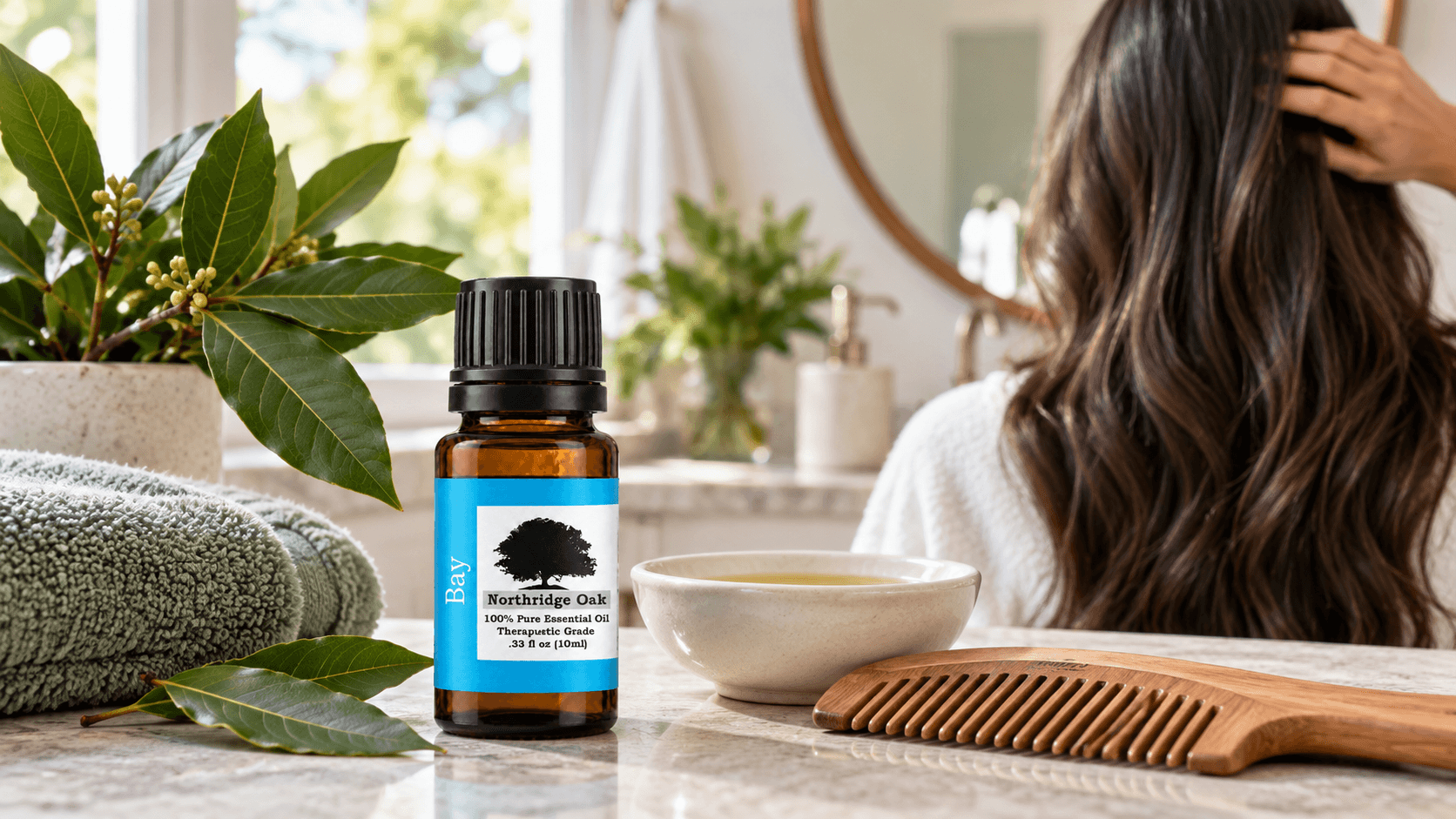
A pre-shampoo scalp massage can turn an ordinary wash day into a ritual you actually look forward to. Basil Essential Oil gives that ritual a fresh, green and lightly spicy aroma, especially when paired with rosemary, lavender or cedarwood. Its most dependable role is sensory: it makes a simple carrier oil smell beautifully herbal while your fingertips and the carrier provide slip, attention and gentle massage.
What Basil can bring to a hair and scalp routine
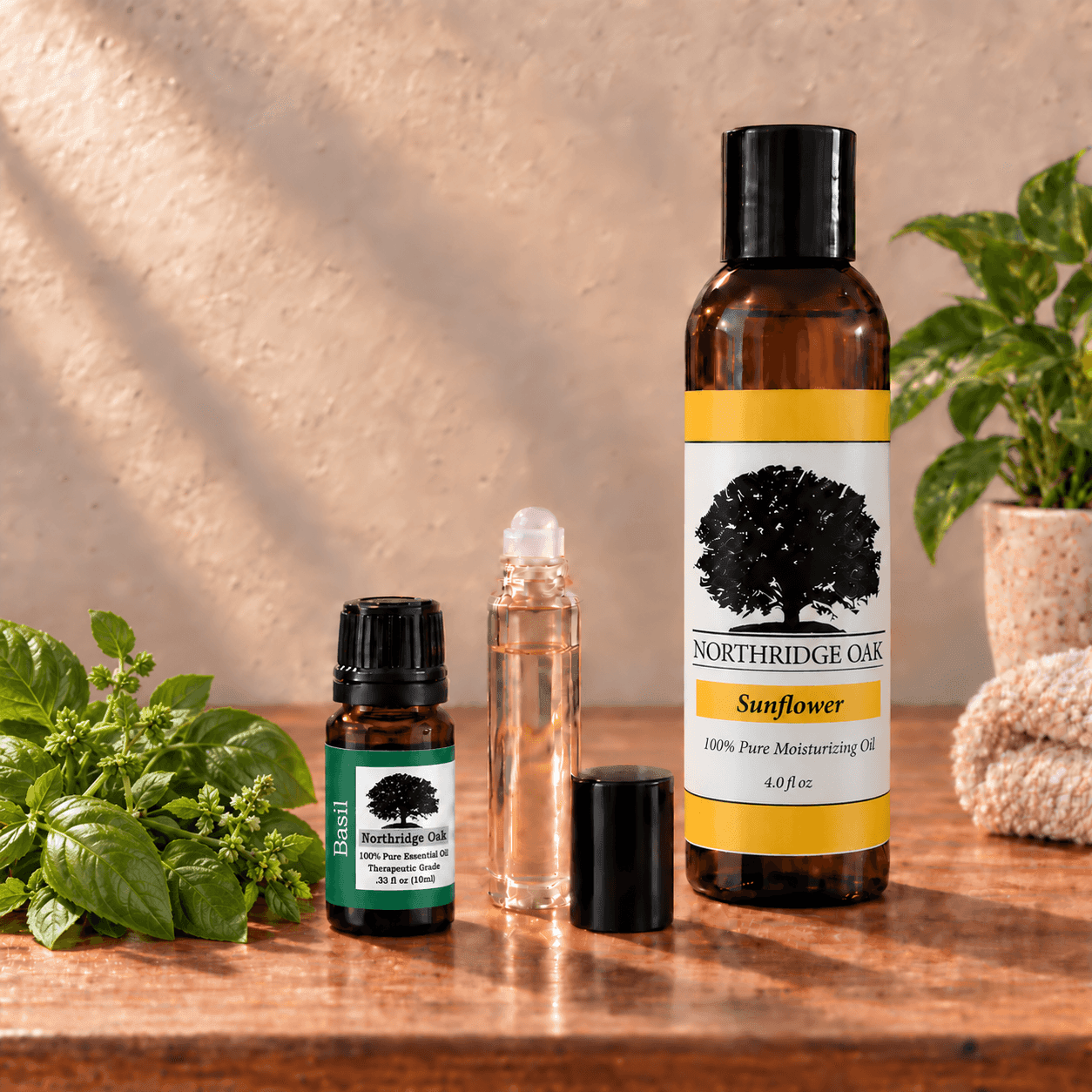
Basil research is still developing, and direct human trials on hair growth remain an important opportunity for future study. Today, Basil shines in a scalp routine by adding a fresh herbal aroma, encouraging gentle massage and making wash day feel more intentional. A diluted Basil blend can provide aroma, lubrication during massage and a pleasant reason to spend a few careful minutes on the scalp.
If you are seeking growth-specific evidence, Rosemary Essential Oil has been studied more directly in human hair-care research. Even with well-designed research, individual experiences naturally vary. Sudden shedding, bald patches, pain, sores or persistent scaling deserve professional evaluation.
Begin with a conservative dilution
The scalp can be sensitive, and Basil composition varies. For an adult pre-shampoo treatment, begin around 0.5–1%: approximately 3–6 total drops per 1 ounce (30 mL) carrier oil. Patch test the finished blend on the inner forearm and wait 24 hours before using it on the scalp.
Keep essential oil away from eyes, eyebrows, ears and broken skin. Use less when the scalp is reactive, and skip the recipe during an active flare or when using medicated scalp products unless a clinician approves the combination.
Fresh Herb Pre-Shampoo Oil
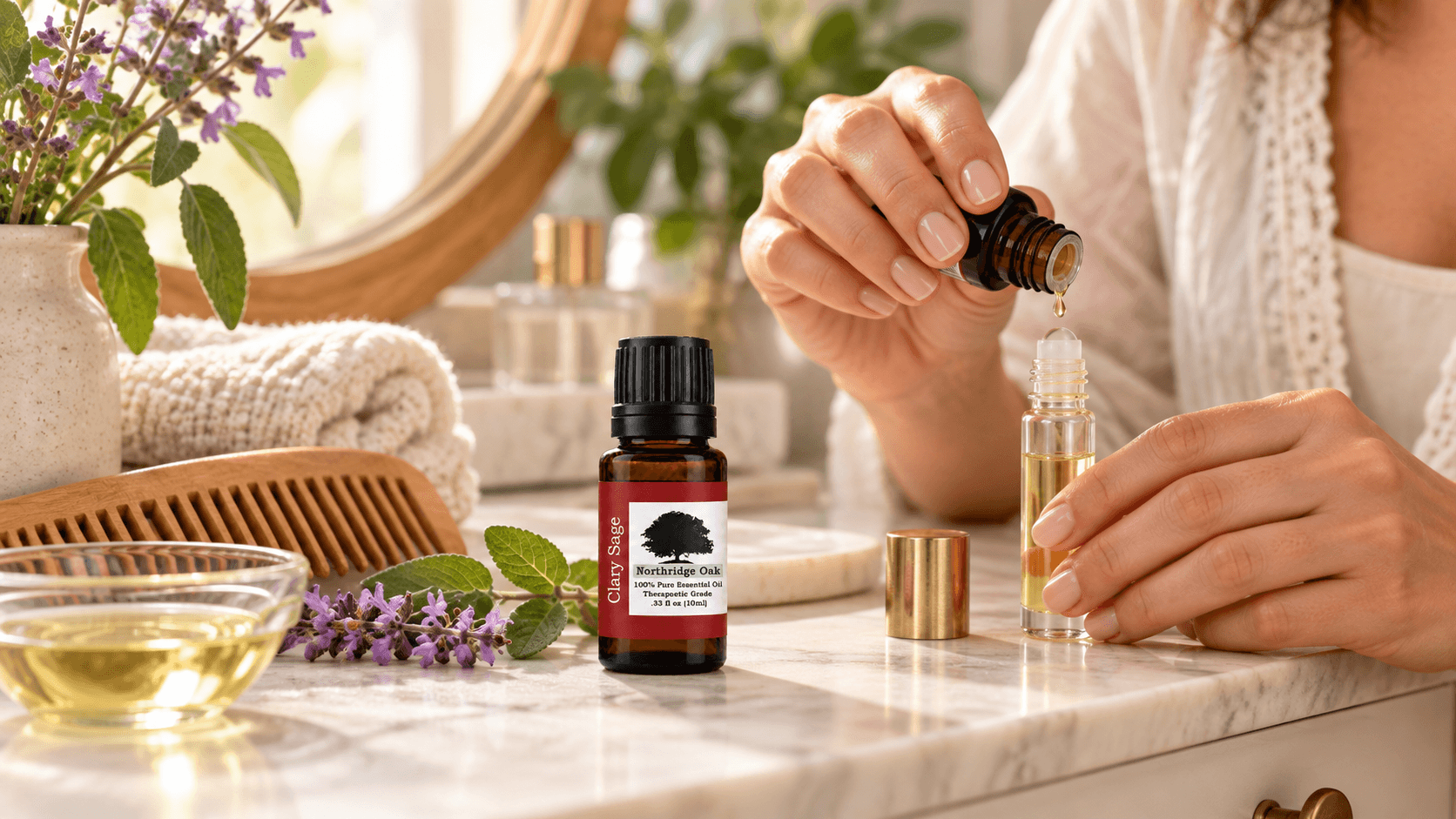
You will need: 3 drops Basil, 3 drops Rosemary, 1 ounce jojoba oil and a clean applicator bottle.
Directions: Add the essential oils to the bottle, fill with jojoba, cap and roll gently. Part dry hair in several places and apply a few drops of the properly diluted finished oil to the scalp. Massage gently with finger pads for two to three minutes. Leave for 15–30 minutes, shampoo thoroughly and repeat only once or twice weekly if comfortable.
Soft Scalp Massage Oil
You will need: 2 drops Basil, 3 drops Lavender Essential Oil, 1 drop Cedarwood Essential Oil and 1 ounce jojoba or fractionated coconut oil.
Directions: Combine, label and patch test. Apply a small amount before shampooing and massage without scratching. Lavender softens Basil’s green aroma while cedarwood adds a warm finish.
Single-use scalp treatment
Mix 1 tablespoon carrier oil with 1 drop Basil and 1 drop Rosemary in a small dish. Apply sparingly to the scalp, massage for two minutes, leave for 15 minutes and shampoo. Making a single-use amount avoids storing a jar that may be exposed to wet fingers or shower humidity.
How to massage without irritating the scalp
Use the pads of your fingers rather than nails. Move the scalp gently over the skull with small circles instead of rubbing the hair back and forth. Light, comfortable pressure is ideal for a relaxed scalp-massage experience. If the treatment causes stinging, heat, itching or increased redness, shampoo it out and discontinue use.
Fine hair may need only a teaspoon of finished oil; thick or tightly coiled hair may need more for distribution. Adjust carrier quantity rather than increasing the essential-oil concentration.
Carrier oil choices
Jojoba is lightweight and similar in feel to natural sebum. Fractionated coconut oil spreads easily and rinses relatively cleanly. Argan oil feels richer and can be focused on hair lengths, while heavier oils may require a second shampoo. Choose for texture, allergies and wash-day preferences.
Can you add Basil to shampoo?
Mixing oil into the full commercial bottle can disrupt a preserved formula and makes dose difficult to control. A safer home approach is to use a measured pre-shampoo oil. For even dilution and comfortable use around the hairline, prepare the measured pre-shampoo formula in advance.
What about dandruff, itch and hair loss?
Dryness, irritation, seborrheic dermatitis, psoriasis, fungal conditions, contact allergy, hormones, nutrition, medications and stress can produce overlapping symptoms. A beautiful DIY routine works best alongside professional guidance that can identify the cause of persistent scalp or shedding concerns. Seek qualified advice for persistent itch, thick scale, bleeding, pain, rapid shedding or patchy loss.
A gentle carrier-only massage may be the better choice for a reactive scalp. Essential oil is optional; comfort and consistency matter more than complexity.
Keep the formula fresh
Use clean, dry tools, label the bottle and store cool and dark. Make an amount you can finish while fresh. Discard it if the scent, color or texture changes. A well-designed Basil scalp ritual should feel easy, smell inviting and rinse away cleanly.
Make wash day feel easy and inviting
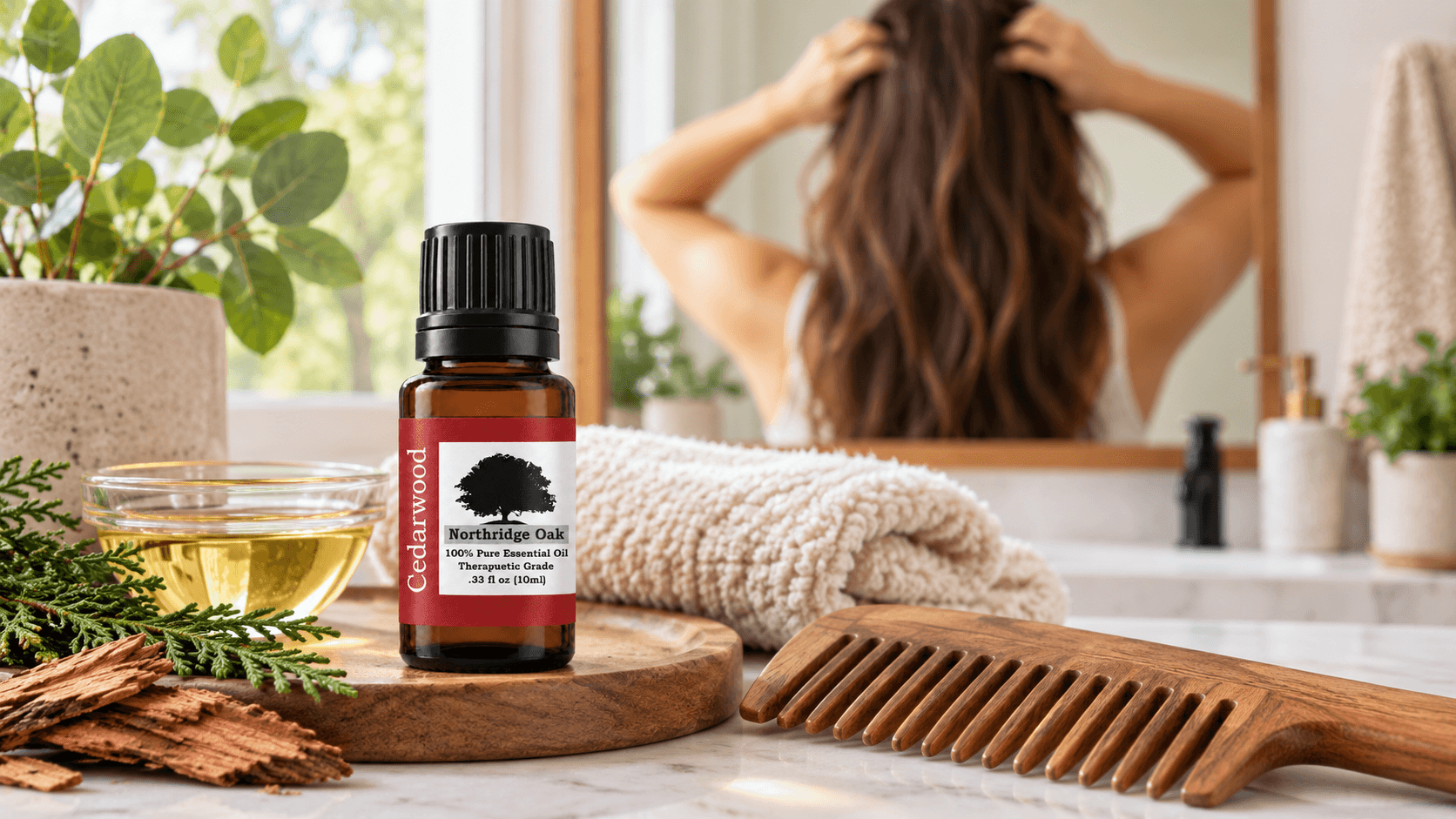
Before applying the blend, set out shampoo, a towel and a wide-tooth comb so the entire ritual flows smoothly. Apply less finished oil than you think you need; you can add another few drops of the diluted formula if a section feels dry. Shampoo the scalp first and allow the lather to move through the lengths. A repeatable, tidy routine is more likely to become useful than an elaborate recipe that takes over the bathroom.
Photograph your routine if consistency helps
A quick picture of the amount of finished oil used, where it was applied and how the hair was sectioned can make the next wash day easier. Keep a short note about rinsing and scalp comfort. Practical observations are more useful than judging a recipe after one application.
Continue learning about Basil essential oil
Choose the guide that matches what you would like to make or understand next:
- Basil Essential Oil: Benefits, Uses, DIY Recipes & Diffuser Blends
- Basil Essential Oil Diffuser Blends: 20 Fresh Recipes
- What Blends Well With Basil Essential Oil?
- What Does Basil Essential Oil Smell Like?
- Basil Essential Oil for Focus, Work & Study
- Basil Essential Oil for Sore Muscles & Massage
- Basil Essential Oil for Cleaning & Home Aromas
- Basil Essential Oil Research: Linalool, Estragole & Chemistry
These statements have not been evaluated by the Food and Drug Administration. Northridge Oak products are not intended to diagnose, treat, cure or prevent disease.