Table of Contents
- Cleaning, deodorizing and disinfecting are different
- Fresh Herb Surface Spray
- Sink-Freshening Paste
- Herb Garden Diffuser Blend
- Warm Welcome Blend
- Fresh-bin sachet
- Single-use cleaning cloth bowl
- Room-by-room ideas
- Label every homemade product
- When disinfection is needed
- Children, pets and shared spaces
- Create a home that feels naturally fresh
- Let fresh air do part of the work
- Choose an aroma that fits the task
- Continue learning about Basil essential oil
- Frequently Asked Questions
If citrus makes a room feel bright, Basil Essential Oil makes it feel freshly opened. Its green, sweet and lightly spicy aroma is especially at home in kitchens, workrooms, mudrooms and entryways. Used thoughtfully, it adds the feeling of an herb garden after routine cleaning.
Cleaning, deodorizing and disinfecting are different
Cleaning removes soil and many microbes through detergent, water and friction. Deodorizing addresses unwanted odor. Disinfection requires an appropriate registered product, correct concentration and full wet contact time. Laboratory activity gives researchers a valuable starting point, while homemade Basil sprays are best used to add an appealing herbal aroma to ordinary cleaning.
This distinction gives Basil an honest role: use it because the aroma makes a room feel fresh and makes a routine more enjoyable.
A sweet Basil oil showed antimicrobial activity in the laboratory
In 2014, researcher Rajesh K. Joshi studied essential oil distilled from flowering Ocimum basilicum grown in India. GC–MS identified 25 constituents; methyl eugenol (39.3%) and methyl chavicol, also called estragole (38.3%), were dominant. In tube-dilution tests, the oil showed bactericidal or fungicidal activity against the tested bacteria and fungi at measured concentrations. You can read the open-access primary study.
That finding is scientifically interesting, but a culture tube is very different from a countertop. The study used controlled culture conditions. Household use introduces additional factors such as soil, contact time, surface type and finish compatibility, so the recipes below focus on aroma and everyday wiping. Use Basil to make ordinary cleaning smell bright and inviting; rely on soap, water and friction for cleaning.
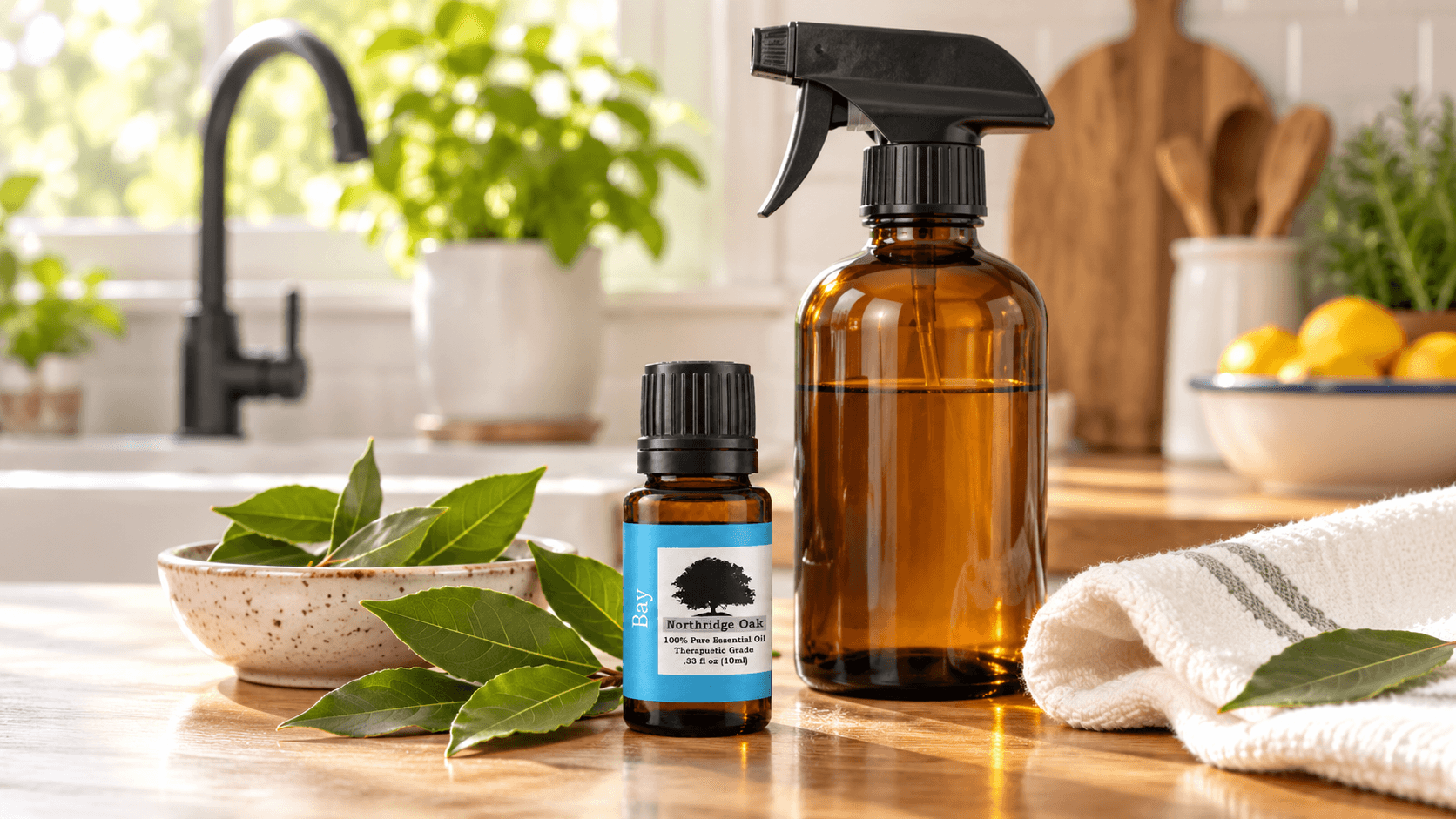
Fresh Herb Surface Spray
You will need: 1 cup distilled water, 1 teaspoon unscented liquid soap, 8 drops Basil, 8 drops Lemon Essential Oil, 4 drops Lavender Essential Oil and a labeled spray bottle.
Directions: Add the ingredients, close and shake. Mist a cloth rather than the surface, wipe and dry. Shake before each use, make small batches and discard if appearance or odor changes. Test a hidden spot first.
Use only on sealed, water-safe surfaces approved for these ingredients. Reserve this formula for sealed, water-safe surfaces approved by the manufacturer; use surface-specific care for natural stone, unfinished wood, waxed finishes, electronics and acrylic. Rinse food-contact surfaces with clean water.
Sink-Freshening Paste
You will need: 2 tablespoons baking soda, 1 teaspoon dish soap, 1 drop Basil and 1 drop Lemon.
Directions: Mix into a soft paste. Apply with a nonabrasive sponge to wet stainless steel or porcelain, scrub gently, rinse thoroughly and dry. Skip natural stone, and never combine this recipe with bleach, ammonia or another cleaner.
Herb Garden Diffuser Blend
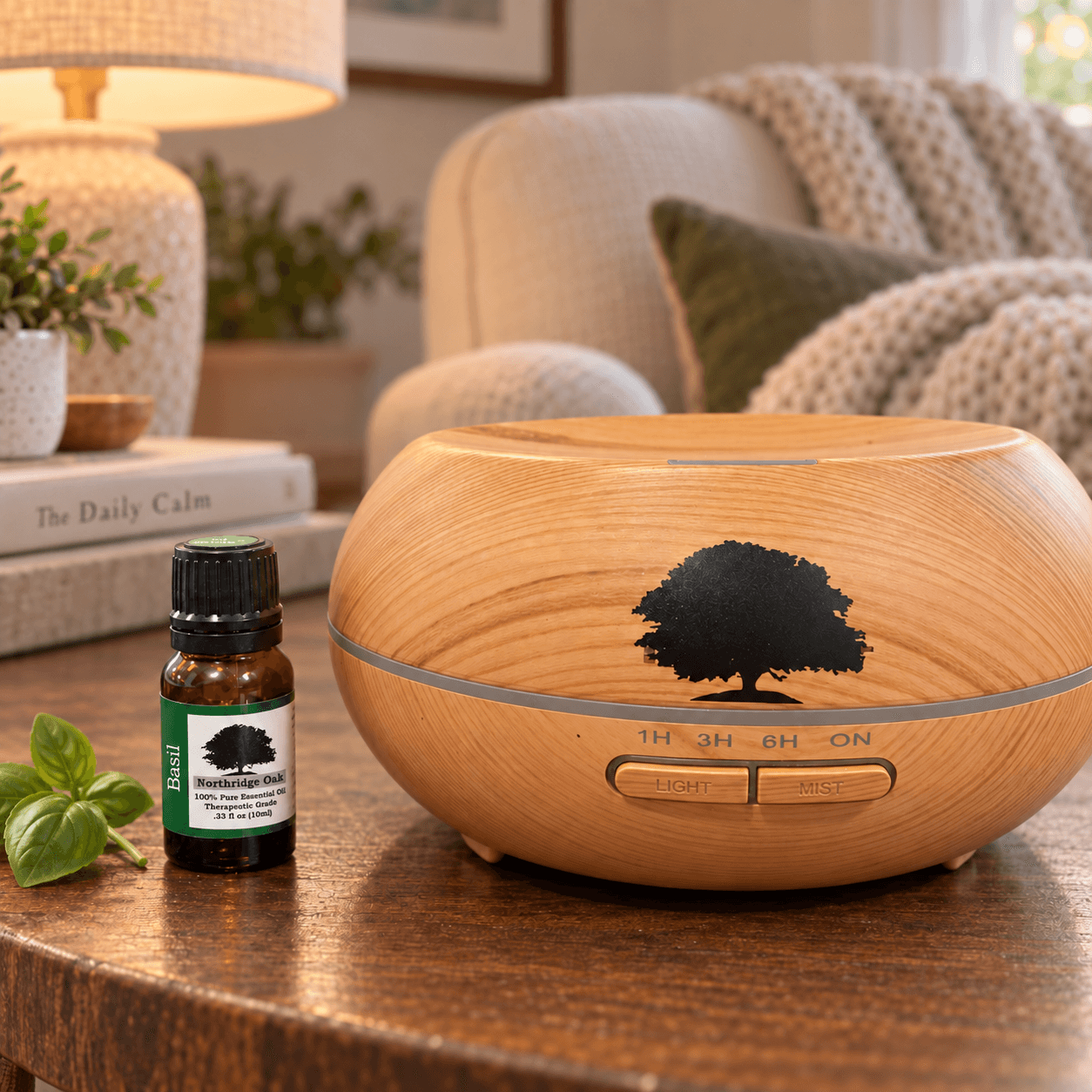
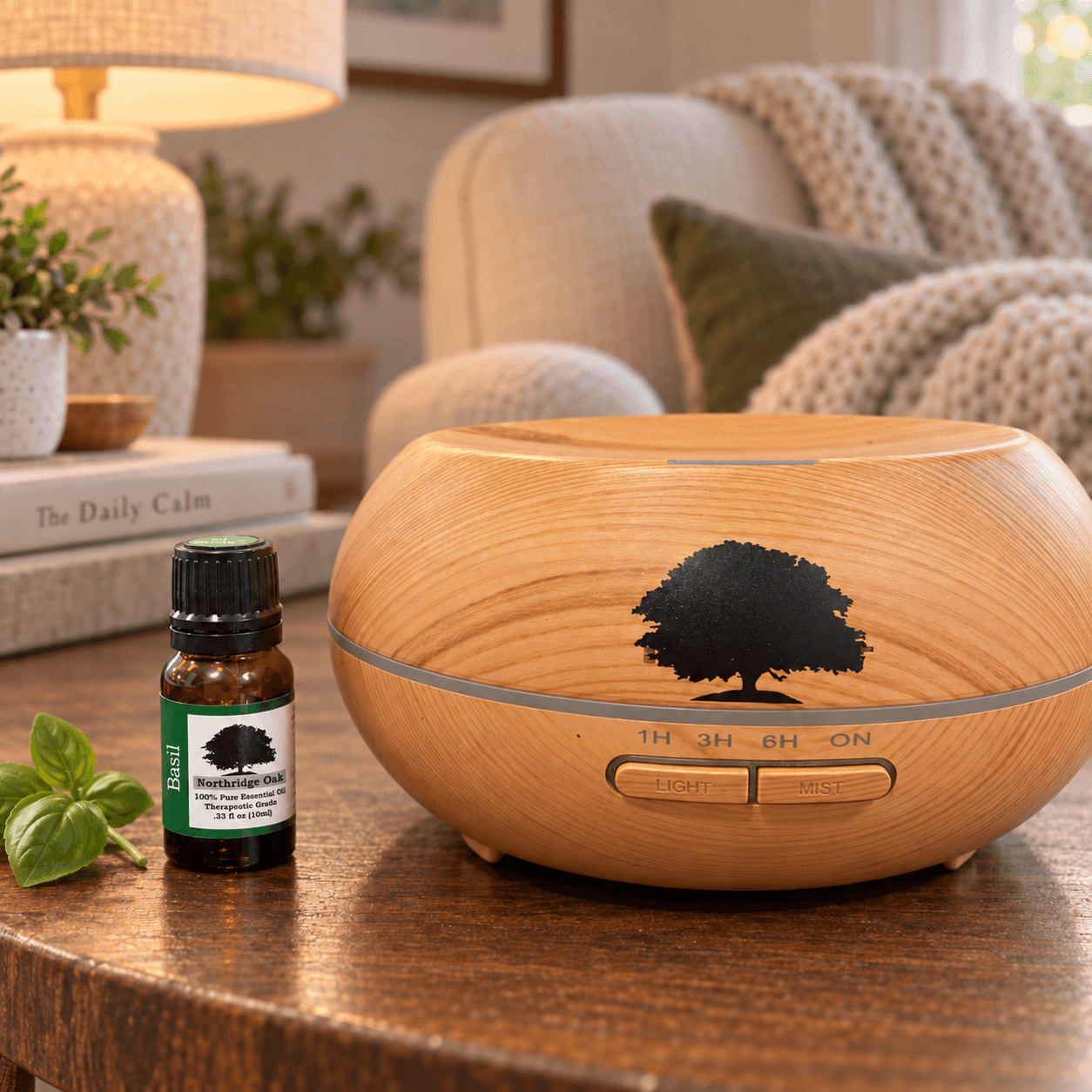
Add 3 drops Lemon, 2 drops Basil and 1 drop Rosemary Essential Oil to a 100–200 mL diffuser. Run for 20 minutes after cleaning. The blend feels green and bright without imitating synthetic “clean” fragrance.
Warm Welcome Blend
Diffuse 3 drops Blood Orange Essential Oil, 2 drops Basil and 1 drop Cedarwood Essential Oil. Sweet citrus makes the herb friendly, while cedarwood creates a smooth finish for living rooms and entryways.
Fresh-bin sachet
Wash and dry the bin first. Place 2 tablespoons baking soda in a breathable sachet, add 2 drops Basil and 2 drops Lemon, and tuck it beneath the liner in a secure location beyond the reach of children and pets. Replace weekly. Never add essential oil directly to pet waste areas, food containers or surfaces an animal may lick.
Single-use cleaning cloth bowl
Fill a bowl with 2 cups warm water and 1 teaspoon unscented liquid soap. Add 4 drops Basil and 6 drops Lemon, stir, soak clean cotton cloths and wring them out. Use immediately on suitable sealed surfaces, then launder. Prepare these cloths for immediate use, then launder them promptly; fresh preparation is the simplest approach for an unpreserved water-based mixture.
Room-by-room ideas
In the kitchen, pair Basil with Lemon or Blood Orange. In a home office, use Basil with Rosemary or Bergamot Essential Oil. In an entryway, Cedarwood softens the herb. For an evening living room, Lavender and Frankincense Essential Oil create a gentler atmosphere.
Bathrooms need ventilation and careful placement. Apply the blend through the recommended diffuser or cloth method, keeping concentrated drops on their intended materials. A ceramic aroma stone on a protected dish gives you a smaller, more controllable scent zone.
Label every homemade product
Write the ingredients and date on the bottle, store it with household cleaners and use a dedicated cleaning container. Keep everything out of reach. A natural formula can still irritate eyes, harm a surface or cause illness if swallowed.
When disinfection is needed
After raw meat, illness or high-risk contamination, clean first and then use a product registered for the target organism and surface. Follow its label, including contact time. Do not add Basil or any other essential oil to bleach or commercial disinfectants.
Children, pets and shared spaces
Use short diffusion periods, open airflow and modest amounts. Everyone should be able to leave the area. Never add essential oil to a pet’s fur, food, water, bedding or litter. Keep aroma away from birds, aquariums and cages. Stop if anyone develops coughing, headache, nausea, eye irritation or breathing discomfort.
Create a home that feels naturally fresh
The most inviting space often uses a light touch, allowing the aroma to complement the room. Clean the source of odor, then use a restrained Basil blend as the final green note. Two or three intentional drops can feel more genuine than a room saturated with fragrance.
Let fresh air do part of the work
Ventilation is one of the simplest ways to improve a room. Open a window when weather and safety permit, run an exhaust fan after cooking and remove damp materials promptly. Then use a modest Basil blend to shape the atmosphere. Essential oil is most convincing when it complements a genuinely clean, aired-out space rather than competing with the source of an odor.
Choose an aroma that fits the task
Use Lemon with Basil when you want brightness, Blood Orange when you want warmth and Lavender when the room should feel softer. For a small space, a passive aroma stone may be enough. Matching the delivery method and blend to the room keeps Basil pleasant and prevents unnecessary overuse.
Continue learning about Basil essential oil
Choose the guide that matches what you would like to make or understand next:
- Basil Essential Oil: Benefits, Uses, DIY Recipes & Diffuser Blends
- Basil Essential Oil Diffuser Blends: 20 Fresh Recipes
- What Blends Well With Basil Essential Oil?
- What Does Basil Essential Oil Smell Like?
- Basil Essential Oil for Focus, Work & Study
- Basil Essential Oil for Sore Muscles & Massage
- Basil Essential Oil for Hair & Scalp Care
- Basil Essential Oil Research: Linalool, Estragole & Chemistry
These statements have not been evaluated by the Food and Drug Administration. Northridge Oak products are not intended to diagnose, treat, cure or prevent disease.