Table of Contents
- What Is Bergamot Essential Oil?
- What Does Bergamot Smell Like?
- Bergamot Essential Oil Benefits at a Glance
- What Research Shows About Bergamot Aromatherapy
- Seven Everyday Uses for Bergamot Essential Oil
- Bergamot Diffuser Blends
- Five Easy Bergamot Essential Oil Recipes
- What Blends Well With Bergamot Essential Oil?
- Bergamot Essential Oil for Skin
- Bergamot FCF, Phototoxicity and Safe Use
- How to Choose a High-Quality Bergamot Essential Oil
- Keep Learning About Bergamot
- Bring Bergamot’s Bright, Balanced Aroma Home
- Frequently Asked Questions
Bergamot Essential Oil is one of those rare aromas that can feel bright and calming at the same time. Its fresh citrus opening is softened by floral notes and a lightly spicy finish, making it a natural choice for diffuser blends, evening wind-down routines, personal-care recipes and properly diluted skincare. This complete guide explains what Bergamot Essential Oil is, what the research actually shows, how to use it at home and why Northridge Oak’s bergapten-free FCF Bergamot makes an important difference for topical use.
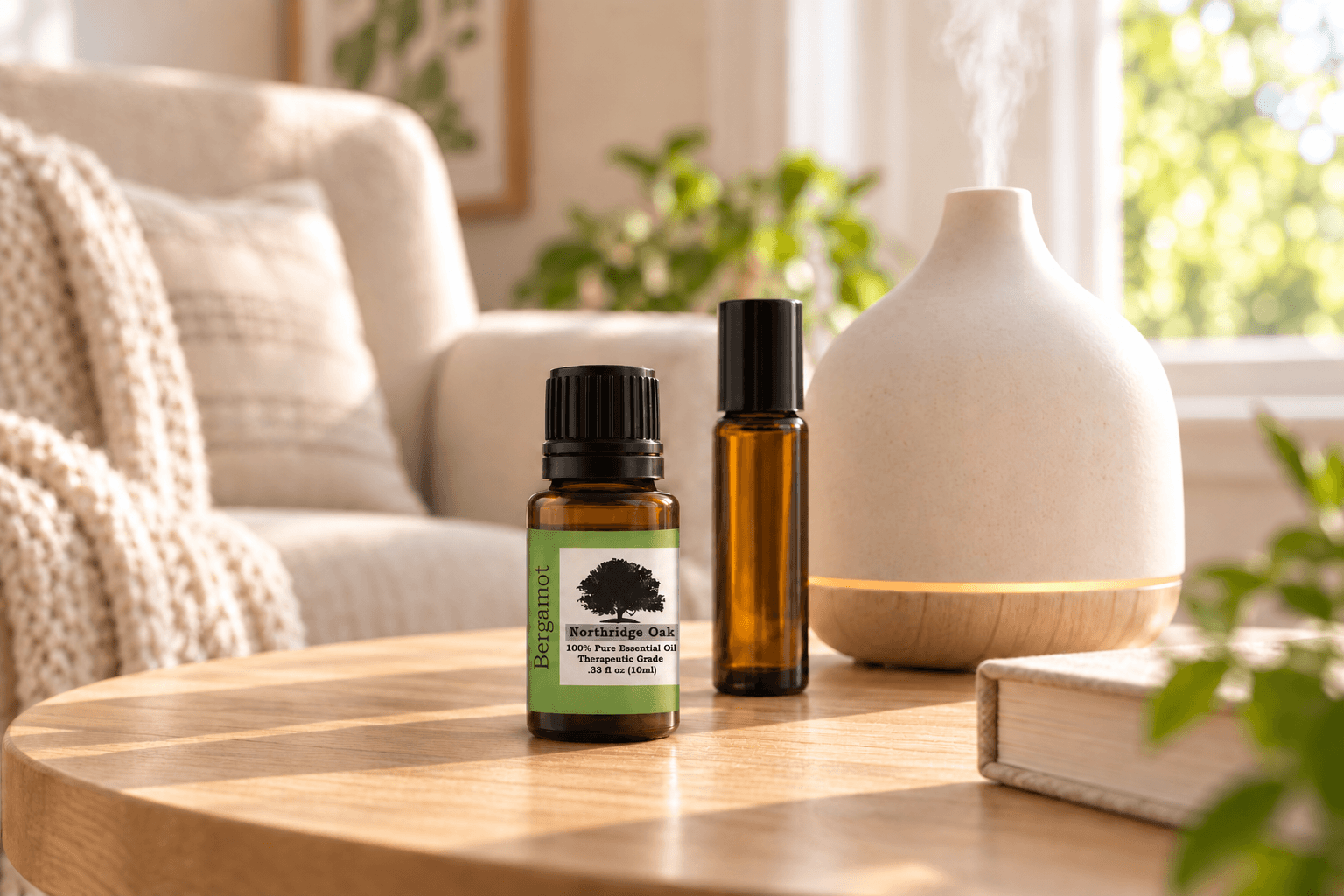
100% Pure Bergamot Essential Oil – 10 mL
$15.67
Bergamot FCF Essential Oil Northridge Oak Bergamot FCF Essential Oil brings bright citrus, soft florals and a refined green-tea finish together in one beautifully versatile oil. It can make a room feel freshly opened in the morning, add graceful brightness… read more

If you are ready to experience the aroma as you read, explore Northridge Oak Bergamot FCF Essential Oil. It is 100% pure, undiluted, bottled in small batches and third-party GC/MS tested.
What Is Bergamot Essential Oil?
Bergamot Essential Oil comes from the peel of Citrus bergamia, a citrus fruit associated especially with southern Italy. The fruit looks something like a small, uneven orange and typically has a green-to-yellow rind as it ripens.
Most traditional Bergamot Essential Oil is mechanically expressed from the peel. That method captures the fruit’s vivid aromatic compounds, but it may also carry naturally occurring furanocoumarins—particularly bergapten—that can make skin unusually sensitive to ultraviolet light.
Northridge Oak carries Bergamot FCF Essential Oil. FCF means furocoumarin-free. The primary phototoxic component associated with traditional expressed bergamot has been removed, while the characteristic citrus-floral aroma remains. This gives you a more versatile bergamot for properly diluted topical recipes as well as diffusion and everyday DIYs.
What Does Bergamot Smell Like?
Bergamot smells like bright citrus with a soft floral heart and a lightly spicy, delicate finish. It is fresher and more complex than a simple orange aroma, less sharp than straight lemon and lighter than many floral oils.
That balanced personality helps explain why bergamot works across so many scent styles:
- With citrus oils, it becomes sparkling and energetic.
- With florals, it becomes soft and graceful.
- With woods and resins, it becomes grounded and warm.
- With herbaceous oils, it becomes clean and refreshing.
Bergamot Essential Oil Benefits at a Glance
The word “benefit” can cover both the practical experience of an aroma and effects studied in controlled settings. Here is the clearest way to separate the two:
| Potential benefit | Practical use | Why people choose bergamot |
|---|---|---|
| A brighter-feeling atmosphere | Diffusion during mornings, work or transitions | Small human studies have reported improvements in some mood and stress measures after brief inhalation. |
| A calmer wind-down routine | Evening diffusion, an inhaler or a diluted roller | Controlled trials have found short-term changes in anxiety scores or stress-related markers in specific settings. |
| A balanced personal aroma | Natural perfume blends and body-care projects | Bergamot’s citrus, floral and lightly spicy profile blends across several aroma families. |
| Fresh-feeling skincare | Properly diluted facial or body oils | Bergamot adds a clean, polished aroma that can make a simple skincare routine feel special. |
| A fresh home scent | Diffuser blends, shower steamers and room-aroma projects | Its bright citrus-floral character freshens a space without the heaviness of many synthetic fragrances. |
What Research Shows About Bergamot Aromatherapy
Bergamot has been studied for the way its aroma influences mood, anxiety and physical markers associated with stress. Human trials have produced encouraging results, including measurable changes after relatively brief inhalation periods.
Short-term stress and mood measures
In a 2015 randomized crossover study, 41 healthy women completed three 15-minute conditions: rest alone, rest with water vapor and rest with water vapor plus Bergamot Essential Oil. After bergamot exposure, salivary cortisol was significantly lower than after rest alone. The researchers also reported increased high-frequency heart-rate variability during the recovery period compared with water vapor and improvements in negative-emotion and fatigue scores. These findings show that bergamot influenced both psychological and physiological measures in as little as 15 minutes. Read the study abstract on PubMed.
Anxiety before a medical procedure
A 2020 controlled clinical trial included 60 adults awaiting laparoscopic gallbladder surgery. Participants were randomly assigned to inhale either two drops of 3% bergamot essence or odorless grapeseed oil. After the intervention, the groups differed significantly in anxiety scores (p = 0.004) and salivary alpha-amylase levels (p = 0.003). The results demonstrate a measurable calming response and support bergamot aromatherapy as a helpful option during stressful moments. Review the trial details on PubMed.
Together, these studies help explain why bergamot is such a popular choice during tense or tiring moments. Its aroma can support a calmer, brighter-feeling environment and is easy to work into a daily routine.
Seven Everyday Uses for Bergamot Essential Oil
1. Brighten a room with diffusion
Add 3–5 drops to a typical ultrasonic diffuser, following the manufacturer’s water and oil instructions. Begin at the low end, especially in a smaller room, and provide fresh airflow.
2. Create a gentle morning transition
Diffuse bergamot while you make breakfast, prepare for work or settle into a morning routine. Pair it with Blood Orange for extra brightness or Cedarwood for a steadier, more grounded aroma.
3. Support an evening wind-down
Bergamot’s citrus freshness keeps an evening blend from becoming too heavy. Pair it with Lavender Essential Oil or Cedarwood Essential Oil when you want a softer atmosphere before bed.
4. Build a natural personal aroma
Bergamot is a classic top note. It can make a floral blend feel lighter or lift the deeper character of woods, resins and earthy oils. Always dilute personal aroma blends before applying them to skin.
5. Add freshness to a shower routine
A shower steamer can release bergamot’s aroma into the warm air without turning the project into a leave-on skin product. Use the shower-steamer recipe below, and keep the steamer away from your feet and the direct water stream.
6. Add it to properly diluted skincare
One drop in 2 teaspoons of a suitable carrier oil creates an approximately 0.5% dilution. Patch test first, avoid the eye area and discontinue use if irritation develops. Bergamot’s clean citrus-floral aroma can make a simple skincare routine feel fresh, uplifting and beautifully finished.
7. Refresh a workspace or quiet corner
Place a few drops on a passive diffuser intended for essential oils. This offers a subtle aroma without running an ultrasonic diffuser continuously.
Bergamot Diffuser Blends
These recipes contain five total drops, a practical starting point for many ultrasonic diffusers. Adjust for your diffuser capacity, room size and personal preference. Diffuse intermittently, keep air moving and stop if anyone experiences discomfort.
Bright Beginning
- 3 drops Bergamot Essential Oil
- 2 drops Blood Orange Essential Oil
Fresh, cheerful citrus for the start of the day.
Quiet Evening
- 3 drops Bergamot Essential Oil
- 2 drops Lavender Essential Oil
A simple citrus-floral blend for a softer nighttime atmosphere.
Grounded Citrus
- 3 drops Bergamot Essential Oil
- 2 drops Cedarwood Essential Oil
Bright at first, then warm and woody.
Garden Light
- 3 drops Bergamot Essential Oil
- 1 drop Geranium Essential Oil
- 1 drop Lavender Essential Oil
A graceful blend that balances citrus and floral notes.
Resin & Sunshine
- 3 drops Bergamot Essential Oil
- 2 drops Frankincense Essential Oil
A bright top note over a warm, resinous base.
Soft Floral Citrus
- 4 drops Bergamot Essential Oil
- 1 drop Ylang Ylang Essential Oil
Ylang Ylang is powerful, so one drop is enough to add floral depth.
Five Easy Bergamot Essential Oil Recipes
1. Bergamot & Lavender Personal Inhaler
You will need:
- 8 drops Bergamot Essential Oil
- 4 drops Lavender Essential Oil
- 1 blank aromatherapy inhaler with wick
Add the essential oils to the wick, place it inside the inhaler and seal the cap. Hold the inhaler just below the nose and take one or two gentle breaths as desired. Do not insert it into the nostrils or share it with another person.
2. Gentle Bergamot Roller
You will need:
- 1 drop Bergamot FCF Essential Oil
- 1 drop Lavender Essential Oil
- Carrier oil to fill one 10 mL roller bottle
Add the essential oils, fill the bottle with carrier oil and replace the roller top. This creates an approximately 1% dilution. Patch test before broader use, then apply sparingly to wrists or forearms. Avoid eyes, mucous membranes and irritated skin.
3. Bergamot & Lavender Shower Steamers
You will need:
- 1 cup baking soda
- 1/2 cup citric acid
- 2 tablespoons cornstarch
- 6 drops Bergamot Essential Oil
- 6 drops Lavender Essential Oil
- Water in a fine-mist bottle
- Silicone mold
Mix the dry ingredients. Add the essential oils and stir thoroughly. Mist with very small amounts of water while mixing until the texture holds when squeezed; avoid adding enough to trigger vigorous fizzing. Press into the mold and let the steamers dry completely.
Place one steamer on the shower floor away from the direct stream and away from where you stand. Do not use these as bath bombs or apply them directly to skin. Use caution because shower surfaces can become slippery.
4. Simple Bergamot Face Oil
You will need:
- 1 drop Bergamot FCF Essential Oil
- 2 teaspoons skin-compatible carrier oil
- 10 mL glass bottle
Combine the ingredients for an approximately 0.5% dilution. Patch test first. If well tolerated, apply a small amount as part of your usual skincare routine, avoiding the eyelids and eye area. Stop use if redness, burning or irritation occurs.
5. Bergamot Aroma Jar
You will need:
- 1/2 cup plain dry rice
- 10 drops Bergamot Essential Oil
- 5 drops Cedarwood or Lavender Essential Oil
- Small glass jar with a ventilated lid
Add the rice and oils to the jar, close it and shake gently. Open the ventilated top when you want a light passive aroma, then close it between uses. Keep it out of reach of children and pets, and replace the contents when the aroma fades.
What Blends Well With Bergamot Essential Oil?
Bergamot is unusually flexible because it connects citrus brightness with floral softness. Use this table as a starting point rather than a rigid formula.
| Aroma family | Oils to try | What they add |
|---|---|---|
| Citrus | Blood Orange, Lemon, Grapefruit | Extra sparkle and freshness |
| Floral | Lavender, Geranium, Ylang Ylang | Softness, fullness and a more rounded aroma |
| Wood | Cedarwood | Warmth and staying power |
| Resin | Frankincense | Depth and a meditative character |
| Earthy | Patchouli Essential Oil | Richness and a longer-lasting base note |
| Herbaceous | Rosemary, Clary Sage | A crisp, green edge |
When creating your own blend, begin with three parts bergamot, then add one part of a stronger floral, wood, resin or earthy oil. Smell the blend after each addition and keep notes so you can recreate it.
Bergamot Essential Oil for Skin
Bergamot is popular in personal-care products because its aroma feels clean, light and polished. For home skincare, the safest approach is simple:
- Choose Bergamot FCF for topical projects.
- Keep facial dilution low—around 0.5% is a conservative starting point for a healthy adult.
- Patch test a finished blend before using it more widely.
- Avoid eyes, mucous membranes, broken skin and irritated areas.
- Stop if discomfort or a reaction occurs.
Bergamot and its naturally occurring aromatic constituents continue to attract research interest. At home, a low, carefully measured dilution adds an enjoyable aromatic element to a simple skincare routine and pairs especially well with lightweight carrier oils.
Bergamot FCF, Phototoxicity and Safe Use
Traditional expressed Bergamot Essential Oil can contain bergapten and related furanocoumarins. When these compounds remain on skin and are followed by ultraviolet exposure, they can produce a serious phototoxic reaction.
Northridge Oak Bergamot is FCF and bergapten-free. Removing the primary phototoxic component makes it the more practical choice for properly diluted topical recipes. Pair that important advantage with normal essential-oil precautions for confident everyday use.
Essential safety checklist
- Dilute before applying bergamot to skin.
- Patch test every new topical blend.
- Follow your diffuser manufacturer’s instructions and use fresh airflow.
- Take diffusion breaks rather than running a diffuser continuously.
- Keep essential oils away from eyes, mucous membranes and broken skin.
- Keep bottles and prepared recipes out of reach of children and pets.
- Ask a qualified professional before use during pregnancy or nursing, with young children, while managing a medical condition or when taking medication.
- If a bottle is not clearly labeled FCF or bergapten-free, treat expressed bergamot as phototoxic and keep it off UV-exposed skin.
For a fuller explanation of dilution, diffusion, children, pets and pregnancy, read Northridge Oak’s complete Essential Oil Safety Guide.
How to Choose a High-Quality Bergamot Essential Oil
The label should identify the botanical as Citrus bergamia and tell you whether the oil is traditional expressed bergamot or an FCF version. Purity, testing and clear product information are equally important.
Northridge Oak Bergamot FCF Essential Oil is:
- 100% pure and undiluted
- Free from fillers and unnecessary additives
- Bottled in small batches
- Third-party GC/MS tested
- Clearly identified as FCF and bergapten-free
That transparency matters. By comparison, a product labeled “bergamot fragrance” may be a formulated scent made with synthetic aroma materials, natural isolates or a mixture. Learn more in Why You Should Avoid Synthetic Fragrance in Your Home.
Keep Learning About Bergamot
This pillar gives you the complete overview. The supporting Bergamot Essential Oil guides will go deeper into the questions people search most often:
- What Does Bergamot Smell Like? — aroma notes, comparisons and fragrance uses.
- Bergamot Essential Oil for Skin — dilution, research and fresh-feeling routine ideas.
- Bergamot Oil for Hair and Scalp — safe recipe ideas and realistic expectations.
- Bergamot Essential Oil for Stress, Anxiety and Sleep — a closer look at the human research.
- Bergamot Diffuser Blends — recipes organized by mood and time of day.
- What Blends Well With Bergamot Essential Oil? — pairings, ratios and aroma families.
- Bergamot Essential Oil Recipes — practical aromatic, topical and personal-care projects.
- Is Bergamot Essential Oil Phototoxic? — traditional bergamot, FCF oil and sun safety.
You can also browse the Northridge Oak Essential Oil Guide Library for practical ideas built around pure, clearly identified essential oils.
Bring Bergamot’s Bright, Balanced Aroma Home
Bergamot brings together qualities that are usually found in separate oils: the sparkle of citrus, the softness of florals and just enough spice to keep the aroma interesting. It can brighten the morning, soften an evening routine and make simple blends feel complete.
For a bergapten-free option suited to diffusion and properly diluted topical projects, choose Northridge Oak Bergamot FCF Essential Oil. Every bottle is 100% pure, undiluted, bottled in small batches and third-party GC/MS tested—so you know exactly what you are bringing into your home.
Frequently Asked Questions
What is Bergamot Essential Oil good for?
Bergamot is commonly used to create bright, balanced diffuser blends, support a pleasant wind-down routine, add freshness to personal aromas and scent properly diluted body-care projects. Human studies have also reported improvements in mood, anxiety and stress-related measures after inhalation.
Does Bergamot Essential Oil make you sleepy?
Many people enjoy bergamot’s soft citrus-floral aroma as part of their evening routine, especially when it is blended with Lavender or Cedarwood. It brings a peaceful quality to the room while keeping the blend light and fresh.
Can I put Bergamot Essential Oil directly on my skin?
Dilute it in a suitable carrier oil before skin use and patch test the finished blend. A conservative starting point is approximately 0.5% for the face and 1% for general adult body use.
Is Bergamot Essential Oil phototoxic?
Traditional expressed bergamot can be phototoxic because it may contain bergapten and other furocoumarins. Northridge Oak Bergamot is FCF and bergapten-free, which removes the primary phototoxic component. Proper dilution and normal topical precautions still apply.
Can I diffuse Bergamot Essential Oil around children or pets?
Households with children or pets should use smaller amounts, shorter sessions, good ventilation and a room the child or animal can freely leave. Species, age and health status matter, so review the Essential Oil Safety Guide and seek individualized professional guidance when needed.
What is the best oil to blend with bergamot?
Lavender is one of the easiest starting partners because it softens bergamot without covering its citrus character. Cedarwood adds warmth, Frankincense adds resinous depth, and Blood Orange makes the blend even brighter.
How many drops of bergamot should I put in a diffuser?
Begin with 3–5 drops in a typical ultrasonic diffuser, then adjust for the unit’s capacity, the room size and personal preference. Follow the manufacturer’s directions and use less in small spaces.