Table of Contents
- Why Bergamot Is So Easy to Blend
- How to Use the Bergamot Pairing Ratios
- Best Floral Oils to Blend With Bergamot
- Best Citrus Oils to Blend With Bergamot
- Best Resinous and Woody Oils to Blend With Bergamot
- Best Herbal and Earthy Oils to Blend With Bergamot
- Bergamot Blending Chart
- How to Build Your Own Bergamot Blend
- Choose a Bergamot Blend by Mood
- Can Bergamot Blends Be Used Topically?
- A Better Way to Scent Your Home
- Keep Learning About Bergamot
- Frequently Asked Questions
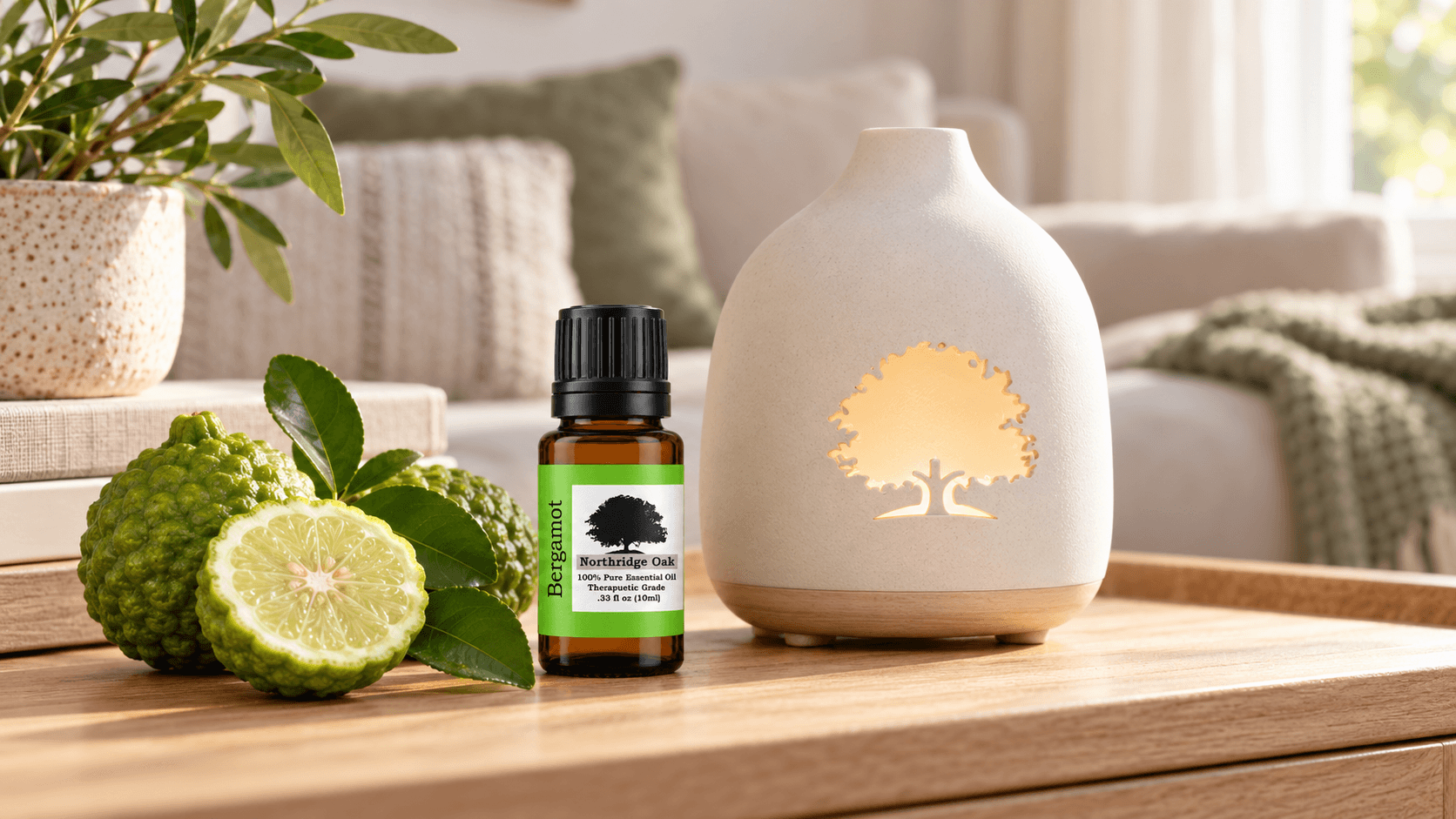
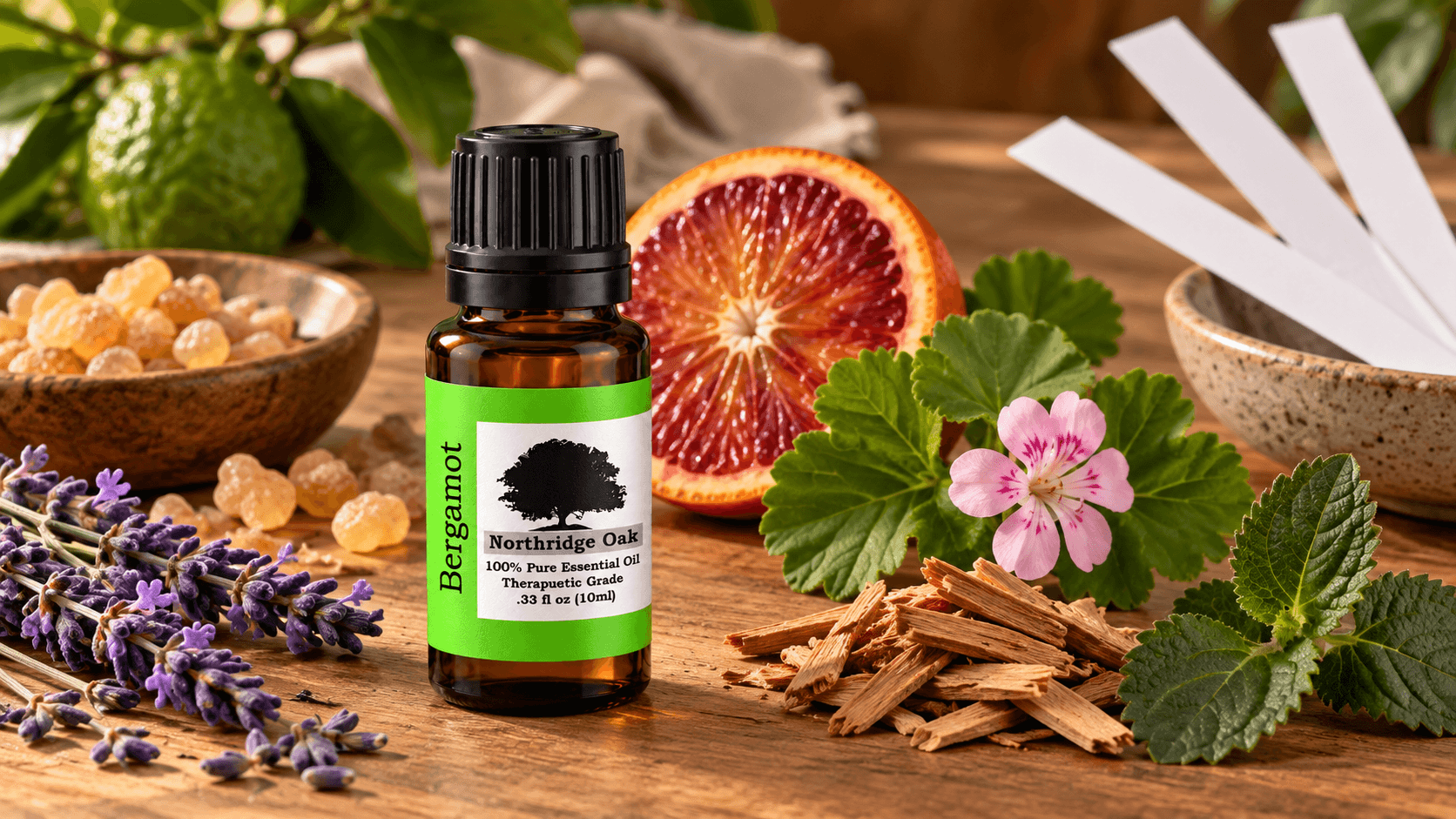
What blends well with Bergamot Essential Oil? The wonderful answer is: almost everything. Bergamot has a bright citrus opening, a soft floral heart and a lightly green, elegant finish that helps it blend naturally with florals, citrus oils, herbs, woods, resins and earthy aromas.
100% Pure Bergamot Essential Oil – 10 mL

$15.67
Bergamot FCF Essential Oil Northridge Oak Bergamot FCF Essential Oil brings bright citrus, soft florals and a refined green-tea finish together in one beautifully versatile oil. It can make a room feel freshly opened in the morning, add graceful brightness… read more
Lavender makes bergamot softer and more relaxing. Lemon gives it extra sparkle. Blood Orange makes it warmer and juicier. Frankincense adds smooth resinous depth, while Cedarwood and Patchouli give bergamot a lasting, grounded foundation.
That versatility makes Northridge Oak Bergamot FCF Essential Oil one of the most useful oils to keep beside your diffuser. You can use the same bottle to create an energizing morning blend, a fresh home aroma, a welcoming blend for company or a peaceful evening atmosphere.
Northridge Oak Bergamot is 100% pure, undiluted and bottled in small batches. Every batch is third-party GC/MS tested, with no fillers or synthetic fragrance. It is also FCF, or furocoumarin-free, which makes it a particularly versatile choice for properly diluted topical recipes.
Why Bergamot Is So Easy to Blend
Bergamot is usually classified as a top note, which means it is one of the first aromas you notice in a blend. Its lively citrus character rises quickly from the diffuser and brings freshness to the entire recipe.
But bergamot is more complex than a typical citrus oil. Beneath that first bright impression are soft floral, green and gently spicy notes. Those quieter layers allow bergamot to connect oils that might otherwise feel far apart.
It can brighten the earthy depth of Patchouli, soften the dry character of Cedarwood and bring a polished finish to Lavender or Geranium. Perfumers have appreciated this ability for generations. Bergamot became an important part of classic European fragrance traditions because it could make a composition feel lighter, smoother and more complete.
If you would like to explore those scent layers more closely, read What Does Bergamot Smell Like?
How to Use the Bergamot Pairing Ratios
The ratios below are starting points rather than rigid rules. A “3:2 ratio,” for example, could mean three drops of bergamot and two drops of the companion oil.
Start with five or six total drops in a medium-sized ultrasonic diffuser unless its manufacturer recommends a different amount. Allow the blend to diffuse for several minutes before adjusting it. Woods, resins and earthy oils often become more noticeable as the lighter citrus notes disperse.
When you find a combination you enjoy, write it down. It is surprisingly easy to forget whether the perfect blend contained two drops of Lavender or three.
Best Floral Oils to Blend With Bergamot
Lavender Essential Oil
Bergamot and Lavender are one of those combinations that simply feel natural together. Bergamot lifts Lavender’s familiar floral aroma, while Lavender softens the sharper edges of the citrus.
The result is fresh, gentle and beautifully balanced. It works well in bedrooms, reading areas, living rooms and anywhere you want the atmosphere to feel peaceful without becoming heavy.
Starting ratio: 3 parts Bergamot to 2 parts Lavender.
Try this blend: Soft Landing
- 3 drops Bergamot
- 2 drops Lavender
- 1 drop Frankincense
This is an excellent blend for the transition between a busy day and a quieter evening.
Geranium Essential Oil
Geranium brings out the floral side of Bergamot. Its rosy, green aroma makes the combination feel lush and garden-inspired, while Bergamot keeps the blend bright and airy.
Geranium has a strong personality, so a single drop can transform an entire recipe. Let Bergamot lead and use Geranium as the floral accent.
Starting ratio: 3 parts Bergamot to 1 part Geranium.
Try this blend: Citrus Garden
- 3 drops Bergamot
- 1 drop Geranium
- 2 drops Blood Orange
This blend feels cheerful, floral and welcoming—perfect for an entryway or living room.
Best Citrus Oils to Blend With Bergamot
Lemon Essential Oil
Lemon emphasizes Bergamot’s clean citrus opening. The combination feels crisp and energetic, but Bergamot contributes enough floral softness to keep the aroma from becoming too sharp.
This pairing is especially inviting in kitchens, offices and freshly cleaned rooms. It also works well when you want to replace a conventional room fragrance with the authentic aroma of pure citrus oils.
Starting ratio: Equal parts Bergamot and Lemon.
Try this blend: Open the Windows
- 3 drops Bergamot
- 2 drops Lemon
- 1 drop Lavender
The aroma feels like sunlight, clean linens and fresh air moving through the room.
Blood Orange Essential Oil
Blood Orange makes Bergamot warmer, sweeter and juicier. Bergamot contributes refinement, while Blood Orange creates a friendly citrus fullness that immediately makes a room feel more inviting.
This is one of our favorite combinations for family rooms, kitchens and gatherings. It is bright enough for morning but warm enough to enjoy throughout the afternoon.
Starting ratio: 3 parts Bergamot to 2 parts Blood Orange.
Try this blend: Golden Hour
- 3 drops Bergamot
- 2 drops Blood Orange
- 1 drop Cedarwood
Cedarwood gives the citrus oils a soft foundation and helps the blend settle beautifully.
Best Resinous and Woody Oils to Blend With Bergamot
Frankincense Essential Oil
Frankincense and Bergamot create a blend that feels spacious, composed and quietly luxurious. Bergamot provides the light; Frankincense provides the depth.
Frankincense’s warm, resinous character also helps the lighter Bergamot aroma feel more substantial. The pairing is especially well suited to reflection, journaling, reading or an intentional evening routine.
Starting ratio: 3 parts Bergamot to 2 parts Frankincense.
Try this blend: Quiet Moment
- 3 drops Bergamot
- 2 drops Frankincense
- 1 drop Lavender
This recipe is simple, smooth and easy to return to whenever you want the room to feel settled.
Cedarwood Essential Oil
Cedarwood gives Bergamot a dry, woody foundation without covering its citrus character. The result feels clean, balanced and grounded rather than sweet.
This pairing is a wonderful choice for an office, den or shared living space. It also works well for people who enjoy citrus aromas but want something deeper than a traditional all-citrus blend.
Starting ratio: 2 parts Bergamot to 1 part Cedarwood.
Try this blend: Bright Timber
- 4 drops Bergamot
- 2 drops Cedarwood
Sometimes two oils are all you need. This uncomplicated recipe allows both oils to remain recognizable.
Best Herbal and Earthy Oils to Blend With Bergamot
Rosemary Essential Oil
Rosemary gives Bergamot a crisp, herbal edge. Together, they create an aroma that feels fresh, clear and purposeful.
Bergamot rounds Rosemary’s more penetrating qualities, while Rosemary gives the citrus extra definition. This combination works beautifully during a work session, household project or active morning.
Starting ratio: 3 parts Bergamot to 2 parts Rosemary.
Try this blend: Clear Desk
- 3 drops Bergamot
- 2 drops Rosemary
- 1 drop Lemon
Use this blend when you want the room to feel bright, organized and ready for the task ahead.
Patchouli Essential Oil
Patchouli reveals a completely different side of Bergamot. Its deep, earthy sweetness anchors the light citrus and creates a sophisticated aroma that develops gradually in the room.
Patchouli is much stronger and longer-lasting than Bergamot, so begin with one drop. Give the blend at least ten minutes before deciding whether it needs more.
Starting ratio: 4 parts Bergamot to 1 part Patchouli.
Try this blend: Grounded Citrus
- 4 drops Bergamot
- 1 drop Patchouli
- 1 drop Frankincense
The opening is bright and polished, while the deeper oils emerge as the blend settles.
Bergamot Blending Chart
| Pairing oil | What it brings to Bergamot | Starting ratio |
|---|---|---|
| Lavender | Soft floral balance | 3:2 |
| Geranium | Rosy, green fullness | 3:1 |
| Lemon | Crisp citrus brightness | 1:1 |
| Blood Orange | Warm, juicy sweetness | 3:2 |
| Frankincense | Smooth resinous depth | 3:2 |
| Cedarwood | Dry woody structure | 2:1 |
| Rosemary | Fresh herbal clarity | 3:2 |
| Patchouli | Rich earthy persistence | 4:1 |
How to Build Your Own Bergamot Blend
Creating your own blend becomes much easier when you decide how you want the room to feel before choosing the oils.
For a fresh blend, begin with Bergamot and another citrus oil. For something softer, add Lavender or Geranium. When you want more depth, introduce Frankincense, Cedarwood or a carefully measured drop of Patchouli.
A dependable three-part structure is:
- Three drops of Bergamot for brightness
- Two drops of a supporting oil for the main character
- One drop of a deeper oil for balance and staying power
For example, three drops of Bergamot, two drops of Lavender and one drop of Cedarwood creates a soft citrus-floral blend with a subtle woody finish.
Three drops of Bergamot, two drops of Lemon and one drop of Frankincense creates something cleaner and brighter, with just enough resinous depth to feel complete.
Avoid adding oil after oil simply because each one smells good by itself. Two or three thoughtfully selected oils usually create a clearer, more memorable blend than a crowded formula.
Choose a Bergamot Blend by Mood
For a Bright Morning
- 3 drops Bergamot
- 2 drops Lemon
- 1 drop Rosemary
This blend is crisp, herbal and full of fresh citrus energy.
For a Welcoming Home
- 3 drops Bergamot
- 2 drops Blood Orange
- 1 drop Cedarwood
The warm citrus aroma feels comfortable and inviting without becoming overly sweet.
For a Peaceful Afternoon
- 3 drops Bergamot
- 2 drops Lavender
- 1 drop Frankincense
This gentle blend creates a beautiful background for reading, writing or enjoying a quiet room.
For a Grounded Evening
- 3 drops Bergamot
- 2 drops Cedarwood
- 1 drop Patchouli
The deeper oils emerge slowly and give Bergamot a warm, earthy finish.
Find more measured combinations in our collection of 20 Bergamot Diffuser Blends.
Can Bergamot Blends Be Used Topically?
Many Bergamot combinations can also be adapted for properly diluted rollers, body oils and massage blends. The essential-oil concentration must be calculated for the finished product, and the completed formula should always be patch tested before wider use.
Northridge Oak Bergamot is FCF, meaning the primary phototoxic furocoumarins have been removed. This makes it more versatile for properly diluted topical projects than ordinary cold-pressed Bergamot.
FCF does not replace dilution or patch testing. Read Is Bergamot Essential Oil Phototoxic? and our complete essential-oil safety guide before making a skin-contact recipe.
You can also find practical formulas in Bergamot Essential Oil Recipes and Bergamot Essential Oil for Skin.
A Better Way to Scent Your Home
Blending pure essential oils gives you control over both the ingredients and the intensity of your home’s aroma. You can start with a small number of drops, let fresh air remain part of the experience and adjust each recipe according to the room.
That is very different from filling a space with a fixed synthetic fragrance. Pure Bergamot develops naturally as it disperses—bright at first, softer and more layered a few minutes later.
Read Why You Should Avoid Synthetic Fragrance in Your Home to learn more about creating a naturally scented home.
Keep Learning About Bergamot
Bergamot may begin as the bright note in a blend, but its versatility is what makes it worth keeping close. It can make Lavender feel lighter, Cedarwood feel fresher, Frankincense feel more expansive and Blood Orange feel beautifully polished.
Continue with our complete Bergamot Essential Oil benefits, uses, recipes and safety guide, explore Bergamot Essential Oil for stress, anxiety and sleep, or choose a new formula from our Bergamot diffuser blend collection.
If you are ready to begin blending, try Bergamot with one oil you already love. Then add a third oil only when you know what you want it to contribute. That simple approach will help you create blends that feel intentional, balanced and completely your own.
Choose Northridge Oak Bergamot FCF Essential Oil for a bright, floral citrus oil that blends beautifully across your collection. It is 100% pure, undiluted, bottled in small batches and independently GC/MS tested—exactly the kind of quality you want at the center of a blend.