Table of Contents
- What Are the Benefits of Bergamot Essential Oil for Skin?
- Is Bergamot Essential Oil Good for Oily or Blemish-Prone Skin?
- Does Bergamot Essential Oil Moisturize Skin?
- Why Must Bergamot Essential Oil Be Diluted?
- What Is FCF Bergamot?
- Does FCF Mean Bergamot Can Be Applied Undiluted?
- How Do You Patch Test a Bergamot Blend?
- Five Bergamot Essential Oil Recipes for Skin
- Which Carrier Oil Works Best With Bergamot?
- Can Bergamot Essential Oil Be Used on the Face?
- Can Bergamot Be Added to Lotion?
- How Often Can You Use Bergamot on Your Skin?
- Why Choose Northridge Oak Bergamot FCF Essential Oil?
- How Should Homemade Bergamot Skin Oils Be Stored?
- Using Bergamot Essential Oil Safely on Skin
- Keep Learning About Bergamot
- Frequently Asked Questions
Bergamot Essential Oil for skin adds a bright, beautifully refined aroma to body oils, massage blends, hand treatments and pulse-point rollers. When it is properly diluted, this distinctive citrus oil can make an everyday moisturizing routine feel fresh, polished and worth slowing down to enjoy.
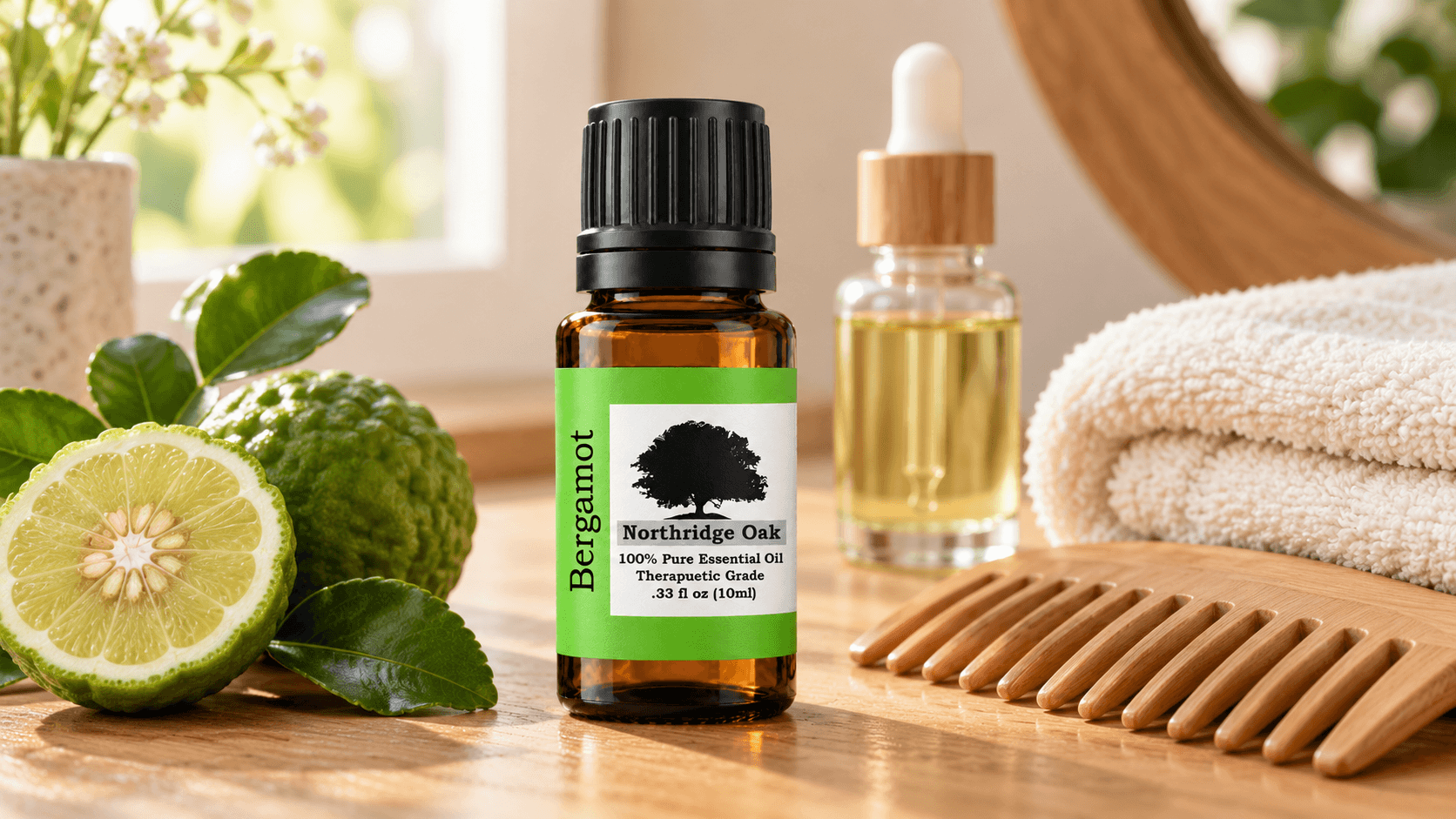
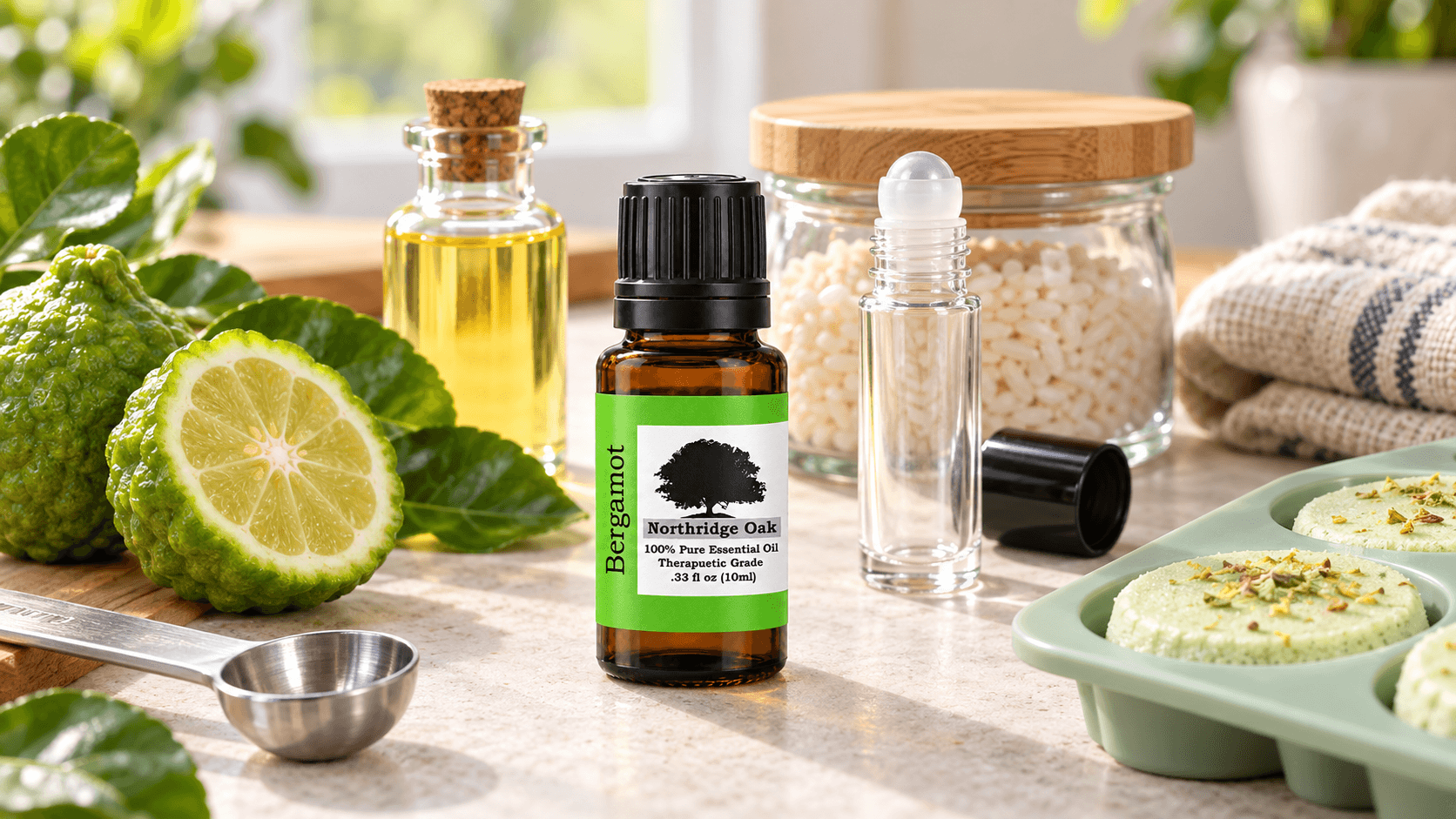
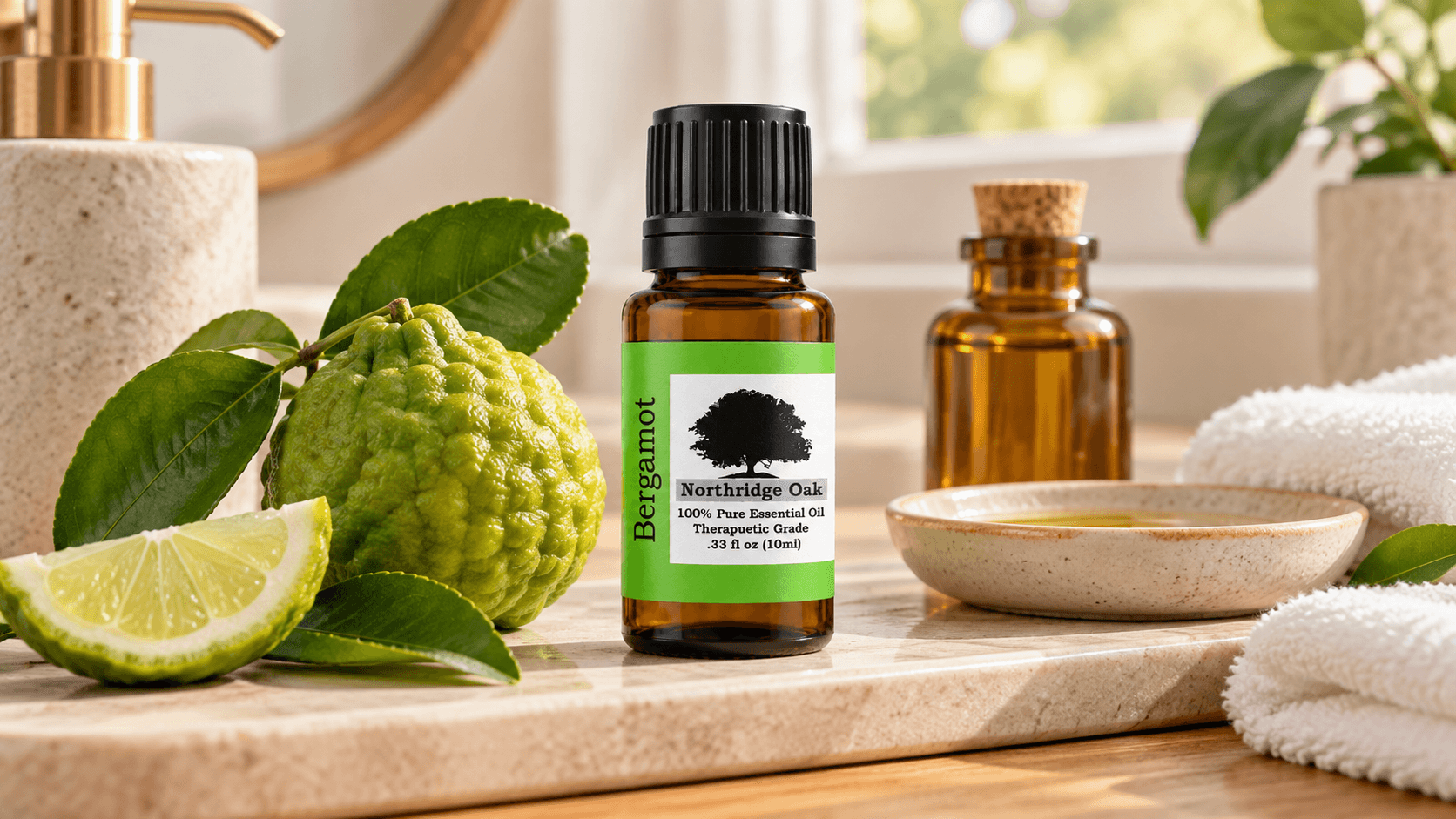
100% Pure Bergamot Essential Oil – 10 mL

$15.67
Bergamot FCF Essential Oil Northridge Oak Bergamot FCF Essential Oil brings bright citrus, soft florals and a refined green-tea finish together in one beautifully versatile oil. It can make a room feel freshly opened in the morning, add graceful brightness… read more
Bergamot opens with sparkling citrus, then reveals softer floral, green and tea-like notes. That unexpected depth allows it to feel cheerful in a morning body oil, comforting in an evening hand treatment and quietly luxurious in a massage blend.
The type of Bergamot you choose matters. Northridge Oak Bergamot FCF Essential Oil has had the primary phototoxic furocoumarins removed, making it a more versatile choice for properly diluted topical recipes.
What Are the Benefits of Bergamot Essential Oil for Skin?
Bergamot’s value in body care comes from the combination of its botanical character, beautiful aroma and ability to complement nourishing carrier oils.
It Makes Everyday Body Care More Enjoyable
A carrier oil supplies the direct moisturizing and softening effect in a Bergamot body-care recipe. Bergamot contributes its complex natural aroma, turning a simple application into a personal ritual.
That sensory experience matters. A blend you enjoy using is easier to make part of your routine. Applying a few drops of a beautifully scented body oil after bathing can become one of the most anticipated moments of the day.
It Creates a Fresh, Clean Aroma
Bergamot smells bright without resembling a sharp household citrus. Its floral and green undertones give it a smooth, sophisticated finish.
This makes it especially appealing in:
- After-bath body oils
- Hand and cuticle oils
- Massage blends
- Pulse-point rollers
- Dry-looking elbow and heel treatments
- Lightly scented shoulder and neck oils
If you want to understand the aroma before choosing a recipe, read What Does Bergamot Smell Like?
It Pairs Beautifully With Other Skin-Care Aromas
Bergamot is one of the easiest citrus oils to blend because it connects naturally with florals, woods and resins.
- Lavender Essential Oil makes Bergamot softer and more familiar.
- Geranium Essential Oil emphasizes its floral character.
- Frankincense Essential Oil adds warm resinous depth.
- Cedarwood Essential Oil creates a dry, grounding finish.
- Patchouli Essential Oil gives the blend an earthy, lasting base.
Our complete guide to what blends well with Bergamot Essential Oil explains how each pairing changes the finished aroma.
It Has Attracted Scientific Interest for Its Antimicrobial Activity
Bergamot has been studied in laboratory settings against several types of microorganisms.
In a 2007 study, researchers tested natural Bergamot essence, distilled Bergamot extract and furocoumarin-free Bergamot against 92 clinical isolates of dermatophytes from the Trichophyton, Microsporum and Epidermophyton genera.
All three Bergamot preparations demonstrated activity in laboratory testing. Minimum inhibitory concentrations ranged from:
- 0.156% to 2.5% for natural Bergamot essence
- 0.02% to 2.5% for the distilled extract
- 0.08% to 1.25% for the furocoumarin-free extract
This research is especially relevant because it included an FCF preparation—the same form chosen for greater topical versatility. Read the study methods and findings on PubMed.
These laboratory findings help explain the continuing interest in Bergamot as a botanical skin-care ingredient. The recipes in this guide use gentle cosmetic dilutions designed for enjoyable everyday body care.
Is Bergamot Essential Oil Good for Oily or Blemish-Prone Skin?
Bergamot is frequently included in natural-care routines for oily or blemish-prone skin because of its fresh feel and the laboratory research surrounding its antimicrobial activity.
However, facial skin is often more reactive than the skin on the arms, legs or shoulders. A low dilution is important, and any new blend should be patch tested before wider application.
For facial use, begin at approximately 0.25% to 0.5%. That means using only one drop of Bergamot Essential Oil in 20 to 40 mL of carrier oil.
Jojoba is a useful carrier for this type of lightweight formula because it spreads easily and does not feel as heavy as many traditional body oils.
Avoid applying essential oils close to the eyes, lips or inside the nose. If the skin is already irritated, allow it to become comfortable before introducing a new aromatic product.
Does Bergamot Essential Oil Moisturize Skin?
Bergamot Essential Oil is not a carrier oil, so it does not provide the rich fatty acids that perform most of the moisturizing work. That role belongs to jojoba, Fractionated Coconut Oil, Apricot Kernel Oil, Sunflower Seed Oil or another suitable carrier.
Bergamot makes the completed formula more enjoyable by giving it an uplifting natural aroma.
Think of the recipe as a partnership:
- The carrier oil provides glide, softness and a moisture-sealing layer.
- Bergamot supplies its citrus-floral aroma and botanical character.
- Companion essential oils shape the mood and scent of the blend.
This is why carefully chosen ingredients matter. A simple formula can feel beautifully finished without becoming complicated.
Why Must Bergamot Essential Oil Be Diluted?
Pure Bergamot Essential Oil is highly concentrated. Dilution distributes a small amount throughout a larger volume of carrier oil, creating a formula that is much more appropriate for skin application.
For everyday adult body care, a total essential-oil dilution of 0.5% to 1% is a comfortable starting range.
| Carrier oil | Approximate 0.5% dilution | Approximate 1% dilution |
|---|---|---|
| 10 mL or 2 teaspoons | 1 drop total | 2 drops total |
| 15 mL or 1 tablespoon | 2 drops total | 3 drops total |
| 30 mL or 2 tablespoons | 3 drops total | 6 drops total |
| 60 mL or 4 tablespoons | 6 drops total | 12 drops total |
Drop size can vary by bottle and oil viscosity, so these are practical household approximations.
A lower dilution is often the better choice for:
- Facial skin
- Sensitive skin
- Large application areas
- Frequent use
- Older adults
- Anyone trying Bergamot topically for the first time
Review our complete Essential Oil Safety Guide for additional dilution guidance.
What Is FCF Bergamot?
FCF means furocoumarin-free. You may also see this type of oil described as bergapten-free.
Traditional cold-pressed Bergamot may contain furocoumarins that can make exposed skin unusually sensitive to ultraviolet light. Bergapten is the best-known of these naturally occurring compounds.
A human-skin study identified bergapten as the significant photoactive component in the Bergamot samples examined. Researchers also found its phototoxicity was nearly equal to that of another strongly photoactive psoralen used for comparison. Review the human phototoxicity study on PubMed.
Researchers later used standardized photopatch testing to study factors affecting Bergamot phototoxicity. The response varied with the concentration, application vehicle, skin location, skin hydration, time between application and ultraviolet exposure, and degree of pigmentation. Read the follow-up photopatch study on PubMed.
Removing the primary phototoxic furocoumarins creates a Bergamot oil that is much easier to incorporate into properly diluted daytime body-care products.
That is why Northridge Oak uses FCF Bergamot.
Does FCF Mean Bergamot Can Be Applied Undiluted?
FCF processing addresses the oil’s primary phototoxic constituents. Bergamot Essential Oil is still highly concentrated and should be diluted before skin application.
Those are two separate safety considerations:
- FCF selection addresses phototoxicity.
- Dilution addresses the concentration placed on the skin.
Patch testing is still important because individual sensitivities can occur with any aromatic ingredient.
Our detailed guide, Is Bergamot Essential Oil Phototoxic? FCF & Safe Use, explains the difference between cold-pressed, distilled and FCF Bergamot.
How Do You Patch Test a Bergamot Blend?
Patch test the completed recipe at the same dilution you intend to use.
- Prepare the full carrier-oil blend.
- Apply a small amount to the inner forearm.
- Leave the area undisturbed.
- Observe the skin for the next 24 hours.
- Discontinue the formula if redness, itching, swelling or persistent discomfort develops.
Do not patch test pure Bergamot Essential Oil. The purpose is to evaluate the properly diluted finished product.
Avoid testing on freshly shaved, exfoliated, broken or irritated skin. If the area already feels sensitive, wait until it returns to normal.
Five Bergamot Essential Oil Recipes for Skin
These recipes use Northridge Oak Bergamot FCF Essential Oil. Measure carefully, label every completed formula and patch test before wider use.
1. Bright Morning Body Oil
- 2 tablespoons or 30 mL jojoba
- 3 drops Bergamot FCF Essential Oil
- 3 drops Lavender Essential Oil
This approximately 1% blend feels fresh, soft and beautifully balanced. Lavender smooths Bergamot’s sparkling citrus opening and brings forward its floral notes.
Apply a modest amount to slightly damp skin after bathing. Begin with the arms and legs, using only enough to leave the skin feeling soft rather than oily.
2. Citrus-Floral Body Oil
- 2 tablespoons or 30 mL Fractionated Coconut Oil
- 4 drops Bergamot FCF Essential Oil
- 2 drops Geranium Essential Oil
Geranium gives Bergamot a more expressive floral center while preserving its bright citrus character. The result feels garden-inspired, cheerful and polished.
This blend is especially lovely on the shoulders, arms and legs after bathing.
3. Evening Pulse-Point Roller
- 1 drop Bergamot FCF Essential Oil
- 1 drop Frankincense Essential Oil
- Jojoba to fill one 10 mL roller bottle
Frankincense gives Bergamot a warm, resinous finish that feels composed and peaceful.
Add the essential oils to the roller bottle, fill the remaining space with jojoba and secure the roller top. Roll the bottle gently between your palms to combine.
Apply lightly to the wrists or shoulders as part of your evening routine.
4. Soft Hands and Cuticles Oil
- 2 tablespoons or 30 mL Apricot Kernel Oil
- 3 drops Bergamot FCF Essential Oil
- 2 drops Lavender Essential Oil
- 1 drop Frankincense Essential Oil
This richer blend is well suited to hands that look dry from frequent washing, weather or everyday work.
Massage one or two drops of the completed formula into the backs of the hands and around the cuticles. A little goes a long way.
Keep the bottle near your evening chair or bedside table so the routine is easy to repeat.
5. Citrus Woods Massage Oil
- 2 tablespoons or 30 mL carrier oil
- 4 drops Bergamot FCF Essential Oil
- 2 drops Cedarwood Essential Oil
Cedarwood grounds Bergamot with a clean, dry wood note. This creates a natural aroma that feels fresh without being overly floral.
Use a modest amount for a gentle hand, shoulder or foot massage. Apply with slow, comfortable movements and add more carrier blend only when additional glide is needed.
Find more measured ideas in Bergamot Essential Oil Recipes: 12 Easy DIY Ideas.
Which Carrier Oil Works Best With Bergamot?
The right carrier depends on the texture and finish you prefer.
Jojoba
Jojoba has a light, stable feel and spreads easily. It is a versatile choice for body oils, rollers and low-dilution facial blends.
Fractionated Coconut Oil
Fractionated Coconut Oil remains liquid and creates excellent slip. It is particularly useful for massage oils and easy-to-apply body blends.
Apricot Kernel Oil
Apricot Kernel Oil has a slightly richer texture. It works beautifully in hand, cuticle and dry-looking skin formulas.
Sunflower Seed Oil
Sunflower Seed Oil is an accessible option for body oils and massage blends. It spreads comfortably across larger application areas.
Sweet Almond Oil
Sweet Almond Oil creates a richer body oil with generous glide. Anyone with a known tree-nut allergy should select another suitable carrier.
The carrier oil does not need a strong natural scent. A mild base allows Bergamot’s citrus-floral character to remain the centerpiece.
Can Bergamot Essential Oil Be Used on the Face?
Bergamot can be included in a carefully diluted facial oil, but facial skin calls for a lighter approach than arms, legs or shoulders.
For a simple adult formula, combine:
- 20 mL jojoba
- 1 drop Bergamot FCF Essential Oil
This creates an approximate 0.25% dilution. Patch test the completed formula and begin with one small drop applied away from the eyes and lips.
A low dilution allows you to enjoy Bergamot’s fresh aroma without crowding a delicate facial formula.
If your skin is already red, uncomfortable or reacting to another product, wait before introducing something new. A simple routine makes it easier to understand how your skin responds.
Can Bergamot Be Added to Lotion?
Adding essential oil to an entire bottle of finished lotion can disrupt the product’s carefully balanced formula and may prevent the oil from dispersing evenly.
A measured carrier-oil recipe gives you much better control. You know the exact number of drops, the total volume and the finished dilution.
If you want to combine Bergamot with lotion during application, place a measured amount of plain lotion in a small clean dish and prepare only a single-use portion. A pre-measured body oil is still the simplest option because it can be blended, labeled and patch tested in advance.
How Often Can You Use Bergamot on Your Skin?
Begin two or three times per week and observe how your skin responds. If the completed formula feels comfortable, you can decide whether it fits more naturally into a daily or occasional routine.
Frequency depends on:
- The finished dilution
- The application area
- The carrier oil
- Individual skin sensitivity
- Other fragranced products used the same day
Using a modest amount consistently is better than applying a heavily scented blend.
Why Choose Northridge Oak Bergamot FCF Essential Oil?
100% Pure Bergamot Essential Oil – 10 mL
$15.67
Bergamot FCF Essential Oil Northridge Oak Bergamot FCF Essential Oil brings bright citrus, soft florals and a refined green-tea finish together in one beautifully versatile oil. It can make a room feel freshly opened in the morning, add graceful brightness… read more
When you are making something for your skin, purity and accurate identification matter.
Northridge Oak Bergamot FCF Essential Oil is:
- 100% pure and undiluted
- Bottled in small batches
- Independently third-party GC/MS tested
- Free from fillers and synthetic fragrance
- FCF for greater versatility in properly diluted topical recipes
Its authentic aroma changes as you wear it. The opening is bright and citrusy, the middle becomes softly floral and the finish reveals green and tea-like depth.
That complexity makes a two-ingredient body oil feel beautifully complete. It also gives you room to explore Lavender, Geranium, Frankincense, Cedarwood and Patchouli without losing Bergamot’s distinctive personality.
Choose Northridge Oak Bergamot FCF Essential Oil and make your next body-care blend something you will genuinely look forward to using.
How Should Homemade Bergamot Skin Oils Be Stored?
Use a clean amber or cobalt glass bottle with a secure cap, treatment pump or roller top.
Label the bottle with:
- The complete ingredient list
- The number of essential-oil drops
- The carrier-oil volume
- The approximate dilution
- The date the formula was prepared
- The intended application area
Keep water out of oil-based recipes and dispense them with clean, dry hands. Store completed blends upright in a cool, dark location away from direct light and heat.
Make small quantities that can be enjoyed while the carrier oils still smell fresh. Prepare a new batch if the aroma or texture changes noticeably.
Using Bergamot Essential Oil Safely on Skin
Dilute Bergamot Essential Oil before every skin application and patch test each new formula. Keep the completed blend away from the eyes, lips, mucous membranes and broken or irritated skin.
Use extra care with facial applications, large application areas and highly sensitive skin. Stop using a blend if it causes redness, burning, itching or persistent discomfort.
Keep essential oils and completed recipes out of reach of children and pets. The recipes in this guide are intended for adults. Consult a qualified healthcare professional before use during pregnancy or nursing, while taking medication or when managing a medical condition.
Review our complete Essential Oil Safety Guide before preparing your first topical formula.
Keep Learning About Bergamot
Bergamot brings a rare combination of brightness and softness to natural body care. It can make a basic carrier oil feel polished, turn hand care into a peaceful evening ritual and create massage blends that smell fresh without feeling overly sharp.
Continue with the complete Bergamot Essential Oil benefits, uses, recipes and safety guide, explore Bergamot oil for hair and scalp, or learn how to design your own blend in What Blends Well With Bergamot Essential Oil?
For an easy first project, prepare the Bright Morning Body Oil with three drops of Bergamot, three drops of Lavender and two tablespoons of jojoba. It is simple, beautifully balanced and a wonderful introduction to using Bergamot on the skin.