Table of Contents
- What causes bergamot phototoxicity?
- What does FCF mean?
- How to tell which Bergamot oil you have
- The 0.4% guideline for cold-pressed bergamot
- When UV precautions apply
- Common bergamot safety mistakes
- A conservative topical formula
- Patch testing and special-use cautions
- Safer no-skin-contact ways to enjoy bergamot
- Keep learning about bergamot
- Frequently Asked Questions
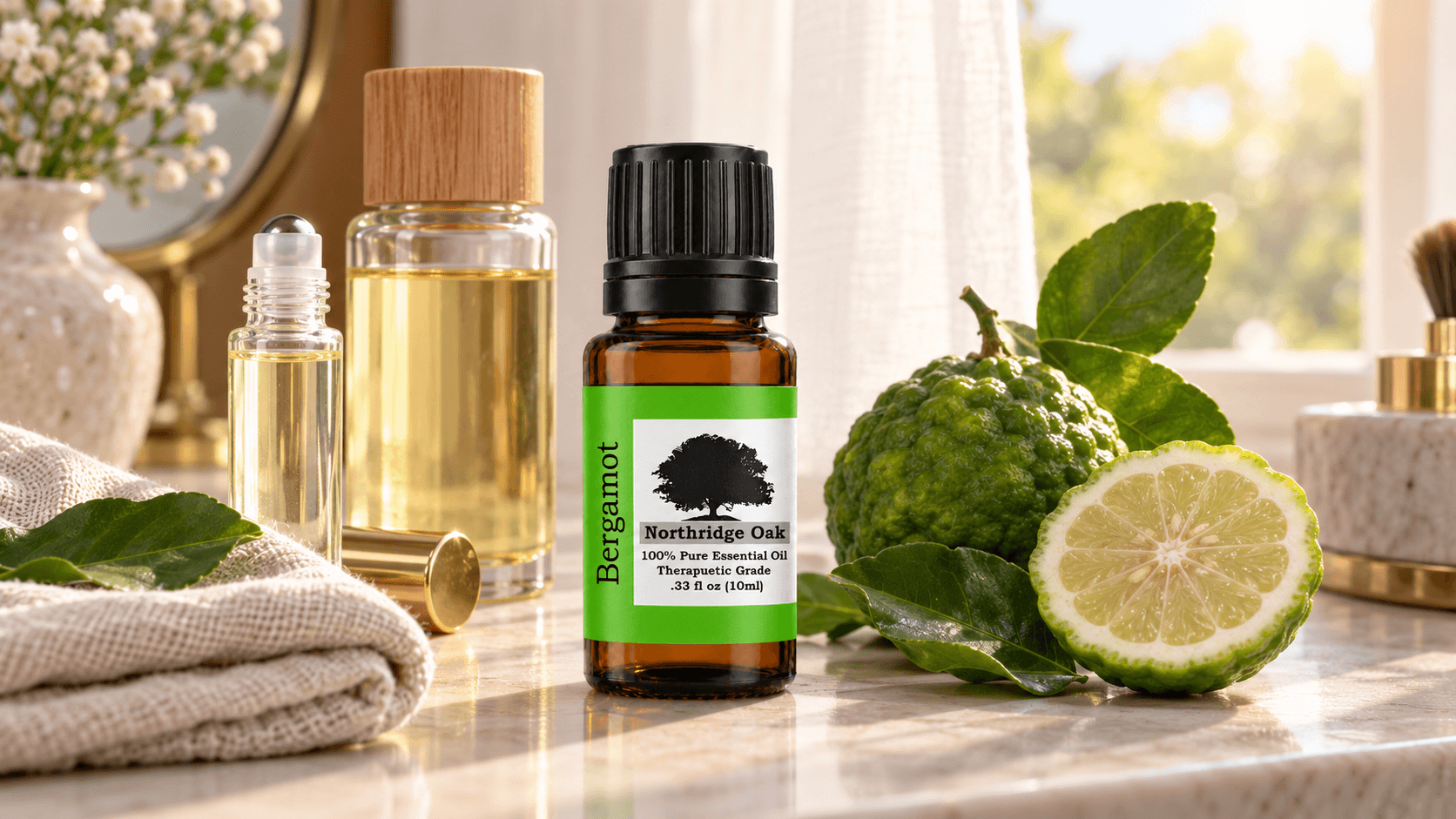
Is Bergamot Essential Oil phototoxic? Cold-pressed bergamot can be phototoxic because it may contain light-reactive furocoumarins, especially bergapten. When a leave-on topical product containing those compounds is followed by sunlight, tanning-bed exposure or another source of ultraviolet light, the skin can develop a serious reaction. FCF or bergapten-free bergamot has the primary phototoxic compounds removed and is the practical choice for daytime leave-on use.
This guide explains how to identify the oil you have, how concentration changes topical safety and when UV precautions matter. Begin by reading the label and product documentation for your Bergamot Essential Oil. Northridge Oak oils are 100% pure and undiluted, prepared in small batches and third-party GC/MS tested, with no fillers.
100% Pure Bergamot Essential Oil – 10 mL

$15.67
Bergamot FCF Essential Oil Northridge Oak Bergamot FCF Essential Oil brings bright citrus, soft florals and a refined green-tea finish together in one beautifully versatile oil. It can make a room feel freshly opened in the morning, add graceful brightness… read more
What causes bergamot phototoxicity?
Bergamot peel oil is commonly produced by expression, often described as cold pressing. That process captures the bright aromatic compounds in the peel along with naturally occurring furocoumarins. Bergapten, also called 5-methoxypsoralen, is the furocoumarin most closely associated with bergamot’s phototoxic effect.
These compounds can absorb ultraviolet energy and trigger a skin reaction. The result may include redness, burning, blistering and later changes in pigmentation. The reaction is not the same as an ordinary fragrance dislike; it is a chemical interaction involving the oil on skin and subsequent UV exposure.
A published laboratory evaluation of essential oils intended for cosmetic use found phototoxic activity among expressed citrus materials and supports careful concentration control for phototoxic oils. Read the study abstract on PubMed.
What does FCF mean?
FCF means furocoumarin-free. After the aromatic oil is produced, additional processing removes the key furocoumarins responsible for phototoxicity. “Bergapten-free” communicates the same practical goal, although product documentation is the best place to confirm exactly what has been removed and how the oil was tested.
FCF bergamot retains the recognizable citrus-floral aroma while making leave-on topical formulation more flexible. FCF does not mean undiluted use is appropriate. It still needs a carrier oil, a sensible finished concentration and a patch test.
How to tell which Bergamot oil you have
- Look for “FCF,” “furocoumarin-free” or “bergapten-free” on the label or product page.
- Check whether the extraction method is listed as expressed or cold pressed.
- Review batch documentation and GC/MS information when available.
- If the type is unclear, contact the seller before making a leave-on product.
- When you cannot verify FCF status, treat the oil as phototoxic.
Do not rely on aroma or color to decide. Phototoxic compounds cannot be identified safely by smelling the bottle. Quality documentation is the useful tool.
The 0.4% guideline for cold-pressed bergamot
For leave-on products used on skin that may receive UV exposure, cold-pressed bergamot is commonly restricted to a maximum of 0.4% in the finished formula. This number applies to the entire product, not to an essential-oil blend before it is added to a carrier.
A 0.4% concentration is approximately 1 drop of bergamot in 12.5 mL of carrier oil, but drop size varies. For accurate formulation, weigh ingredients with a scale that reads to 0.01 gram and calculate by weight. When precision matters, drops are an estimate rather than a laboratory measurement.
Even at a conservative concentration, protect the application area from sunlight, tanning beds and other UV sources for at least 12 hours when using phototoxic bergamot. Clothing works only when it fully covers the area and does not allow oil to migrate onto exposed skin.
When UV precautions apply
UV precautions matter when cold-pressed bergamot is used in leave-on body oils, rollers, massage blends, lotions, solid perfumes and hair or scalp oils that can reach the part line, forehead, ears or neck. A rinse-off format lowers exposure, but residue may remain, so thoughtful timing is still valuable.
Diffusion and personal inhalers do not place the oil on skin, so bergamot’s phototoxicity is not the governing issue for those formats. Normal aromatic-use precautions still apply: ventilate the room, use short sessions, consider children and pets and stop if the aroma causes discomfort.
Common bergamot safety mistakes
Applying it undiluted
Purity describes what is in the bottle; it does not make direct skin application appropriate. Essential oil is highly concentrated and should be measured into a suitable carrier.
Assuming hair covers the scalp
Hair parts, the hairline, ears and neck may receive direct sunlight. Oil can also move beyond the original application area. Use FCF bergamot for leave-on scalp formulas or follow the same concentration and UV rules used elsewhere on the body.
Confusing FCF with dilution
FCF addresses furocoumarins. Dilution addresses concentration and skin tolerance. A safe formula considers both.
Forgetting other phototoxic citrus oils
A blend’s safety is determined by every ingredient. If another expressed citrus oil is present, review its requirements too. Do not assume the finished blend is non-phototoxic merely because the bergamot component is FCF.
A conservative topical formula
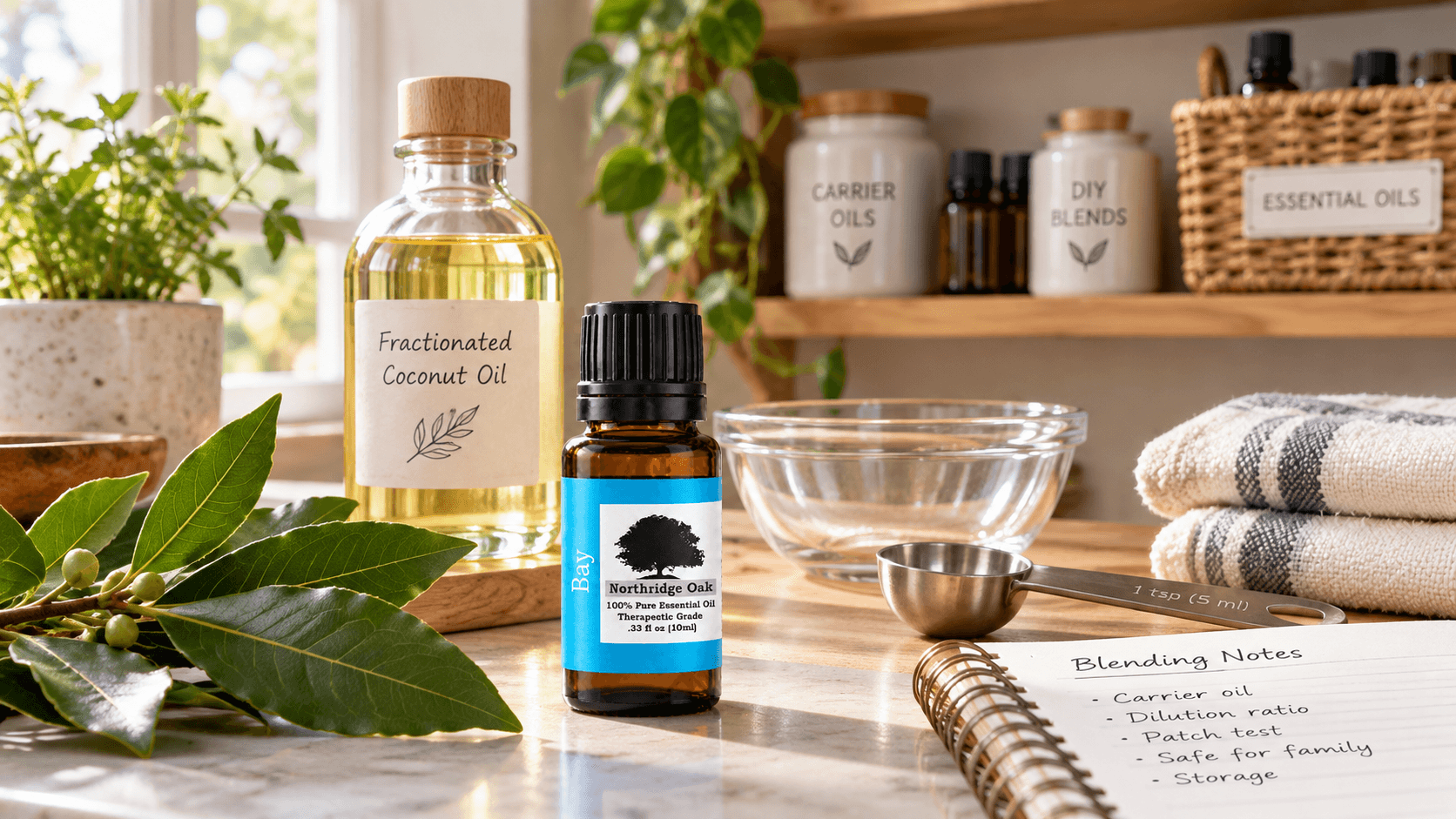
For a 10 mL adult pulse-point roller, add 1 drop FCF bergamot and 1 drop lavender, then fill with jojoba. This gives approximately a 1% total essential-oil dilution. Label the bottle, patch test the finished blend for 24 hours and apply lightly away from eyes and sensitive areas.
If using ordinary cold-pressed bergamot, a formula based on drops becomes awkward at the 0.4% maximum because one drop can already exceed that percentage in a 10 mL bottle. Make a larger batch using weight-based measurement or choose FCF bergamot for the small leave-on formula.
Find additional measured formulas in Bergamot Essential Oil recipes and topical context in Bergamot Essential Oil for skin.
Patch testing and special-use cautions
Patch test the finished, diluted formula on a small area of the inner forearm and observe it for 24 hours. Stop if redness, itching, swelling or discomfort appears. Do not apply essential oils to broken, inflamed or freshly shaved skin. Keep them away from eyes and sensitive areas.
Use extra caution for young children, older adults and people with sensitive skin. Keep oils and finished blends out of reach of children and pets, and never apply essential oils to animals. During pregnancy or nursing, while taking medication or when managing a medical condition, consult a qualified healthcare professional before use. Our essential oil safety guide brings these principles together.
Safer no-skin-contact ways to enjoy bergamot
If you have cold-pressed bergamot and do not want to manage UV timing, enjoy it aromatically. A compatible diffuser, personal inhaler or ceramic aroma stone keeps the focus on bergamot’s sparkling scent. Try Bergamot diffuser blends or learn what Bergamot smells like before choosing a pairing.
Keep learning about bergamot
Return to the complete Bergamot Essential Oil pillar guide, compare topical routines in Bergamot oil for hair and scalp, choose ratios from the blending guide and use the recipe collection for measured ideas. Read the label first, choose FCF for flexible leave-on use and make UV safety part of the formula from the beginning.