Table of Contents
- How Would You Describe the Scent of Bergamot?
- What Are Bergamot’s Top, Middle and Base Notes?
- Does Bergamot Smell Like Lemon or Orange?
- Why Does Bergamot Smell So Familiar?
- Is Bergamot Sweet?
- Does Bergamot Smell Floral?
- Is Bergamot a Masculine or Feminine Scent?
- What Essential Oils Smell Best With Bergamot?
- How Does Bergamot Behave in a Blend?
- Six Bergamot Aroma Pairings to Experience
- How Can You Choose a Bergamot Blend by Mood?
- How Can You Evaluate Bergamot on a Scent Strip?
- What Should High-Quality Bergamot Essential Oil Smell Like?
- Why Choose Northridge Oak Bergamot FCF Essential Oil?
- How Should Bergamot Essential Oil Be Used Safely?
- Keep Learning About Bergamot
- Frequently Asked Questions
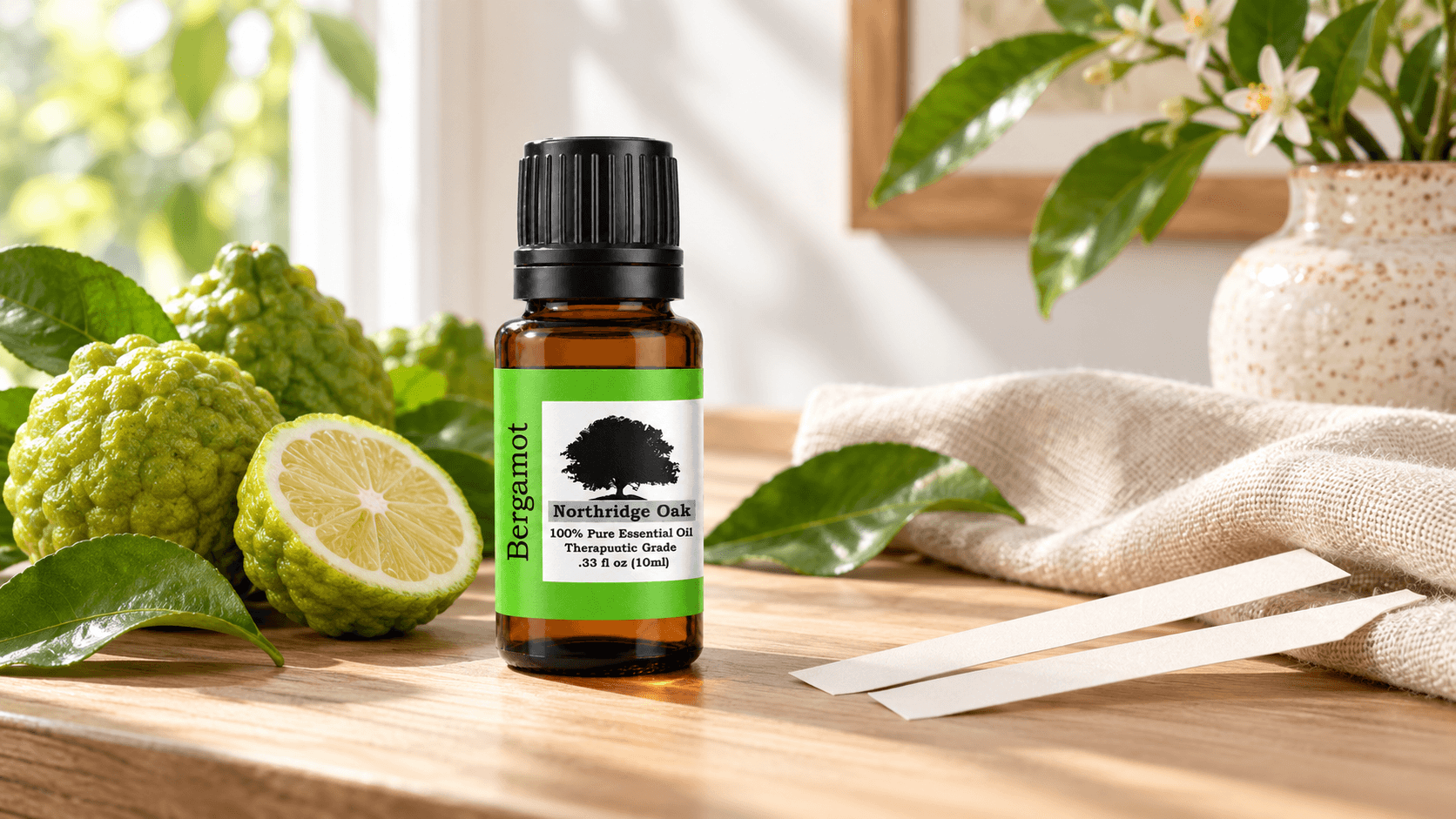
What does Bergamot smell like? Bergamot has a sparkling citrus aroma softened by delicate floral notes, fresh green peel and a refined tea-like dryness. It is smoother and more floral than Lemon, less sweet than Orange and softer than Grapefruit. The result feels bright, elegant and wonderfully clean without becoming sharp or sugary.
100% Pure Bergamot Essential Oil – 10 mL

$15.67
Bergamot FCF Essential Oil Northridge Oak Bergamot FCF Essential Oil brings bright citrus, soft florals and a refined green-tea finish together in one beautifully versatile oil. It can make a room feel freshly opened in the morning, add graceful brightness… read more
That unexpected complexity is what makes Northridge Oak Bergamot FCF Essential Oil such an easy oil to love. It can make a room feel freshly opened in the morning, polished and welcoming before company arrives or peaceful when blended with florals and woods in the evening.
If ordinary citrus oils feel too simple or overly sweet to you, Bergamot may be exactly the aroma you have been looking for.
How Would You Describe the Scent of Bergamot?
The easiest way to understand Bergamot is to picture several aroma families appearing in sequence.
It begins with the lively brightness of freshly expressed citrus peel. That first impression feels clean, airy and cheerful. Within moments, a softer floral note begins to appear. As the aroma settles, the sharpest citrus edges fade and leave behind a dry green finish with hints of light spice and tea leaves.
Bergamot’s aroma can be summarized as:
- Bright citrus peel
- Soft floral blossoms
- Fresh green leaves
- Gentle sweetness
- Light herbal spice
- Dry tea-like depth
- A clean, polished finish
It is unmistakably citrus, but it has far more personality than a simple lemon or orange aroma.
What Are Bergamot’s Top, Middle and Base Notes?
Bergamot is classified primarily as a top note, but its aroma has enough complexity to reveal several distinct layers.
The Opening: Sparkling Citrus
The first impression is bright, fresh and slightly juicy. This is the part of Bergamot that immediately lifts a blend and helps the aroma travel through a room.
It feels more rounded than Lemon Essential Oil and less overtly sweet than Blood Orange Essential Oil.
The Heart: Soft Floral and Green Notes
After the initial citrus sparkle begins to soften, Bergamot reveals delicate floral and leafy notes. This is what gives the oil its graceful character.
The floral center connects naturally with Lavender and Geranium, while the green quality pairs beautifully with herbs such as Rosemary.
The Drydown: Tea-Like and Lightly Spiced
Bergamot’s later aroma is drier, quieter and more refined. A subtle tea-like quality remains after the brightest citrus notes have dispersed.
This gentle drydown is what allows Bergamot to work so naturally with Cedarwood, Frankincense and Patchouli. Those deeper oils give it staying power without covering its fresh character.
Does Bergamot Smell Like Lemon or Orange?
Bergamot belongs to the citrus family, but it does not smell exactly like Lemon, Orange or Grapefruit.
| Essential oil | Main aroma | Sweetness | Distinctive character |
|---|---|---|---|
| Bergamot | Citrus, floral and green | Medium-light | Refined, tea-like and softly spicy |
| Lemon | Sharp, clean citrus | Light | Crisp, sparkling and direct |
| Blood Orange | Juicy, warm citrus | High | Sweet, cheerful and welcoming |
| Grapefruit | Tart citrus peel | Medium | Bright, tangy and slightly bitter |
| Bergamot + Lavender | Citrus-floral | Medium-light | Soft, balanced and peaceful |
| Bergamot + Cedarwood | Citrus-wood | Low | Dry, polished and grounding |
Compared with Lemon Essential Oil, Bergamot is softer, rounder and more floral.
Compared with Blood Orange Essential Oil, Bergamot is drier, greener and less sweet.
Compared with Grapefruit Essential Oil, Bergamot has less tartness and a more delicate floral center.
Bergamot is the citrus to choose when you want freshness with a more sophisticated finish.
Why Does Bergamot Smell So Familiar?
Bergamot has been prized in fine fragrance and traditional eau de cologne compositions for generations. Its bright top note gives a fragrance an immediate sense of cleanliness and energy, while its floral-green center creates a smooth bridge to the other ingredients.
You may recognize its character from:
- Fine fragrance
- Traditional cologne
- Naturally scented soaps
- Botanical body oils
- Upscale hotel and spa aromas
- Fresh citrus-floral home fragrances
Even when Bergamot is not the most obvious ingredient, it often performs an important role. It brightens heavier notes, softens sharp herbs and helps very different aroma families feel connected.
That is one reason Bergamot appears in so many beautiful natural blends. It rarely feels out of place.
Is Bergamot Sweet?
Bergamot has a gentle natural sweetness, but it is not candy-like or syrupy.
Its green peel and tea-like notes keep the sweetness balanced. This makes Bergamot a good choice for anyone who enjoys citrus but finds some Orange-based aromas too sweet.
Pairing determines which side becomes more noticeable:
- Blood Orange brings forward Bergamot’s juicy sweetness.
- Lemon emphasizes its clean citrus sparkle.
- Lavender highlights its floral softness.
- Rosemary emphasizes its fresh green character.
- Cedarwood draws out its dry finish.
- Patchouli makes it richer and earthier.
Bergamot can move in many directions without losing its recognizable personality.
Does Bergamot Smell Floral?
Yes, but the floral note is delicate rather than perfume-heavy.
Think of the floral character as a soft thread running beneath the citrus. It rounds the aroma and makes Bergamot feel smoother than Lemon or Grapefruit.
When paired with Lavender Essential Oil, Bergamot becomes gentle and familiar. With Geranium Essential Oil, the floral center becomes more noticeable and garden-inspired.
The floral quality also explains why Bergamot works so well in evening blends. It retains enough citrus brightness to feel fresh while taking on a softer character as the blend settles.
Is Bergamot a Masculine or Feminine Scent?
Bergamot works beautifully in both traditionally masculine and feminine aroma profiles.
In a blend with florals, it can feel soft, graceful and elegant. Paired with woods, herbs or resins, it becomes dry, clean and quietly masculine.
For a softer profile, try:
- Bergamot and Lavender
- Bergamot and Geranium
- Bergamot and Blood Orange
- Bergamot, Lavender and Frankincense
For a drier profile, try:
- Bergamot and Cedarwood
- Bergamot and Rosemary
- Bergamot and Frankincense
- Bergamot, Cedarwood and Patchouli
Its versatility makes Bergamot an excellent choice for shared living spaces and personal blends intended for a wide range of scent preferences.
What Essential Oils Smell Best With Bergamot?
Bergamot blends naturally with citrus, floral, herbal, woody, resinous and earthy oils.
Citrus Oils
Citrus pairings make Bergamot feel brighter and more cheerful.
- Lemon creates crisp, sparkling freshness.
- Blood Orange adds juicy warmth.
- Grapefruit adds tartness and energy.
Floral Oils
Floral oils bring forward Bergamot’s softer center.
- Lavender creates a peaceful, familiar aroma.
- Geranium makes the blend lush and garden-like.
- Ylang Ylang adds rich floral sweetness and should be introduced one drop at a time.
Herbal Oils
Herbal oils emphasize Bergamot’s green character.
- Rosemary creates a crisp, purposeful blend.
- Clary Sage adds a soft herbal depth.
- Marjoram creates a warm, gentle herbal finish.
Woody Oils
Woods give Bergamot structure and staying power.
- Cedarwood creates a clean, dry foundation.
- Balsam Fir adds fresh forest character.
- Pine makes the blend feel outdoorsy and invigorating.
Resinous and Earthy Oils
These deeper aromas reveal Bergamot’s sophisticated side.
- Frankincense adds smooth resinous depth.
- Patchouli creates a rich, earthy drydown.
- Myrrh makes the blend deeper and more contemplative.
For exact ratios across each aroma family, see What Blends Well With Bergamot Essential Oil?
How Does Bergamot Behave in a Blend?
Because Bergamot is primarily a top note, you usually notice it first. It gives a blend an immediate lift and helps heavier oils feel more spacious.
As the blend develops, Bergamot’s brightest citrus notes gradually soften. The partner oils then become more noticeable.
For example:
- Bergamot and Lemon begin crisp and sparkling.
- Bergamot and Lavender move from citrus into soft florals.
- Bergamot and Cedarwood open brightly and finish dry and woody.
- Bergamot and Frankincense become smooth and resinous.
- Bergamot and Patchouli shift from fresh citrus into deep earthiness.
When blending Bergamot with a powerful oil such as Patchouli, Ylang Ylang or Myrrh, begin with three or four parts Bergamot to one part of the deeper oil.
With softer companions such as Lavender or Blood Orange, equal proportions can create a beautifully balanced duet.
Six Bergamot Aroma Pairings to Experience
These six-drop recipes are suitable starting points for many medium-sized ultrasonic diffusers. Adjust the total according to your diffuser’s capacity and the size of the room.
1. Open the Windows
- 3 drops Bergamot Essential Oil
- 2 drops Lemon Essential Oil
- 1 drop Lavender Essential Oil
This blend highlights Bergamot’s brightest side. It smells clean, airy and gently floral—like sunlight and fresh air moving through the room.
2. Soft Citrus
- 3 drops Bergamot
- 2 drops Lavender
- 1 drop Frankincense Essential Oil
Lavender softens Bergamot’s citrus opening, while Frankincense creates a smooth finish. This is a wonderful blend for quieter parts of the day.
3. Sunlit Garden
- 3 drops Bergamot
- 2 drops Blood Orange
- 1 drop Geranium
Blood Orange adds warmth and sweetness. Geranium makes the floral center more noticeable. The result feels joyful, green and garden-inspired.
4. Citrus Woods
- 4 drops Bergamot
- 2 drops Cedarwood Essential Oil
This simple pairing shows how beautifully Bergamot works with wood notes. It begins fresh and citrusy before settling into a clean, dry finish.
5. Fresh Focus
- 3 drops Bergamot
- 2 drops Rosemary Essential Oil
- 1 drop Lemon
Rosemary draws out Bergamot’s green character, while Lemon adds extra sparkle. This blend feels crisp, purposeful and ideal for a workspace.
6. Grounded Citrus
- 4 drops Bergamot
- 1 drop Cedarwood
- 1 drop Patchouli Essential Oil
Patchouli gives Bergamot a rich, earthy foundation. Cedarwood connects the citrus and earth notes, creating a blend that feels warm and complete.
Find 14 additional combinations in Bergamot Diffuser Blends: 20 Bright, Relaxing Recipes.
How Can You Choose a Bergamot Blend by Mood?
Start with how you want the room to feel.
| Desired atmosphere | Pair Bergamot with | Finished character |
|---|---|---|
| Bright and freshly opened | Lemon + Lavender | Crisp, airy and clean |
| Warm and welcoming | Blood Orange + Frankincense | Juicy, smooth and inviting |
| Soft and peaceful | Lavender + Cedarwood | Floral, gentle and grounded |
| Fresh and focused | Rosemary + Lemon | Green, sparkling and purposeful |
| Polished and elegant | Geranium + Frankincense | Floral, citrusy and refined |
| Earthy and comfortable | Cedarwood + Patchouli | Deep, warm and lasting |
If you are unsure where to begin, Bergamot and Lavender is the most approachable pairing. Bergamot and Cedarwood is an excellent choice when you prefer a less floral aroma.
How Can You Evaluate Bergamot on a Scent Strip?
A scent strip allows you to notice Bergamot’s changing aroma without crowding it with other oils.
- Place one drop of Bergamot near the end of a clean scent strip.
- Hold the strip several inches from your nose.
- Notice the first citrus impression.
- Smell it again after 15 minutes.
- Return after 30 and 60 minutes.
- Write down the notes that remain.
You may notice the bright citrus beginning to soften while the floral, green and tea-like character becomes clearer.
To test a pairing, place the companion oil on a separate strip. Fan the strips together and adjust their distance until the balance feels right. This lets you explore proportions before preparing a diffuser or topical formula.
Keep an untreated strip nearby as your Bergamot reference. Smelling the single oil between blends makes it easier to notice which parts of the aroma are being highlighted.
What Should High-Quality Bergamot Essential Oil Smell Like?
A high-quality Bergamot Essential Oil should smell fresh, lively and dimensional.
Look for an aroma that:
- Opens with recognizable citrus peel
- Has a soft floral quality beneath the citrus
- Feels green and natural rather than sugary
- Develops as it sits on a scent strip
- Finishes with a dry, refined character
An oil that smells flat, stale or unusually harsh may have been exposed to too much heat, light or air.
Citrus oils contain delicate aromatic compounds, so storage matters. Keep the cap tightly closed, store the bottle upright and place it somewhere cool and dark.
Why Choose Northridge Oak Bergamot FCF Essential Oil?
100% Pure Bergamot Essential Oil – 10 mL
$15.67
Bergamot FCF Essential Oil Northridge Oak Bergamot FCF Essential Oil brings bright citrus, soft florals and a refined green-tea finish together in one beautifully versatile oil. It can make a room feel freshly opened in the morning, add graceful brightness… read more
Northridge Oak Bergamot FCF Essential Oil captures the complexity that makes this citrus so special: a sparkling opening, delicate floral center and dry green finish.
Every bottle is:
- 100% pure and undiluted
- Bottled in small batches
- Independently third-party GC/MS tested
- Free from fillers and synthetic fragrance
- FCF for greater versatility in properly diluted topical recipes
Natural Bergamot has movement. It changes as it disperses instead of remaining flat and one-dimensional. That is what makes it such a rewarding oil to smell by itself and such a valuable ingredient in a blend.
Choose Northridge Oak Bergamot FCF Essential Oil and experience the citrus oil that can feel bright, floral, green, elegant and comforting—all within the same bottle.
How Should Bergamot Essential Oil Be Used Safely?
When diffusing, begin with a small number of drops in a well-ventilated room. Follow the diffuser manufacturer’s recommendations and make sure people and pets can leave the scented area.
Dilute Bergamot before applying it to the skin and patch test the completed formula. Keep essential oils away from the eyes, mucous membranes and broken or irritated skin.
Northridge Oak Bergamot is FCF, meaning the primary phototoxic furocoumarins have been removed. Our guide to Bergamot phototoxicity and FCF oil explains why that distinction matters for topical recipes.
Keep bottles and completed blends out of reach of children and pets. Review our complete Essential Oil Safety Guide for additional household guidance.
Keep Learning About Bergamot
Now that you can answer “What does Bergamot smell like?” the best next step is to experience how that aroma changes in a blend.
Explore the complete Bergamot Essential Oil benefits, uses, recipes and safety guide, try one of our 20 Bergamot diffuser blends, or prepare a project from Bergamot Essential Oil Recipes: 12 Easy DIY Ideas.
For a simple introduction, diffuse three drops of Bergamot, two drops of Lavender and one drop of Frankincense. It allows Bergamot’s sparkling citrus opening to shine while revealing the soft, graceful character that makes this oil so memorable.