Table of Contents
- Cinnamon Leaf vs. Cinnamon Bark at a Glance
- One Tree, Two Very Different Oils
- How Do Cinnamon Leaf and Cinnamon Bark Smell?
- The Chemistry Behind the Difference
- Which Oil Is Better for Diffusing?
- Four Cinnamon Leaf Blends That Show Its Range
- Which Is Better for Perfume, Soap and Body Care?
- Try a Side-by-Side Aroma Test
- Can You Substitute One for the Other?
- How to Choose a Quality Cinnamon Oil
- A Simple Way to Experience Cinnamon Leaf
- What You Have Learned
- Continue Learning About Cinnamon Leaf Essential Oil
- Thoughtful Use
- Frequently Asked Questions
Two oils can share a familiar name and still create completely different experiences. This comparison is here to help you smell the difference before you buy: which one feels softer or bolder, which fits the blends you already love and which is easier to reach for in everyday routines. By the end, you should know not just how they differ, but which bottle you will be excited to use.
Cinnamon Leaf vs. Cinnamon Bark at a Glance
The easiest way to choose between these oils is to decide what you want the cinnamon note to do. Cinnamon Leaf adds warm, botanical spice while leaving room for citrus, woods, resins and evergreens to be noticed. Cinnamon bark creates a bolder, sweeter burst that can quickly become the center of a blend.
| Feature | Cinnamon Leaf Essential Oil | Cinnamon Bark Essential Oil |
|---|---|---|
| Plant part | Leaves | Inner bark |
| Typical leading constituent | Eugenol | Cinnamaldehyde |
| Aroma | Dry, green, woody and clove-like | Sweet, hot, rich and distinctly cinnamon-like |
| Role in a blend | Supporting spice that adds depth | Dominant spice accent |
| Especially lovely with | Bergamot, Blood Orange, Cedarwood, fir and frankincense | Orange, vanilla-style accords and rich resinous blends |
| Best starting point | One drop in a diffuser recipe | Often less than one full drop in small aromatic tests |
| Formulation mindset | Use sparingly and follow eugenol-aware limits | Use with exceptional restraint and follow cinnamaldehyde-aware limits |
Both are concentrated aromatic materials. The comparison is not “mild versus strong”; Cinnamon Leaf is powerful too. The difference is how that strength presents itself. Leaf oil feels drier and more botanical, while bark oil feels sweeter, hotter and more immediately recognizable as kitchen cinnamon.
One Tree, Two Very Different Oils
Cinnamon oils are commonly distilled from Cinnamomum species, including Cinnamomum verum. The plant part on the label matters because steam distillation captures a different balance of aromatic constituents from leaves than from bark. That botanical distinction changes the scent, the way the oil behaves in a formula and the precautions a formulator considers.
It also explains why the bottle should say more than “cinnamon oil.” Look for the botanical name, plant part and extraction method. “Cinnamon Leaf Essential Oil” and “Cinnamon Bark Essential Oil” are useful identities; a generic cinnamon fragrance or an unlabeled cinnamon oil does not give you enough information to compare aroma or plan responsible use.
How Do Cinnamon Leaf and Cinnamon Bark Smell?
Cinnamon Leaf: warm spice with a green, woody edge
Open a bottle of Cinnamon Leaf Essential Oil and the first impression may remind you of clove, dry leaves and polished wood. A peppery warmth follows, but the aroma is usually less sugary than people expect from the word cinnamon. That restrained sweetness is precisely what makes it interesting. It can warm a citrus blend without turning it into a dessert scent and can give Cedarwood or fir a glowing, lived-in feeling.
As the scent settles, the green and woody details become easier to notice. The result feels botanical and dimensional—like walking into a cozy room where evergreen branches, citrus peel and spice are present together.
Cinnamon Bark: sweet, radiant and immediately familiar
Cinnamon bark oil usually announces itself quickly. It is rich, sweet-spicy and intensely reminiscent of cinnamon sticks. In a blend, even a very small amount can pull attention toward itself. That can be beautiful when a composition truly needs a bold cinnamon center, but it also makes bark harder to balance.
Its warmth often feels sharper and more radiant than leaf oil. If Cinnamon Leaf is a burnished wooden note, cinnamon bark is the bright spark above it. Neither is inherently better; they simply solve different aromatic problems.
The Chemistry Behind the Difference
Cinnamon Leaf Essential Oil is typically rich in eugenol, an aromatic constituent also prominent in clove. Eugenol helps explain the oil’s clove-like warmth, dry spice and affinity for woods and resins. Cinnamon bark oil is typically associated with a high proportion of cinnamaldehyde, the constituent that contributes the familiar sweet-hot character of cinnamon bark.
Natural oils vary with species, origin, harvest conditions and distillation. A reliable supplier’s GC/MS report is therefore more useful than assuming every bottle has an identical profile. Chemistry should help you understand an oil—not tempt you to turn laboratory or preliminary findings into medical promises. For a more detailed, plain-language look at eugenol and the evidence, read Cinnamon Leaf Essential Oil Research: Eugenol & Chemistry.
Which Oil Is Better for Diffusing?
For many home diffusers, Cinnamon Leaf is the easier creative partner. One drop can add warmth while three to five drops of softer companion oils shape the mood. Citrus makes the blend brighter, Cedarwood makes it calmer, fir makes it fresher and frankincense adds a smooth resinous finish.
Cinnamon bark can work when you want unmistakable cinnamon intensity, but it requires a very light hand. In a small recipe, a full drop may be more than the composition needs. That makes bark less convenient when you are learning, because essential-oil drops are difficult to divide accurately without first making a properly calculated stock dilution for aromatic formulation.
With either oil, begin with fewer total drops than your diffuser’s maximum, diffuse for 20 to 30 minutes and keep fresh air moving through the room. A pleasant blend should create atmosphere without filling every corner with spice.
Four Cinnamon Leaf Blends That Show Its Range
These recipes are written for a typical 100–200 mL ultrasonic diffuser. Add water according to the manufacturer’s directions, add the oils and begin with a 20-minute session. Reduce the recipe for a smaller space or a scent-sensitive household.
Bright Botanical Spice
- 1 drop Cinnamon Leaf Essential Oil
- 3 drops Bergamot FCF Essential Oil
- 2 drops Cedarwood Essential Oil
Bergamot opens the blend with sparkling citrus, Cinnamon Leaf gives it a warm heart and Cedarwood creates a smooth, grounded finish. This is an easy first blend when you want coziness without a holiday-only aroma.
Warm Citrus Woods
- 1 drop Cinnamon Leaf Essential Oil
- 3 drops Blood Orange Essential Oil
- 2 drops Cedarwood Essential Oil
Juicy Blood Orange softens the dry spice while Cedarwood keeps the sweetness polished. Try it in a living room or entryway when you want the home to feel warm and welcoming.
Fresh Forest Warmth
- 1 drop Cinnamon Leaf Essential Oil
- 3 drops Balsam Fir Essential Oil
- 2 drops Lemon Essential Oil
This blend places Cinnamon Leaf among fresh needles and bright peel. The result is crisp rather than heavy, making it useful well beyond autumn.
Quiet Resin Spice
- 1 drop Cinnamon Leaf Essential Oil
- 2 drops Frankincense Essential Oil
- 2 drops Cedarwood Essential Oil
- 1 drop Bergamot FCF Essential Oil
Frankincense and Cedarwood create a calm resinous base, Bergamot lifts the opening and one drop of Cinnamon Leaf supplies a gentle ember of spice.
Which Is Better for Perfume, Soap and Body Care?
Cinnamon Leaf often fits more naturally into woody, citrus-spice and resinous perfume structures because its dryness gives other notes room to develop. In soap, it can create a warm clove-like accent. Cinnamon bark is more likely to dominate a composition and usually reads as a direct cinnamon statement.
A beautiful scent idea still needs a technically sound formula. Both oils contain constituents that require careful dermal limits, and neither belongs in a topical recipe by guesswork. Finished-product concentration, product type and the oil’s current supplier documentation all matter. For formulation-specific guidance, visit Cinnamon Leaf Essential Oil in Soap, Perfume & Body Care and the complete Cinnamon Leaf safety guide.
Try a Side-by-Side Aroma Test
If you have both oils, scent strips make the contrast easy to understand. Place one drop of Cinnamon Leaf on one strip and one drop of cinnamon bark on a second strip. Label them, keep them apart and smell from a comfortable distance rather than touching the strips to your nose.
- At first: notice whether the aroma feels dry and clove-like or sweet and intensely cinnamon-like.
- After 15 minutes: compare which details emerge as the sharpest opening softens.
- After one hour: decide which drydown would support the citrus, woods, resins or florals you enjoy.
This small exercise is more revealing than choosing by name alone. Many people who expect to prefer bark discover that the quieter, greener character of leaf is easier to live with and far more flexible in blends.
Can You Substitute One for the Other?
Not as a one-for-one replacement. Swapping leaf for bark changes both aroma and chemical profile. A formula built around Cinnamon Leaf may become much sweeter and hotter with bark, while a bark-centered formula may lose its familiar cinnamon impact when leaf is substituted.
For a diffuser blend, treat the substitution as a new recipe: test a very small aromatic batch, rebalance the companion oils and evaluate it over time. For products used on skin, in soap or in perfume, recalculate the formula with the correct safety documentation for the exact oil. The shared word “cinnamon” is not a shortcut around reformulation.
How to Choose a Quality Cinnamon Oil
Choose a bottle that identifies the botanical name, plant part and extraction method. The supplier should also provide clear use guidance and meaningful quality documentation. Third-party GC/MS testing helps confirm identity and shows the constituent pattern of the specific oil or batch.
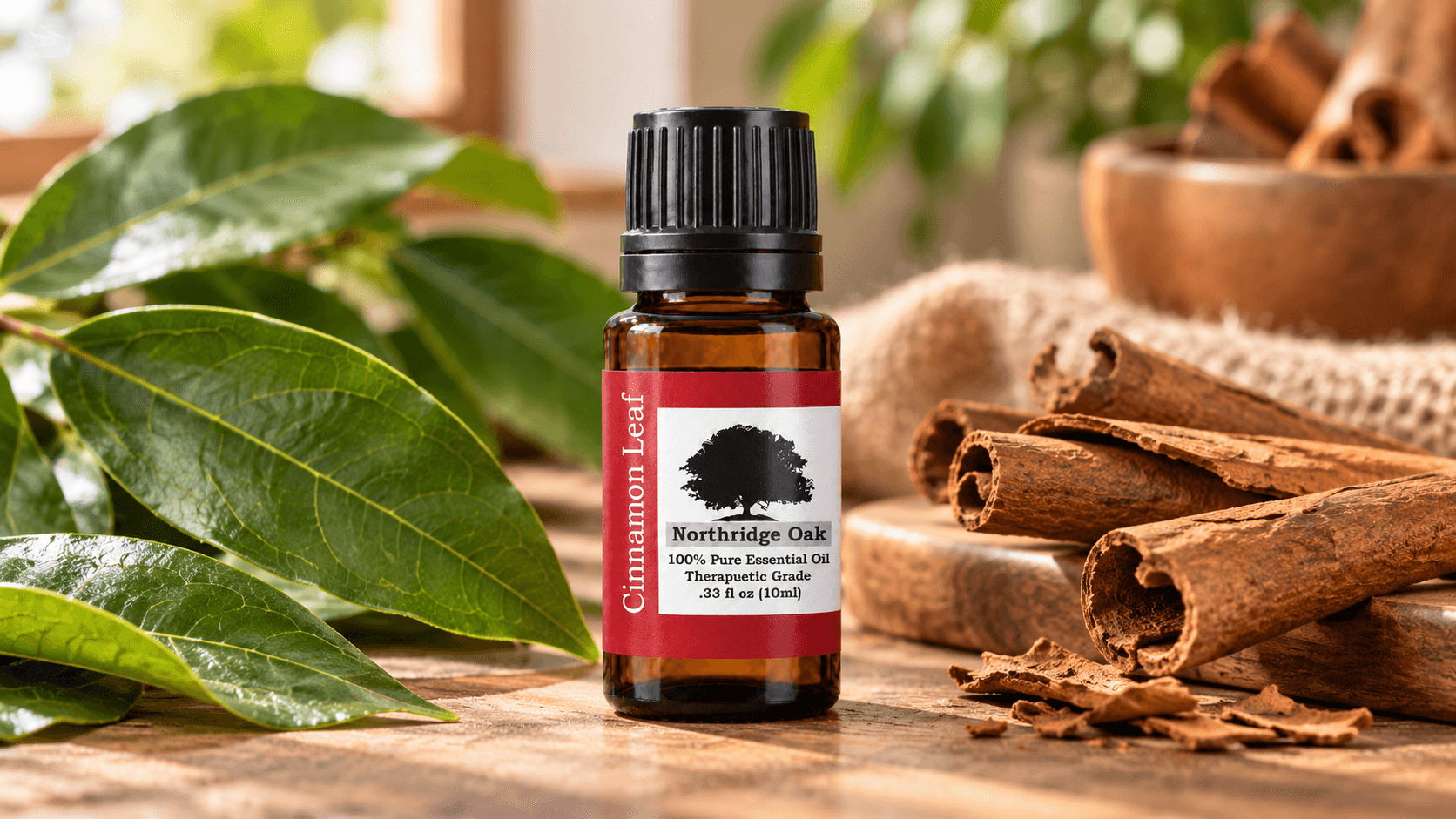
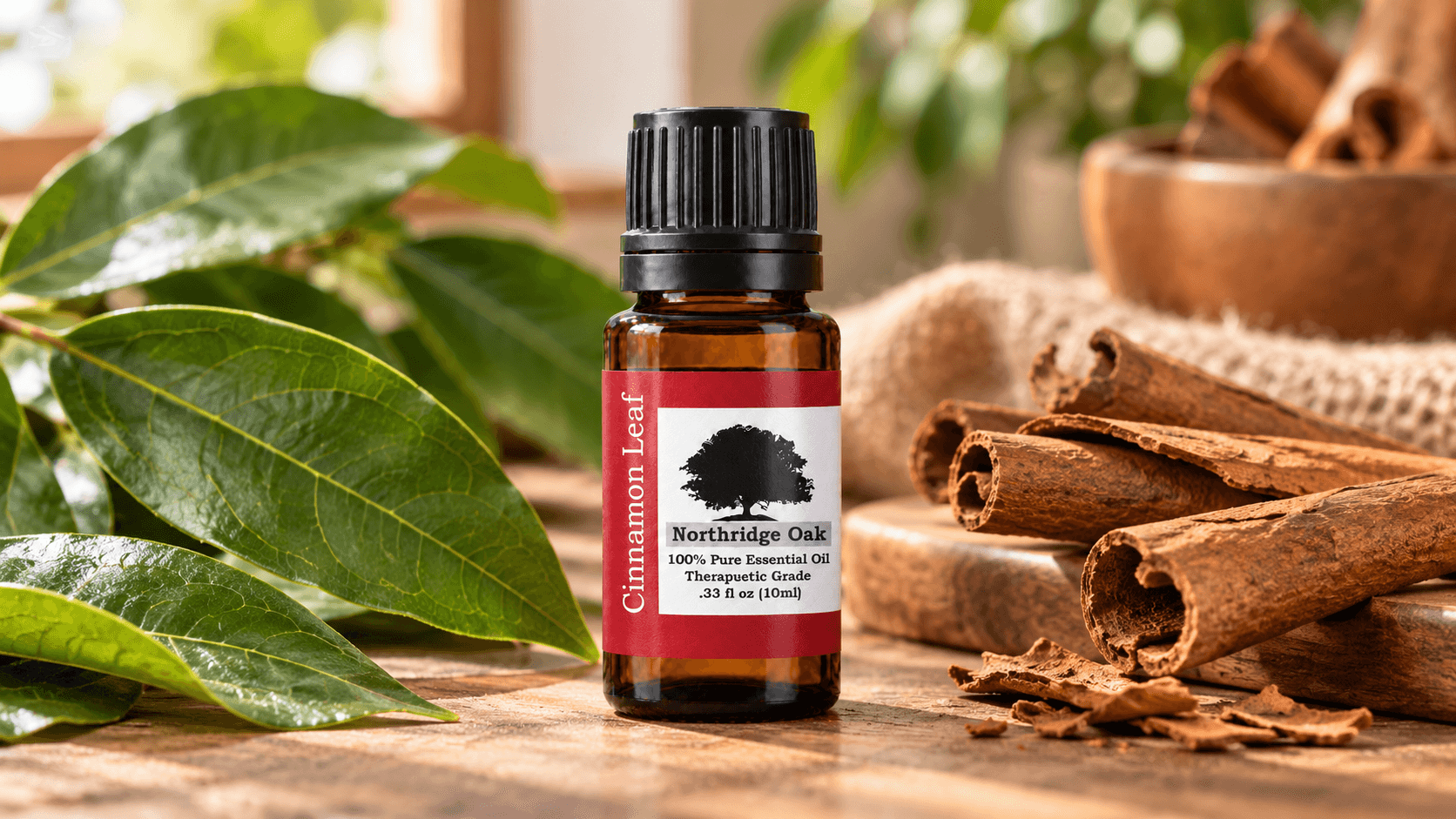
Northridge Oak Cinnamon Leaf Essential Oil is 100% pure and undiluted, bottled in small batches and third-party GC/MS tested. If you want a warm spice that can sit gracefully beside Bergamot, Blood Orange, Cedarwood, fir and frankincense, it is a rewarding bottle to explore. Start with one drop in a balanced diffuser recipe and let its dry botanical warmth unfold.
A Simple Way to Experience Cinnamon Leaf
You do not need a complicated project to decide whether this oil is for you. Begin with the aroma itself. Place one drop on a paper scent strip or cotton pad, set it several inches away and notice the first impression. Return after 15 minutes, then again after an hour. Cinnamon Leaf often reveals more character as the sharpest opening settles, and this slower test makes it easier to notice the warm, dry, green and clove-like details that disappear when you smell directly from the bottle.
If both oils are available, place one drop of each on separate labeled scent strips. Smell from a comfortable distance at the beginning, after 15 minutes and after an hour. This reveals the difference far better than a comparison chart alone—and helps you choose the oil whose drydown you actually want in your home.
If that sounds like the kind of ritual you would enjoy, Northridge Oak Cinnamon Leaf Essential Oil is 100% pure and undiluted, bottled in small batches and third-party GC/MS tested. It gives you a clearly identified single oil and a dependable place to begin.
What You Have Learned
- Cinnamon Leaf and cinnamon bark oils come from different plant parts and should not be treated as the same material.
- Leaf oil is typically eugenol-rich, dry, green, woody and clove-like.
- Bark oil is typically cinnamaldehyde-rich, sweeter, hotter and more overtly cinnamon-like.
- Cinnamon Leaf is often the more versatile choice for citrus, wood, evergreen and resin blends.
- Neither oil should be substituted one-for-one in a diffuser or topical formula.
- Clear labeling, supplier documentation and GC/MS testing help you choose with confidence.
Continue Learning About Cinnamon Leaf Essential Oil
Make this article part of a complete Cinnamon Leaf routine:
- Cinnamon Leaf Essential Oil Benefits, Uses & Safety Guide
- Cinnamon Leaf Essential Oil Diffuser Blends: 20 Recipes
- What Blends Well With Cinnamon Leaf Essential Oil?
- What Does Cinnamon Leaf Essential Oil Smell Like?
- Cinnamon Leaf Essential Oil Safety: Dilution, Kids & Pets
Thoughtful Use
Cinnamon Leaf and cinnamon bark are highly concentrated oils. Do not ingest them. Avoid eyes and mucous membranes, keep bottles away from children and animals and wash your hands after handling. For topical use, work from the supplier’s current safety data and applicable formulation guidance rather than adding drops directly to skin. Ask a qualified healthcare professional for individualized guidance during pregnancy or nursing, around children or pets, or when health conditions and medications need to be considered.
When diffusing, start low, use brief sessions, provide ventilation and make it easy for people and pets to leave the room. Read the Cinnamon Leaf safety guide, the broader essential-oil safety guide and the beginner’s guide to essential oils.
These statements have not been evaluated by the Food and Drug Administration. Northridge Oak products are not intended to diagnose, treat, cure or prevent disease.