Table of Contents
- Why Perfumers Use Spice as an Accent
- A Natural-Perfume Study
- Soap Aroma Directions
- Body-Care Formulation
- Pairing With Lavender
- Pairing With Patchouli
- Why Choose Northridge Oak Cinnamon Leaf?
- Learning About Essential Oils: Use Strength as a Design Advantage
- Continue Learning About Cinnamon Leaf Essential Oil
- Thoughtful Use
- Frequently Asked Questions
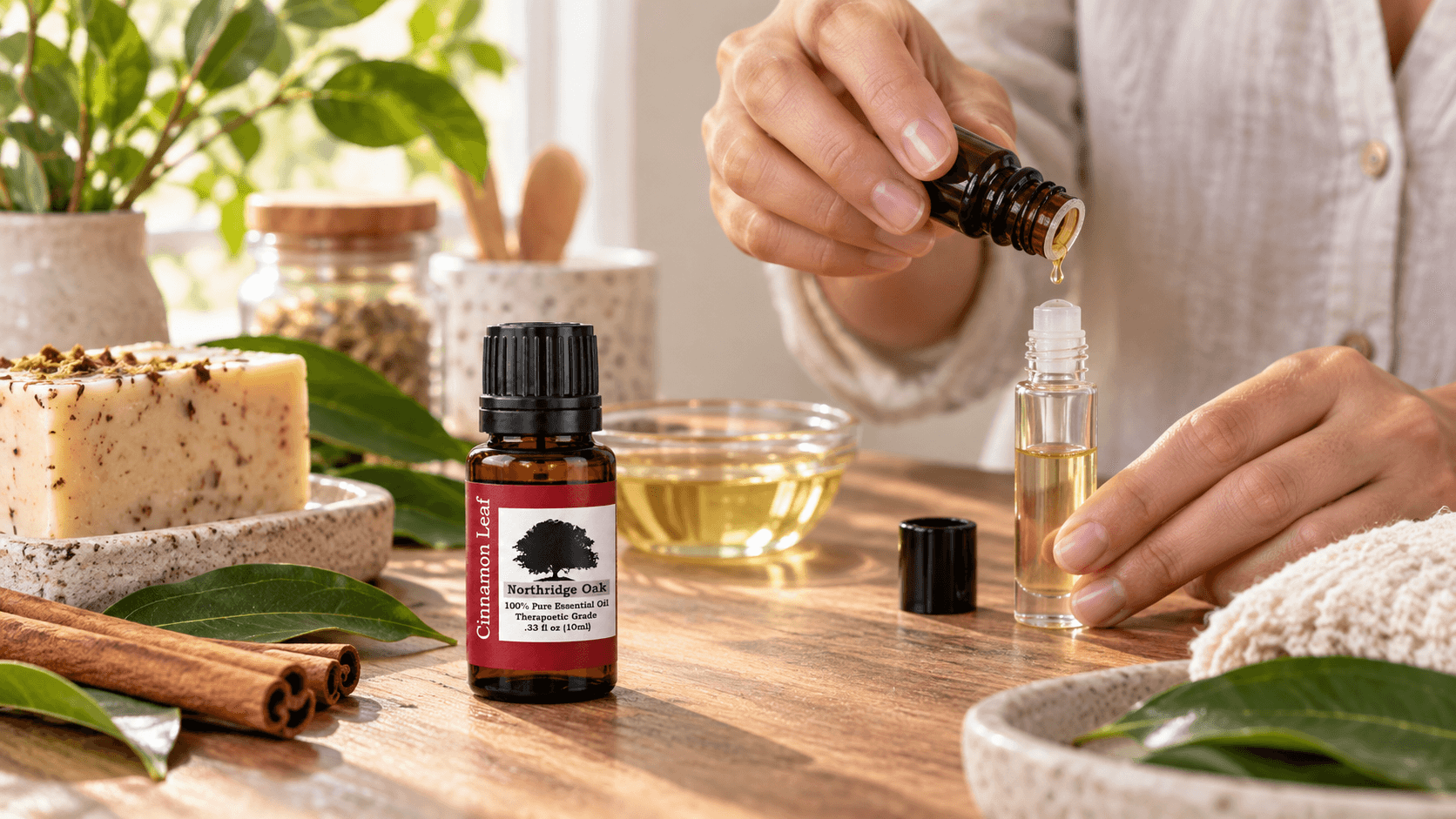
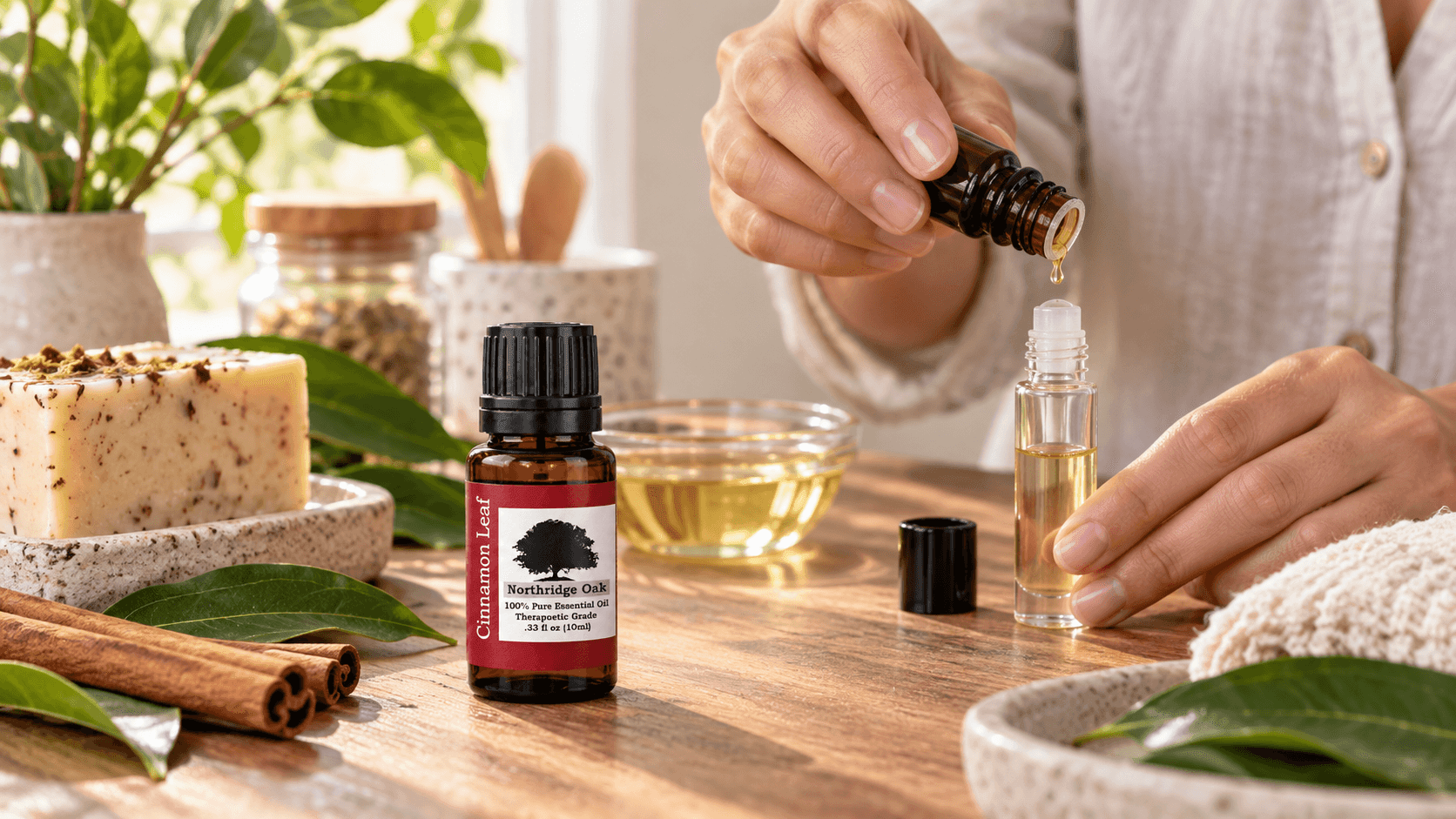
Cinnamon Leaf gives soap and natural fragrance a sophisticated dry spice that feels more botanical than sweet. Because the aroma is strong and eugenol-rich, small measured amounts create the most elegant results.
100% Pure Cinnamon Leaf Essential Oil – 10 mL

$14.67
Cinnamon Leaf Essential Oil Cinnamon Leaf Essential Oil brings warmth to a room without smelling like a bottle of sugary cinnamon fragrance. Its aroma is dry, green, woody and clove-like, with a glowing spice that settles beautifully beside citrus, evergreens,… read more
Why Perfumers Use Spice as an Accent
A small spice note can connect citrus and wood, add warmth and extend the drydown. Cinnamon Leaf is especially useful because its green clove-like character feels complex at low concentration.
A Natural-Perfume Study
On paper, try three Bergamot, one Cinnamon Leaf and two Cedarwood. Compare it with three Blood Orange, one Cinnamon Leaf and two Frankincense.
Soap Aroma Directions
Citrus-spice uses Blood Orange or Lemon. Forest-spice uses Balsam Fir and Cedarwood. Resin-spice uses Frankincense. Follow a tested soap formula and calculate Cinnamon Leaf precisely for the finished product.
Body-Care Formulation
Cinnamon Leaf calls for conservative eugenol-aware concentration and expert recipe guidance. Its strength means an appealing personal aroma can emerge from a very small amount supported by citrus or wood.
Pairing With Lavender
Lavender softens the dry spice and creates a surprising aromatic contrast. Bergamot helps bridge the floral and spice notes.
Pairing With Patchouli
Patchouli deepens the earthiness. Keep Cinnamon Leaf and Patchouli smaller than the citrus top so the perfume stays open.
Smell perfume studies immediately, after a day and after a week. Strong accents often integrate beautifully with time, changing the adjustment you would make on the first day.
Record botanical identity, ratios, carrier or base, date and intended use. Keep scent-strip concentrates clearly separate from ready-to-use body formulas.
Cinnamon Leaf works best as the detail that makes someone lean closer—not the only note they can smell.
It brings an unusual combination of warmth, green leaf, clove and dry wood. One carefully placed accent can make a familiar citrus-wood perfume feel entirely original.
Choose citrus for the opening, Cinnamon Leaf as the spice accent and wood or resin for the drydown. A 3:1:2 scent-strip ratio makes every role clear. Evaluate after one hour and again the next day.
Polished spice: Bergamot, Cinnamon Leaf, Cedarwood. Amber citrus: Blood Orange, Cinnamon Leaf, Frankincense. Earthy spice: Grapefruit, Cinnamon Leaf, Patchouli. Keep the spice at the smallest share.
Bright spice: Lemon and Cinnamon Leaf. Forest spice: Balsam Fir, Cedarwood and Cinnamon Leaf. Soft spice: Lavender, Bergamot and Cinnamon Leaf. Use a tested soap formula and suitable professional calculation.
Cinnamon Leaf remains recognizable at low concentration. Allowing citrus and woods to surround it reveals green leaf and dry warmth instead of only intensity.
A freshly mixed perfume study may feel disjointed. After a day, citrus, eugenol warmth and wood often feel more integrated. Record the change before deciding on the next trial.
A light carrier suits close-wearing perfume or beard formulas; richer textures may suit massage-oriented products. Aroma and feel work together to determine whether a formula becomes part of the routine.
One Cinnamon Leaf–Bergamot–Cedarwood identity can inspire soap, perfume and beard care, with each item formulated specifically for its use. The shared aroma makes the set feel intentional.
Choose one formula, write it down before diffusing and keep the total light enough to notice every ingredient. Cinnamon Leaf is expressive at one drop, so consistency matters more than complexity. Record the diffuser capacity, room, time and first impression.
Return to the room after a brief break. Citrus usually greets you first, Cinnamon Leaf supplies the warm heart and woods or resins remain through the drydown. This simple observation turns a pleasant blend into practical blending knowledge.
Close the bottle promptly, use clean tools and store it upright away from heat and sunlight. Fresh Cinnamon Leaf should smell layered: green leaf, warm clove-like spice and dry wood. Thoughtful storage preserves that progression from the first recipe to the last.
A successful soap or perfume has a clear identity. Citrus-spice feels bright, forest-spice feels outdoorsy and resin-spice feels contemplative. Choose one direction rather than asking every oil in the collection to compete.
Cinnamon Leaf rewards restraint. When the wearer notices warm spice after the citrus opens—and again as the wood dries down—the formula feels layered and sophisticated.
A beautiful fragrance project begins on paper. Build the aromatic idea with scent strips before committing it to soap, perfume or another finished product. Evaluate the opening immediately, the heart after fifteen minutes and the base the following day. When Cinnamon Leaf remains recognizable but allows the citrus, floral or wood notes to keep their identity, the accord is ready for method-specific formulation. This extra step saves materials and makes the finished aroma far easier to reproduce.
Why Choose Northridge Oak Cinnamon Leaf?
Northridge Oak Cinnamon Leaf Essential Oil is 100% pure, undiluted leaf oil, bottled in small batches and third-party GC/MS tested. Its warm spice, dry leaf and clove-like character brings depth to diffusers, natural fragrance and thoughtfully formulated home or personal-care projects.
Choose pure Cinnamon Leaf when you want a tiny measured accent to give soap or perfume a memorable signature.
Try Northridge Oak Cinnamon Leaf Essential Oil
Learning About Essential Oils: Use Strength as a Design Advantage
Write the botanical identity, exact drops, method, date and first impression in a blending notebook. Cinnamon Leaf is powerful enough that a one-drop adjustment can change the whole composition. Smell immediately and again after fifteen minutes to notice how citrus brightness settles around the warm eugenol-rich heart.
Build from two oils before adding a third. Simple formulas reveal whether the blend needs more brightness, softer floral character or deeper wood structure. This measured approach makes successful recipes repeatable.
Continue Learning About Cinnamon Leaf Essential Oil
Make this article part of a complete Cinnamon Leaf routine:
- Cinnamon Leaf Essential Oil Benefits, Uses & Safety Guide
- What Blends Well With Cinnamon Leaf Essential Oil?
- Cinnamon Leaf Essential Oil Diffuser Blends: 20 Recipes
- What Does Cinnamon Leaf Essential Oil Smell Like?
- Cinnamon Leaf vs. Cinnamon Bark Essential Oil
Thoughtful Use
Use light amounts in diffusion with fresh airflow. For topical formulation, follow conservative eugenol-aware guidance, calculate the complete concentration and patch test the finished blend. Seek individualized guidance for pregnancy, nursing, young children, pets, medications or significant health considerations.
Read the essential-oil safety guide and beginner’s guide.
These statements have not been evaluated by the Food and Drug Administration. Northridge Oak products are not intended to diagnose, treat, cure or prevent disease.