Table of Contents
- What Is Cinnamon Leaf Essential Oil?
- What Does Cinnamon Leaf Essential Oil Smell Like?
- Why People Enjoy Cinnamon Leaf Essential Oil
- What Research Has Found About Cinnamon Leaf
- How to Blend Cinnamon Leaf Successfully
- Six Complete Cinnamon Leaf Diffuser Recipes
- Two Easy Home-Aroma Projects
- Cinnamon Leaf for Fall, Christmas—and the Rest of the Year
- Using Cinnamon Leaf in Natural Perfume and Soap
- How to Use Cinnamon Leaf Thoughtfully
- How to Choose a Quality Cinnamon Leaf Oil
- Learning About Essential Oils: Train Your Nose With One Drop
- Is Cinnamon Leaf Essential Oil Right for You?
- Why Choose Northridge Oak Cinnamon Leaf Essential Oil?
- A Simple Way to Experience Cinnamon Leaf
- Continue Learning About Cinnamon Leaf Essential Oil
- Frequently Asked Questions
Some essential oils make sense the moment you open the bottle. Cinnamon Leaf is one of them—but not always for the reason people expect. Its warm, dry, green and clove-like aroma can shift a room, soften the edges of a familiar blend and turn a simple routine into something you genuinely look forward to. This guide brings the aroma, practical uses, research, recipes and safety together so you can understand what makes Cinnamon Leaf distinctive and decide how it might fit naturally into your own home.
If you have ever wondered whether Cinnamon Leaf smells like Cinnamon Bark, how to blend it without letting it take over, or what researchers have learned about its eugenol-rich chemistry, this guide will walk you through the answers in plain language. You will also find complete recipes with exact measurements, clear methods and suggestions for making each blend your own.
What Is Cinnamon Leaf Essential Oil?
Cinnamon Leaf essential oil is steam distilled from the leaves of the cinnamon tree. That plant part matters. Although leaf oil and bark oil can come from the same botanical source, they offer distinctly different aromatic experiences because their chemical profiles are different.
Cinnamon Bark is usually associated with cinnamaldehyde, the constituent that creates the sweet, hot aroma many people recognize from cinnamon candy and baked goods. Cinnamon Leaf is commonly rich in eugenol, a constituent also strongly associated with Clove essential oil. Eugenol gives the leaf oil its dry, spicy, clove-like heart.
That difference is one of Cinnamon Leaf’s greatest strengths. Instead of making every blend smell like dessert, it can add warmth while allowing citrus, evergreen, wood and resin notes to remain recognizable. For a detailed side-by-side explanation, visit our Cinnamon Leaf versus Cinnamon Bark guide.
What Does Cinnamon Leaf Essential Oil Smell Like?
Open the bottle and the first impression is warm spice. Give the aroma a moment, and its greener personality begins to appear. The middle is dry, leafy and distinctly clove-like; the finish is woody, persistent and pleasantly warm.
That progression makes Cinnamon Leaf especially interesting to blend. Sweet orange brings out its cheerful side. Lemon makes it feel brighter and cleaner. Balsam Fir turns it into a forest aroma, while Cedarwood makes the spice feel smooth and tailored. Frankincense adds a soft resinous quality that works beautifully in quiet evening blends.
If you enjoy warm aromas but prefer something more botanical than sweet, Cinnamon Leaf may be the cinnamon oil you have been looking for. Our complete Cinnamon Leaf aroma guide explores its notes, strength and drydown in greater detail.
Why People Enjoy Cinnamon Leaf Essential Oil
The most immediate benefit of Cinnamon Leaf is the atmosphere it creates. A room can feel warmer, more inviting and more thoughtfully arranged within minutes of starting a diffuser. Because the oil is so expressive, you can achieve that effect with only one drop in many recipes.
It is also an excellent “bridge” oil. Citrus oils tend to feel bright and lively, while woods and resins feel deeper and slower. Cinnamon Leaf connects those two sides of a formula. It gives a blend a warm heart so the bright opening and grounded finish feel like parts of the same story.
That versatility is easy to underestimate. Cinnamon Leaf feels natural in fall and Christmas blends, yet it can also brighten a kitchen with Lemon, bring sophistication to Bergamot and Cedarwood, or add a sunny spice note to Grapefruit. The surrounding oils—not the calendar—decide how seasonal the final aroma feels.
A 10 mL bottle can also go a long way. Cinnamon Leaf usually plays its best role as a one-drop accent rather than the largest ingredient. Used that way, one bottle can support many diffuser sessions, scent-strip experiments and home-aroma projects.
What Research Has Found About Cinnamon Leaf
Cinnamon Leaf has attracted scientific attention because of both its chemistry and its performance in controlled laboratory studies. The research is especially useful for understanding why the oil smells and behaves the way it does.
Eugenol-rich chemistry
A comparative study of cinnamon leaf and bark materials identified eugenol as 87.3% of the tested leaf volatile oil, while the bark oil was dominated by cinnamaldehyde. That result gives us a clear chemical explanation for the sensory difference between the two oils: the leaf’s clove-like character is not simply a descriptive comparison; it reflects the major constituent found in the tested oil. Read the study on PubMed.
Natural essential oils vary by species, growing conditions, harvest and distillation, so one study does not define every bottle. This is where batch-specific GC/MS testing becomes valuable. It shows the actual constituent profile of the oil you are using.
Antioxidant and antimicrobial laboratory results
In that same comparative research, the investigators tested leaf and bark preparations in several antioxidant and microbial assays. Cinnamon leaf volatile oil performed strongly in the study’s laboratory systems, and the authors reported particularly encouraging results from the leaf oil in their antibacterial comparison. These findings help explain why cinnamon leaf chemistry remains interesting to researchers and product formulators.
A separate 2021 study evaluated Cinnamomum verum leaf oil against several Candida strains and established biofilms. The researchers identified eugenol as the abundant compound and observed activity in their controlled vapor, dilution and biofilm experiments. Read the 2021 study.
Those are promising laboratory findings, and they give enthusiasts another reason to appreciate the chemistry inside the bottle. They are not instructions for treating an infection or using undiluted oil on the body. For everyday users, Cinnamon Leaf’s clearest and most enjoyable role remains aromatic: creating beautiful diffuser blends, home aromas and carefully formulated fragrance projects.
For a closer look at the studies and what they mean, explore our Cinnamon Leaf research and eugenol guide.
How to Blend Cinnamon Leaf Successfully
The easiest way to make Cinnamon Leaf feel polished is to give every oil a job. Let a citrus oil provide the opening, use one drop of Cinnamon Leaf as the warm heart, and choose a wood, evergreen or resin to shape the finish.
A reliable six-drop structure is:
3 drops of a bright oil + 1 drop Cinnamon Leaf + 2 drops of a grounding oil.
For example, three drops of Blood Orange, one drop of Cinnamon Leaf and two drops of Cedarwood create a warm, rounded welcome. Three drops of Lemon, one drop of Cinnamon Leaf and two drops of Balsam Fir feel fresher and more forested.
If a blend feels spicier than you hoped, add one or two drops of the citrus already in the recipe. This preserves the character while opening more space around the Cinnamon Leaf. If you want the warm heart to feel more noticeable, keep Cinnamon Leaf at one drop and choose quieter partners such as Cedarwood or Frankincense. Strength and prominence are not the same thing.
See our full Cinnamon Leaf pairing guide for more families, ratios and pairing ideas.
Six Complete Cinnamon Leaf Diffuser Recipes
The recipes below are written for a typical 100–200 mL ultrasonic diffuser. Add water to the manufacturer’s fill line first, then add the oils. Start with the listed amount and diffuse for about 30 minutes in a comfortably ventilated room. For a very small diffuser or compact room, reduce the total by one or two drops. Follow your diffuser manufacturer’s directions.
1. Warm Welcome
You’ll need: 3 drops Blood Orange, 1 drop Cinnamon Leaf and 2 drops Cedarwood.
How to make it: Fill the diffuser with water, add the oils in the order listed and run for 30 minutes. Blood Orange arrives first, Cinnamon Leaf adds the warm center and Cedarwood leaves a smooth wood finish. This is the best all-around introduction to the oil and an easy blend to use in an entryway or living room.
2. Bright Kitchen Spice
You’ll need: 4 drops Lemon and 1 drop Cinnamon Leaf.
How to make it: Add the water and oils to your diffuser and run for 20–30 minutes. Lemon keeps the blend light and sunny, while the single Cinnamon Leaf drop adds a clean-feeling dry spice. If you would like more depth, add 1 drop Frankincense the next time you make it.
3. Cozy Forest
You’ll need: 3 drops Balsam Fir, 2 drops Lemon and 1 drop Cinnamon Leaf.
How to make it: Combine in a water-filled diffuser and run for approximately 30 minutes. Balsam Fir creates the evergreen body, Lemon lifts the needles and Cinnamon Leaf supplies gentle warmth. This feels cozy in winter, but the fresh citrus makes it equally pleasant on a rainy spring day.
4. Golden Evening
You’ll need: 3 drops Blood Orange, 2 drops Frankincense and 1 drop Cinnamon Leaf.
How to make it: Add all three oils to your filled diffuser and enjoy for 30 minutes in a living room or reading area. The orange is soft and cheerful, Frankincense brings a resinous calm and Cinnamon Leaf ties them together with a warm, lingering heart.
5. Crisp Autumn Air
You’ll need: 3 drops Grapefruit, 2 drops Cedarwood and 1 drop Cinnamon Leaf.
How to make it: Add to your filled diffuser and run for 30 minutes. Grapefruit makes the opening bright rather than sweet, Cedarwood adds a dry base and Cinnamon Leaf creates the unmistakable autumn accent. This is a lovely choice when you want seasonal warmth without a dessert-style aroma.
6. Holiday Hearth
You’ll need: 2 drops Blood Orange, 2 drops Balsam Fir, 1 drop Frankincense and 1 drop Cinnamon Leaf.
How to make it: Add the oils to a water-filled diffuser and run for about 30 minutes. Orange suggests holiday fruit, Balsam Fir brings the tree, Frankincense softens the edges and Cinnamon Leaf gives the blend its glowing spice. For a brighter version, replace one Blood Orange drop with one Lemon drop.
Want more choices? The Cinnamon Leaf diffuser guide includes twenty measured recipes for different rooms, moods and seasons.
Two Easy Home-Aroma Projects
Cinnamon Leaf aroma jar
You’ll need: 1 cup baking soda, 4 drops Blood Orange, 2 drops Cedarwood, 1 drop Cinnamon Leaf, a clean 8-ounce jar and a breathable fabric cover or vented lid.
How to make it: Place the baking soda in the jar. Add the essential oils, stir thoroughly with a clean spoon and cover the jar with breathable fabric secured under the ring, or use a lid designed with ventilation holes. Set it on a stable surface where children and pets cannot reach it. Gently stir the baking soda whenever you want to refresh the aroma.
This recipe gives a small entryway, bathroom shelf or mudroom a subtle warm fragrance without making Cinnamon Leaf the dominant note.
Reusable wood aroma pieces
You’ll need: 4 unfinished cedar shapes or blocks, 3 drops Cedarwood, 2 drops Blood Orange and 1 drop Cinnamon Leaf.
How to make it: Place the wood pieces on a protected plate. Distribute the six drops across the pieces, allow them to absorb for several hours and then place them in a decorative bowl. Keep the scented pieces away from polished surfaces, fabrics, children and pets. Refresh with half the original recipe when the aroma becomes faint.
For more room-by-room ideas, see our Cinnamon Leaf cleaning and home-aroma guide.
Cinnamon Leaf for Fall, Christmas—and the Rest of the Year
Cinnamon Leaf naturally shines in fall because orange, wood and spice recreate the feeling of cool weather and a welcoming home. At Christmas, evergreen and Frankincense bring out its festive side. Yet the oil is far more flexible than a single season suggests.
In spring, try it with Grapefruit and Cedarwood. The tart citrus and dry wood keep the blend airy. In summer, pair one drop with four drops Lemon for bright warmth. For a year-round natural-fragrance study, combine it with Bergamot and Cedarwood. Cinnamon Leaf becomes overtly seasonal mainly when orange, clove and evergreen appear together; changing its partners changes the entire mood.
Our fall and holiday Cinnamon Leaf guide offers a complete progression from early autumn through winter.
Using Cinnamon Leaf in Natural Perfume and Soap
In natural perfumery, Cinnamon Leaf works like punctuation. It may occupy only one part of a formula, yet it can make the entire accord feel intentional. Citrus gives it lift, flowers soften it, and woods provide structure.
Begin with a scent-strip study before creating a finished personal fragrance. Place 3 drops Bergamot, 1 drop Cinnamon Leaf and 2 drops Cedarwood in a small glass blending cup. Stir with a disposable scent strip, then smell the strip immediately, after 15 minutes and again the next day. This is not a skin recipe; it is a simple way to study how the three aromas develop together.
For soap and other body-care projects, measure by weight, use the finished product’s established formulation limits and count every eugenol-containing ingredient in the total. The Cinnamon Leaf soap, perfume and body-care guide explains the creative role of the oil and the planning that goes into a well-balanced formula.
How to Use Cinnamon Leaf Thoughtfully
Cinnamon Leaf’s rich eugenol content is part of what makes the aroma so satisfying. It is also the reason precision matters. More drops do not automatically create a better blend. One measured drop usually gives you the warmth you want while allowing its partners to breathe.
For diffusion, start light, use fresh airflow and take occasional breaks. Keep bottles and aromatic projects stored securely away from children and pets. For topical products, use a carefully calculated dilution suited to the complete formula, patch test the finished product and follow current ingredient-specific guidance. Pregnancy, nursing, young children, pets, medications and individual health considerations deserve personalized professional advice.
Our complete Cinnamon Leaf safety guide covers dilution, sensitive users, storage and household considerations in detail. You can also review the broader essential-oil safety guide.
How to Choose a Quality Cinnamon Leaf Oil
Start with the label. It should identify the oil as Cinnamon Leaf rather than using “cinnamon” as a catch-all term. Look for the botanical identity, plant part, extraction method and purity information. These details help you understand what is inside the bottle and how its aroma should differ from bark oil.
Third-party GC/MS testing adds another layer of confidence. It documents the tested batch’s chemical profile and helps confirm that the oil matches its stated identity. Because natural composition changes from crop to crop, testing is a more meaningful quality practice than assuming every harvest is chemically identical.
Store the bottle upright, tightly closed and away from heat and direct sunlight. Fresh Cinnamon Leaf should unfold in layers: green leaf first, a warm clove-like center and a dry woody finish. Thoughtful storage helps preserve that progression.
Learning About Essential Oils: Train Your Nose With One Drop
Cinnamon Leaf is a wonderful aroma teacher because a one-drop change is easy to notice. Start by placing one drop on a paper scent strip. On a second strip, place one drop of Clove. Smell each strip separately rather than holding them together. Notice the family resemblance created by eugenol, then look for the greener, woodier quality that makes Cinnamon Leaf its own aromatic material.
Next, make the Warm Welcome diffuser recipe. Write down the diffuser capacity, exact drops, room and first impression. Leave the room briefly and return after ten minutes. Blood Orange will usually greet you first, Cinnamon Leaf will shape the warm center and Cedarwood will remain as the blend settles.
This simple practice turns “I like it” into useful blending knowledge. You begin to recognize what each oil contributes, which makes future recipes easier to adjust and repeat.
Is Cinnamon Leaf Essential Oil Right for You?
Cinnamon Leaf is an excellent choice if you love warm citrus blends, authentic spice, forest aromas or fragrances that feel both cozy and refined. It is especially rewarding for someone who enjoys experimenting because one bottle can take on many personalities depending on its partners.
If you want sweet, candy-like cinnamon to dominate a formula, Cinnamon Bark may be closer to that particular aroma. If you want a drier, greener spice that can support citrus, woods, evergreens and resins, Cinnamon Leaf offers something beautifully distinctive.
Why Choose Northridge Oak Cinnamon Leaf Essential Oil?
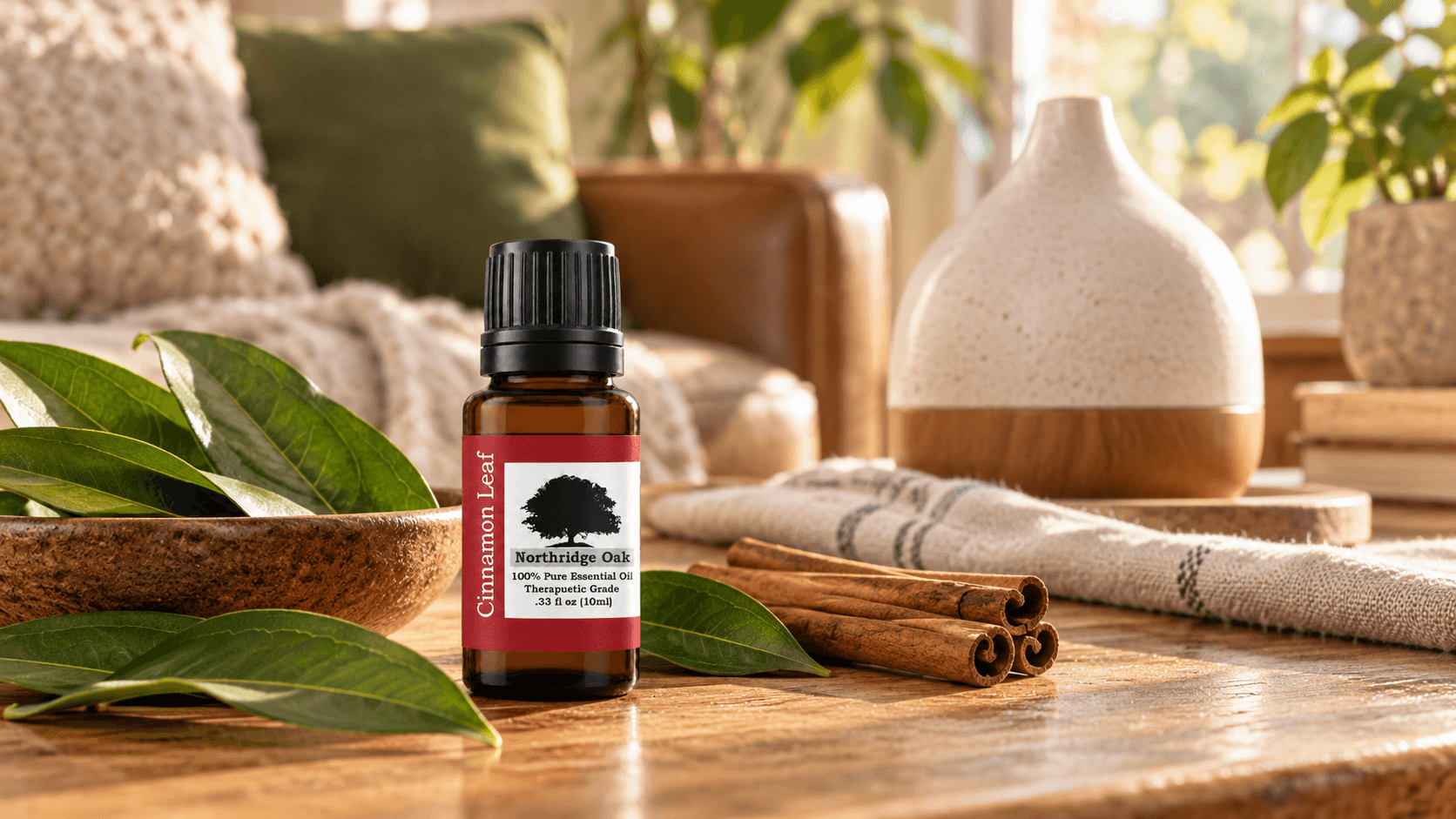
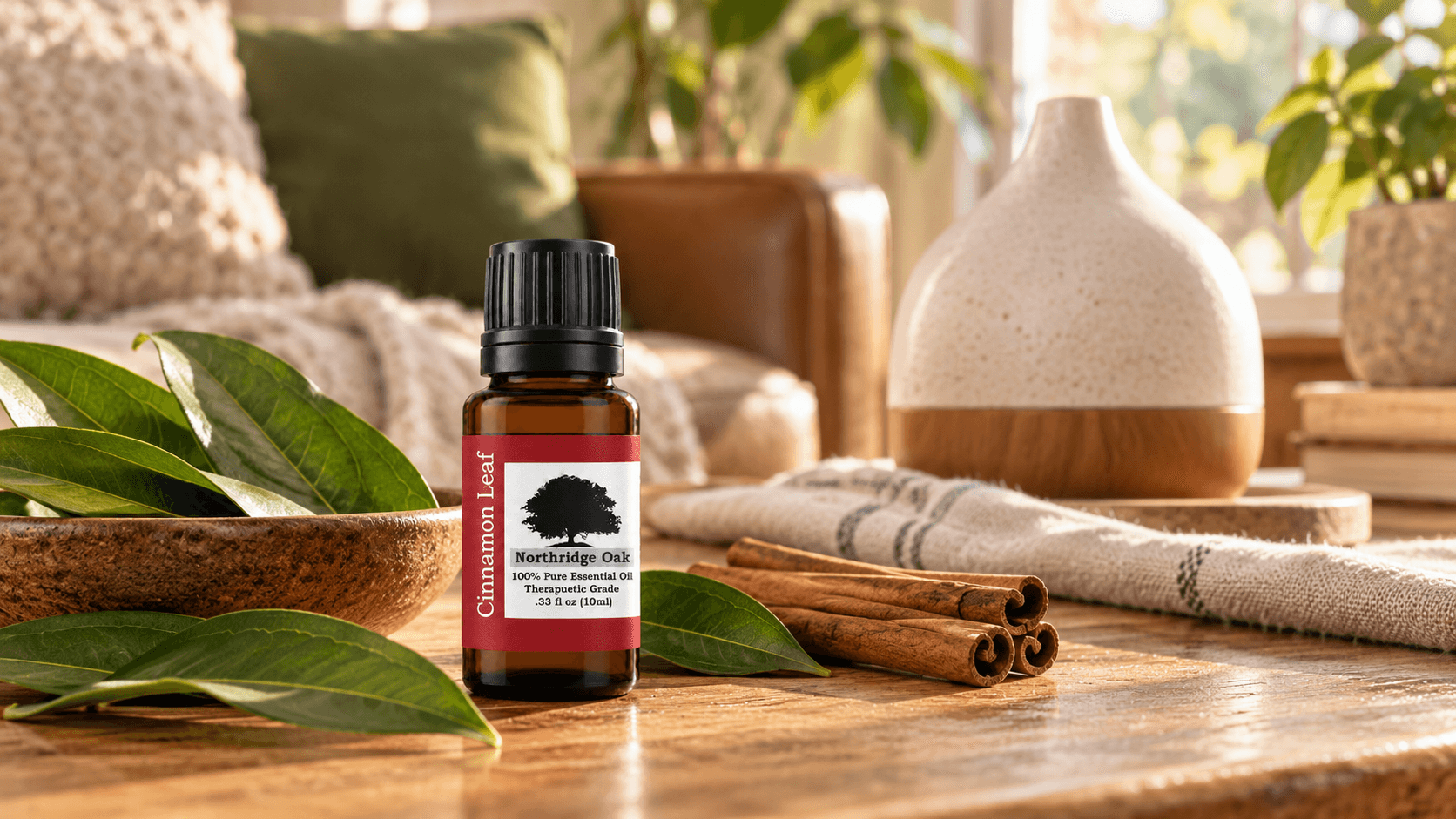
Northridge Oak Cinnamon Leaf Essential Oil is 100% pure and undiluted, bottled in small batches and third-party GC/MS tested. Its warm spice, dry leaf and clove-like depth make it a powerful little addition to a diffuser collection—especially when you want one drop to turn familiar oils into something new.
Start with the Warm Welcome recipe: three drops Blood Orange, one drop Cinnamon Leaf and two drops Cedarwood. It is bright, woodsy and warmly spiced, and it shows exactly why Cinnamon Leaf deserves a place beyond the holiday season.
Try Northridge Oak Cinnamon Leaf Essential Oil
A Simple Way to Experience Cinnamon Leaf
You do not need a complicated project to decide whether this oil is for you. Begin with the aroma itself. Place one drop on a paper scent strip or cotton pad, set it several inches away and notice the first impression. Return after 15 minutes, then again after an hour. Cinnamon Leaf often reveals more character as the sharpest opening settles, and this slower test makes it easier to notice the warm, dry, green and clove-like details that disappear when you smell directly from the bottle.
For a first diffuser experience, let Cinnamon Leaf play a supporting role beside two familiar oils. Use the measured recipe in this guide that best matches the room you want to create, diffuse for 20 to 30 minutes with fresh airflow, and write down the proportions. The goal is not to “use” the oil as quickly as possible. It is to discover the version of it that makes you pause, breathe in and think, I want my home to smell like this again.
If that sounds like the kind of ritual you would enjoy, Northridge Oak Cinnamon Leaf Essential Oil is 100% pure and undiluted, bottled in small batches and third-party GC/MS tested. It gives you a clearly identified single oil and a dependable place to begin.
Continue Learning About Cinnamon Leaf Essential Oil
Make this article part of a complete Cinnamon Leaf routine:
- What Blends Well With Cinnamon Leaf Essential Oil?
- Cinnamon Leaf Essential Oil Diffuser Blends: 20 Recipes
- What Does Cinnamon Leaf Essential Oil Smell Like?
- Cinnamon Leaf vs. Cinnamon Bark Essential Oil
- Cinnamon Leaf Essential Oil for Cleaning & Home Aromas
These statements have not been evaluated by the Food and Drug Administration. Northridge Oak products are not intended to diagnose, treat, cure or prevent disease.