Table of Contents
- The Opening: Warm Spice and Green Leaf
- The Heart: Clove-Like Eugenol Warmth
- The Drydown: Dry Wood and Lasting Spice
- Leaf Compared With Bark
- Cinnamon Leaf Compared With Clove
- Who Usually Enjoys It?
- Why Choose Northridge Oak Cinnamon Leaf?
- Learning About Essential Oils: Describe Warmth Without Calling It Sweet
- A Simple Way to Experience Cinnamon Leaf
- Continue Learning About Cinnamon Leaf Essential Oil
- Thoughtful Use
- Frequently Asked Questions
If you have never smelled Cinnamon Leaf, the name alone does not quite prepare you for it. Imagine citrus peel, polished wood and a single warm spice note glowing in the background. That is the direction of the aroma: warm, dry, green and clove-like, with small details that become more noticeable as it settles. Here is what to expect from the bottle, in the diffuser and in a finished blend—so you can decide whether it belongs in your collection.
The Opening: Warm Spice and Green Leaf
The first impression is warm but not sugary. A green, slightly woody edge keeps the spice botanical and gives the aroma more texture than a bakery-style cinnamon fragrance.
The Heart: Clove-Like Eugenol Warmth
As the oil rests, the shared aromatic relationship with Clove becomes clear. Eugenol contributes the deep, warm and slightly medicinal-spicy character that gives leaf oil its identity.
The Drydown: Dry Wood and Lasting Spice
Cinnamon Leaf remains noticeable after lighter citrus notes fade. The late aroma feels dry, warm and woody, making it a useful heart-to-base accent.
Leaf Compared With Bark
Leaf oil is drier, greener and more clove-like. Bark oil is sweeter, hotter and more cinnamaldehyde-driven. See the complete Leaf-versus-Bark comparison.
Cinnamon Leaf Compared With Clove
They share eugenol warmth, yet Cinnamon Leaf carries a greener woody quality while Clove feels rounder and more directly spice-like.
Who Usually Enjoys It?
Fans of fall air, dry spice, mulled-citrus aromas, forest blends and unisex woody fragrances often appreciate Cinnamon Leaf. It also appeals to people who enjoy cinnamon warmth with less sweetness.
Blood Orange makes it cozy, Bergamot makes it polished, Balsam Fir makes it festive, Cedarwood makes it dry and Frankincense makes it spacious.
Smell near the capped bottle, place one drop on paper and diffuse one drop with four Blood Orange. The bottle feels concentrated, paper reveals the woody drydown and diffusion shows how citrus opens the spice.
Record words such as warm, leafy, dry, woody, clove-like, smoky, sweet or sharp. Revisit after fifteen minutes and one hour. Your own notes become a practical guide for future blending.
One drop can make a familiar citrus or forest formula feel seasonal, sophisticated and complete. Cinnamon Leaf offers a character synthetic “cinnamon” fragrance rarely captures: living green leaf beneath the spice.
Many people expect sweetness because “cinnamon” suggests baked goods. Leaf oil tells another story: dry green wood, warm eugenol and a clove-like center. Understanding that difference turns surprise into appreciation.
Compare it with Clove to recognize eugenol warmth, Cedarwood to recognize dry structure and Blood Orange to understand how citrus changes the mood. Separate strips reveal details that disappear in a finished blend.
At zero minutes, record the opening. At fifteen minutes, identify the heart. At one hour, describe what remains. Cinnamon Leaf often moves from intense spice toward warm dry wood, teaching why it lasts so well beneath citrus.
Close to the strip, sharp botanical detail is strongest. At arm’s length, the warmth becomes smoother. After leaving and returning, the overall room impression becomes clearer. This is the experience a diffuser user actually encounters.
The shared eugenol character creates an aromatic family resemblance, yet Cinnamon Leaf carries more leafy wood. In a blend, that green dryness can feel more architectural and less purely spice-like.
Readers who enjoy unisex fragrance, forest air, dried herbs, mulled citrus and authentic spice are strong candidates. Someone who prefers sweet cinnamon can use Blood Orange to reveal that side while retaining the leaf’s complexity.
Choose one formula, write it down before diffusing and keep the total light enough to notice every ingredient. Cinnamon Leaf is expressive at one drop, so consistency matters more than complexity. Record the diffuser capacity, room, time and first impression.
Return to the room after a brief break. Citrus usually greets you first, Cinnamon Leaf supplies the warm heart and woods or resins remain through the drydown. This simple observation turns a pleasant blend into practical blending knowledge.
Close the bottle promptly, use clean tools and store it upright away from heat and sunlight. Fresh Cinnamon Leaf should smell layered: green leaf, warm clove-like spice and dry wood. Thoughtful storage preserves that progression from the first recipe to the last.
For warmth, pair it with Blood Orange. For polish, choose Bergamot. For forest air, use Balsam Fir. For dry structure, select Cedarwood. For meditative depth, add Frankincense. Each partner highlights a real facet already present in Cinnamon Leaf.
The most persuasive way to understand the oil is to smell one drop beside a familiar partner. The contrast turns descriptive words into an experience and reveals why this leaf oil belongs in a collection.
Why Choose Northridge Oak Cinnamon Leaf?
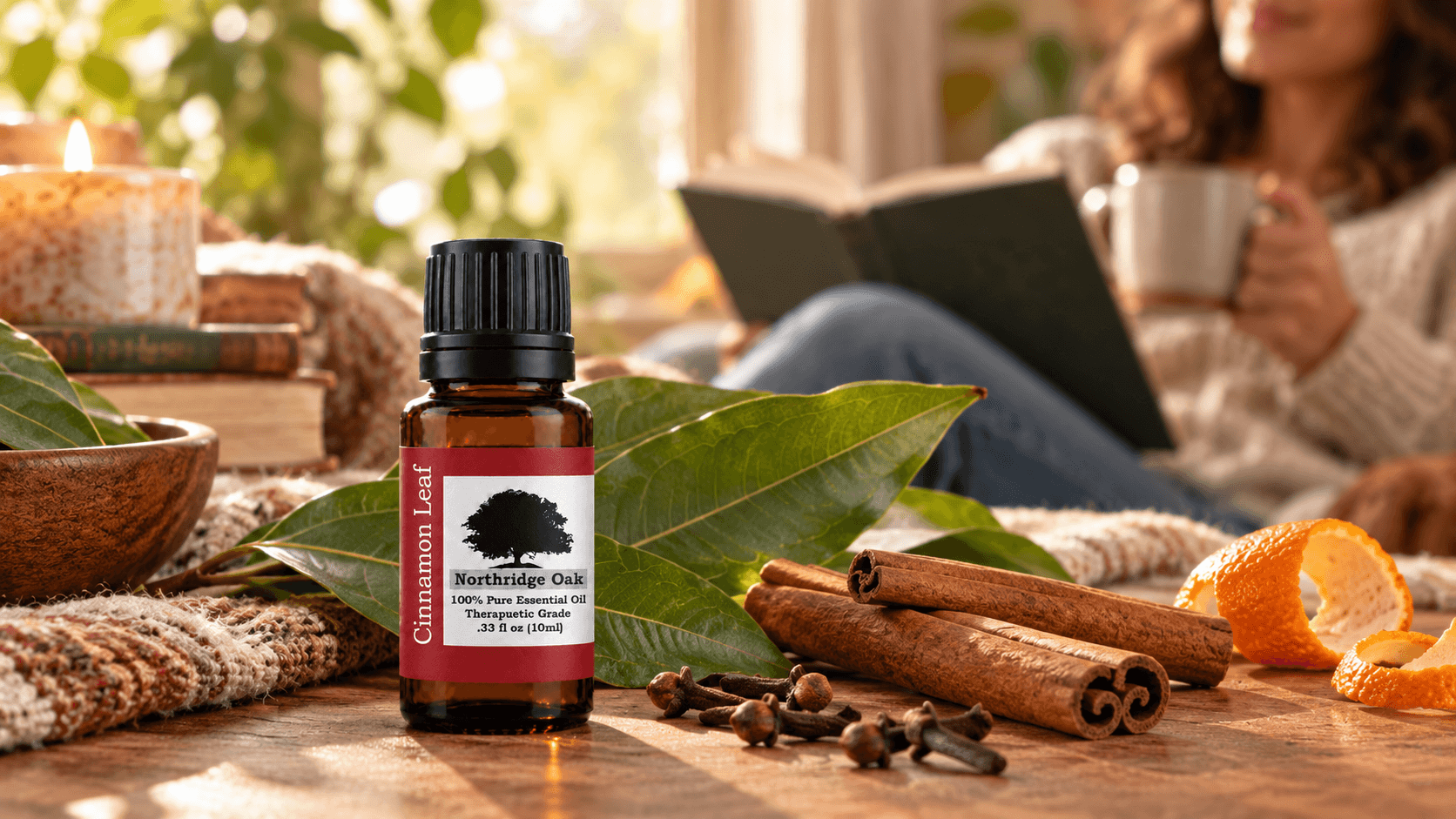
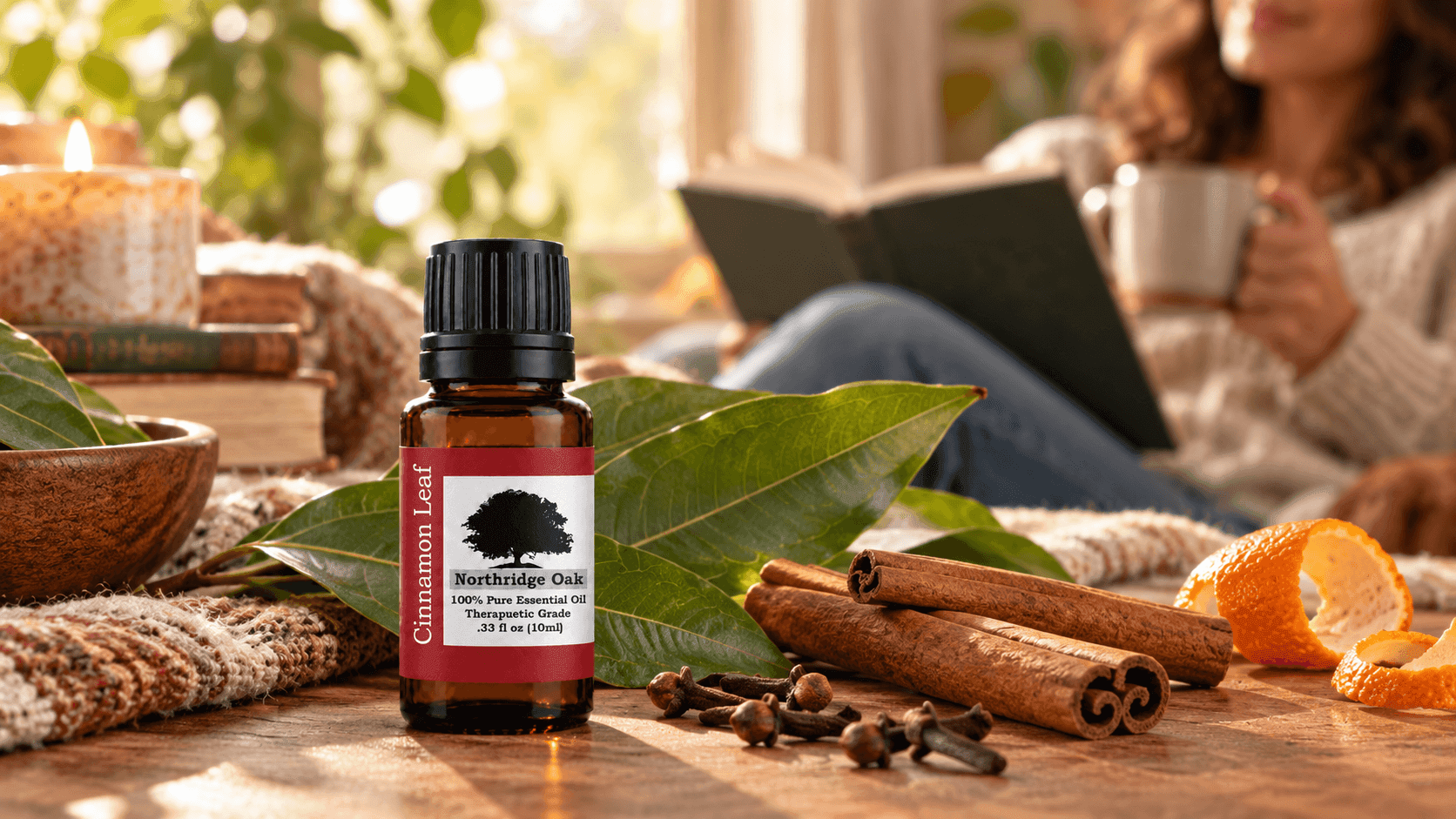
Northridge Oak Cinnamon Leaf Essential Oil is 100% pure, undiluted leaf oil, bottled in small batches and third-party GC/MS tested. Its warm spice, dry leaf and clove-like character brings depth to diffusers, natural fragrance and thoughtfully formulated home or personal-care projects.
Try pure Cinnamon Leaf when you want to experience cinnamon as a botanical leaf aroma rather than a dessert note.
Try Northridge Oak Cinnamon Leaf Essential Oil
Learning About Essential Oils: Describe Warmth Without Calling It Sweet
Write the botanical identity, exact drops, method, date and first impression in a blending notebook. Cinnamon Leaf is powerful enough that a one-drop adjustment can change the whole composition. Smell immediately and again after fifteen minutes to notice how citrus brightness settles around the warm eugenol-rich heart.
Build from two oils before adding a third. Simple formulas reveal whether the blend needs more brightness, softer floral character or deeper wood structure. This measured approach makes successful recipes repeatable.
A Simple Way to Experience Cinnamon Leaf
You do not need a complicated project to decide whether this oil is for you. Begin with the aroma itself. Place one drop on a paper scent strip or cotton pad, set it several inches away and notice the first impression. Return after 15 minutes, then again after an hour. Cinnamon Leaf often reveals more character as the sharpest opening settles, and this slower test makes it easier to notice the warm, dry, green and clove-like details that disappear when you smell directly from the bottle.
Then compare it with one familiar oil from the recipes below. Hold the strips side by side rather than mixing immediately. You will begin to hear the aroma almost like harmony: one oil carries the opening, one shapes the middle and one lingers. That small experiment is often the moment an unfamiliar oil becomes genuinely exciting.
If that sounds like the kind of ritual you would enjoy, Northridge Oak Cinnamon Leaf Essential Oil is 100% pure and undiluted, bottled in small batches and third-party GC/MS tested. It gives you a clearly identified single oil and a dependable place to begin.
Continue Learning About Cinnamon Leaf Essential Oil
Make this article part of a complete Cinnamon Leaf routine:
- Cinnamon Leaf Essential Oil Benefits, Uses & Safety Guide
- What Blends Well With Cinnamon Leaf Essential Oil?
- Cinnamon Leaf Essential Oil Diffuser Blends: 20 Recipes
- Cinnamon Leaf vs. Cinnamon Bark Essential Oil
- Cinnamon Leaf Essential Oil for Cleaning & Home Aromas
Thoughtful Use
Use light amounts in diffusion with fresh airflow. For topical formulation, follow conservative eugenol-aware guidance, calculate the complete concentration and patch test the finished blend. Seek individualized guidance for pregnancy, nursing, young children, pets, medications or significant health considerations.
Read the essential-oil safety guide and beginner’s guide.
These statements have not been evaluated by the Food and Drug Administration. Northridge Oak products are not intended to diagnose, treat, cure or prevent disease.