Table of Contents
- Start With the Right Cinnamon Oil
- A Simple Dilution Plan for Adult Topical Use
- Make a Small, Measured Body Oil
- Diffuse Cinnamon Leaf With a Light Hand
- Using Cinnamon Leaf Around Children
- Pregnancy, Nursing and Personal Health Considerations
- Cinnamon Leaf Essential Oil and Pets
- Storage, Spills and Accidental Exposure
- Why Choose Northridge Oak Cinnamon Leaf?
- Learning About Essential Oils: Precision Builds Confidence
- References and Thoughtful Use
- Continue Learning About Cinnamon Leaf Essential Oil
- Frequently Asked Questions
Cinnamon Leaf essential oil can make an entire blend feel warmer, richer and more inviting with a single drop. Its dry, green spice is often compared with Clove, yet it has a leafy, woody character all its own. That aromatic strength is exactly why thoughtful measurement matters: when you know the bottle, choose the right method and use a light hand, Cinnamon Leaf becomes an easy oil to enjoy with confidence.
Start With the Right Cinnamon Oil
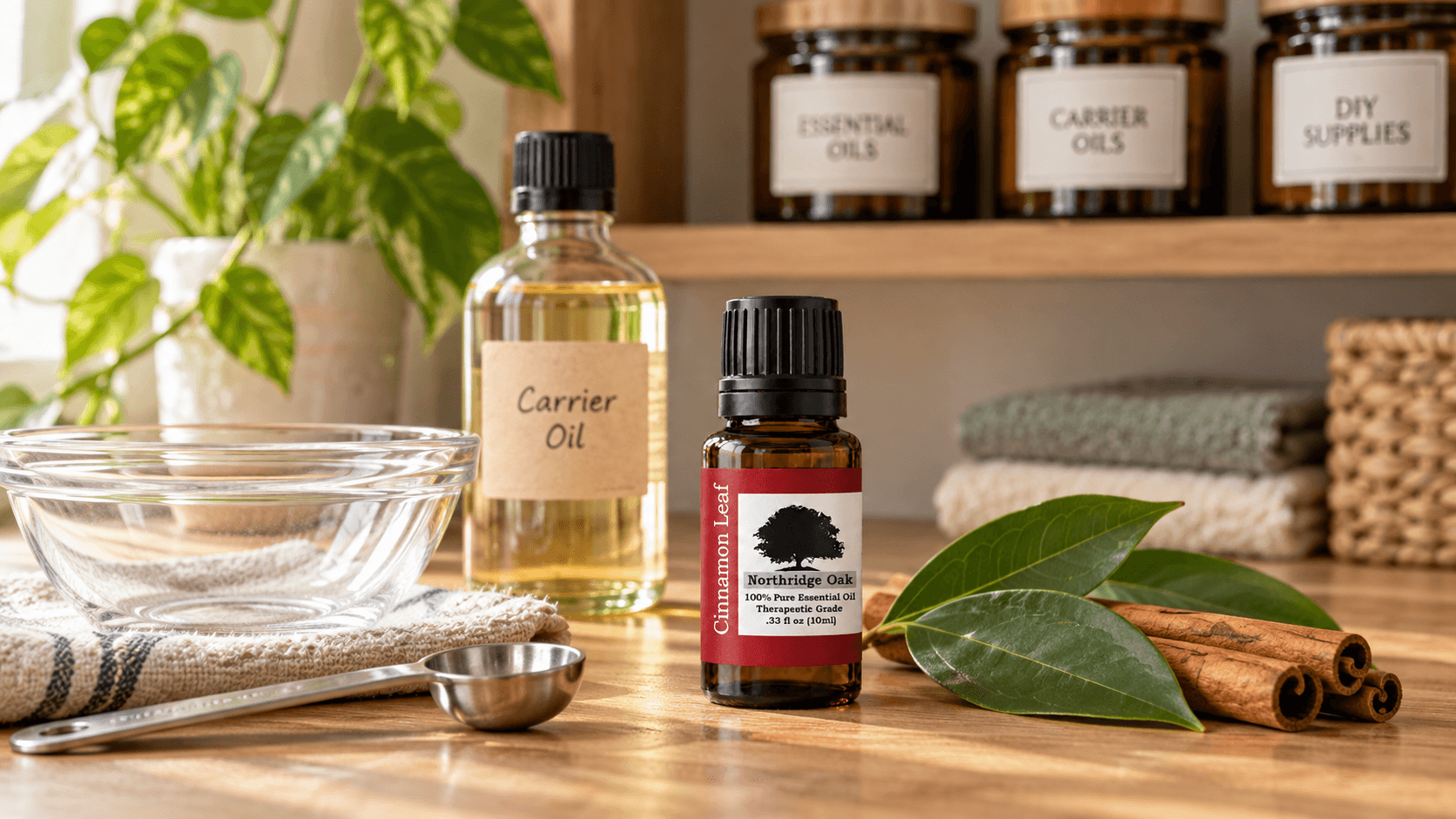
100% Pure Cinnamon Leaf Essential Oil – 10 mL

$14.67
Cinnamon Leaf Essential Oil Cinnamon Leaf Essential Oil brings warmth to a room without smelling like a bottle of sugary cinnamon fragrance. Its aroma is dry, green, woody and clove-like, with a glowing spice that settles beautifully beside citrus, evergreens,… read more
Begin by reading the complete label. Northridge Oak Cinnamon Leaf is distilled from the leaves of Cinnamomum verum. Cinnamon Bark comes from another part of the plant and has a different aromatic and chemical profile, so the two oils should not be treated as interchangeable. If a recipe simply says “cinnamon oil,” pause and confirm the plant part before using it.
Cinnamon Leaf is commonly rich in eugenol, the aromatic constituent that gives Clove much of its familiar warmth. Eugenol has a generous presence, so a small amount can shape a whole formula. This makes Cinnamon Leaf economical and rewarding to blend with, while also making accurate dilution especially important. The Cinnamon Leaf versus Cinnamon Bark guide explains the distinction in more detail.
A Simple Dilution Plan for Adult Topical Use
For a leave-on adult body product, a conservative 0.5% dilution is a sensible starting point for Cinnamon Leaf. In practical terms, that means the essential oil makes up one-half of one percent of the finished formula. Because droppers vary, weighing ingredients is the most precise method; the drop estimates below are convenient guides for small personal batches.
| Finished amount | 0.5% Cinnamon Leaf | Approximate drop guide |
|---|---|---|
| 10 mL | 0.05 mL | About 1 drop |
| 30 mL / 1 fl oz | 0.15 mL | About 3 drops |
| 60 mL / 2 fl oz | 0.30 mL | About 6 drops |
The familiar 1% and 2% dilution charts used for gentler oils should not automatically be carried over to Cinnamon Leaf. Its eugenol-rich composition calls for botanical-specific limits, and professional formulas must also account for the exact product type and the percentage of every essential oil in the finished blend. For regular leave-on use, keep the Cinnamon Leaf portion at or below 0.5% unless a qualified formulator has evaluated the complete recipe and current supplier documentation.
Here is the easiest way to plan a multi-oil blend: calculate the total essential-oil allowance first, then divide that allowance among the oils. In a 30 mL body oil at 0.5% total essential oil, the entire aromatic allowance is about three drops—not three drops of each oil. A gentle formula might use one drop of Cinnamon Leaf plus two drops of another appropriately selected oil in 30 mL of carrier.
Make a Small, Measured Body Oil
For a simple adult formula, add 1 drop of Cinnamon Leaf and 2 drops of Lavender essential oil to a clean 30 mL amber bottle. Fill the bottle with jojoba or another skin-compatible carrier oil, cap it and roll it gently between your palms. Label it with every ingredient, the 0.5% total dilution and the date.
Patch test the finished blend on a small area of intact skin and observe the area before broader use. This recipe is intended for limited adult external use, away from the face, eyes, lips, mucous membranes and freshly shaved or sensitive skin. A scent strip or diffuser is the better choice when you simply want to enjoy the aroma.
Diffuse Cinnamon Leaf With a Light Hand
Cinnamon Leaf does not need to dominate a diffuser blend to be noticed. For a typical water diffuser, start with one drop of Cinnamon Leaf as part of a four- to six-drop recipe, follow the manufacturer’s water and cleaning directions, and use the diffuser in a comfortably ventilated room. Try a short, intermittent session, then step away and return before deciding whether the blend needs adjustment.
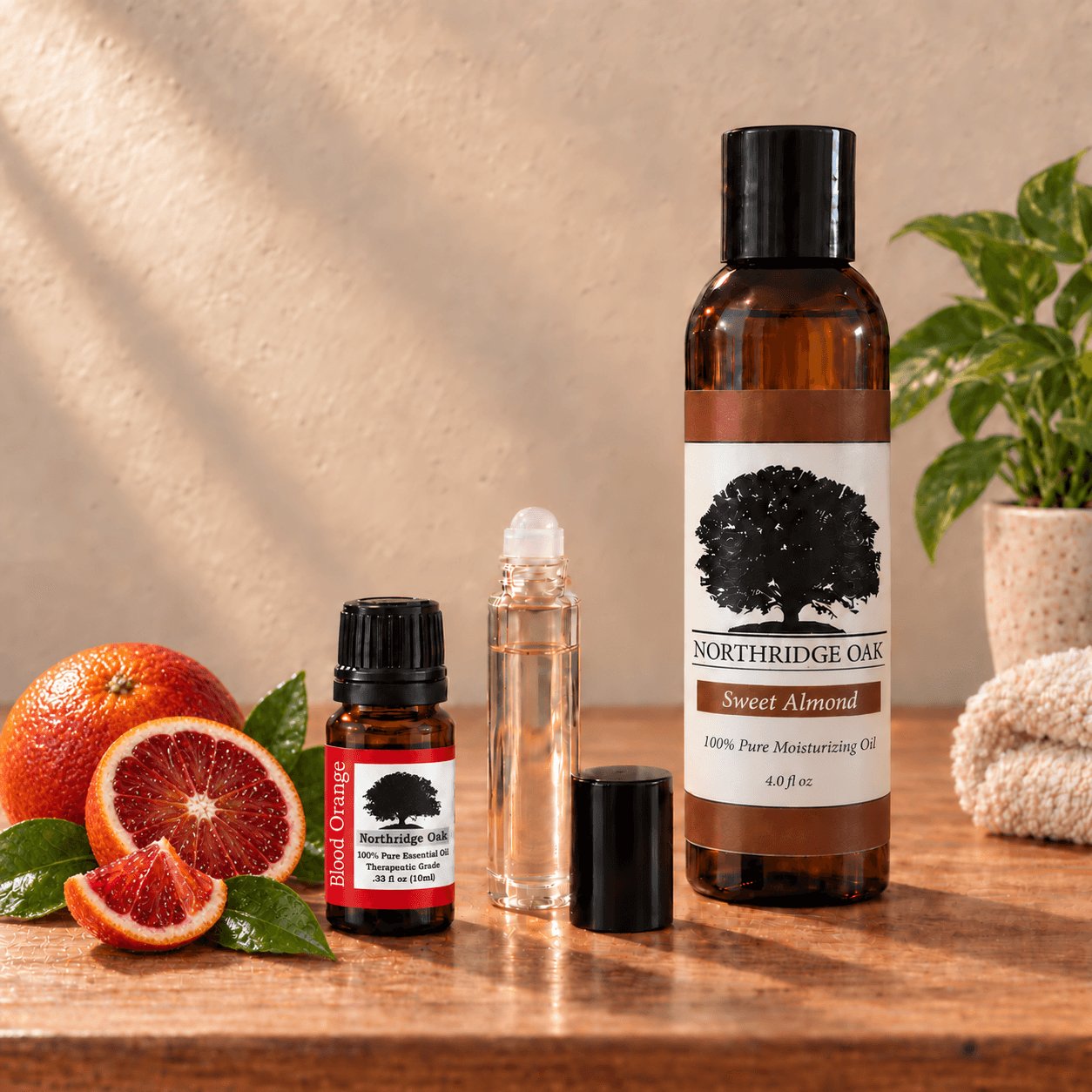
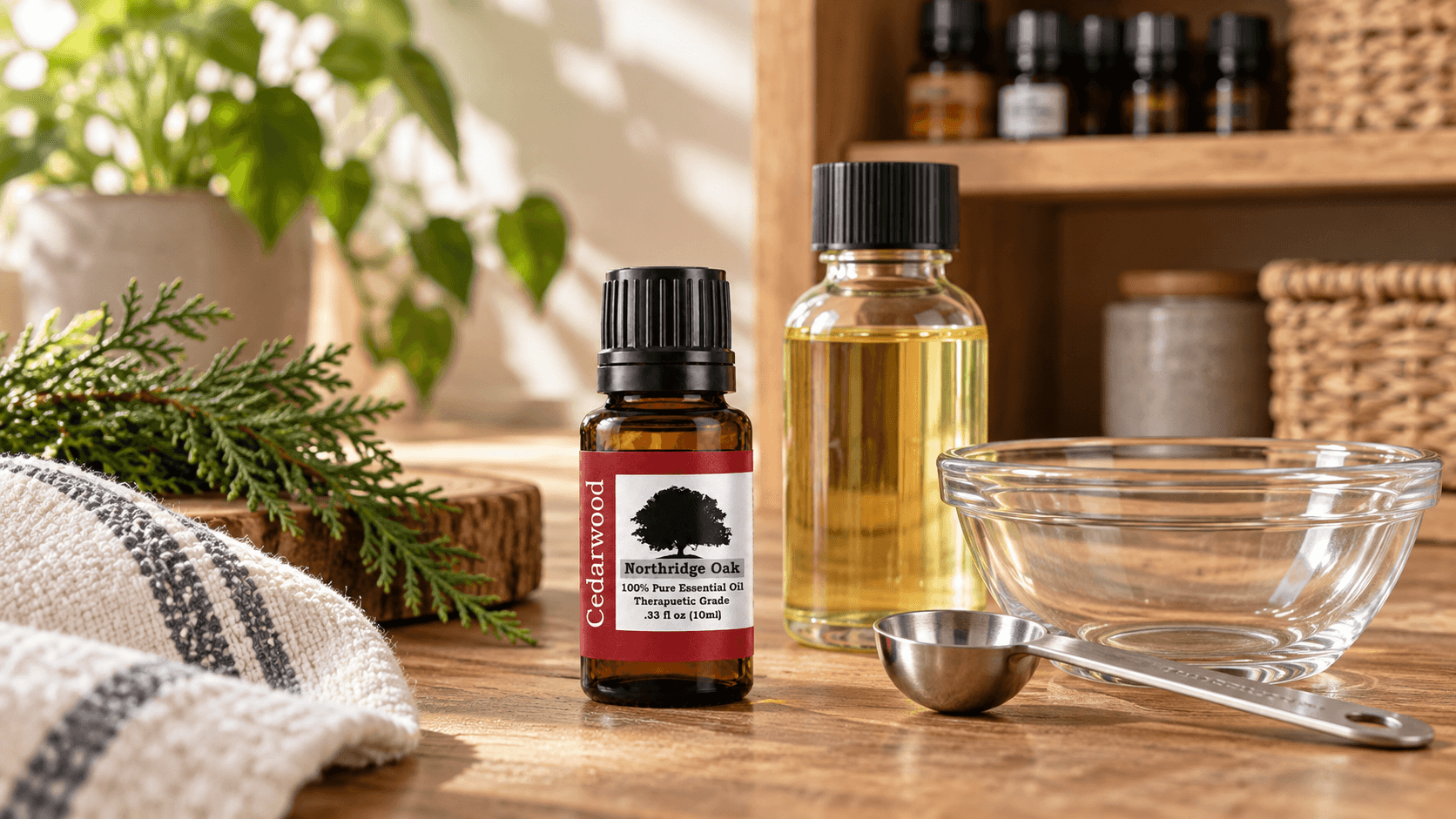
A welcoming starter blend is 1 drop Cinnamon Leaf, 3 drops Blood Orange and 2 drops Cedarwood. Add water to the diffuser’s fill line, add the oils and diffuse for about 20 to 30 minutes in an occupied adult space with fresh airflow. Blood Orange brings a cheerful opening, Cinnamon Leaf adds its warm heart and Cedarwood gives the aroma a smooth, grounded finish. For more ideas, visit the Cinnamon Leaf diffuser recipes.
Using Cinnamon Leaf Around Children
A child-aware routine begins with secure storage. Keep the undiluted bottle, prepared blends and diffuser reservoir out of sight and reach, and return the oil to storage as soon as you finish measuring. Child-resistant packaging adds a useful layer of protection, but attentive storage remains essential.
Children are not simply smaller adults, so age, health history, room size and method all matter. For a home with babies or young children, choose a gentler aromatic option unless a pediatric clinician or appropriately trained aromatherapy professional has reviewed the intended use. For older children, obtain individualized guidance before topical use and keep any shared-room diffusion brief, light and well ventilated. The child should be able to leave the room, and the diffuser should remain on a stable surface where it cannot be handled or tipped.
Pregnancy, Nursing and Personal Health Considerations
Pregnancy and nursing are times for individualized decisions. A clinician who knows the person’s history can consider the stage of pregnancy, intended method, frequency and complete formula. The same tailored approach is useful for anyone taking medication, preparing for a procedure or managing a significant health condition.
If the goal is simply to explore Cinnamon Leaf’s aroma, place one drop on a paper scent strip, set it nearby rather than against the skin and evaluate it in a fresh-air setting. This offers a clear introduction to its warm, clove-like character without turning an aroma test into a topical formula.
Cinnamon Leaf Essential Oil and Pets
Pet safety deserves its own plan because species, size, age and health can change how an animal responds to concentrated aromatic products. Cats, dogs, birds and small pets should never have direct access to the bottle, diffuser water or a freshly prepared blend. Do not apply Cinnamon Leaf to a pet, its collar, bedding, paws or fur unless the animal’s veterinarian has provided product-specific direction.
If an adult chooses to diffuse in a home with a dog or cat, keep the formula very light, ventilate the room and make sure the animal can leave freely. Birds and small animals have especially sensitive respiratory systems, making a separate, unscented space the prudent choice. Stop the session and contact a veterinarian or animal poison-control service if an animal shows an unexpected change in breathing, behavior, balance, appetite or comfort.
The safest household setup is simple: diffuse only while you are present, place the unit where paws and tails cannot reach it, empty and clean it after use, and store every oil behind a closed door. These habits protect pets while preserving Cinnamon Leaf for the adult aromatic moments it suits best.
Storage, Spills and Accidental Exposure
Store Cinnamon Leaf upright with the cap firmly closed in a cool, dark location. Keep the original label legible, and label every handmade product with its ingredients, concentration, preparation date and intended use. A small blending record makes favorite recipes repeatable and gives you accurate information if questions arise later.
If undiluted oil reaches the skin, remove contaminated clothing and contact Poison Control for situation-specific guidance. If it enters the eyes, begin rinsing with clean lukewarm water and seek immediate guidance. If anyone swallows essential oil, do not improvise a home remedy or induce vomiting; contact Poison Control in the United States at 1-800-222-1222 or use its online tool. Call emergency services for trouble breathing, collapse, seizure or inability to wake. For animal exposure, contact a veterinarian or the ASPCA Animal Poison Control Center at 888-426-4435 and keep the bottle available so the exact oil can be identified.
For routine handling, protect finished surfaces, wipe the bottle after measuring and wash blending tools before using them for another formula. These small habits keep the experience orderly and let the aroma—not a spill—be the memorable part.
Why Choose Northridge Oak Cinnamon Leaf?
Northridge Oak Cinnamon Leaf Essential Oil is a 100% pure, undiluted leaf oil, bottled in small batches and third-party GC/MS tested. Clear plant identity matters with any cinnamon oil: it lets you connect the bottle with the right aroma description, dilution approach and formulation guidance.
Used one measured drop at a time, Cinnamon Leaf brings remarkable depth to citrus, woods and evergreens. Its strength is part of its appeal—you can create a polished, enveloping aroma without a complicated formula or a crowded collection.
Try Northridge Oak Cinnamon Leaf Essential Oil
Learning About Essential Oils: Precision Builds Confidence
The most useful blending habit is to write the formula before opening the bottles. Record the botanical identity, carrier amount, exact drops or weights, total concentration, method and date. Then note how the aroma feels immediately and after fifteen minutes. With Cinnamon Leaf, even a one-drop change can reshape the composition, so careful notes quickly become a creative tool.
For topical products, calculate the finished concentration rather than counting each oil separately. For aromatic blends, start small and adjust after a fresh-air break. Precision does more than support safety: it helps you recreate the warm, balanced blend you loved.
References and Thoughtful Use
Current fragrance limits depend on the ingredient, finished-product category and supplier documentation. The International Fragrance Association Standards Library provides category-based fragrance guidance. For an exposure involving a person, use Poison Control; for an animal, contact a veterinarian or the ASPCA Animal Poison Control Center.
Cinnamon Leaf essential oil is intended for appropriate aromatic use and thoughtfully formulated external use. Keep the concentrate away from eyes and sensitive tissue, follow botanical-specific guidance, and obtain individualized advice for children, pregnancy, nursing, pets, medication use or significant health considerations.
Continue Learning About Cinnamon Leaf Essential Oil
Make this article part of a complete Cinnamon Leaf routine:
- Cinnamon Leaf Essential Oil Benefits, Uses & Safety Guide
- What Blends Well With Cinnamon Leaf Essential Oil?
- Cinnamon Leaf Essential Oil Diffuser Blends: 20 Recipes
- What Does Cinnamon Leaf Essential Oil Smell Like?
- Cinnamon Leaf vs. Cinnamon Bark Essential Oil
These statements have not been evaluated by the Food and Drug Administration. Northridge Oak products are not intended to diagnose, treat, cure or prevent disease.