Table of Contents
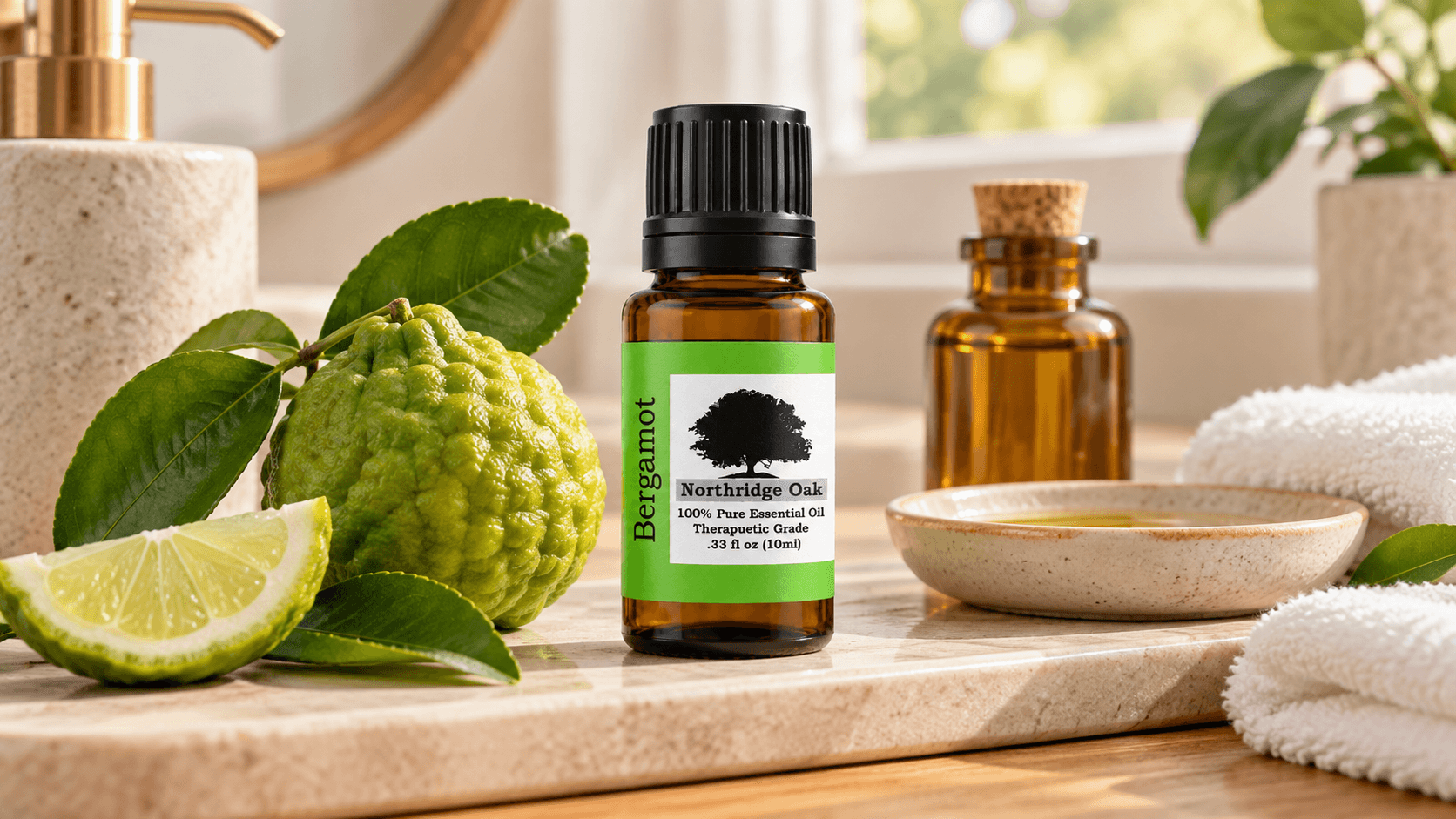
Bergamot Essential Oil recipes bring a bright citrus-floral aroma to diffusers, personal inhalers, body oils, rollers and simple home rituals. Bergamot is easy to blend because its sparkling top note pairs with soft florals, fresh herbs, warm resins and dry woods. The twelve ideas below use measured amounts and oils carried by Northridge Oak, so you can choose one format and make it with confidence.
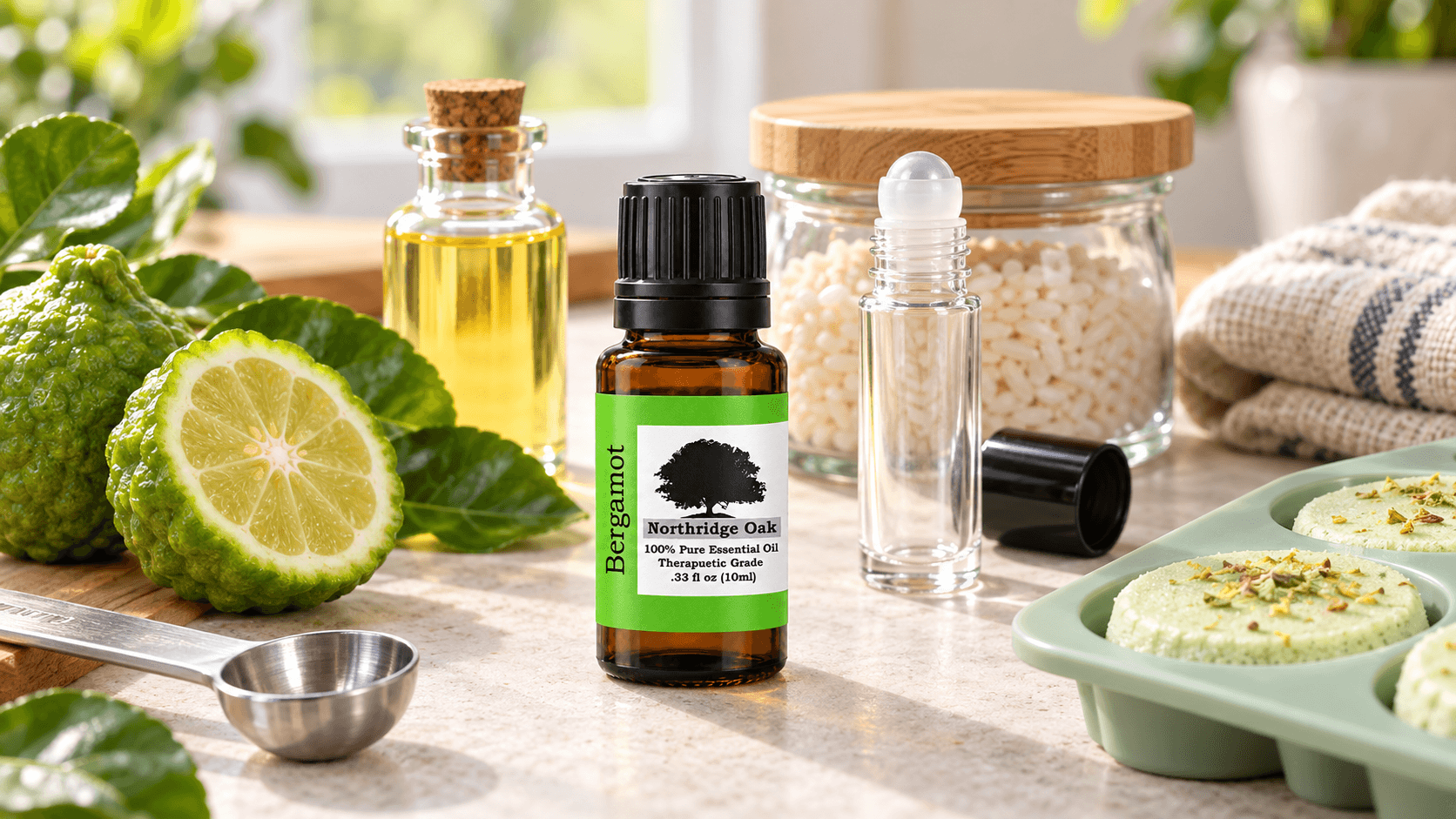
Every recipe starts with Northridge Oak Bergamot Essential Oil, which is 100% pure and undiluted, made in small batches and third-party GC/MS tested, with no fillers. Read each method before beginning, label the finished blend and keep essential oils out of reach of children and pets.
100% Pure Bergamot Essential Oil – 10 mL

$15.67
Bergamot FCF Essential Oil Northridge Oak Bergamot FCF Essential Oil brings bright citrus, soft florals and a refined green-tea finish together in one beautifully versatile oil. It can make a room feel freshly opened in the morning, add graceful brightness… read more
Before you make a Bergamot recipe
Pure essential oil is concentrated. Diffuser formulas go into a compatible aroma diffuser according to its instructions. Topical formulas require a carrier oil and patch test. Cold-pressed bergamot can be phototoxic; FCF or bergapten-free bergamot is preferred for leave-on daytime recipes. If you cannot verify that your oil is FCF, keep leave-on bergamot at 0.4% or less and keep the area away from sunlight and other UV exposure for at least 12 hours.
Review Bergamot phototoxicity and FCF guidance along with our complete essential oil safety guide before making a skin-contact blend.
Bergamot diffuser recipes
1. Sunlit Room
Ingredients: 3 drops Bergamot Essential Oil, 2 drops Blood Orange Essential Oil and 1 drop Cedarwood Essential Oil.
Method: Fill the diffuser as directed, add the oils and run for 15 to 30 minutes. This blend begins juicy and bright, then settles into a dry wood finish.
2. Fresh Linen
Ingredients: 3 drops bergamot, 2 drops Lavender Essential Oil and 1 drop Lemon Essential Oil.
Method: Add to a medium-size diffuser. The lemon sharpens the opening while lavender makes the room feel soft and finished.
3. Quiet Focus
Ingredients: 3 drops bergamot, 2 drops Rosemary Essential Oil and 1 drop Frankincense Essential Oil.
Method: Diffuse during a focused work block, with ventilation and regular scent breaks. Rosemary gives the blend definition; frankincense adds depth.
4. Evening Exhale
Ingredients: 2 drops bergamot, 2 drops lavender and 2 drops cedarwood.
Method: Diffuse for 15 to 30 minutes as part of an evening transition. Turn the diffuser off before sleep unless its instructions provide a safe intermittent mode.
Find sixteen more measured combinations in Bergamot diffuser blends.
Portable aroma recipes
5. Bright Day Personal Inhaler
Ingredients: 6 drops bergamot, 2 drops lemon and 2 drops frankincense.
Method: Apply the oils to the cotton wick of a blank personal inhaler, insert the wick and cap it. Hold a few inches from the nose and take two or three normal breaths. Keep the inhaler personal and avoid forceful inhalation.
6. Soft Evening Personal Inhaler
Ingredients: 5 drops bergamot, 3 drops lavender and 2 drops cedarwood.
Method: Assemble as above and label it with the ingredients and date. Replace the wick when the aroma fades or changes.
7. Bergamot Aroma Jar
Ingredients: 1/2 cup dry rice, 6 drops bergamot, 3 drops lavender and 1 drop cedarwood.
Method: Place rice in a small glass jar, add the oils, close the lid and shake. Open briefly when you want a passive aroma, then close for storage. Keep it secure and away from children and pets. Do not place where it can be mistaken for food.
Topical Bergamot recipes
8. FCF Bergamot Pulse-Point Roller
Ingredients: 1 drop FCF bergamot, 1 drop lavender and enough jojoba to fill a 10 mL roller bottle.
Method: Add the essential oils, fill with jojoba, cap and roll gently. Patch test before use. Apply lightly to wrists or shoulders, away from eyes and sensitive areas.
9. Citrus Woods Body Oil
Ingredients: 3 drops FCF bergamot, 2 drops cedarwood, 1 drop frankincense and 2 tablespoons (30 mL) jojoba or Fractionated Coconut Oil.
Method: Combine in a dark-glass bottle. This is approximately a 1% total essential-oil dilution. Apply a modest amount to damp body skin after bathing.
10. Lavender Bergamot Massage Oil
Ingredients: 3 drops FCF bergamot, 3 drops lavender and 2 tablespoons (30 mL) Sweet Almond Oil or jojoba oil.
Method: Blend thoroughly and patch test. Use a small amount for hands, shoulders or feet. Avoid broken or freshly shaved skin.
For more detail on carrier choices and patch testing, read Bergamot Essential Oil for skin.
Shower and hair ritual recipes
11. Bergamot Shower Steamer Aroma
Ingredients: 1 unscented shower steamer made for essential oils, 2 drops bergamot and 1 drop lavender.
Method: Add the oils immediately before use and place the steamer on the shower floor away from the direct stream, following its maker’s instructions. Keep the oils off skin and make sure the surface remains slip-safe.
12. Fresh Roots Pre-Wash Oil
Ingredients: 3 drops bergamot, 3 drops lavender and 2 tablespoons (30 mL) jojoba.
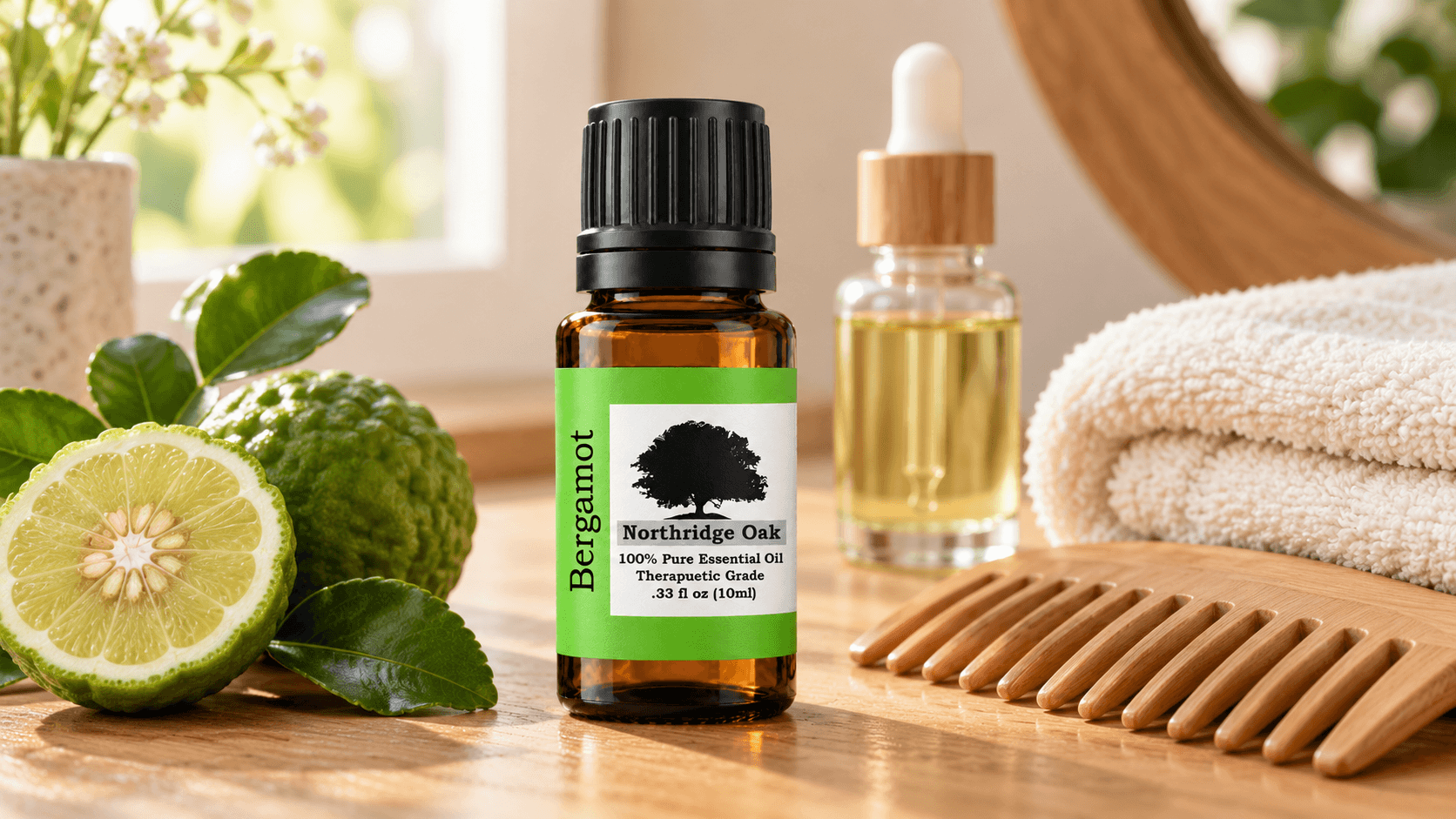
Method: Apply sparingly to the scalp in sections, massage gently for two to three minutes, leave for 15 to 30 minutes and shampoo thoroughly. Protect the hairline from UV exposure when using cold-pressed bergamot. Explore more detail in Bergamot oil for hair and scalp.
How to customize a recipe without losing balance
First choose one oil to replace, rather than adding more. Keep the original total drop count and swap within a scent family: blood orange for lemon, cedarwood for frankincense, or geranium for lavender. Strong oils such as patchouli should enter one drop at a time. Record every change so you can recreate the blend.
Use the detailed guide to what blends well with Bergamot Essential Oil for ratios and scent directions. If you are learning the oil itself, begin with Bergamot’s aroma profile.
Storage and freshness
Keep stock bottles tightly capped, upright and away from heat and sunlight. Use dark glass for carrier-oil blends and label the ingredients, dilution and date. Make small batches that fit your routine. Discard a blend if the aroma changes sharply, the carrier smells stale or the container shows contamination.
During pregnancy or nursing, while taking medication or when managing a medical condition, consult a qualified healthcare professional before use. Use extra care around young children and sensitive individuals, and never apply essential oils to animals.
Keep learning about bergamot
Continue with the complete Bergamot Essential Oil guide, browse 20 diffuser blends, refine your choices with the pairing guide and review phototoxicity before topical use. Pick one recipe, make the smallest practical batch and enjoy the fresh, graceful character of bergamot.