Table of Contents
- What Are the Benefits of Bergamot Oil for Hair and Scalp?
- What Does Research Tell Us About Bergamot?
- Does Bergamot Oil Make Hair Softer?
- Why Should Bergamot Be Diluted for Scalp Use?
- Which Carrier Oil Should You Use?
- Five Bergamot Hair and Scalp Recipes
- How Do You Apply a Bergamot Scalp Oil?
- How Often Should You Use Bergamot Oil on Your Scalp?
- Can You Add Bergamot Essential Oil to Shampoo?
- Why Does FCF Bergamot Matter Around the Hairline?
- Why Choose Northridge Oak Bergamot FCF Essential Oil?
- How Should You Store a Homemade Hair Oil?
- Using Bergamot Safely on Hair and Scalp
- Keep Learning About Bergamot
- Frequently Asked Questions
Bergamot oil for hair and scalp can turn an ordinary wash day into a fresh, beautifully scented care ritual. When properly diluted, Bergamot Essential Oil is a lovely addition to pre-wash scalp oils, massage blends and lightweight treatments for dry-looking ends. Its bright citrus-floral aroma also pairs beautifully with Lavender, Rosemary, Cedarwood and Frankincense.
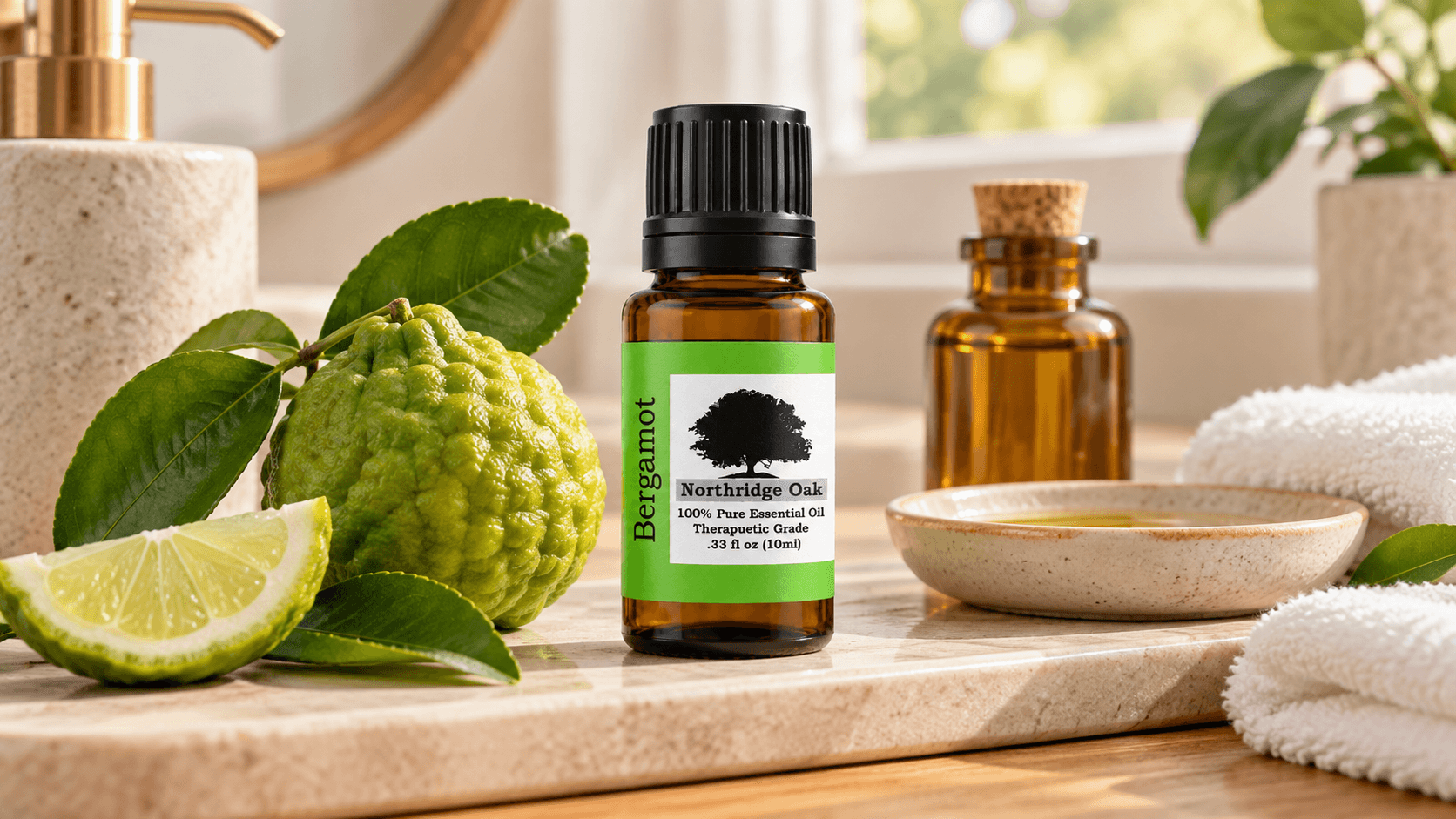
100% Pure Bergamot Essential Oil – 10 mL

$15.67
Bergamot FCF Essential Oil Northridge Oak Bergamot FCF Essential Oil brings bright citrus, soft florals and a refined green-tea finish together in one beautifully versatile oil. It can make a room feel freshly opened in the morning, add graceful brightness… read more
The carrier oil in each recipe supplies the slip, softness and conditioning feel, while Bergamot adds its distinctive aroma and botanical character. The finished blend feels practical enough for weekly use but special enough to make you slow down and enjoy the process.
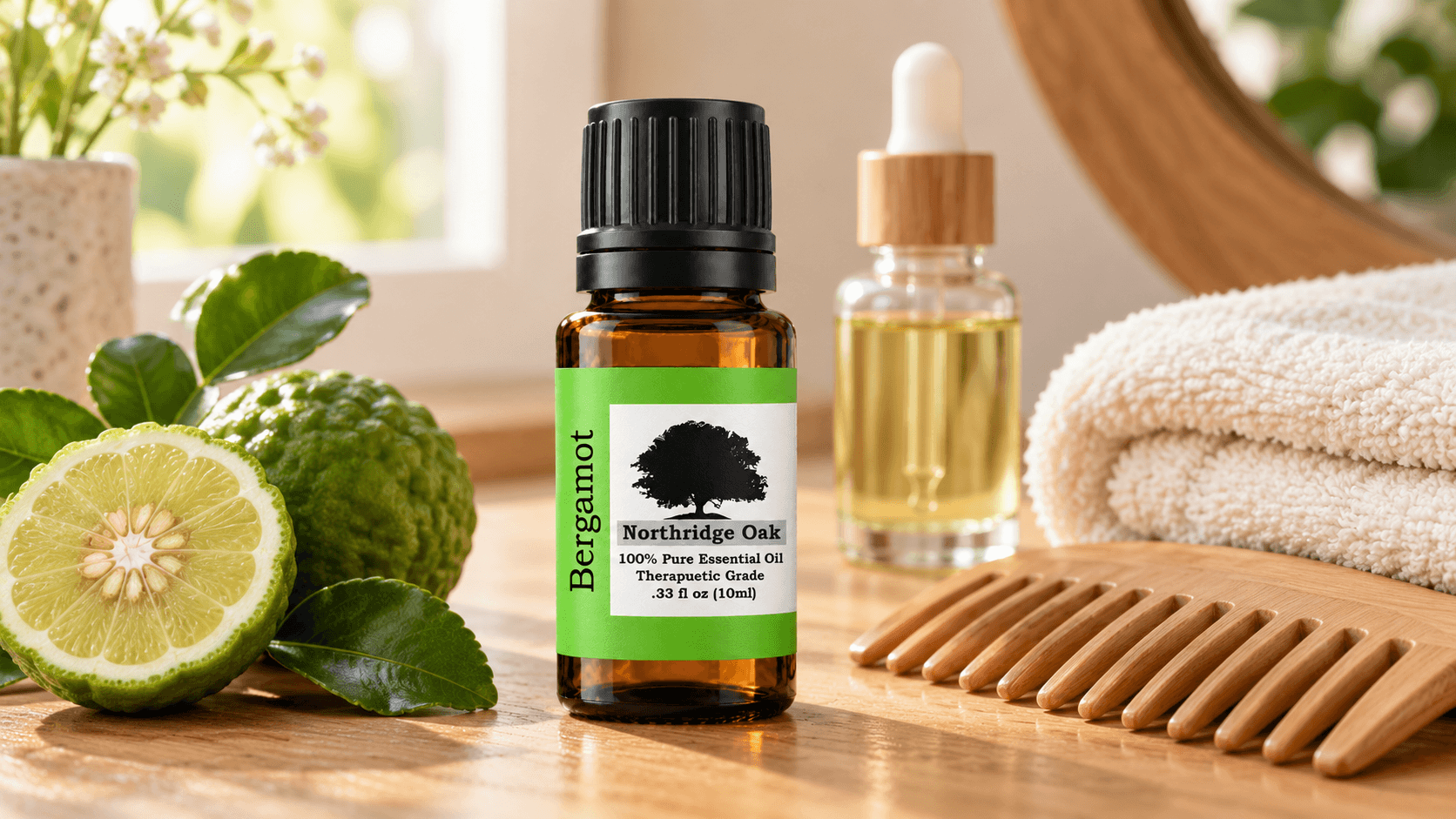
For the most versatile option, choose Northridge Oak Bergamot FCF Essential Oil. It is 100% pure, undiluted, bottled in small batches and independently third-party GC/MS tested, with no fillers or synthetic fragrance.
What Are the Benefits of Bergamot Oil for Hair and Scalp?
Bergamot brings several qualities to a well-formulated hair-care routine.
It Makes Scalp Care Feel Fresh and Inviting
Scalp oiling can be a simple maintenance step, but Bergamot makes it feel like something worth anticipating. Its citrus opening smells clean and lively, while its softer floral, green and tea-like notes keep the aroma from becoming sharp.
That balance is especially pleasant in a pre-wash treatment. You receive the smooth glide of a carrier oil along with an aroma that makes the entire routine feel fresh, polished and restorative.
It Works Beautifully in Scalp-Massage Blends
A properly diluted oil provides comfortable slip for gentle fingertip massage. This makes it easier to move across the scalp without pulling the hair or scratching the skin.
A two- to three-minute massage also encourages you to slow down and give your scalp the same thoughtful attention you give the rest of your skin.
It Complements Both Fresh and Grounding Oils
Bergamot is unusually easy to blend:
- Lavender Essential Oil creates a soft, familiar floral finish.
- Rosemary Essential Oil adds a crisp herbal character.
- Cedarwood Essential Oil gives Bergamot a dry, grounding base.
- Frankincense Essential Oil adds smooth resinous depth.
- Geranium Essential Oil emphasizes Bergamot’s floral side.
This flexibility makes it easy to adjust a recipe for your hair type and aroma preference. Our guide to what blends well with Bergamot Essential Oil explains how each pairing changes the finished blend.
It Adds Natural Aroma Without a Heavy Fragrance
Bergamot creates a refined scent without the lingering sweetness found in many conventionally fragranced hair products. Its aroma feels bright at first and then becomes softer as the treatment rests on the hair.
If you are curious about those individual notes, read What Does Bergamot Smell Like?
What Does Research Tell Us About Bergamot?
Research interest in Bergamot has focused largely on its chemistry and antimicrobial activity.
A 2022 laboratory study examined distilled Bergamot extract against multidrug-resistant bacteria and fungi obtained from clinical specimens. Researchers used time-kill testing and confocal microscopy. They reported antimicrobial activity against the tested bacterial and fungal strains and observed damage to cellular structures following exposure. Review the laboratory study in PubMed Central.
A separate study tested seven Bergamot Essential Oils against eight strains of Listeria monocytogenes. The results varied by bacterial strain and oil sample, but the most active Bergamot oil demonstrated strong inhibition against four of the strains. Chemical analysis identified limonene and linalyl acetate as its two most abundant constituents. See the study and complete results in PubMed Central.
These were laboratory studies rather than finished scalp-product trials. Their value is in helping us understand why Bergamot continues to attract interest as a botanical ingredient. For everyday hair care, the most practical approach remains simple: use a pure, accurately identified oil, dilute it carefully and make the finished blend part of a consistent scalp-care routine.
Does Bergamot Oil Make Hair Softer?
The carrier oil performs most of the direct conditioning work in a Bergamot hair recipe.
Jojoba, Fractionated Coconut Oil, Apricot Kernel Oil and other carrier oils can coat the hair lightly, reduce its dry appearance and add temporary smoothness and shine. Bergamot contributes aroma and helps transform that practical conditioning step into a more enjoyable ritual.
The amount you use matters. Fine or straight hair may need only a trace of finished oil on the ends. Thick, curly or very dry-looking hair may enjoy a slightly richer pre-wash application.
Start with less than you think you need. You can always add another drop of the finished carrier blend, but too much may leave the hair looking heavy.
Why Should Bergamot Be Diluted for Scalp Use?
The scalp is skin, and Bergamot Essential Oil is highly concentrated. It should be mixed into a carrier oil before it touches the scalp or hairline.
For an adult pre-wash scalp oil, a total essential-oil dilution between 0.5% and 1% is a comfortable place to begin.
| Carrier oil | Approximate 0.5% dilution | Approximate 1% dilution |
|---|---|---|
| 1 tablespoon or 15 mL | 2 drops total | 3 drops total |
| 2 tablespoons or 30 mL | 3 drops total | 6 drops total |
| 4 tablespoons or 60 mL | 6 drops total | 12 drops total |
Drop sizes naturally vary, so these are practical household approximations rather than laboratory measurements.
Always patch test the completed blend before applying it across the scalp. Place a small amount on the inner forearm and wait 24 hours. If the skin becomes red, itchy or uncomfortable, discontinue using that formula.
Our complete essential-oil safety guide provides additional dilution and household guidance.
Which Carrier Oil Should You Use?
Jojoba for a Lighter Feel
Jojoba spreads easily and has a relatively light texture. It is a good starting point for fine or easily weighed-down hair and works especially well in short pre-wash treatments.
Fractionated Coconut Oil for Smooth Slip
Fractionated Coconut Oil remains liquid and moves easily across the scalp. Its smooth texture makes it particularly comfortable for fingertip massage.
Apricot Kernel Oil for a Softer, Richer Treatment
Apricot Kernel Oil feels slightly richer and works well when the scalp or hair ends feel dry. Use it sparingly on fine hair.
Sunflower Seed Oil for an Accessible Pre-Wash Blend
Sunflower Seed Oil is another practical choice for a pre-wash treatment. It spreads well and can be shampooed out after the oil has rested on the scalp and hair.
Whichever carrier you choose, make a small batch and store it in a clean, labeled bottle away from heat and direct light.
Five Bergamot Hair and Scalp Recipes
Each recipe makes approximately 30 mL, or two tablespoons. The scalp formulas contain six total essential-oil drops, creating an approximate 1% dilution.
1. Fresh Roots Pre-Wash Scalp Oil
- 2 tablespoons jojoba
- 3 drops Bergamot Essential Oil
- 3 drops Lavender Essential Oil
This is the easiest Bergamot scalp blend to love. Lavender softens the citrus and brings out Bergamot’s gentle floral notes.
Part dry hair into sections and place a small amount of the finished blend on your fingertips. Massage it gently across the scalp for two to three minutes. Allow it to rest for 15 to 30 minutes, then shampoo thoroughly.
2. Bright Botanical Scalp Oil
- 2 tablespoons Fractionated Coconut Oil
- 4 drops Bergamot Essential Oil
- 2 drops Rosemary Essential Oil
Rosemary gives this blend a crisp, green character that feels especially fresh on wash day. Bergamot rounds the herbal aroma and keeps it from becoming too sharp.
Apply sparingly across the scalp before shampooing. Fine hair may need only a teaspoon of the completed formula per application.
3. Citrus Woods Massage Blend
- 2 tablespoons jojoba
- 4 drops Bergamot Essential Oil
- 2 drops Cedarwood Essential Oil
Cedarwood provides a warm, dry foundation beneath Bergamot’s citrus-floral top notes. The aroma feels natural, clean and quietly luxurious.
Use this blend when you want scalp care to feel grounding rather than floral. Massage gently for two to three minutes and leave it in place for up to 30 minutes before washing.
4. Soft Shine Hair-Ends Oil
- 2 tablespoons jojoba
- 1 drop Bergamot Essential Oil
- 1 drop Lavender Essential Oil
This very light aromatic dilution is designed for the ends rather than the scalp.
Place one or two drops of the completed formula between your palms, rub them together and lightly smooth the oil over dry-looking ends. Begin with an extremely small amount, particularly on fine or straight hair.
If your hair becomes weighed down easily, use this as a 15-minute pre-wash treatment instead.
5. Quiet Evening Pre-Wash Oil
- 2 tablespoons Apricot Kernel Oil
- 3 drops Bergamot Essential Oil
- 2 drops Lavender Essential Oil
- 1 drop Frankincense Essential Oil
This richer blend is ideal when you want hair care to feel like a slow evening ritual. Frankincense adds warmth and depth, while Lavender creates a soft bridge between the resin and citrus notes.
Apply a small amount to the scalp and any dry-looking ends. Allow it to rest for 15 to 30 minutes before shampooing.
Explore additional home and personal-care formulas in Bergamot Essential Oil Recipes: 12 Easy DIY Ideas.
How Do You Apply a Bergamot Scalp Oil?
A careful application keeps the treatment comfortable and prevents unnecessary heaviness.
- Begin with dry, untangled hair.
- Divide the hair into four to six loose sections.
- Place a small amount of the completed blend on clean fingertips.
- Press the fingertips gently against the scalp.
- Massage with small circular movements for two to three minutes.
- Smooth any remaining oil over dry-looking ends.
- Leave the treatment in place for 15 to 30 minutes.
- Shampoo thoroughly and repeat the wash if necessary.
Use the pads of your fingers rather than your nails. Vigorous scratching can leave the scalp feeling more uncomfortable, particularly if it is already dry or sensitive.
A warm towel wrapped loosely around the hair can make the experience feel especially relaxing. Keep the towel comfortably warm rather than hot.
How Often Should You Use Bergamot Oil on Your Scalp?
Begin once a week and observe how your scalp and hair respond.
Thick, textured or dry-looking hair may enjoy a weekly pre-wash treatment. Fine hair may prefer a smaller application every other week. An oily scalp may need less carrier oil and a shorter treatment time.
The ideal routine is the one that leaves your scalp comfortable and your hair fresh after washing. Consistency is more useful than saturating the hair with a large amount of oil.
Pause the routine if the scalp becomes red, itchy, tender or unusually flaky. Also wait until the scalp feels comfortable following coloring, chemical services or vigorous exfoliation.
Can You Add Bergamot Essential Oil to Shampoo?
A measured pre-wash oil gives you better control over dilution and distribution than altering an entire bottle of shampoo.
Retail shampoos are carefully balanced for texture, cleansing and preservation. Adding essential oil to the full container can change how the product disperses.
When you want to pair Bergamot with wash day, use one of the measured carrier-oil recipes before shampooing. You will know exactly how much essential oil is in the completed blend, and you can patch test that formula before using it more widely.
For an aromatic experience without adding anything to your hair products, diffuse one of our Bergamot diffuser blends while you get ready.
Why Does FCF Bergamot Matter Around the Hairline?
Traditional cold-pressed Bergamot Essential Oil may contain phototoxic furocoumarins, including bergapten. When an oil containing these constituents remains on exposed skin, ultraviolet light can produce a strong skin reaction.
Hair does not create dependable protection because a scalp blend may reach the:
- Forehead
- Ears
- Neck
- Hairline
- Exposed part line
Northridge Oak Bergamot is FCF, meaning the primary phototoxic furocoumarins have been removed. This makes it a more convenient choice for properly diluted hair and scalp projects.
You should still dilute it, patch test the completed blend and avoid applying it to irritated skin. FCF processing addresses phototoxicity; it does not make concentrated essential oil suitable for undiluted use.
Learn more in Is Bergamot Essential Oil Phototoxic? FCF & Safe Use.
Why Choose Northridge Oak Bergamot FCF Essential Oil?
100% Pure Bergamot Essential Oil – 10 mL
$15.67
Bergamot FCF Essential Oil Northridge Oak Bergamot FCF Essential Oil brings bright citrus, soft florals and a refined green-tea finish together in one beautifully versatile oil. It can make a room feel freshly opened in the morning, add graceful brightness… read more
A hair-care recipe is only as appealing as the ingredients you put into it. Northridge Oak Bergamot FCF Essential Oil gives you a clean, authentic aroma with the quality documentation you want from a concentrated botanical product.
Every bottle is:
- 100% pure and undiluted
- Bottled in small batches
- Independently third-party GC/MS tested
- Free from fillers and synthetic fragrance
- FCF for greater versatility in properly diluted topical recipes
Its sparkling citrus opening makes the scalp feel fresh, while its floral and tea-like drydown turns a simple pre-wash treatment into something that feels beautifully finished.
Choose Northridge Oak Bergamot FCF Essential Oil for your next wash-day blend and discover how enjoyable a few thoughtful minutes of scalp care can be.
How Should You Store a Homemade Hair Oil?
Use a clean amber or cobalt glass bottle with a secure cap or treatment pump. Label it with:
- The complete ingredient list
- The number of drops used
- The date the blend was made
- Whether it is intended for the scalp or hair ends
Store the bottle upright in a cool, dark location. Keep water out of the formula and dispense it with clean, dry hands.
Make small batches that you can use while the carrier oils still smell fresh. If the aroma changes noticeably or the carrier begins to smell stale, prepare a new bottle.
Using Bergamot Safely on Hair and Scalp
Always dilute Bergamot Essential Oil before applying it to the scalp, hairline or hair. Patch test the completed blend and avoid the eyes, mucous membranes and broken or irritated skin.
Keep essential oils and completed recipes out of reach of children and pets. These recipes are intended for adults. Consult a qualified healthcare professional before use during pregnancy or nursing, while taking medication or when managing a medical condition.
Apply pre-wash treatments sparingly and shampoo thoroughly. Stop using a blend if you experience redness, burning, itching or persistent discomfort.
For broader household precautions, review our Essential Oil Safety Guide.
Keep Learning About Bergamot
Bergamot is one of those oils that brings pleasure and practicality together. It makes a weekly scalp massage feel fresher, adds a polished aroma to a conditioning oil and blends effortlessly with many oils already in your collection.
Continue with our complete Bergamot Essential Oil benefits, uses, recipes and safety guide, explore Bergamot Essential Oil for skin, or discover more complementary oils in our Bergamot blending guide.
For your first recipe, begin with the Fresh Roots blend: three drops of Bergamot, three drops of Lavender and two tablespoons of jojoba. It is easy to prepare, beautifully balanced and a wonderful introduction to making wash day feel a little more special.