Table of Contents
- Basic 4-Ounce Lemon Room Spray
- Why Essential Oil Does Not Dissolve in Water
- 10 Room Spray Recipes
- How to Choose the Blend
- Best Places to Use It
- Fabric and Surface Testing
- How Long Does It Last?
- Room Spray vs Diffuser
- Aroma Journal Method
- Adjusting for Room Size
- Cleaning the Bottle
- Turning One Formula Into a Seasonal Set
- Children and Pets
- General Safety
- Bring Brightness Into the Room
- Lemon Essential Oil Learning Center
- References
- Frequently Asked Questions
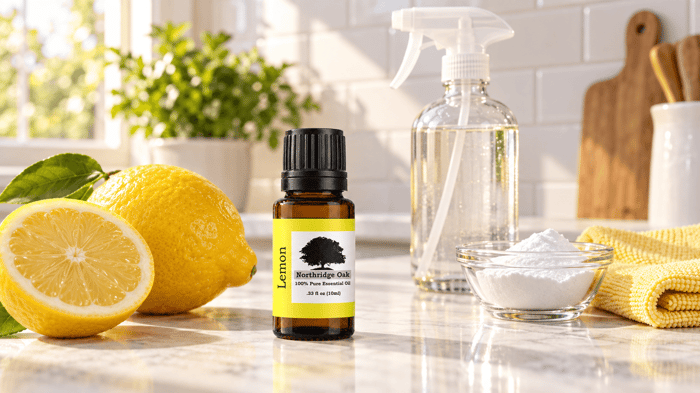
Lemon Essential Oil room spray is an easy way to bring a fresh citrus-peel aroma into an entryway, bathroom, laundry room, or living space. With Northridge Oak Lemon Essential Oil, a small measured amount can brighten a room without a dense perfume impression.
100% Pure Lemon Essential Oil – 10 mL

$7.50
Bright, Fresh and Useful Far Beyond the Diffuser Northridge Oak Lemon Essential Oil has the crisp, cheerful aroma of freshly cut lemon peel—but its value goes well beyond making a room smell good. A few carefully measured drops can brighten… read more
This guide provides a dependable base formula, ten variations, mixing guidance, material precautions, and storage advice. It also explains why oil and water separate—an important detail many quick recipes skip.
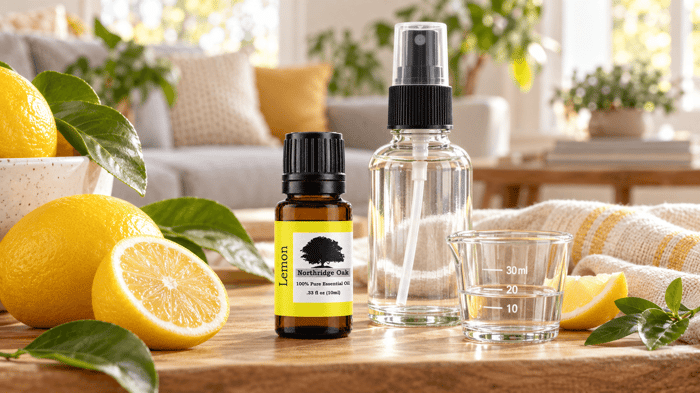
Basic 4-Ounce Lemon Room Spray
- 4-ounce glass spray bottle
- 24 total drops essential oil
- 1 tablespoon high-proof alcohol or a room-spray solubilizer used according to directions
- Distilled water to fill
Add solubilizer and essential oil, mix, then add water. Cap and shake. Label with recipe and date. Even with a dispersing ingredient, shake before use. Mist into open room air away from faces and surfaces, using less in small spaces.
Why Essential Oil Does Not Dissolve in Water
Essential oils are hydrophobic. Drops added directly to water float, cling to the bottle, and may leave the nozzle in concentrated bursts. High-proof alcohol can help distribute oil, while a purpose-made solubilizer can create more consistent dispersion. Neither turns a casual mixture into a preservation-tested commercial formula, so make small batches and keep equipment clean.
10 Room Spray Recipes
| Blend | Drops per 4 oz | Aroma |
|---|---|---|
| Simple Lemon | 24 Lemon | Bright and direct |
| Lemon Lavender | 16 Lemon + 8 Lavender | Soft freshness |
| Citrus Grove | 12 Lemon + 12 Blood Orange | Juicy and cheerful |
| Clear Kitchen | 16 Lemon + 4 Rosemary + 4 Peppermint | Herbal and brisk |
| Open Window | 16 Lemon + 8 Eucalyptus | Airy and vivid |
| Grounded Citrus | 16 Lemon + 8 Cedarwood | Warm and steady |
| Quiet Light | 14 Lemon + 10 Frankincense | Resinous citrus |
| Garden Lemon | 16 Lemon + 8 Geranium | Floral and green |
| Fresh Entry | 14 Lemon + 6 Eucalyptus + 4 Cedarwood | Clean and grounded |
| Bright Linen | 14 Lemon + 8 Lavender + 2 Peppermint | Soft with cool finish |
Shop the oils used in these recipes: Lavender, Blood Orange, Rosemary, Peppermint, Eucalyptus, Cedarwood, Frankincense, and Geranium Essential Oil.
How to Choose the Blend
Use Simple Lemon to understand the oil alone. Lavender and Geranium soften it. Blood Orange emphasizes juicy citrus. Eucalyptus, Peppermint, and Rosemary create a brisk profile. Cedarwood and Frankincense make the aroma warmer and help the quick top note feel more complete.
Best Places to Use It
Entryway: mist lightly before guests arrive. Bathroom: use after ordinary cleaning and ventilation. Laundry room: spray the air while folding clean items. Kitchen: wait until cooking heat and flame are off. Living room: choose Lavender or Frankincense. A room spray adds aroma; it does not correct moisture, smoke, spoiled food, plumbing, or another odor source.
Fabric and Surface Testing
Airborne mist settles. Test the formula on a hidden area before using near upholstery, curtains, rugs, finished wood, natural stone, painted surfaces, or electronics. Essential oil and alcohol may spot fabric or alter a finish. Spray toward the center of open air, not furniture. Wipe overspray promptly so hard floors do not become slippery.
How Long Does It Last?
Freshness depends on water, alcohol or solubilizer, bottle sanitation, and storage. A home recipe is not preservation-tested. Make a small amount, keep it cool and dark, and discard it if color, clarity, pressure, odor, or texture changes. Never top off an old batch; wash and dry the bottle first.
Room Spray vs Diffuser
A spray gives an immediate but brief burst. A diffuser releases aroma gradually during a planned session. Choose spray for a quick entryway reset and diffusion for a 15- to 30-minute routine. Neither requires putting Lemon on skin, so both avoid leave-on phototoxicity concerns from expressed citrus oil.
Aroma Journal Method
Record blend, drop count, room, time, and perceived strength after one, five, and fifteen minutes. If it fades quickly, add a small amount of Cedarwood or Frankincense next time. If heavy, increase Lemon. If sharp, add Lavender. Change only one element per batch.
Adjusting for Room Size
For a small bathroom, begin with one or two sprays and leave the door open. For a large living area, spray near the activity rather than trying to saturate the whole space. Airflow, ceiling height, textiles, and humidity all affect how long the aroma remains noticeable. Wait several minutes before adding more.
Cleaning the Bottle
When a batch is finished, rinse the bottle, wash it with hot soapy water, and clean the dip tube and nozzle. Allow every part to dry completely before refilling. Residual oil from an old recipe can distort the next blend, while trapped water or visible residue shortens the useful life of a homemade mixture.
Turning One Formula Into a Seasonal Set
Keep Lemon as the constant and change one supporting oil. Blood Orange makes spring and summer blends juicy; Cedarwood or Frankincense gives autumn depth; Balsam Fir creates a bright winter forest. A consistent total drop count lets you compare the aroma family without accidentally changing strength at the same time.
Children and Pets
Keep the bottle inaccessible and never let children handle it. Ventilate and use fewer sprays. Do not spray pets, bedding, crates, toys, bowls, or cages. Animals must be able to leave, and birds are especially sensitive to airborne materials. Read our Lemon Essential Oil and dogs guide.
General Safety
Do not ingest. Avoid eyes, faces, skin, food, flame, hot appliances, and concentrated mist. Mark the bottle “room spray.” Do not reuse a beverage container. If anyone develops coughing, wheezing, headache, nausea, or irritation, stop and move to fresh air.
Bring Brightness Into the Room
Start with Simple Lemon, then choose a blend that fits the space. Shop Northridge Oak Lemon Essential Oil for a pure, undiluted, small-batch citrus aroma.
Lemon Essential Oil Learning Center
- Lemon Essential Oil Benefits, Uses, Research, Recipes & Safety
- How to Use Lemon Essential Oil
- Is Lemon Essential Oil Safe for Dogs?
- Relieving Headaches With Lemon Essential Oils
References
- Dosoky NS, Setzer WN. Biological Activities and Safety of Citrus spp. Essential Oils. 2018. Read the review.
- Kiecolt-Glaser JK, et al. Olfactory influences on mood and autonomic, endocrine, and immune function. 2008. Read the study.
These statements have not been evaluated by the Food and Drug Administration. This product and the information in this article are not intended to diagnose, treat, cure, or prevent any disease. This content is for educational purposes only and is not a substitute for professional medical advice.