Table of Contents
- The Simple Answer: When Is Lemon Essential Oil Phototoxic?
- Why the Extraction Method Matters
- What the Lemon Phototoxicity Study Found
- The Easy 12-Hour Rule
- How to Dilute Lemon Essential Oil
- Three Inviting Evening Recipes
- Wash-Off Uses Make Lemon Especially Convenient
- Diffusing Lemon Does Not Create the Same Sunlight Risk
- Can You Use Lemon Essential Oil on the Face?
- Cleaning With Lemon Essential Oil
- Phototoxicity and Skin Irritation Are Not the Same Thing
- Are Other Citrus Essential Oils Phototoxic?
- What to Do If You Applied Lemon Before Going Into the Sun
- A Simple Decision Guide
- Enjoy Lemon With Confidence
- Lemon Essential Oil Learning Center
- Research and References
- Frequently Asked Questions
Yes—some Lemon Essential Oil can make skin more sensitive to sunlight. But that does not mean you need to avoid Lemon in body care. It means you need to know what kind of Lemon oil you have, dilute it properly and choose the right time to use it.
100% Pure Lemon Essential Oil – 10 mL

$7.50
Bright, Fresh and Useful Far Beyond the Diffuser Northridge Oak Lemon Essential Oil has the crisp, cheerful aroma of freshly cut lemon peel—but its value goes well beyond making a room smell good. A few carefully measured drops can brighten… read more
The concern applies mainly to cold-pressed or expressed Lemon Essential Oil that remains on the skin before strong ultraviolet exposure. Steam-distilled Lemon is generally considered non-phototoxic, and diffusing Lemon or using it in household cleaning does not create the same concern.
Once you understand that difference, Lemon becomes much easier to use confidently. You can enjoy its bright aroma in evening body oils, pre-shampoo treatments, wash-off recipes, diffuser blends and cleaning formulas without turning a simple safety point into something frightening or complicated.
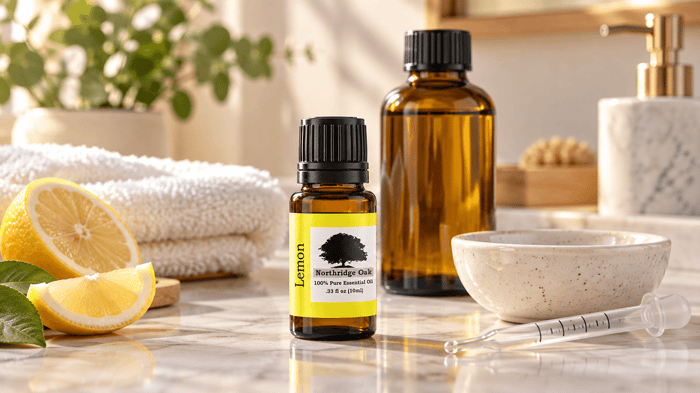
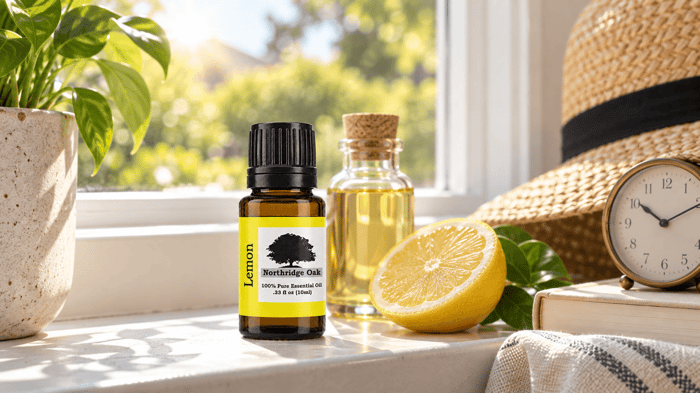
Northridge Oak Lemon Essential Oil brings the crisp scent of freshly cut lemon peel to everyday routines. This guide explains exactly when sunlight matters, how to dilute Lemon and which uses are simplest when you want the benefits without unnecessary worry.
The Simple Answer: When Is Lemon Essential Oil Phototoxic?
Phototoxicity happens when two things occur together:
- A light-reactive substance remains on the skin.
- That skin is then exposed to strong ultraviolet light from the sun or a tanning bed.
Either one by itself is not the complete problem. A properly diluted Lemon body oil used at night is very different from undiluted cold-pressed Lemon applied to bare arms immediately before hours in direct summer sun.
A phototoxic reaction can resemble a severe sunburn. The skin may become red, painful, swollen or blistered, and discoloration can sometimes remain after the immediate reaction settles. The purpose of safe-use guidance is to prevent that combination of topical Lemon and strong UV exposure.
Why the Extraction Method Matters
Lemon Essential Oil is commonly produced in two different ways, and that difference matters more than many people realize.
| Type of Lemon Essential Oil | How It Is Made | Sunlight Consideration |
|---|---|---|
| Cold-pressed or expressed | The aromatic oil is mechanically pressed from the peel. | May contain the natural peel compounds associated with phototoxicity. |
| Steam-distilled | Steam carries the lighter aromatic compounds from the peel. | Generally contains very little of the heavier phototoxic compounds and is usually considered non-phototoxic. |
| FCF or furocoumarin-reduced | The primary light-reactive compounds have been removed or substantially reduced. | Designed for uses where phototoxicity is a concern; follow the supplier's directions. |
| Extraction method unknown | The label does not clearly identify the process. | Use the more cautious cold-pressed guidance. |
Cold pressing captures a rich, true-to-peel aroma, but it can also carry over naturally occurring substances from the outer peel. Some of these substances react with ultraviolet light. Steam distillation leaves most of those heavier compounds behind.
This is why the phrase “all citrus oils are phototoxic” is too broad. The plant, the part used and the extraction method all matter.
What the Lemon Phototoxicity Study Found
A 1985 study examined different Lemon oils to find out which parts of the oil were responsible for reactions to ultraviolet light.
The researchers identified two naturally occurring peel compounds—oxypeucedanin and bergapten—as the main contributors. In everyday terms, these are the parts of certain cold-pressed Lemon oils that can cause trouble when enough oil is left on the skin and then exposed to strong UV light.
The study also found that the amount of these light-reactive compounds varied by more than twentyfold among the Lemon oil samples. That helps explain why the risk cannot be judged by aroma alone and why one Lemon oil may not behave exactly like another.
The useful takeaway is simple: know the extraction method when possible, dilute the oil and separate leave-on use from strong sunlight.
View the Lemon oil phototoxicity study.
The Easy 12-Hour Rule
For a leave-on recipe made with cold-pressed Lemon Essential Oil, keep the treated skin away from direct sun, tanning beds and other strong ultraviolet exposure for at least 12 hours.
This does not mean you need to stay indoors after diffusing Lemon or cleaning the kitchen with it. The rule is for Lemon oil that remains on the skin.
The easiest habit is to use leave-on Lemon body oils in the evening. Apply the diluted blend after your nighttime shower, let the aroma become part of your wind-down routine and keep the treated areas covered if you will be outside early the next morning.
How to Dilute Lemon Essential Oil
Essential oils are concentrated. A carrier oil spreads Lemon over a larger area, makes application more even and reduces the chance of ordinary irritation.
For a gentle adult body oil, combine:
- 6 total drops of essential oil
- 1 ounce of carrier oil
This creates an approximate 1% dilution. Lemon may make up all six drops, or it can be blended with oils such as Lavender, Frankincense, Geranium or Cedarwood.
Dilution improves topical safety, but it does not erase every sunlight consideration. Continue to follow the 12-hour rule when using cold-pressed Lemon in a leave-on product.
Three Inviting Evening Recipes
1. Lemon, Lavender and Frankincense Nighttime Body Oil
- 3 drops Lemon Essential Oil
- 2 drops Lavender Essential Oil
- 1 drop Frankincense Essential Oil
- 1 ounce carrier oil
Combine the ingredients in an amber bottle. Massage a small amount onto the arms, shoulders or legs after an evening shower. Lemon keeps the aroma bright, Lavender softens it and Frankincense adds a warm resinous depth.
2. Lemon and Geranium Evening Glow Oil
- 3 drops Lemon Essential Oil
- 3 drops Geranium Essential Oil
- 1 ounce carrier oil
This floral-citrus blend feels especially cheerful after a long day. Apply a small amount to the body in the evening and allow it to absorb before dressing.
3. Lemon, Cedarwood and Lavender Wind-Down Oil
- 3 drops Lemon Essential Oil
- 2 drops Cedarwood Essential Oil
- 1 drop Lavender Essential Oil
- 1 ounce carrier oil
Cedarwood grounds Lemon's sparkling top note while Lavender rounds out the blend. Use it as an evening hand, foot or body massage oil.
For every recipe, patch test first and keep treated skin protected from strong UV exposure for at least 12 hours if the Lemon oil is cold-pressed or the extraction method is unknown.
Wash-Off Uses Make Lemon Especially Convenient
Not every topical use is a leave-on use. Lemon works beautifully in routines that are rinsed or washed away.
Pre-Shampoo Scalp Oil
Combine three drops of Lemon and three drops of Rosemary Essential Oil with one ounce of carrier oil. Massage a small amount onto the scalp, leave it for 10–20 minutes and shampoo thoroughly.
This gives you Lemon's fresh aroma without leaving a body oil on exposed skin all day. Learn more in our guide to Lemon Essential Oil for hair and scalp.
Single-Use Shower Wash
Mix one drop of Lemon into one tablespoon of unscented body wash immediately before use. Wash and rinse thoroughly. Prepare one serving at a time instead of adding essential oil to the entire bottle.
Even with wash-off applications, avoid using undiluted Lemon directly on the skin and wash thoroughly before sun exposure.
Diffusing Lemon Does Not Create the Same Sunlight Risk
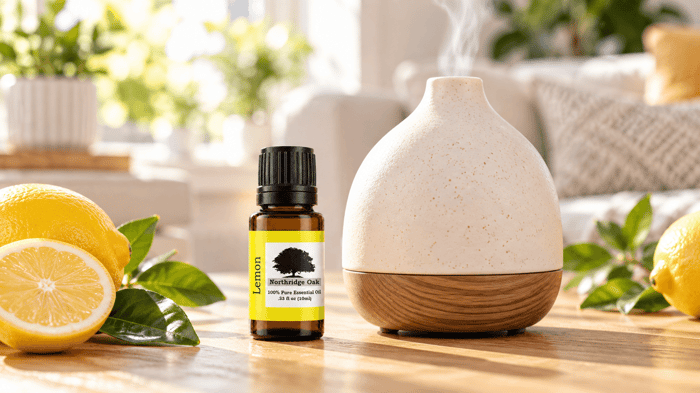
Phototoxicity is a skin-and-UV issue. When Lemon Essential Oil is placed in a diffuser, you are enjoying its aroma in the air rather than coating sun-exposed skin with it.
That makes diffusion one of the easiest ways to enjoy Lemon at any time of day. Add the amount recommended for your diffuser, begin with fewer drops in a small room and diffuse with reasonable ventilation.
Try Lemon alone when you want a clean, bright atmosphere, or explore our Lemon Essential Oil diffuser blends and the research behind the benefits of diffusing Lemon Essential Oil.
Can You Use Lemon Essential Oil on the Face?
Facial skin is frequently exposed to daylight, so cold-pressed Lemon is usually easiest to manage in nighttime facial care rather than a morning product.
Use a conservative dilution, patch test first and keep the formula away from the eyes and other sensitive areas. If you are new to facial essential oils, a wash-off product or professionally formulated product may be simpler than creating a leave-on facial serum.
For more ideas and precautions, visit Lemon Essential Oil for skin.
Cleaning With Lemon Essential Oil
Lemon's sunlight warning should not distract from one of its most practical strengths: household cleaning. Lemon oil is rich in limonene, a citrus compound useful for loosening grease, sticky labels and oily residue.
Use Lemon in a properly formulated surface spray or place a drop on a cleaning cloth for adhesive residue, testing an inconspicuous area first. Avoid unfinished wood, delicate stone, painted surfaces and plastics that could be affected by concentrated oil.
Wash your hands if concentrated Lemon contacts the skin. Then continue with your day knowing that household use is different from intentionally applying a leave-on body oil.
Explore 12 natural Lemon cleaning uses and our detailed guide to Lemon Essential Oil for kitchen cleaning and degreasing.
Phototoxicity and Skin Irritation Are Not the Same Thing
These two safety concerns are often confused.
- Phototoxicity requires both a light-reactive substance on the skin and ultraviolet exposure.
- Irritation can happen without sunlight when an essential oil is too concentrated or the skin is especially sensitive.
That is why both precautions matter: dilute Lemon for topical use, and follow sunlight guidance when the oil is cold-pressed or expressed.
Oxidized essential oil may also be more irritating. Keep the cap tightly closed, store the bottle away from heat and direct light, and replace oil that has changed noticeably in aroma or consistency.
Are Other Citrus Essential Oils Phototoxic?
Some are and some are not. Bergamot is especially well known for phototoxicity when it contains its natural light-reactive components. Certain expressed Lime, Bitter Orange and Grapefruit oils may also require precautions. Sweet Orange is generally not considered phototoxic, although it should still be diluted properly.
Do not assume that every citrus oil follows one universal rule. Check the botanical name, extraction method and supplier guidance for the specific bottle you are using.
If you enjoy citrus blends, Bergamot Essential Oil creates a beautiful companion to Lemon, but its own sunlight guidance must also be respected.
What to Do If You Applied Lemon Before Going Into the Sun
If you realize that cold-pressed Lemon has been applied to exposed skin:
- Move out of direct sunlight or other strong UV exposure.
- Gently wash the area with soap and water.
- Cover the skin with clothing and keep it protected.
- Do not scrub, exfoliate or apply additional essential oils.
- Seek medical guidance if burning, swelling, blistering or a significant reaction develops.
Quick, calm action is more useful than panic.
A Simple Decision Guide
- Diffusing Lemon? Sunlight precautions are not needed because it is not being left on the skin.
- Using Lemon for cleaning? Avoid prolonged skin contact and wash your hands after concentrated use.
- Using a wash-off hair or body recipe? Dilute properly and rinse thoroughly.
- Using cold-pressed Lemon in a leave-on body oil? Apply it in the evening and avoid strong UV exposure for at least 12 hours.
- Using steam-distilled or FCF Lemon? Follow the supplier's directions and continue using sensible dilution.
- Do not know the extraction method? Follow the cold-pressed precautions.
Enjoy Lemon With Confidence
The right lesson is not that Lemon Essential Oil is too risky for topical use. The lesson is that extraction method, dilution, timing and exposure all matter.
Use cold-pressed Lemon in the evening, choose wash-off applications when they suit your routine and enjoy diffusion whenever you want its lively citrus atmosphere. Those small decisions allow Lemon to remain one of the most versatile oils in your collection.
Northridge Oak Lemon Essential Oil is 100% pure, undiluted, produced in small batches and supported by third-party GC/MS testing. Check the product label or supplier information for the extraction method, then choose the use that fits your day.
Lemon Essential Oil Learning Center
Continue exploring Lemon Essential Oil:
- Lemon Essential Oil Benefits, Uses, Research, Recipes and Safety
- How to Use Lemon Essential Oil: 15 Practical Uses
- Lemon Essential Oil Safety: Dilution, Kids, Pregnancy and Storage
- Benefits of Diffusing Lemon Essential Oil
- Lemon Essential Oil Diffuser Blends
- What Blends Well With Lemon Essential Oil?
- Lemon Essential Oil for Cleaning: 12 Natural Uses
- Lemon Essential Oil for Kitchen Cleaning and Degreasing
- Lemon Essential Oil for Laundry and Household Odors
- Lemon Essential Oil for Skin
- Lemon Essential Oil for Hair and Scalp
- Lemon Essential Oil for Nails and Cuticles
Research and References
- Naganuma M, Hirose S, Nakayama Y, Nakajima K, Someya T. A Study of the Phototoxicity of Lemon Oil. Archives of Dermatological Research. 1985;278(1):31–36. View the PubMed record.
- Kejlová K, Jírová D, Bendová H, Gajdos P, Kolárová H. Phototoxicity of Essential Oils Intended for Cosmetic Use. Toxicology in Vitro. 2010;24(8):2084–2089. View the PubMed record.
- Dosoky NS, Setzer WN. Biological Activities and Safety of Citrus Species Essential Oils. International Journal of Molecular Sciences. 2018;19(7):1966. Read the review.
- Tisserand Institute. Phototoxicity: Essential Oils, Sun and Safety. Read the safety guide.
These statements have not been evaluated by the Food and Drug Administration. This product and the information in this article are not intended to diagnose, treat, cure or prevent any disease. This content is for educational purposes only and is not a substitute for professional medical advice.