Table of Contents
- Why Ylang Ylang suits a calming routine
- What human research found
- A ten-minute evening reset
- Three blends for three moods
- Try a personal aroma ritual
- Pair aroma with what already helps
- Let personal preference guide the blend
- Create a routine that fits real life
- Choose the best moment for Ylang Ylang
- Use Ylang Ylang with confidence
- Continue learning about Ylang Ylang essential oil
- Frequently Asked Questions
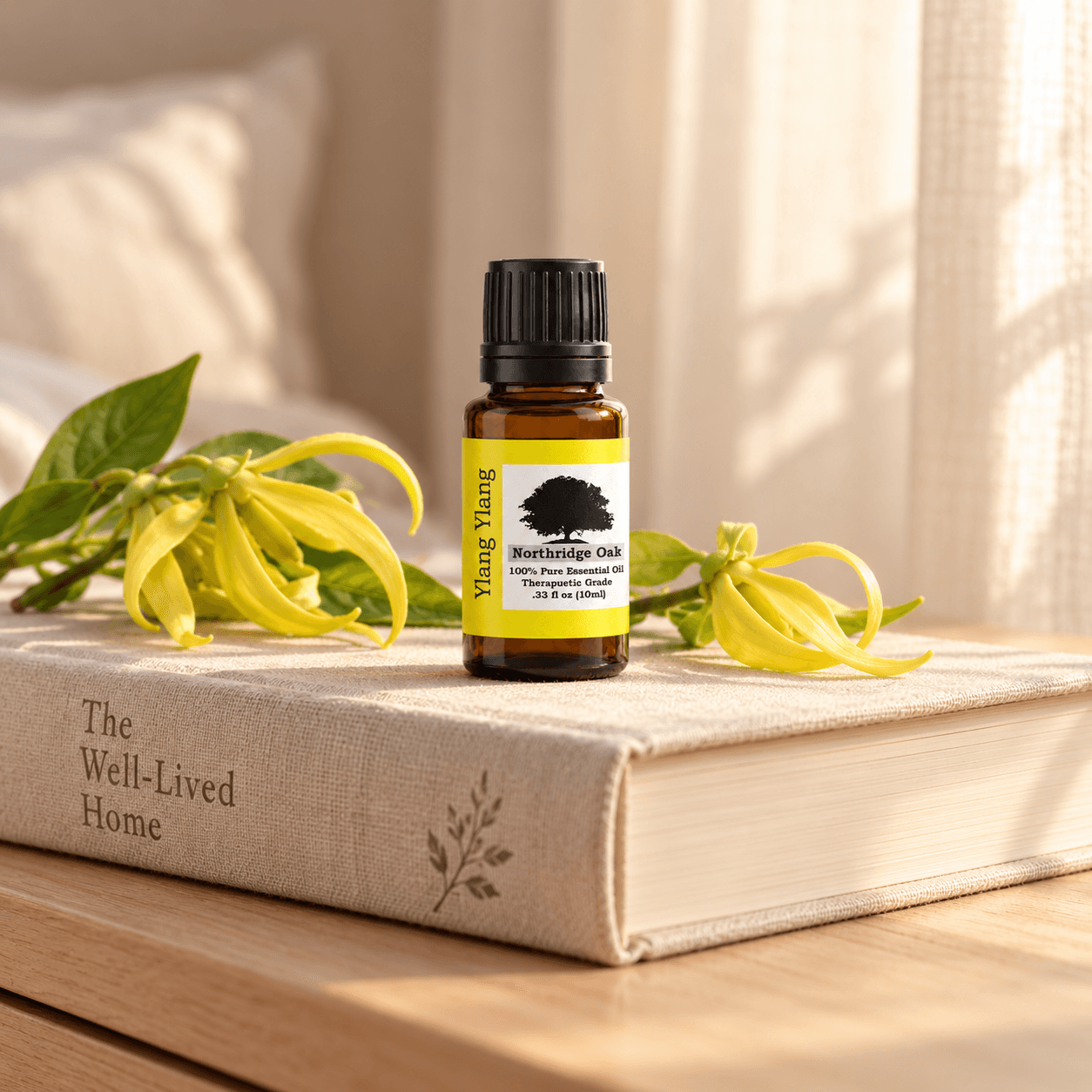
There are evenings when a room needs more than silence—it needs a clear signal that the pace has changed. Ylang Ylang Essential Oil creates that signal beautifully. Its lush floral aroma feels warm, enveloping and special, making it a natural companion for slow breathing, gentle stretching, journaling and the transition out of a busy day.
Why Ylang Ylang suits a calming routine
Scent can become a reliable cue. When the same aroma accompanies the same sequence—dim the lights, put away the phone, breathe slowly, stretch—the brain begins to recognize the pattern. Ylang Ylang works especially well because its fragrance is distinctive enough to mark the moment and beautiful enough to make the ritual inviting.
What human research found
In a 2004 randomized clinical study, Hongratanaworakit and Buchbauer assigned 24 healthy volunteers to Ylang Ylang inhalation or an odorless control. Researchers measured blood pressure, pulse, breathing, skin temperature and self-rated feelings. The Ylang Ylang group showed significant decreases in blood pressure and pulse alongside increases in subjective attentiveness and alertness. The authors described the overall pattern as “harmonizing.” Read the PubMed record for the human inhalation study.
A 2008 randomized study of 144 volunteers compared Ylang Ylang, Peppermint and a no-aroma condition. Ylang Ylang significantly increased self-rated calmness. The broader pattern suggests it is especially well suited to quiet, low-pressure moments rather than demanding memory work. See the 144-person aroma study.
A ten-minute evening reset
- Open a window or door briefly to refresh the room.
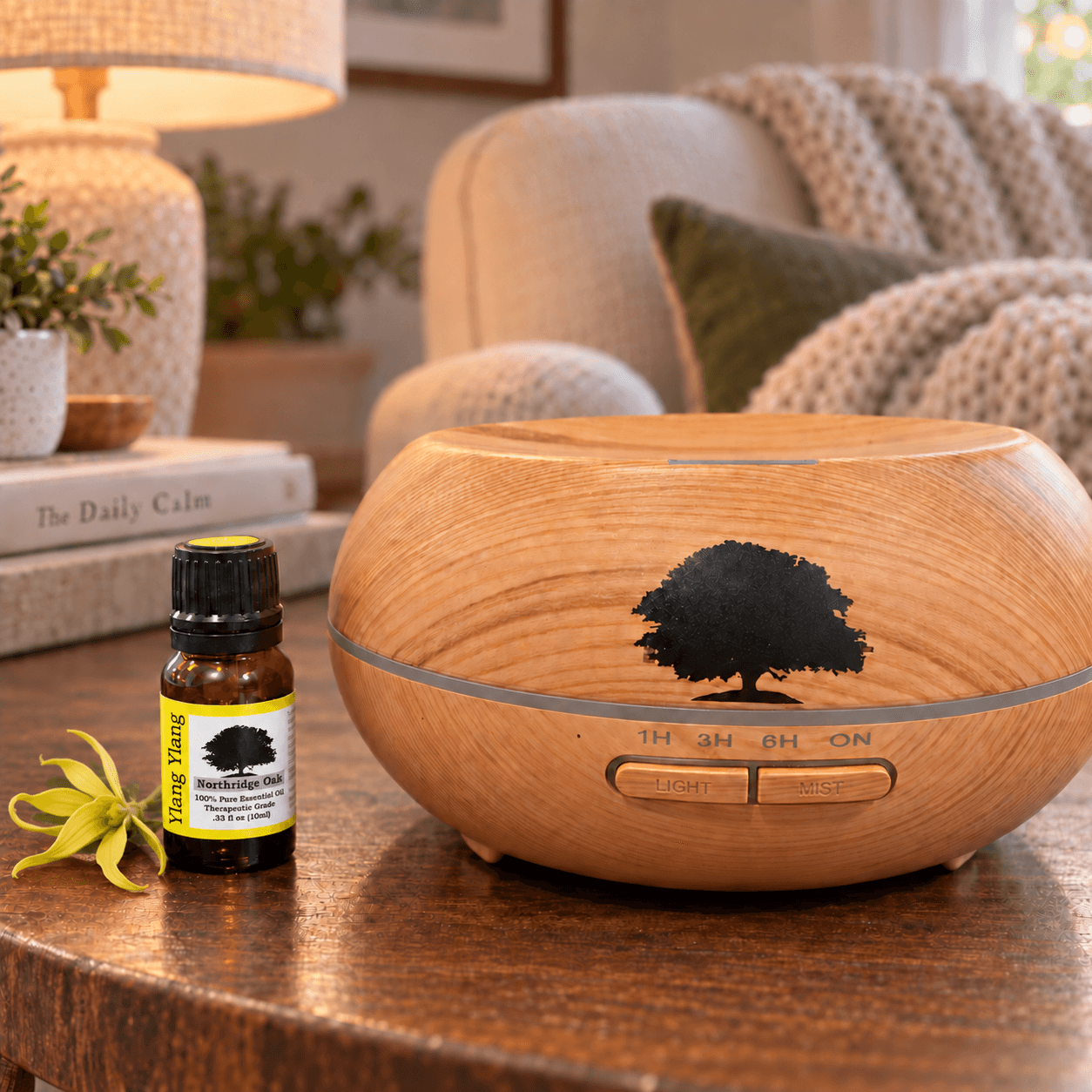
- Add 3 drops Bergamot, 2 drops Lavender and 1 drop Ylang Ylang to a water-filled diffuser.
- Set a ten-minute timer and place the phone face down.
- Take five slow, comfortable breaths, allowing the exhale to lengthen naturally.
- Roll the shoulders, unclench the jaw and write down tomorrow’s first priority.
The ritual is simple enough to repeat, which is what gives it power. Ylang Ylang supplies the sensory marker; your consistent actions build the habit.
Three blends for three moods
Soft Landing
3 drops Bergamot, 2 drops Lavender and 1 drop Ylang Ylang. Bright at first and gently floral as it settles.
Quiet Confidence
2 drops Frankincense, 2 drops Cedarwood, 1 drop Blood Orange and 1 drop Ylang Ylang. Warm, composed and grounded.
Comforting Bloom
3 drops Lavender, 1 drop Geranium and 1 drop Ylang Ylang. A full floral bouquet with a familiar herbal softness.
Try a personal aroma ritual
Add 6 drops Bergamot, 3 drops Lavender and 1 drop Ylang Ylang to a blank adult inhaler wick. Cap and label it. Hold it several inches from the nose for one or two gentle breaths when beginning a quiet break. The compact format makes the scent easy to associate with a particular routine.
Pair aroma with what already helps
Ylang Ylang fits naturally beside a warm shower, comfortable clothing, a cup of caffeine-free tea, a short walk, music or a few pages of a book. The oil brings pleasure and consistency to the routine while these familiar practices support the larger experience.
Let personal preference guide the blend
Some people love Ylang Ylang immediately; others enjoy it most when citrus or woods give it space. Begin with one drop. If the floral character feels rich, add Bergamot, Lemon or Cedarwood. If you want more softness, add Lavender. A blend that feels personally beautiful is the one most likely to become part of your life.
Create a routine that fits real life
If you have five minutes, diffuse a small blend while preparing tomorrow’s clothes and taking several comfortable breaths. If you have twenty minutes, add gentle stretching or a short journal entry. The aroma gives both versions a recognizable beginning.
Keep the same core formula for a week before changing it. Repetition helps the scent become associated with the routine and gives you enough experience to know whether the balance feels right. A simple ritual repeated several times is more useful than a complicated idea used once.
Choose the best moment for Ylang Ylang
The 144-person study offers a practical clue: Ylang Ylang increased calmness while alertness and cognitive performance shifted. That makes it a thoughtful choice after demanding work, during a low-pressure creative practice, before a warm shower or while reading for pleasure.
After a seven-day trial, ask whether you looked forward to the aroma, whether it marked the beginning of a calmer period and whether the blend felt gentle enough to enjoy consistently. More Bergamot creates lift, Lavender creates familiarity and Cedarwood adds quiet structure.
For a beautifully simple first week, keep Ylang Ylang to one drop and let Bergamot or Lavender lead. This gives the floral note room to become familiar and makes each evening feel welcoming rather than elaborate.
Use Ylang Ylang with confidence
Ylang Ylang is beautifully expressive, so one or two drops often give a blend all the floral character it needs. Dilute before skin use, patch test the finished formula and keep essential oil away from eyes, ears, mucous membranes and sensitive areas. Reserve it for aromatic and appropriately diluted topical use. Pregnancy, breastfeeding, young children, pets and individual health considerations benefit from guidance tailored to the exact household. The complete Ylang Ylang safety guide offers practical dilution and diffusion guidance.
Continue learning about Ylang Ylang essential oil
Make this article part of a complete Ylang Ylang routine:
- Ylang Ylang Essential Oil: Benefits, Uses, Blends & Safety
- Ylang Ylang Essential Oil Diffuser Blends
- What Blends Well With Ylang Ylang Essential Oil?
- What Does Ylang Ylang Essential Oil Smell Like?
- Ylang Ylang Essential Oil for Relaxation, Stress & Mood
- Ylang Ylang Essential Oil for Sleep & Bedtime
- Ylang Ylang Natural Perfume Recipes
- Ylang Ylang Essential Oil for Hair & Scalp
- Ylang Ylang Essential Oil for Skin & Massage
- Ylang Ylang Essential Oil Research & Chemistry
- Ylang Ylang Essential Oil Safety
These statements have not been evaluated by the Food and Drug Administration. Northridge Oak products are not intended to diagnose, treat, cure or prevent disease.