Table of Contents
- What Makes Bay Laurel Interesting for Skin Formulas?
- Simple Body Oil
- Fresh Herbal Hand Oil
- How to Keep Skin Use Comfortable
- Choosing a Carrier
- Why Bay Laurel Continues to Interest Skin-Care Formulators
- A Simple Way to Experience Bay Laurel
- Continue Learning About Bay Laurel Essential Oil
- Frequently Asked Questions
Some essential oils make sense the moment you open the bottle. Bay Laurel is one of them—but not always for the reason people expect. Its fresh, green, herbaceous and gently spicy aroma can shift a room, soften the edges of a familiar blend and turn a simple routine into something you genuinely look forward to. This guide brings the aroma, practical uses, research, recipes and safety together so you can understand what makes Bay Laurel distinctive and decide how it might fit naturally into your own home.
What Makes Bay Laurel Interesting for Skin Formulas?
Researchers have studied the composition, antioxidant activity and antimicrobial activity of Laurus nobilis extracts and essential oil in laboratory settings. Those positive findings help formulators understand why the plant continues to attract interest, while home users can enjoy Bay Laurel as a distinctive aromatic ingredient in a carefully diluted body-care routine.
Simple Body Oil
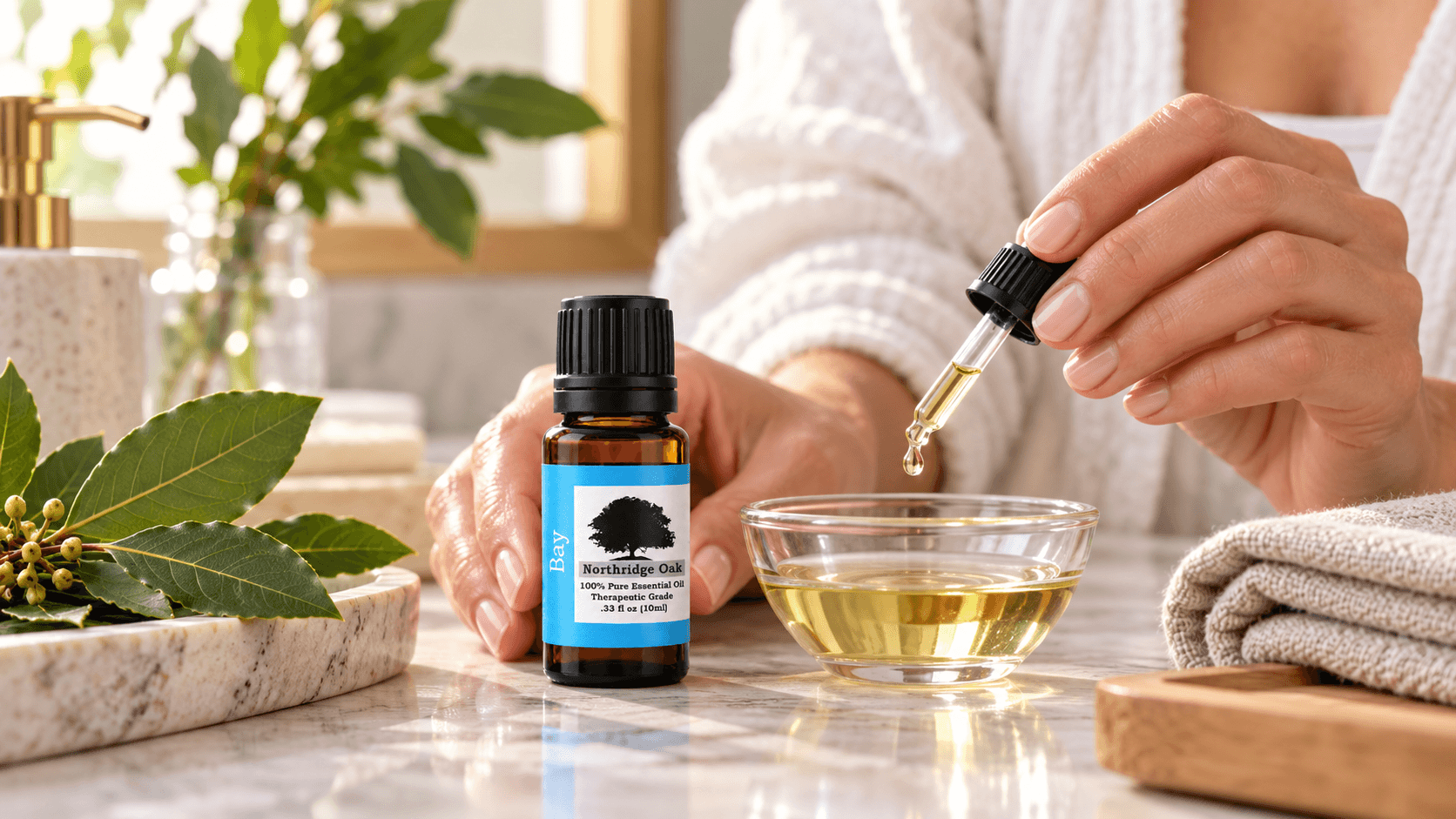
Add one drop of Bay Laurel and one drop of Lavender to two tablespoons of jojoba, apricot kernel or fractionated coconut oil. Mix thoroughly, patch test, and use a small amount on intact skin. This creates an aromatic body oil at a conservative concentration.
Fresh Herbal Hand Oil
Combine one tablespoon of jojoba with one drop Bay Laurel. If you prefer a brighter aroma, add one drop of Bergamot FCF or Lemon while keeping the overall concentration modest. Remember that some expressed citrus oils can be phototoxic; check the specifications of the exact citrus oil used.
How to Keep Skin Use Comfortable
Choose intact skin, keep the blend away from the eyes and begin with a properly diluted patch test. Facial and highly reactive skin benefit from individualized formulation guidance, while a qualified professional can help shape a comfortable routine for persistent concerns.
Choosing a Carrier
Jojoba gives a light, stable feel; fractionated coconut oil spreads easily; apricot kernel oil feels soft and emollient. The carrier changes the texture and experience, while the essential-oil concentration determines exposure. Measure both deliberately.
Why Bay Laurel Continues to Interest Skin-Care Formulators
Modern research gives us several encouraging reasons to appreciate Laurus nobilis. In a 2017 study, Caputo and colleagues found that the Bay Laurel essential oil sample was rich in 1,8-cineole (31.9%), sabinene (12.2%) and linalool (10.2%). The oil also demonstrated marked antifungal activity in laboratory testing, and the researchers examined its antimicrobial performance alongside its major constituent. Read the published study.
Those constituents help explain what makes Bay Laurel so enjoyable to use. The cineole-rich opening contributes its fresh, expansive character; sabinene adds green spice; and linalool brings a softer aromatic dimension. Together they create an oil that feels lively, balanced and much more versatile than a one-note herbal scent.
That balance of freshness, spice and softness makes Bay Laurel worth trying in a carefully diluted body oil, especially when you want a refined and distinctive herbal aroma. These encouraging findings add depth to Bay Laurel’s story and make it especially appealing to explore through well-designed diffuser blends, fresh home aromas and properly diluted personal-care recipes.
Northridge Oak Bay Laurel Essential Oil is 100% pure, undiluted Laurus nobilis essential oil. It is produced in small batches and third-party GC/MS tested, with no fillers or synthetic fragrance. Its fresh, herbal, gently camphoraceous aroma works beautifully in diffuser blends, home recipes and carefully diluted personal-care formulas.
The botanical name matters. True Bay Laurel is Laurus nobilis. West Indian Bay (Pimenta racemosa), cherry laurel and other plants with “laurel” in their names are distinct botanicals, so confirming Laurus nobilis helps you choose the intended aroma and guidance. When you compare recipes or safety advice, confirm that the source is discussing the same botanical species.
Learn the aroma before building a complicated recipe. Place one drop on a paper scent strip, wait several minutes, and smell from a comfortable distance. Notice the cool, cineole-rich opening, the green leafy middle and the warm spicy-woody finish. Smell it again after thirty minutes. That simple exercise makes future blending easier because you are learning directly from the oil’s natural aromatic character.
Start smaller than you think. Bay Laurel has presence, and one drop can reshape an entire blend. In a diffuser recipe, begin with the printed ratio but reduce the total number of drops when using a small room or a compact diffuser. In a topical recipe, careful measurement creates a consistent, comfortable and repeatable blend. A light touch usually creates the most balanced and enjoyable result.
Keep notes as you experiment. Record the oils, ratios, date and first impression, then revisit the aroma after it has rested. Citrus oils often brighten Bay Laurel immediately, while woods and resins become more noticeable later. Written notes help you repeat a blend you love and adjust one that feels too sharp, sweet or medicinal.
Quality and storage affect the experience. A fresh, properly stored oil should smell lively and layered. A lively, layered aroma is a good sign of freshness; when the scent becomes flat or stale, a fresh bottle will give your recipes their best character. Clean tools, tightly closed bottles and a cool storage area protect both the aroma and your finished recipes.
Bay Laurel is concentrated, so a little goes a long way. For topical enjoyment, dilute it in a carrier oil, begin with a conservative concentration and patch test the finished preparation. Keep the finished blend comfortably away from the eyes and other sensitive areas, enjoy the essential oil through aromatic or properly diluted topical use, and keep dried bay leaves for culinary recipes.
Thoughtful use keeps the experience welcoming for everyone. Seek individualized guidance for children, pregnancy or nursing, pets and significant health considerations. Diffuse intermittently in a well-ventilated room with a scent-free exit, and preserve freshness by closing the cap tightly and storing the bottle away from heat and sunlight.
For the broader rules that apply to every oil, read our complete essential oil safety guide and our beginner’s guide to essential oils.
A Simple Way to Experience Bay Laurel
You do not need a complicated project to decide whether this oil is for you. Begin with the aroma itself. Place one drop on a paper scent strip or cotton pad, set it several inches away and notice the first impression. Return after 15 minutes, then again after an hour. Bay Laurel often reveals more character as the sharpest opening settles, and this slower test makes it easier to notice the fresh, green, herbaceous and gently spicy details that disappear when you smell directly from the bottle.
For a first diffuser experience, let Bay Laurel play a supporting role beside two familiar oils. Use the measured recipe in this guide that best matches the room you want to create, diffuse for 20 to 30 minutes with fresh airflow, and write down the proportions. The goal is not to “use” the oil as quickly as possible. It is to discover the version of it that makes you pause, breathe in and think, I want my home to smell like this again.
If that sounds like the kind of ritual you would enjoy, Northridge Oak Bay Laurel Essential Oil is 100% pure and undiluted, bottled in small batches and third-party GC/MS tested. It gives you a clearly identified single oil and a dependable place to begin.
Continue Learning About Bay Laurel Essential Oil
Make this article part of a complete Bay Laurel routine:
- Bay Laurel Essential Oil Benefits, Uses & Safety Guide
- Bay Laurel Essential Oil Diffuser Blends: 20 Fresh Recipes
- What Blends Well With Bay Laurel Essential Oil?
- What Does Bay Laurel Essential Oil Smell Like?
- Bay Laurel Essential Oil for Hair and Scalp: Uses & Recipes
These statements have not been evaluated by the Food and Drug Administration. Northridge Oak products are not intended to diagnose, treat, cure or prevent disease.