Table of Contents
- Bay Laurel Essential Oil at a Glance
- What Is Bay Laurel Essential Oil?
- A Plant With a Remarkable History
- What Does Bay Laurel Essential Oil Smell Like?
- Bay Laurel Chemistry and What the Research Found
- Why Try Bay Laurel Essential Oil?
- A Simple Way to Experience Bay Laurel
- Continue Learning About Bay Laurel Essential Oil
- Frequently Asked Questions
Some essential oils make sense the moment you open the bottle. Bay Laurel is one of them—but not always for the reason people expect. Its fresh, green, herbaceous and gently spicy aroma can shift a room, soften the edges of a familiar blend and turn a simple routine into something you genuinely look forward to. This guide brings the aroma, practical uses, research, recipes and safety together so you can understand what makes Bay Laurel distinctive and decide how it might fit naturally into your own home.
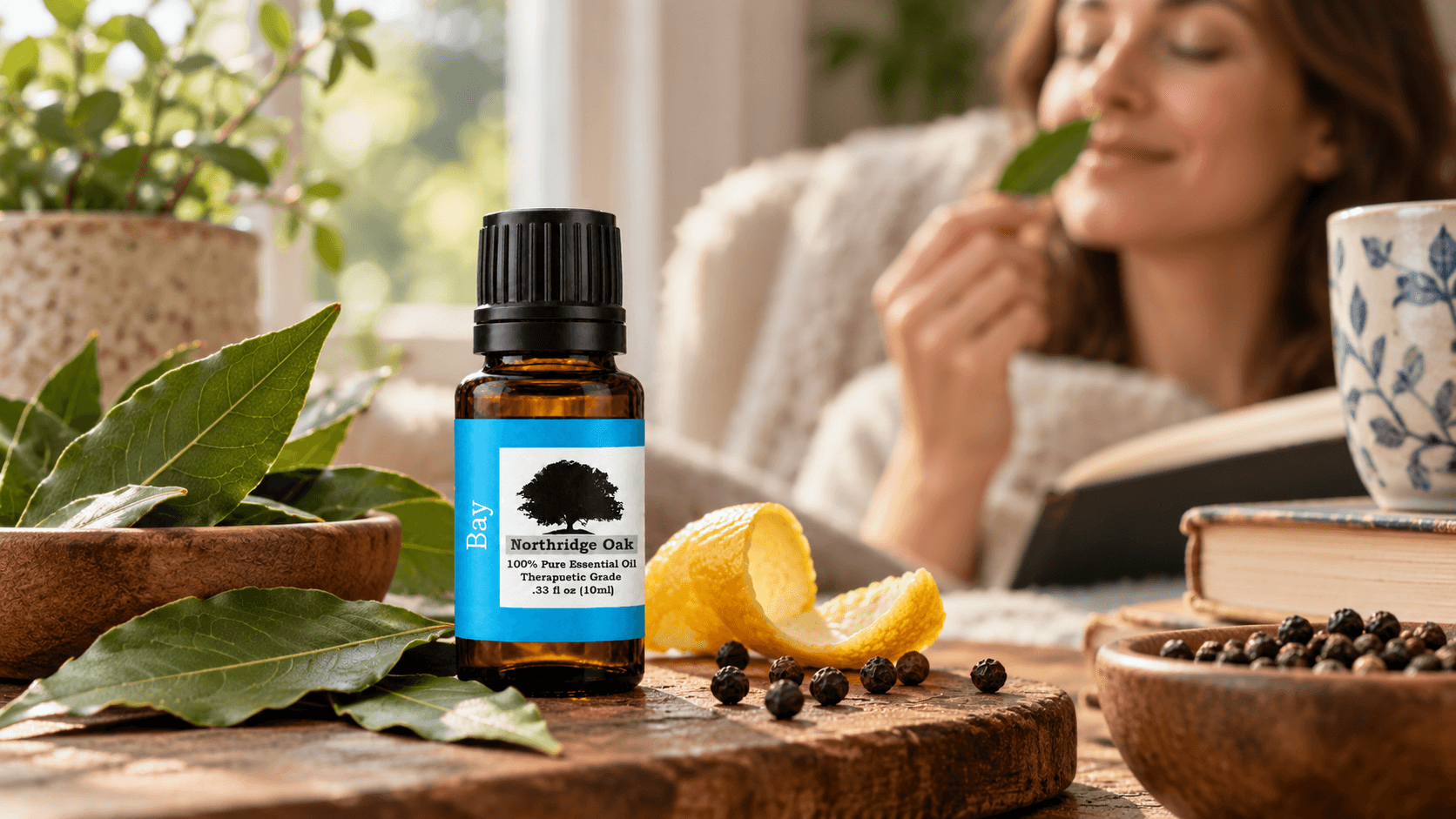
Steam distilled from the leaves of Laurus nobilis, this is the concentrated aromatic expression of the true bay tree—the same species whose leaves have been treasured in Mediterranean kitchens and whose branches became enduring symbols of honor and achievement. Today, Bay Laurel is especially rewarding for diffusion, personal aromatherapy, carefully diluted body and scalp recipes, sophisticated natural perfumery, and fresh-home routines.
This complete guide brings the entire subject together: botanical identity, history, scent, chemistry, published research, practical benefits, blending partners, diffuser recipes, topical ideas, hair and skin applications, home uses, dilution, storage, quality and safety. If Bay Laurel is new to you, you will leave knowing exactly what makes it special and how to begin.
Bay Laurel Essential Oil at a Glance
- Botanical name: Laurus nobilis
- Plant family: Lauraceae
- Plant part: Leaves
- Typical extraction: Steam distillation
- Aroma: Fresh, green, herbaceous, gently camphoraceous, spicy and woody
- Aromatic role: A strong, versatile middle note with a bright opening
- Popular uses: Diffusion, personal aromatherapy, blending, massage oils, hair and scalp recipes, body care and fresh-home aromas
- Best first step: Smell one drop on a scent strip, then try one drop in a simple three-oil diffuser blend
What Is Bay Laurel Essential Oil?
Bay Laurel essential oil is produced by steam distilling the leaves of Laurus nobilis, an evergreen tree native to the Mediterranean region. Steam carries the plant’s volatile aromatic compounds away from the leaf material; cooling then separates the essential oil from the aromatic water. The result is far more concentrated than a dried culinary leaf.
That distinction matters. A bay leaf added to a pot contributes flavor slowly through cooking. Essential oil captures volatile aromatic molecules in a highly concentrated form, so it is measured by the drop and enjoyed through diffusion or properly diluted topical recipes. Keeping those two forms in their intended roles makes Bay Laurel both easy and enjoyable to explore.
True Bay Laurel also has a precise botanical identity. West Indian Bay is Pimenta racemosa, while cherry laurel belongs to the genus Prunus. They have different chemistry, aromas and guidance. Look for Laurus nobilis on the bottle whenever you are shopping for the fresh, green-spicy oil described here.
A Plant With a Remarkable History
Bay Laurel has been woven into Mediterranean life for centuries. Its leaves became part of food traditions, household customs and aromatic preparations. In ancient Greece and Rome, laurel wreaths represented honor, accomplishment and victory. The words “laureate” and “baccalaureate” still carry that symbolism today.
This history gives Bay Laurel unusual depth. It is not simply a trendy aroma discovered for the modern diffuser. It comes from a plant people have valued across generations for its fragrance, usefulness and cultural meaning. Bringing the oil into a workspace, grooming ritual or home blend can feel both fresh and connected to something enduring.
What Does Bay Laurel Essential Oil Smell Like?
The complete aroma is more nuanced than “herbal.” Its first impression is cool, vivid and almost airy. That opening can remind people of Eucalyptus or Rosemary, but Bay Laurel quickly reveals a leafier, spicier personality.
The opening
Fresh, penetrating and green. This is the part of the scent that makes a room feel newly opened and gives citrus oils a crisp frame.
The heart
Dry leaves, aromatic herbs and gentle spice become more noticeable after a few minutes. The heart connects Bay Laurel to the familiar culinary plant while still feeling refined enough for personal fragrance.
The drydown
The later aroma becomes warmer, softer and quietly woody. It is lighter than Cedarwood or Patchouli, yet it has enough depth to keep a blend interesting after the brightest notes settle.
Readers who want to explore every layer can visit our complete guide to what Bay Laurel essential oil smells like.
Bay Laurel Chemistry and What the Research Found
Bay Laurel’s natural chemistry helps explain its memorable aroma and the continuing scientific interest surrounding the plant. Essential-oil composition varies with growing region, harvest, plant part and distillation, so each study represents the specific sample tested. Looking across multiple studies gives us a more complete picture.
Caputo and colleagues, 2017
A 2017 study published in Molecules analyzed Bay Laurel essential oil and reported 1,8-cineole at 31.9%, sabinene at 12.2% and linalool at 10.2% as the leading constituents. The oil demonstrated marked antifungal activity in laboratory testing, and the researchers also evaluated antimicrobial activity of the complete oil and 1,8-cineole. Read the Caputo study.
The positive practical takeaway begins with the aroma: cineole contributes a fresh, expansive opening; sabinene adds lively green spice; and linalool lends a softer aromatic dimension. Their combination helps explain why Bay Laurel can feel invigorating at first and beautifully balanced as it develops.
Ramos and colleagues, 2012
A Portuguese study published in Natural Product Research identified eucalyptol at 27.2%, alpha-terpinyl acetate at 10.2% and linalool at 8.4% among the major constituents of the tested essential oil. In laboratory experiments, the essential oil showed strong antibacterial activity against the foodborne spoilage and pathogenic bacteria included in the study. Read the Ramos study.
Those findings help explain why Bay Laurel continues to attract attention in natural-product and food-preservation research. For the home user, its immediate appeal remains beautifully practical: a crisp botanical aroma that makes cleaning rituals, diffuser blends and fresh-home routines feel brighter and more intentional.
Fidan and colleagues, 2019
A 2019 Molecules study compared essential oils from Bulgarian Bay Laurel leaves, twigs and fruits. The leaf oil had the highest reported yield among the plant parts studied and showed antibacterial and antifungal activity against nearly all of the microorganisms tested. The researchers also documented meaningful differences among the oils from different plant parts. Read the Fidan study.
This is an encouraging reminder that the complete oil is a naturally complex ingredient. It also shows why botanical identity, plant part and quality testing matter. Laboratory research creates a promising foundation for continued study, while everyday use allows us to appreciate Bay Laurel through its aroma, versatility and ability to transform thoughtfully designed blends.
Why Try Bay Laurel Essential Oil?
Bay Laurel earns its place in a collection because it does several aromatic jobs remarkably well. It feels fresh without becoming a simple minty note, herbal without smelling like a kitchen seasoning, and woody without weighing down the blend. That balance makes it especially useful when a familiar combination feels flat or disconnected.
- It refreshes a room. The green, cineole-rich opening feels clean and expansive.
- It brings focus to a blend. Bay Laurel can give citrus, herbs, florals and woods a clear aromatic structure.
- It makes familiar oils feel new. One drop can completely reshape a blend you already enjoy.
- It works across seasons. Pair it with citrus in spring and summer, woods in fall, or evergreens and spice in winter.
- It feels sophisticated. The progression from cool green leaves to spice and wood creates a polished, gender-neutral aroma.
- It connects tradition with modern use. Few oils combine such a recognizable plant, distinguished history and versatile contemporary aroma.
Diffusing Bay Laurel
Diffusion is the easiest way to meet Bay Laurel. Begin with one drop in a small blend; its presence is strong enough to shape the recipe without requiring a large amount. Short, well-ventilated sessions keep the aroma lively and comfortable.
Try these simple starting blends:
- Bright Laurel: 1 drop Bay Laurel, 3 drops Lemon, 1 drop Rosemary
- Green Citrus: 1 drop Bay Laurel, 2 drops Bergamot, 2 drops Blood Orange
- Forest Air: 1 drop Bay Laurel, 2 drops Balsam Fir, 1 drop Cedarwood
- Herbal Calm: 1 drop Bay Laurel, 3 drops Lavender, 1 drop Frankincense
For more ideas, explore 20 Bay Laurel diffuser blends created for mornings, workspaces, spa-like rooms, cozy evenings and fresh-home routines.
Personal aromatherapy
Bay Laurel is a natural fit for workspaces, reading areas and creative routines. Try a drop on a paper scent strip and place it at a comfortable distance, or use an aromatherapy inhaler prepared according to its instructions. The goal is a fresh aromatic cue that helps the moment feel deliberate and welcoming.
Massage and body oils
In a properly diluted body oil, Bay Laurel adds a sophisticated herbal note that pairs beautifully with Lavender, Marjoram, Frankincense or Cedarwood. For a simple adult body oil, begin around a one-percent total essential-oil concentration—approximately one drop of essential oil per teaspoon of carrier, recognizing that drop size varies.
A light concentration is often the most elegant choice because Bay Laurel has plenty of aromatic presence. Patch test the completed blend, then use a small amount on intact skin.
Hair and scalp routines
Bay Laurel’s grooming history and clean herbal aroma make it a compelling addition to pre-shampoo scalp oils and rinse-off recipes. Combine one drop of Bay Laurel with one tablespoon of carrier oil for a simple pre-shampoo treatment. Massage a small amount over the scalp, keep the blend comfortably away from the eyes, leave it on briefly and shampoo thoroughly.
For a more layered aroma, add one drop of Rosemary or Lavender while keeping the total dilution conservative. Our guide to Bay Laurel for hair and scalp includes additional recipes and formulation guidance.
Skin and body-care recipes
Bay Laurel gives body oils and hand oils a polished green aroma. Its character is especially attractive when you want something fresh and botanical with more complexity than a single citrus or floral note.
Try one drop of Bay Laurel and one drop of Lavender in two tablespoons of carrier oil. Mix thoroughly, patch test, and apply a small amount to intact body skin. For a brighter variation, pair Bay Laurel with Bergamot FCF. Learn more in our detailed guide to Bay Laurel essential oil for skin and body-care recipes.
Natural cleaning and fresh-home aromas
Bay Laurel smells naturally at home in cleaning routines. Its crisp leaves, cool herbs and dry spice create a fresh atmosphere in kitchens, entryways, bathrooms and workrooms. Diffuse it while tidying, add it to a professionally formulated unscented cleaning base, or use it on an aroma stone placed near cleaning-cloth storage.
Pair it with Lemon and Tea Tree for a bright bathroom aroma, or combine it with Pine and Cedarwood for a mudroom or garage. Published laboratory findings make the plant especially interesting for natural-product research; use an EPA-registered disinfectant separately whenever verified disinfection is needed. Find more ideas in 12 Bay Laurel natural-cleaning uses.
Bay Laurel is a bridge oil: it connects aroma families that can otherwise feel separate. One part Bay Laurel to two or three parts of a partner oil is an approachable place to begin.
Citrus oils
Lemon feels crisp and cheerful. Bergamot gives Bay Laurel a softer, polished citrus-floral edge. Grapefruit adds a tart sparkle, while Blood Orange produces a warmer, rounder blend.
Herbs and mints
Rosemary creates one of the most seamless pairings because both oils share a clear herbal direction. Eucalyptus emphasizes Bay Laurel’s cool opening. Marjoram makes the blend warmer, while Peppermint and Spearmint add a lively lift.
Woods, evergreens and resins
Cedarwood gives the blend depth and staying power. Balsam Fir and Pine create a forest character. Frankincense makes Bay Laurel feel spacious and composed, while Myrrh brings a darker resinous warmth.
Florals and spice
Lavender is the easiest floral partner because it softens Bay Laurel while preserving its herbal identity. Geranium adds a rosy-green quality. For seasonal blends, a very small amount of Cinnamon Leaf can create a warm wreath-like aroma.
Visit what blends well with Bay Laurel essential oil for complete aroma-family guidance and dependable starting ratios.
Bay Laurel is concentrated, which is part of what makes it so satisfying: a small amount can make a meaningful aromatic difference. Thoughtful measurement helps every recipe feel balanced and comfortable.
- For diffusion: Begin with one drop as part of a small blend, follow the diffuser manufacturer’s guidance and use short sessions with ventilation.
- For adult body use: Start around one percent total essential oil or less unless qualified, oil-specific guidance indicates another limit for the intended use.
- For patch testing: Test the completed diluted formula on a small area of intact skin and observe how it feels before broader use.
- For eyes and sensitive areas: Keep the finished recipe comfortably away from eyes, mucous membranes and highly reactive skin.
- For children, pregnancy, nursing, pets and significant health considerations: Seek individualized guidance that accounts for age, species, concentration, route and personal circumstances.
- For culinary use: Keep essential oil use aromatic or properly diluted and topical; choose dried culinary bay leaves for food and beverages.
For complete guidance, read our dedicated Bay Laurel safety and dilution guide, our broader essential-oil safety guide, and our beginner’s guide to essential oils.
A quality bottle should make it easy to know what you are buying. Look for the botanical name Laurus nobilis, the plant part, extraction method and clear purity information. Third-party GC/MS testing provides a detailed chemical profile that can help verify identity and reveal the natural composition of the batch.
Fresh Bay Laurel should smell lively and layered: cool and green at first, then spicy, leafy and woody. Store the bottle upright with its cap tightly closed in a cool, dark place. Heat, sunlight and repeated oxygen exposure gradually change essential-oil chemistry, so good storage protects both the aroma and your investment.
Northridge Oak Bay Laurel Essential Oil is 100% pure, undiluted Laurus nobilis essential oil. It is produced in small batches and every batch is third-party GC/MS tested. There are no fillers or synthetic fragrances—just the vivid green, gently camphoraceous, spicy-woody character that makes true Bay Laurel so versatile.
If you enjoy crisp spa aromas, herbal gardens, Mediterranean plants, fresh woods or blends that feel polished and distinctive, Bay Laurel is an easy oil to become excited about. Begin with a single drop in one of the diffuser recipes above, then follow your favorite aroma family into the deeper guides.
Try Northridge Oak Bay Laurel Essential Oil
The best way to understand Bay Laurel is to experience how it changes. Place one drop on a paper scent strip. Smell from a comfortable distance immediately, then return after ten minutes, thirty minutes and one hour. Write down three words each time.
You may notice the first impression leaning toward Eucalyptus or Rosemary, the middle becoming leafier and spicier, and the drydown revealing a soft woodiness. That progression explains why Bay Laurel works as a bridge: it can meet fresh top notes, remain present through the heart, and settle comfortably beside woods and resins.
Next, make two tiny test blends on separate scent strips. Pair one drop of Bay Laurel with two drops of Lemon on the first strip. Pair one drop of Bay Laurel with two drops of Cedarwood on the second. The citrus pairing will reveal its bright side; the wood pairing will reveal its depth. This ten-minute exercise teaches more than a generic list of descriptors and makes future blending much easier.
- Day one: Smell Bay Laurel by itself on a scent strip.
- Day two: Diffuse one drop with Lemon and Rosemary.
- Day three: Try a softer blend with Lavender and Frankincense.
- Day four: Choose a forest direction with Balsam Fir and Cedarwood.
- Day five: If topical use interests you, prepare a carefully measured one-percent body oil and patch test it.
- Keep notes: Record the drops, room, time and impression so you can recreate the combinations you love.
By the end of those five experiments, you will understand Bay Laurel’s brightness, softness, depth and topical character—and you will know exactly where it fits in your collection.
Bay Laurel is memorable because it offers contrast and harmony at the same time. It is cool and warm, bright and grounded, leafy and woody. It can energize a citrus blend, refine an herbal blend, lift a forest blend or add character to a gentle floral recipe.
Its history gives the oil meaning, its chemistry gives it depth, and its versatility gives you reasons to reach for it throughout the year. Whether your first experiment is a morning diffuser blend, a fresh-home aroma, a pre-shampoo ritual or a carefully diluted body oil, Bay Laurel has a way of making the familiar feel more intentional.
Start with one drop, notice the difference, and let Bay Laurel show you what your collection has been missing.
A Simple Way to Experience Bay Laurel
You do not need a complicated project to decide whether this oil is for you. Begin with the aroma itself. Place one drop on a paper scent strip or cotton pad, set it several inches away and notice the first impression. Return after 15 minutes, then again after an hour. Bay Laurel often reveals more character as the sharpest opening settles, and this slower test makes it easier to notice the fresh, green, herbaceous and gently spicy details that disappear when you smell directly from the bottle.
For a first diffuser experience, let Bay Laurel play a supporting role beside two familiar oils. Use the measured recipe in this guide that best matches the room you want to create, diffuse for 20 to 30 minutes with fresh airflow, and write down the proportions. The goal is not to “use” the oil as quickly as possible. It is to discover the version of it that makes you pause, breathe in and think, I want my home to smell like this again.
If that sounds like the kind of ritual you would enjoy, Northridge Oak Bay Laurel Essential Oil is 100% pure and undiluted, bottled in small batches and third-party GC/MS tested. It gives you a clearly identified single oil and a dependable place to begin.
Continue Learning About Bay Laurel Essential Oil
Make this article part of a complete Bay Laurel routine:
- Bay Laurel Essential Oil Diffuser Blends: 20 Fresh Recipes
- What Blends Well With Bay Laurel Essential Oil?
- What Does Bay Laurel Essential Oil Smell Like?
- Bay Laurel Essential Oil for Hair and Scalp: Uses & Recipes
- Bay Laurel Essential Oil for Skin: Benefits, Uses & Recipes
These statements have not been evaluated by the Food and Drug Administration. Northridge Oak products are not intended to diagnose, treat, cure or prevent disease.