Table of Contents
A good diffuser blend should feel like a room you want to stay in, not a list of oils someone told you to combine. Bay Laurel brings a fresh, green, herbaceous and gently spicy character that can make citrus feel fuller, florals feel more grounded and woods or resins feel beautifully finished. These 20 measured recipes are designed around real moods and moments, with enough explanation to help you choose the one that sounds like home.
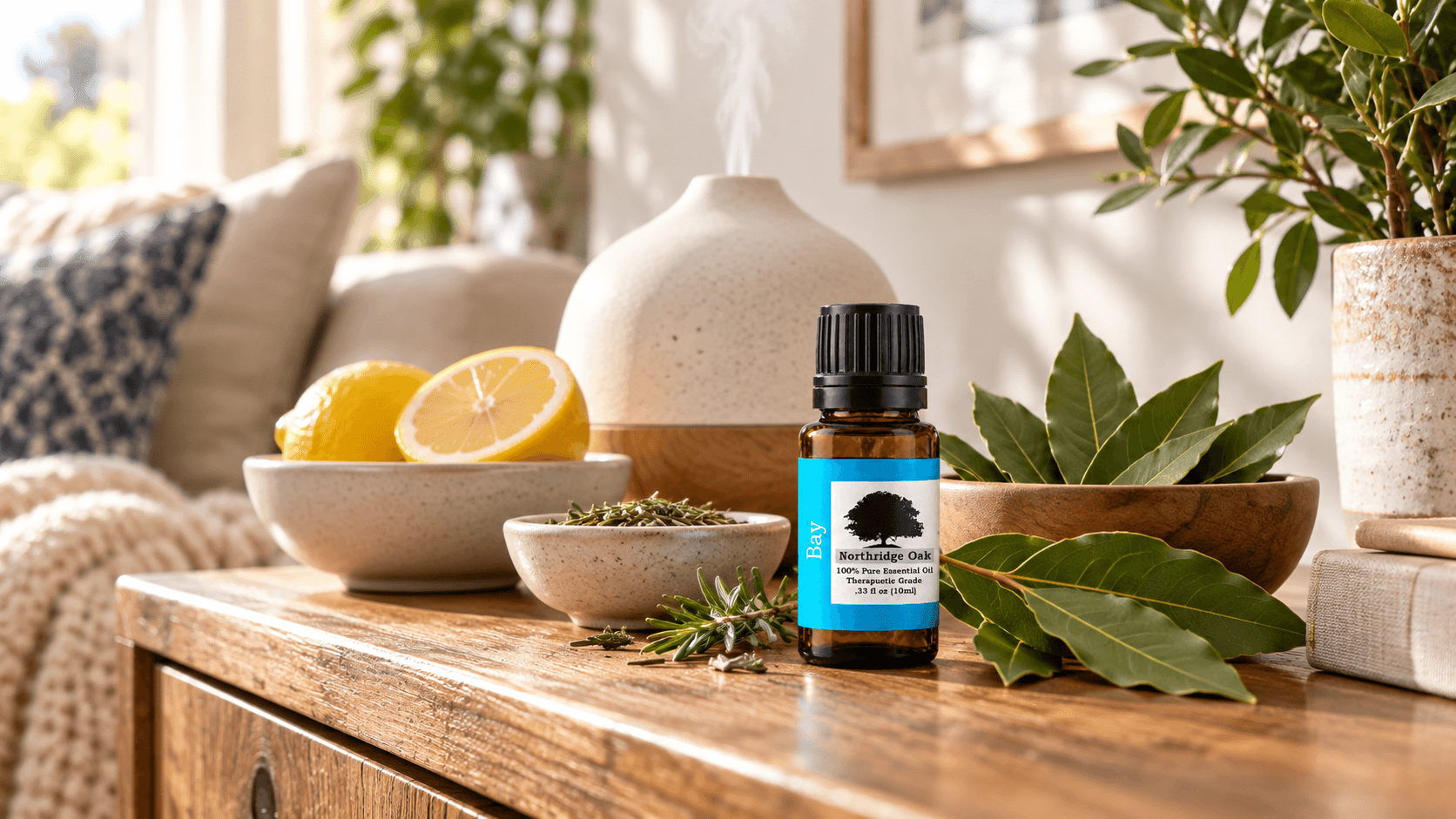
These recipes are designed for a typical 100–200 mL ultrasonic diffuser. Fill the reservoir to the manufacturer’s water line first, then add the listed oils. Diffuse for about 30 minutes, step out briefly and return to experience the blend as a guest would. In a compact room, begin with four total drops; in a larger room, use the complete recipe while following your diffuser’s directions.
Bay Laurel has a fresh herbal presence, so each recipe gives its supporting oils enough room to shine. Choose citrus-forward blends for daytime, evergreen and wood combinations for a grounded room, and lavender or resinous partners when you want a softer evening atmosphere.
How Much Bay Laurel Should You Diffuse?
Start with the instructions for your diffuser and the size of your room. The recipes below use four to six total drops as a starting point. For a small diffuser, compact room or aroma-sensitive household, begin with fewer drops and build gradually. Short, well-ventilated diffuser sessions keep the aroma fresh, comfortable and inviting.
Bright Morning Blends
- Green Sunrise: 2 Bay Laurel, 3 Lemon, 1 Rosemary.
The fresh herbal notes make this recipe feel clear, lively and well suited to daytime. Add water first, add the measured oils and diffuse for about 30 minutes. - Citrus Laurel: 2 Bay Laurel, 2 Bergamot, 2 Blood Orange.
Bergamot adds polished citrus softness, allowing Bay Laurel to feel refined rather than heavy. Add water first, add the measured oils and diffuse for about 30 minutes. - Fresh Start: 1 Bay Laurel, 3 Grapefruit, 1 Peppermint.
Grapefruit gives the blend a dry, sparkling opening that keeps Bay Laurel bright and airy. Add water first, add the measured oils and diffuse for about 30 minutes. - Open Windows: 2 Bay Laurel, 2 Lemon, 1 Eucalyptus.
The fresh herbal notes make this recipe feel clear, lively and well suited to daytime. Add water first, add the measured oils and diffuse for about 30 minutes.
Workspace and Study Blends
- Clear Desk: 2 Bay Laurel, 2 Rosemary, 1 Cedarwood.
Cedarwood adds dry structure and staying power while letting the character of Bay Laurel remain clear. Add water first, add the measured oils and diffuse for about 30 minutes. - Quiet Focus: 1 Bay Laurel, 2 Frankincense, 2 Bergamot.
Bergamot adds polished citrus softness, allowing Bay Laurel to feel refined rather than heavy. Add water first, add the measured oils and diffuse for about 30 minutes. - Herbal Momentum: 2 Bay Laurel, 2 Spearmint, 1 Lemon.
This balanced combination lets Bay Laurel remain recognizable while its partners shape the finished atmosphere. Add water first, add the measured oils and diffuse for about 30 minutes. - Fresh Ideas: 1 Bay Laurel, 2 Grapefruit, 2 Rosemary.
Grapefruit gives the blend a dry, sparkling opening that keeps Bay Laurel bright and airy. Add water first, add the measured oils and diffuse for about 30 minutes.
Spa-Inspired Blends
- Laurel Steam: 2 Bay Laurel, 2 Eucalyptus, 2 Lavender.
Soft and gently floral, this recipe rounds the Bay Laurel aroma into an inviting evening blend. Add water first, add the measured oils and diffuse for about 30 minutes. - Herbal Towel: 1 Bay Laurel, 2 Lavender, 1 Tea Tree, 1 Lemon.
Soft and gently floral, this recipe rounds the Bay Laurel aroma into an inviting evening blend. Add water first, add the measured oils and diffuse for about 30 minutes. - Forest Spa: 2 Bay Laurel, 2 Balsam Fir, 1 Cedarwood.
Cedarwood adds dry structure and staying power while letting the character of Bay Laurel remain clear. Add water first, add the measured oils and diffuse for about 30 minutes. - Garden Sauna: 1 Bay Laurel, 2 Rosemary, 2 Marjoram.
The fresh herbal notes make this recipe feel clear, lively and well suited to daytime. Add water first, add the measured oils and diffuse for about 30 minutes.
Cozy and Grounding Blends
- Laurel & Resin: 2 Bay Laurel, 2 Frankincense, 1 Myrrh.
Frankincense brings a smooth resinous finish that makes this a comfortable late-day choice. Add water first, add the measured oils and diffuse for about 30 minutes. - Warm Library: 1 Bay Laurel, 2 Cedarwood, 2 Bergamot.
Bergamot adds polished citrus softness, allowing Bay Laurel to feel refined rather than heavy. Add water first, add the measured oils and diffuse for about 30 minutes. - Evening Green: 1 Bay Laurel, 3 Lavender, 1 Frankincense.
Soft and gently floral, this recipe rounds the Bay Laurel aroma into an inviting evening blend. Add water first, add the measured oils and diffuse for about 30 minutes. - Autumn Wreath: 2 Bay Laurel, 2 Blood Orange, 1 Cinnamon Leaf.
Orange gives this recipe a cheerful opening and lets the Bay Laurel note settle into a warm heart. Add water first, add the measured oils and diffuse for about 30 minutes.
Fresh-Home Blends
- Clean Kitchen: 2 Bay Laurel, 3 Lemon, 1 Tea Tree.
This balanced combination lets Bay Laurel remain recognizable while its partners shape the finished atmosphere. Add water first, add the measured oils and diffuse for about 30 minutes. - Rainy Porch: 2 Bay Laurel, 2 Pine, 1 Patchouli.
This balanced combination lets Bay Laurel remain recognizable while its partners shape the finished atmosphere. Add water first, add the measured oils and diffuse for about 30 minutes. - Herbal Linen: 1 Bay Laurel, 3 Lavender, 1 Lemon.
Soft and gently floral, this recipe rounds the Bay Laurel aroma into an inviting evening blend. Add water first, add the measured oils and diffuse for about 30 minutes. - Mediterranean Air: 2 Bay Laurel, 2 Bergamot, 1 Cedarwood.
Bergamot adds polished citrus softness, allowing Bay Laurel to feel refined rather than heavy. Add water first, add the measured oils and diffuse for about 30 minutes.
If a recipe smells too medicinal, add one drop of citrus, Lavender or Frankincense. If it feels too sweet, add Bay Laurel, Cedarwood or Rosemary. If it feels flat, a small amount of Lemon or Grapefruit can brighten the opening. Change only one drop at a time so you can understand what fixed the balance.
Few essential oils can connect bright citrus, cool herbs, soft florals, deep resins and forest-like woods as naturally as Bay Laurel. Start with one drop in a favorite blend and notice how it adds freshness, structure and a sophisticated green-spicy finish. It is an easy way to make familiar diffuser oils feel completely new.
Northridge Oak Bay Laurel Essential Oil is 100% pure, undiluted Laurus nobilis essential oil. It is produced in small batches and third-party GC/MS tested, with no fillers or synthetic fragrance. Its fresh, herbal, gently camphoraceous aroma works beautifully in diffuser blends, home recipes and carefully diluted personal-care formulas.
The botanical name matters. True Bay Laurel is Laurus nobilis. West Indian Bay (Pimenta racemosa), cherry laurel and other plants with “laurel” in their names are distinct botanicals, so confirming Laurus nobilis helps you choose the intended aroma and guidance. When you compare recipes or safety advice, confirm that the source is discussing the same botanical species.
Learn the aroma before building a complicated recipe. Place one drop on a paper scent strip, wait several minutes, and smell from a comfortable distance. Notice the cool, cineole-rich opening, the green leafy middle and the warm spicy-woody finish. Smell it again after thirty minutes. That simple exercise makes future blending easier because you are learning directly from the oil’s natural aromatic character.
Start smaller than you think. Bay Laurel has presence, and one drop can reshape an entire blend. In a diffuser recipe, begin with the printed ratio but reduce the total number of drops when using a small room or a compact diffuser. In a topical recipe, careful measurement creates a consistent, comfortable and repeatable blend. A light touch usually creates the most balanced and enjoyable result.
Keep notes as you experiment. Record the oils, ratios, date and first impression, then revisit the aroma after it has rested. Citrus oils often brighten Bay Laurel immediately, while woods and resins become more noticeable later. Written notes help you repeat a blend you love and adjust one that feels too sharp, sweet or medicinal.
Quality and storage affect the experience. A fresh, properly stored oil should smell lively and layered. A lively, layered aroma is a good sign of freshness; when the scent becomes flat or stale, a fresh bottle will give your recipes their best character. Clean tools, tightly closed bottles and a cool storage area protect both the aroma and your finished recipes.
Bay Laurel is concentrated, so a little goes a long way. For topical enjoyment, dilute it in a carrier oil, begin with a conservative concentration and patch test the finished preparation. Keep the finished blend comfortably away from the eyes and other sensitive areas, enjoy the essential oil through aromatic or properly diluted topical use, and keep dried bay leaves for culinary recipes.
Thoughtful use keeps the experience welcoming for everyone. Seek individualized guidance for children, pregnancy or nursing, pets and significant health considerations. Diffuse intermittently in a well-ventilated room with a scent-free exit, and preserve freshness by closing the cap tightly and storing the bottle away from heat and sunlight.
For the broader rules that apply to every oil, read our complete essential oil safety guide and our beginner’s guide to essential oils.
A Simple Way to Experience Bay Laurel
You do not need a complicated project to decide whether this oil is for you. Begin with the aroma itself. Place one drop on a paper scent strip or cotton pad, set it several inches away and notice the first impression. Return after 15 minutes, then again after an hour. Bay Laurel often reveals more character as the sharpest opening settles, and this slower test makes it easier to notice the fresh, green, herbaceous and gently spicy details that disappear when you smell directly from the bottle.
Choose your first recipe by feeling rather than by season. If you want brightness, begin with citrus. If you want a quieter room, choose Lavender, Cedarwood or Frankincense. If you want an outdoor character, reach for fir or pine. Add the oils to water according to your diffuser instructions, run the blend for 20 to 30 minutes and then step out of the room briefly. When you return, you will notice the balance more clearly and can adjust one drop next time.
If that sounds like the kind of ritual you would enjoy, Northridge Oak Bay Laurel Essential Oil is 100% pure and undiluted, bottled in small batches and third-party GC/MS tested. It gives you a clearly identified single oil and a dependable place to begin.
Continue Learning About Bay Laurel Essential Oil
Make this article part of a complete Bay Laurel routine:
- Bay Laurel Essential Oil Benefits, Uses & Safety Guide
- What Blends Well With Bay Laurel Essential Oil?
- What Does Bay Laurel Essential Oil Smell Like?
- Bay Laurel Essential Oil for Hair and Scalp: Uses & Recipes
- Bay Laurel Essential Oil for Skin: Benefits, Uses & Recipes
These statements have not been evaluated by the Food and Drug Administration. Northridge Oak products are not intended to diagnose, treat, cure or prevent disease.
Bay Laurel shines as a carefully chosen ingredient that can transform the character of an entire blend. Match the method to the purpose: diffusion for room aroma, a personal inhaler for individual aromatic use, a properly diluted carrier blend for intact skin, and a tested base for water-containing products. Keep the recipe simple enough to notice exactly what you enjoy and make future blends easy to repeat.
Names and measurements matter. Write Laurus nobilis on recipe notes, record the number of drops and carrier volume, and label finished products with the date. Choose recipes that specify Laurus nobilis, since the words “bay oil” can refer to different botanicals. Responsible details make DIY use more repeatable and much easier to evaluate.
A pleasant aromatic ritual has real everyday value all its own. A fresh diffuser blend may make a workspace feel inviting; a diluted body oil may turn an ordinary evening into a more intentional routine; a herbal cleaning aroma may make chores more enjoyable. Those everyday benefits are genuine reasons to make Bay Laurel part of a favorite routine.
To make a favorite recipe truly useful, repeat it in the same diffuser and room before changing the formula. Notice which aroma arrives first, what remains after fifteen minutes and how the room feels when you return from outside it. Bay Laurel may read as fresh and herbal at first, then reveal a smoother spicy-green finish as the citrus or wood settles. Recording those observations turns a pleasant recipe into a dependable household blend you can recreate for guests, work sessions or quiet evenings.