Table of Contents
- Why Patchouli Fits Hair-Care Rituals
- What Current Research Is Exploring
- Patchouli Pre-Shampoo Scalp Oil
- A Lighter Hair-End Oil
- Patchouli and Rosemary Hair-Aroma Blend
- How Often Should You Use a Scalp Oil?
- Keeping the Recipe Fresh
- Patch Testing and Comfortable Use
- What We’re Learning About Patchouli Hair Care
- Continue Exploring Patchouli Essential Oil
- Make Wash Day Feel More Intentional
- Frequently Asked Questions
Patchouli essential oil for hair and scalp brings a deep, spa-like aroma to pre-shampoo oils, scalp massage and scented hair rituals. Its earthy base note pairs especially well with Lavender, Cedarwood and Rosemary, allowing a tiny amount to give a simple carrier-oil blend a polished personality.
The most satisfying approach is measured and gentle. Patchouli is concentrated, so use it diluted, keep recipes simple and let good hair-care basics do the practical work.
Why Patchouli Fits Hair-Care Rituals
Scalp oiling already invites a slower pace: section the hair, apply a small amount, massage lightly and shampoo thoroughly. Patchouli complements that experience because its aroma lasts and warms beautifully beside the skin. It can make an ordinary pre-wash step feel like a private appointment at a woodsy botanical spa.
It also blends well with oils associated with fresh, clean aromas. Rosemary brings herbal clarity, Lavender adds softness and Cedarwood strengthens the dry-wood character. Choose the combination for scent and enjoyment, not because every ingredient needs to make a sweeping promise.
What Current Research Is Exploring
A 2025 paper examined a light fraction of Patchouli oil in hair-care formulations for hair and anti-dandruff applications. The work is encouraging because it looks beyond raw oil and asks how a carefully designed formulation might perform. Read the open-access paper through PubMed Central.
The positive takeaway is that researchers see enough potential in Patchouli chemistry and aroma to develop and test purpose-built hair products. A laboratory or formulated shampoo study is not the same as putting essential oil directly on the scalp, and it does not establish that a homemade blend treats dandruff or hair loss. It does give formulators a useful direction for future study.
Patchouli Pre-Shampoo Scalp Oil
For a 30 mL bottle, combine three drops Patchouli, two drops Lavender and one drop Cedarwood, then fill with jojoba oil. That creates a gentle, approximately 1% aromatic blend. Label the bottle and roll it between your palms before use.
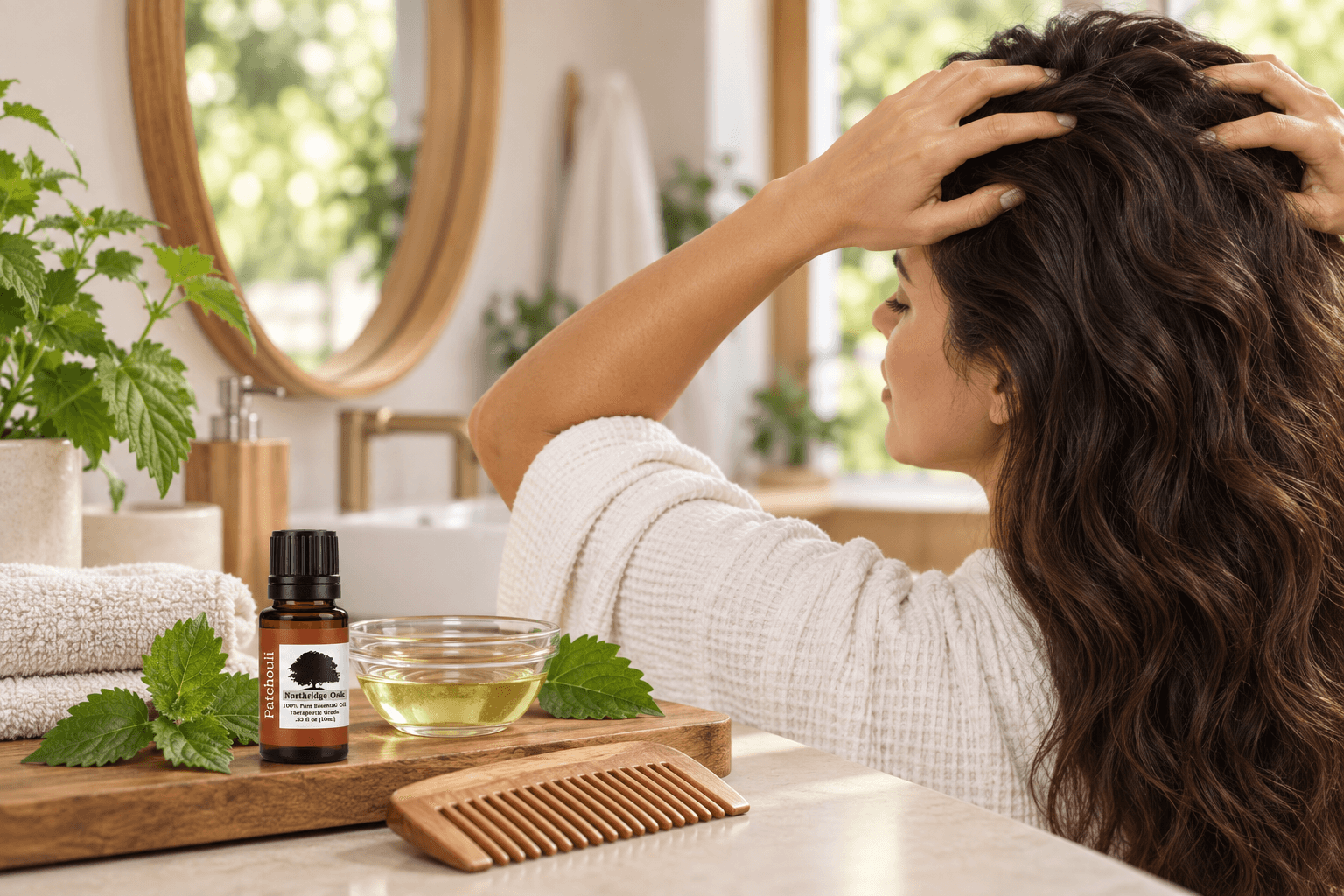
Part the hair in several places, apply a small amount to the scalp and massage with the pads of your fingers. Let the ritual be comfortable rather than vigorous. Leave it on briefly, then shampoo thoroughly. Start with less oil than you think you need; fine hair and oily scalps may prefer only a few drops of the finished blend.
A Lighter Hair-End Oil
For dry-feeling ends, the carrier oil matters more than a strong essential-oil concentration. Add one drop Patchouli and one drop Lavender to 15 mL of a lightweight hair-compatible carrier. Rub one or two drops of the finished mixture between your palms and smooth lightly over the ends.
Avoid the roots if your hair becomes weighed down easily. This recipe is about aroma, slip and a polished finishing ritual—not changing the biology of hair growth.
Patchouli and Rosemary Hair-Aroma Blend
Rosemary’s bright herbal note is a lively counterpoint to Patchouli. In 30 mL jojoba, try three drops Rosemary, two drops Lavender and one drop Patchouli. The result smells green, clean and grounded.
Review Rosemary’s individual safety considerations before use, particularly for children, pregnancy or specific health circumstances. Every blend inherits the guidance of every oil it contains.
How Often Should You Use a Scalp Oil?
There is no universal schedule. Begin occasionally—perhaps before one wash—and notice how easily it shampoos out and how your scalp feels afterward. Some people enjoy oiling; others prefer water-based products. The right routine is the one your scalp and hair tolerate well.
If you have persistent flaking, discomfort, sudden shedding or scalp lesions, a dermatologist can help identify the cause. You can still enjoy Patchouli’s aroma in a diffuser while you follow professional care.
Keeping the Recipe Fresh
Make small batches, use clean equipment and keep water out of an oil-only formula. Store the bottle tightly closed away from heat and light. Add a label with ingredients and date so there is never any question about what is inside.
If the aroma or appearance changes in a way you do not enjoy, make a fresh batch. Patchouli itself often matures beautifully, but the carrier oil determines much of a blend’s practical shelf life.
Patch Testing and Comfortable Use
Patch test the finished diluted blend on a small skin area before applying it widely to the scalp. Avoid eyes and broken or irritated skin. Use less if the aroma feels too strong, and discontinue if discomfort develops.
Essential oil should not be treated as a shortcut around formulation. Dilution gives the aroma room to soften and makes the finished product far more pleasant to distribute.
What We’re Learning About Patchouli Hair Care
Patchouli is interesting to formulators because it combines a distinctive, lasting aroma with chemical components being studied in hair and scalp products. The 2025 formulation research is a positive step: it shows active interest in developing practical products and evaluating them, rather than relying only on tradition.
For home use, that curiosity translates best into a simple, well-diluted pre-shampoo oil. Enjoy the scent, the massage and the intentional pause. Let established cleansing and professional guidance handle concerns that need more than an aromatic ritual.
Continue Exploring Patchouli Essential Oil
Patchouli is one of those oils that becomes more interesting the more you explore it. Continue through the Northridge Oak Patchouli Learning Center to discover encouraging research, inviting aroma combinations and practical ways to bring this warm, earthy botanical into your everyday routine.
- Start with the complete Patchouli Essential Oil benefits, uses, research, recipes and safety guide.
- Create a warm, welcoming atmosphere with 20 Patchouli Essential Oil diffuser blends.
- Discover what blends well with Patchouli Essential Oil and how different pairings reveal its softer side.
- Learn how Patchouli can become a lasting base note in a natural perfume or personal aroma blend.
- Bring Patchouli into thoughtful self-care with guides for skin, hair and scalp, and massage and body oils.
- Create a peaceful aromatic routine with Patchouli for relaxation and sleep.
- Use Patchouli confidently with the Patchouli Essential Oil safety guide and the Complete Essential Oil Safety Guide.
- Shop Northridge Oak Patchouli Essential Oil.
Make Wash Day Feel More Intentional
A few minutes of gentle scalp massage and a beautiful aroma can make wash day feel less rushed. Begin with a small amount, notice how your hair responds and adjust the carrier or frequency before changing the essential-oil concentration. Patchouli brings the atmosphere; thoughtful technique makes the routine work.
These statements have not been evaluated by the Food and Drug Administration. Northridge Oak products are not intended to diagnose, treat, cure or prevent disease.