Table of Contents
- The Easiest Patchouli Pairing Rule
- Citrus Oils That Blend With Patchouli
- Floral Oils That Blend With Patchouli
- Wood Oils That Blend With Patchouli
- Resins and Herbs That Blend With Patchouli
- Spice Oils That Blend With Patchouli
- Patchouli Blends by Mood
- How to Fix a Patchouli Blend
- From Diffuser to Personal Aroma
- What We’re Learning About Blending Patchouli
- Continue Exploring Patchouli Essential Oil
- Start With One Familiar Oil
- Frequently Asked Questions
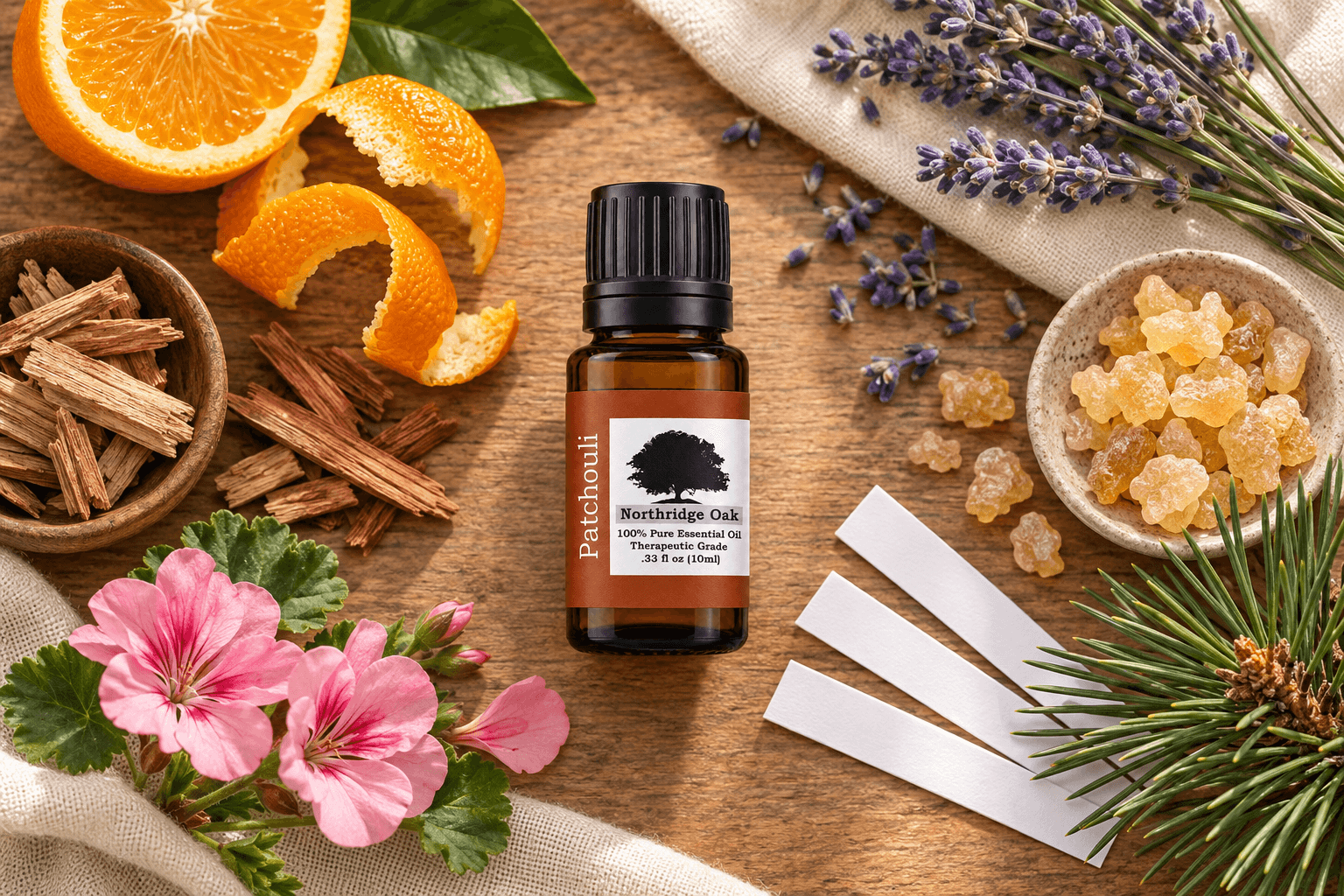
What blends well with Patchouli essential oil? More than you might expect. Citrus oils brighten it, florals soften it, woods deepen it, resins enrich it and gentle spices add glow. Patchouli is a powerful base note, so the secret is not finding an oil strong enough to compete—it is choosing partners that let each part of the blend remain clear.
This guide will help you pair Patchouli confidently, understand simple proportions and build aromas that feel balanced from the first bright impression to the warm finish.
The Easiest Patchouli Pairing Rule
Begin with one drop Patchouli for every four to six drops of lighter essential oils. Patchouli has wonderful staying power, and a small amount can anchor the whole composition. After blending, wait at least ten minutes before judging it. Base notes unfold slowly.
A useful three-part formula is top, heart and base. Choose a citrus top note, a floral or herbal heart and Patchouli for the base. For example, three drops Sweet Orange, two drops Lavender and one drop Patchouli creates a complete blend with very little effort.
Citrus Oils That Blend With Patchouli
Sweet Orange is one of the friendliest partners. It draws forward Patchouli’s soft sweetness and makes the earthiness feel warm rather than dense. Bergamot creates a more polished, tea-like brightness. Grapefruit makes the blend lively and contemporary, while Lemon gives it a clean edge.
Try three drops Sweet Orange, two drops Grapefruit and one drop Patchouli for an upbeat room blend. Citrus notes fade sooner than Patchouli, so the aroma will gradually move from sparkling to grounded. That evolution is part of the pleasure.
Floral Oils That Blend With Patchouli
Lavender and Patchouli are natural companions. Lavender adds airy herbal softness, while Patchouli gives Lavender depth. Geranium creates a green-rose heart that feels refined and garden-inspired. Ylang Ylang leans lush and creamy, making an elegant perfume blend when both oils are used with restraint.
For a gentle floral diffuser recipe, combine three drops Lavender, two drops Geranium and one drop Patchouli. For a richer mood, use two drops Sweet Orange, one drop Ylang Ylang and one drop Patchouli.
Wood Oils That Blend With Patchouli
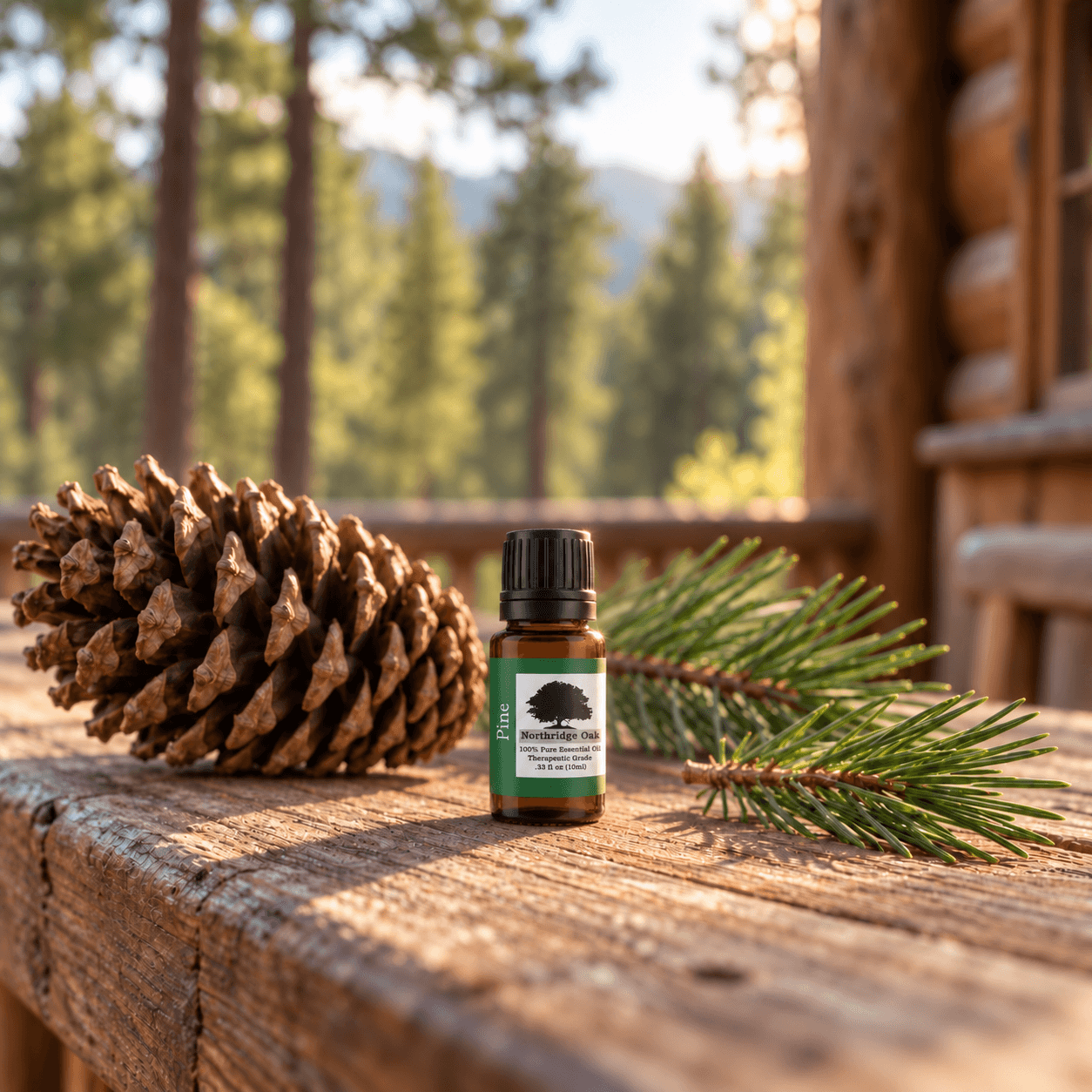
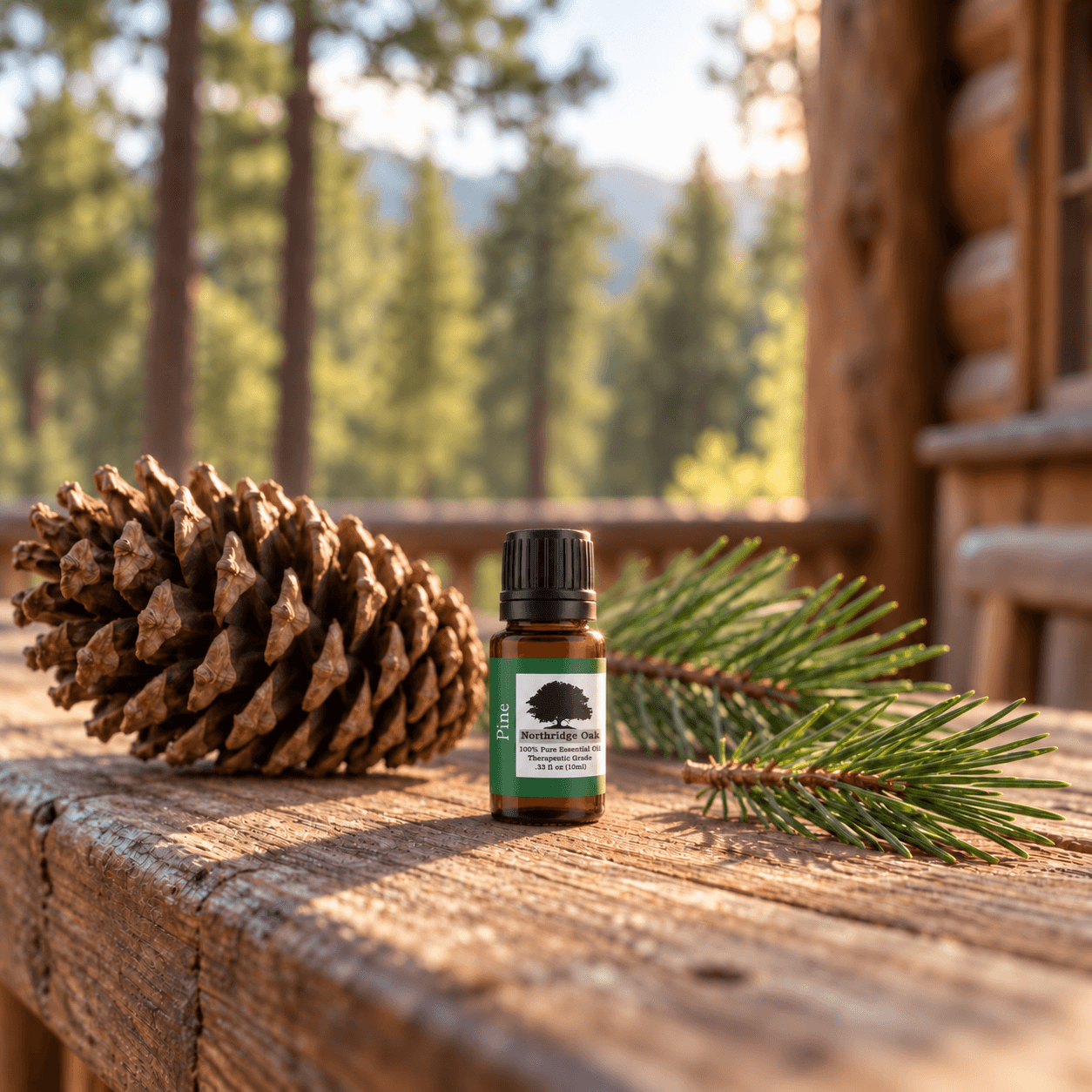
Cedarwood emphasizes Patchouli’s dry, woody side and makes a blend feel steady and outdoorsy. Pine adds fresh forest lift. Sandalwood, when responsibly sourced, creates a creamy base, while Vetiver makes the result darker, drier and more contemplative.
Because Patchouli and Vetiver are both long-lasting base notes, let brighter oils lead. A balanced forest blend might use three drops Pine, two drops Sweet Orange, one drop Cedarwood and one drop Patchouli. Explore more atmosphere-driven recipes in our Patchouli diffuser blend collection.
Resins and Herbs That Blend With Patchouli
Frankincense brings a clear, resinous spaciousness to Patchouli. Clary Sage adds a soft herbal-musky quality, while Rosemary can make the blend feel greener and more alert. These pairings work well for journaling, creative work or a quiet room reset.
Try three drops Frankincense, two drops Lavender and one drop Patchouli. The aroma is warm without feeling overly sweet, and every oil remains recognizable.
Spice Oils That Blend With Patchouli
Cinnamon Leaf, Clove and Ginger can give Patchouli a cozy seasonal glow. Spice oils are assertive and may require extra topical caution, so they are best introduced in very small amounts. For diffusion, one drop Cinnamon Leaf can be plenty in a larger blend.
A welcoming autumn formula is three drops Sweet Orange, two drops Cedarwood, one drop Patchouli and one drop Cinnamon Leaf, adjusted to your diffuser’s capacity. Find more in our Patchouli fall and Halloween blends.
Patchouli Blends by Mood
Fresh and modern
Use four drops Grapefruit, two drops Bergamot and one drop Patchouli. The generous citrus keeps the opening buoyant while Patchouli gives the finish character.
Soft and restful
Combine three drops Lavender, two drops Frankincense and one drop Patchouli. Use it during an evening routine, with intermittent diffusion and fresh airflow.
Romantic and floral
Blend two drops Geranium, two drops Sweet Orange, one drop Ylang Ylang and one drop Patchouli. For personal fragrance, follow a carefully measured topical recipe rather than transferring diffuser proportions directly to skin.
Woodsy and grounded
Try three drops Pine, two drops Cedarwood and one drop Patchouli. This simple trio feels outdoorsy, clean and comfortably anchored.
How to Fix a Patchouli Blend
If Patchouli feels too strong, add brightness rather than more competing base notes. Sweet Orange or Grapefruit can open the blend. If it feels too sharp, Lavender or Geranium can soften the middle. If it feels thin, one additional drop of Cedarwood may add body without making Patchouli dominant.
Work in tiny increments and keep notes. Record the number of drops, the time you smelled the blend and how it changed. A formula that seems citrus-heavy at first may become perfectly balanced after the top notes settle.
From Diffuser to Personal Aroma
Diffuser formulas are designed for air, not direct skin use. When you want a roll-on, massage oil or perfume, use a skin-appropriate dilution and consider the safety profile of every ingredient. Our Patchouli perfume guide and massage guide provide purpose-built formulas.
What We’re Learning About Blending Patchouli
Patchouli becomes approachable when it has a clear role. Let citrus lead when you want brightness, florals lead when you want softness, and woods lead when you want a forest atmosphere. Patchouli then acts as the quiet foundation that makes the blend feel finished.
Your nose is the final judge. Begin with a reliable ratio, give the aroma time and adjust one drop at a time. This is creative work, not a test, and the best blend is the one you are excited to smell again.
Continue Exploring Patchouli Essential Oil
Patchouli is one of those oils that becomes more interesting the more you explore it. Continue through the Northridge Oak Patchouli Learning Center to discover encouraging research, inviting aroma combinations and practical ways to bring this warm, earthy botanical into your everyday routine.
- Start with the complete Patchouli Essential Oil benefits, uses, research, recipes and safety guide.
- Create a warm, welcoming atmosphere with 20 Patchouli Essential Oil diffuser blends.
- Discover what blends well with Patchouli Essential Oil and how different pairings reveal its softer side.
- Learn how Patchouli can become a lasting base note in a natural perfume or personal aroma blend.
- Bring Patchouli into thoughtful self-care with guides for skin, hair and scalp, and massage and body oils.
- Create a peaceful aromatic routine with Patchouli for relaxation and sleep.
- Use Patchouli confidently with the Patchouli Essential Oil safety guide and the Complete Essential Oil Safety Guide.
- Shop Northridge Oak Patchouli Essential Oil.
Start With One Familiar Oil
Choose an essential oil you already love and pair it with a single drop of Patchouli. That simple experiment teaches you more than a crowded formula. From there, add one supporting note and watch the aroma become a composition. Patchouli is generous that way: used thoughtfully, it makes familiar oils feel newly interesting.
These statements have not been evaluated by the Food and Drug Administration. Northridge Oak products are not intended to diagnose, treat, cure or prevent disease.