Table of Contents
- Ginger Oil vs. Ginger Essential Oil at a Glance
- What Is Ginger Essential Oil?
- What Is Ginger-Infused Oil?
- How Are They Different?
- Can You Use Both in a Diffuser?
- Can You Use Both on Skin?
- Ginger Root Essential Oil for Consistent Blending
- How to Read a Ginger Product Label
- Which One Should You Buy?
- Storage and Safety
- Continue Learning
- Frequently Asked Questions
Ginger oil vs. ginger essential oil is more than a naming question. “Ginger oil” may describe a homemade botanical infusion, a commercial fragrance blend, a culinary product or true distilled essential oil. The label determines how concentrated the product is, how it should be used and whether it belongs in a diffuser, on skin or nowhere near either.
This guide gives you a quick way to read the bottle and choose confidently. We will compare production, aroma, strength, topical use, diffuser use and shopping language—without assuming that every product containing the word “ginger” is interchangeable.
Ginger Oil vs. Ginger Essential Oil at a Glance
- Ginger essential oil: a concentrated volatile extract, commonly steam-distilled from the rhizome of Zingiber officinale.
- Ginger-infused oil: dried ginger steeped in a carrier oil such as jojoba, sunflower or fractionated coconut oil.
- Fragrance oil: an aromatic composition that may include synthetic materials and is not an essential oil unless clearly stated.
- Culinary ginger oil: a food product formulated and labeled for consumption.
The shortest rule is to follow the actual ingredient list and intended-use directions, not the large marketing phrase on the front.
What Is Ginger Essential Oil?
Ginger essential oil captures volatile aromatic compounds from the ginger rhizome. Steam distillation is the common method: steam passes through plant material, the vapor is cooled, and the essential oil is separated. The result is potent enough to be used in drops rather than spoonfuls.
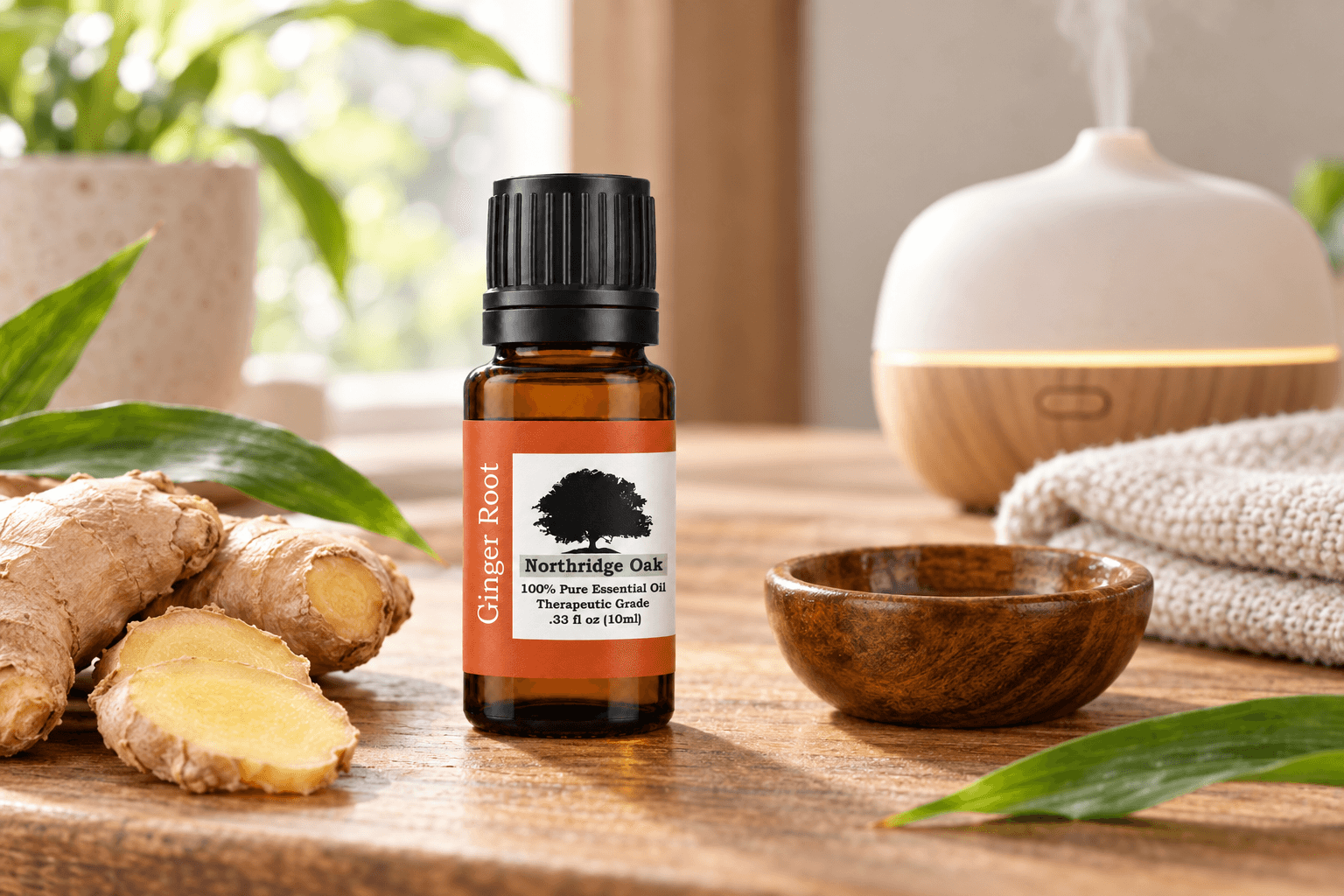
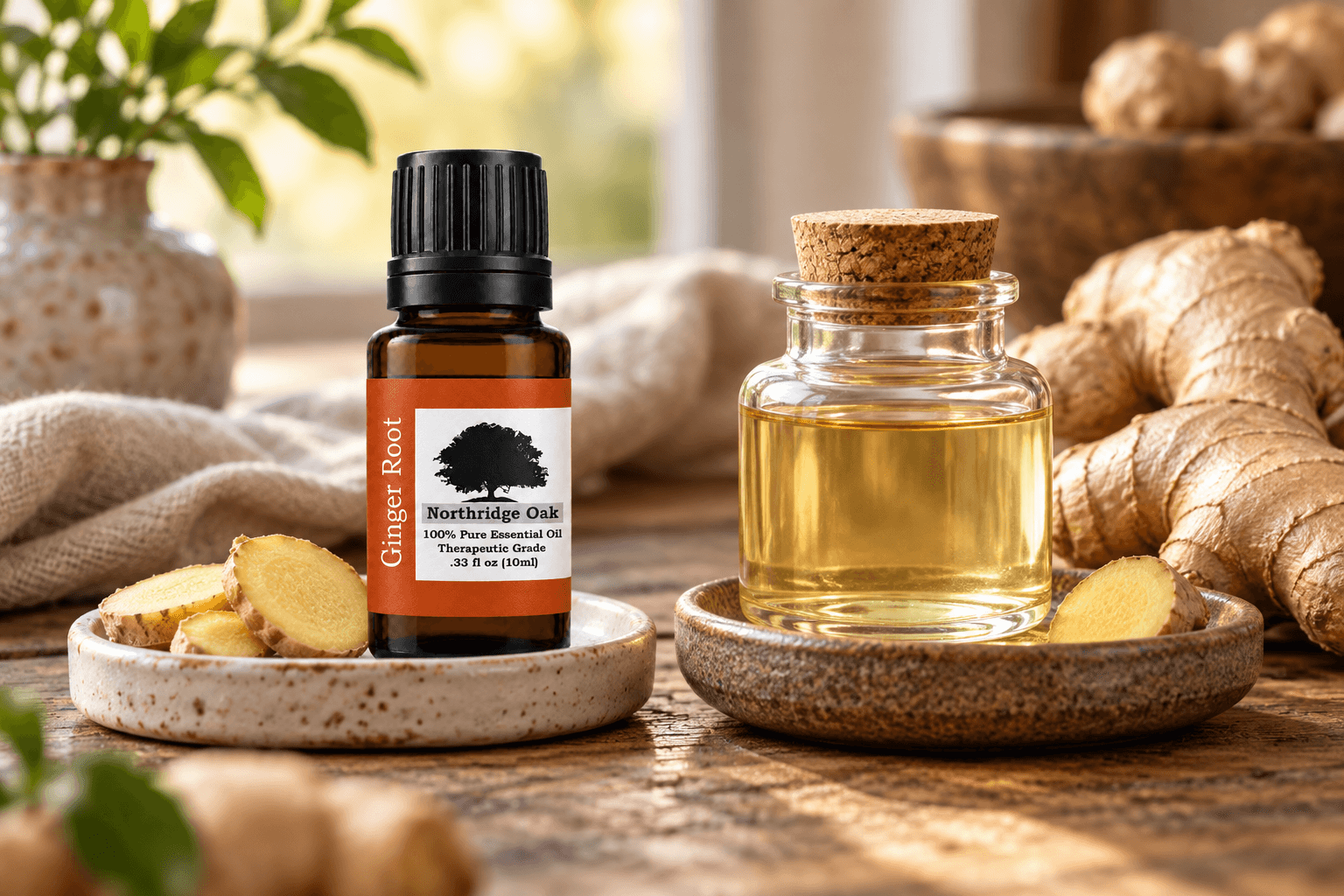
A quality bottle should identify the botanical name, ingredient, extraction context or sourcing information, and appropriate cautions. Northridge Oak’s Ginger Root Essential Oil is 100% pure and undiluted, GC/MS tested, botanically identified as Zingiber officinale, sourced from India and packaged in a 10 mL amber bottle.
What Is Ginger-Infused Oil?
An infusion begins with a fixed carrier oil. Dried ginger sits in that oil long enough to transfer some plant-soluble constituents and a mild aroma. The result remains mostly carrier oil, which gives it the slip and body expected in massage or skin care. It is not a diluted form of essential oil unless essential oil was separately added.
Infusions vary with the ginger, carrier, time, temperature and filtering method. They can be rewarding to make, but they are less standardized than a measured essential-oil blend. If you want to try one, follow our detailed how to make ginger oil guide, which explains why dried—not fresh—ginger is the safer practical starting point.
How Are They Different?
Concentration
Essential oil is highly concentrated and is measured into a carrier before skin application. Infused oil already contains its carrier base. Reading the ingredient list tells you which form you have and how to use it.
Aroma
Distilled ginger essential oil typically smells warm, spicy, earthy and dry, with a fresh-root brightness. An infusion is softer and often smells strongly of its carrier. Fragrance oil can imitate ginger but may lean sweeter or more perfumed depending on the formula.
Texture
Essential oil is a volatile liquid used sparingly and will not behave like a rich massage base. Infused oil feels like the jojoba, sunflower or other carrier from which it was made. That texture difference is an immediate clue when an ingredient list is unclear.
Consistency
A tested commercial essential oil gives you repeatable drop measurements, while a home infusion reflects the ginger, carrier, time and method used. One offers standardized aromatic blending; the other offers the appeal of a handmade body-care ingredient.
Can You Use Both in a Diffuser?
Use genuine essential oils or products your diffuser manufacturer specifically permits. Ginger-infused carrier oil is designed for topical body care, while distilled Ginger Essential Oil supplies the volatile aroma used in a diffuser.
For a room aroma, start with a low total drop count and increase only if the space and diffuser instructions allow. Ginger pairs particularly well with orange, lemon, cedarwood and certain spice or resin notes. Try the balanced recipes in our ginger diffuser blend guide or browse ginger essential oil pairings.
Can You Use Both on Skin?
They can both be used in properly formulated topical products, but the math differs. An infused oil may serve as the carrier itself. Ginger essential oil must first be added to a carrier. For an adult body oil, a conservative starting point is about six drops of essential oil in one ounce of carrier, approximately 1%.
For scalp routines, see Ginger oil for hair and scalp for practical cosmetic formulas and wash-day ideas.
Ginger Root Essential Oil for Consistent Blending
If your goal is precise aromatic blending, a single-ingredient essential oil is the clearest option. You can count drops, reproduce recipes and understand what contributed the ginger note. The label should say ginger or ginger root essential oil and ideally list Zingiber officinale, not simply “aroma,” “perfume” or “fragrance.”
For massage, dilute essential oil before use and keep the goal sensory: slip, warmth of aroma and a calming routine. Our ginger essential oil massage guide includes modest adult dilution examples and compatible carrier oils.
How to Read a Ginger Product Label
Turn the bottle around. If the ingredient list names ginger essential oil only, the product is likely undiluted and requires dilution. If it lists jojoba, sunflower, sweet almond or coconut oil first, it is a carrier-based blend or infusion. If “fragrance” appears without botanical identification, do not assume it is essential oil. If the product is for food, it should carry food-specific directions and labeling.
Also look for a batch or lot reference, storage guidance and a supplier willing to discuss testing. GC/MS analysis can help verify the aromatic profile and reveal unexpected components, though no single test replaces responsible sourcing and transparent labeling.
Which One Should You Buy?
Choose based on the task. For a diffuser, choose pure ginger essential oil. For a ready-to-spread massage base, choose a properly formulated diluted blend or a fresh infusion. For DIY flexibility, buy a tested essential oil and a separate carrier so you can adjust concentration. For cooking, buy a culinary product specifically meant for food.
If digestive comfort is your interest, read our Ginger Essential Oil, nausea and digestive comfort guide, which explains the human inhalation studies in plain English.
Storage and Safety
Keep undiluted essential oil tightly closed, upright and away from heat and sunlight. Store infused oils cool and dark, and replace them if their odor, color or clarity changes. Keep every product out of reach of children and pets. Diffuse intermittently in ventilated spaces and consider the health and species of everyone sharing the room.
For broader precautions, review the complete essential oil safety guide.
Continue Learning
Build your blending instincts with what blends well with Lemon Essential Oil, then compare ginger’s warmth with Cinnamon Leaf Essential Oil benefits and uses and the earthiness of Patchouli Essential Oil.
These statements have not been evaluated by the Food and Drug Administration. This product and the information in this article are not intended to diagnose, treat, cure or prevent any disease. Essential oils are highly concentrated. Dilute before topical use, patch test first, and keep out of reach of children and pets. Consult a qualified healthcare professional before use during pregnancy or nursing, with young children, while taking medication or when managing a medical condition.