Table of Contents
- What Kind of Ginger Oil Is Used for Hair?
- What Are the Benefits of Ginger Oil for Hair?
- How Do You Dilute Ginger Essential Oil for the Scalp?
- Which Carrier Oils Pair Well With Ginger?
- How Do You Make a Ginger Pre-Shampoo Scalp Oil?
- What Oils Blend Well With Ginger for Hair Care?
- Can Ginger Oil Help With Dryness or Flakes?
- Should Ginger Oil Be Left in the Hair Overnight?
- How Often Can You Use Ginger Oil on the Scalp?
- How Does Ginger Compare With Rosemary or Peppermint?
- How to Use Ginger Scalp Oil with Confidence
- Continue Learning About Ginger Root
- Frequently Asked Questions
Ginger oil for hair is receiving new attention because its warm aroma and invigorating character fit naturally into scalp massage and pre-shampoo care. The phrase can describe several very different products, however. Pure Ginger Root Essential Oil is concentrated and must be diluted, while commercial ginger hair oils are usually ready-to-use blends of carrier oils, extracts and fragrance.
This guide focuses on pure Zingiber officinale essential oil and shows how to turn it into an enjoyable pre-shampoo oil, choose a carrier and build a warm, invigorating scalp-massage ritual.
What Kind of Ginger Oil Is Used for Hair?
Check the label before putting any ginger product on your scalp. A bottle labeled “100% pure Ginger Root Essential Oil” contains a highly concentrated steam-distilled aromatic oil. A bottle labeled “ginger hair oil” may already contain coconut, olive, sesame, jojoba or other carriers. Ginger-infused oil is made by steeping plant material in a fixed oil. These products require different amounts and methods.
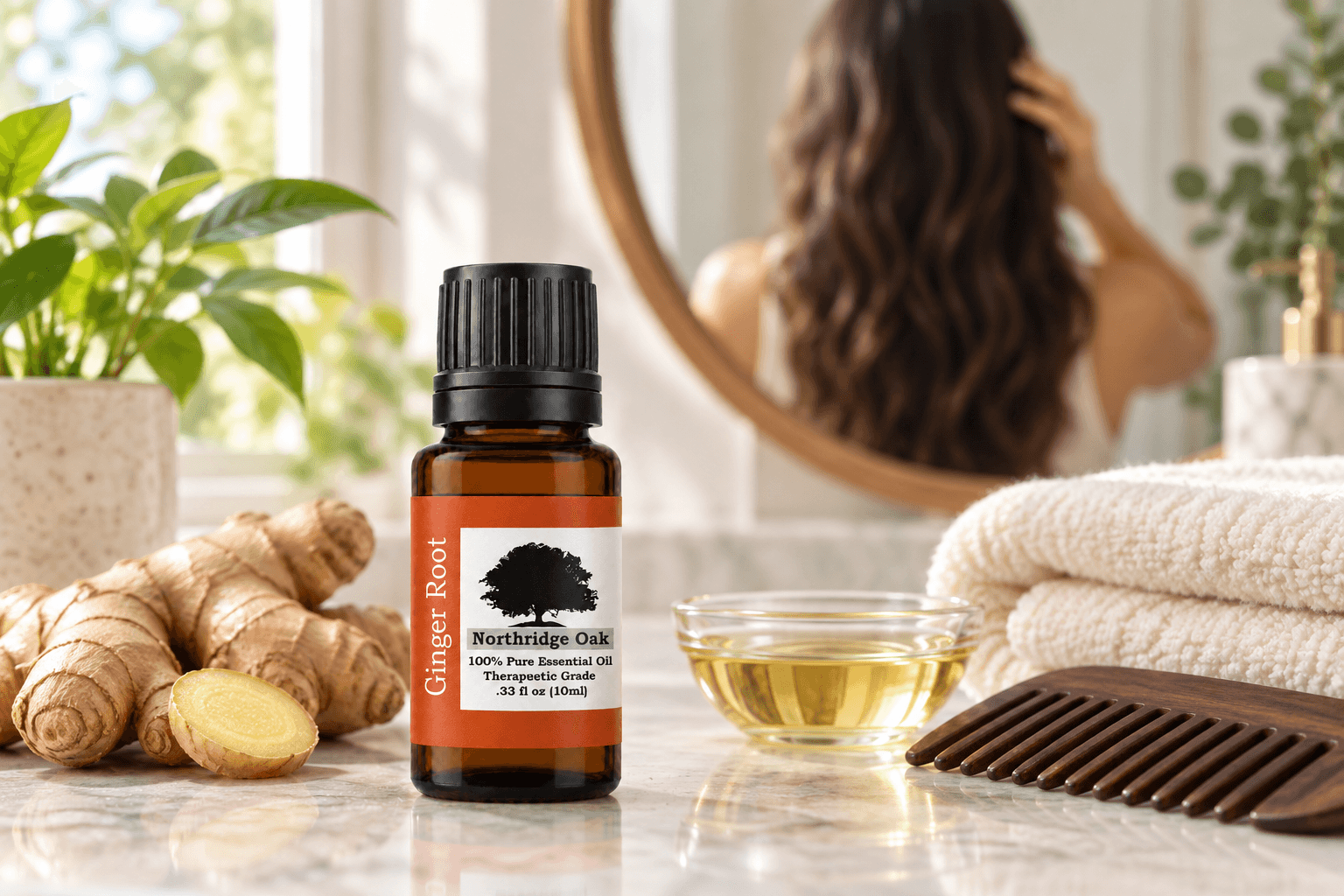
Northridge Oak Ginger Root Essential Oil is undiluted. Treat it as an ingredient, not a finished hair serum. Our Ginger oil versus Ginger Essential Oil comparison helps you identify each type.
What Are the Benefits of Ginger Oil for Hair?
The clearest immediate benefit is sensory. Ginger’s spicy, earthy aroma gives a plain scalp oil a warm botanical personality. Massaging a properly diluted blend across the scalp can turn a rushed wash day into a deliberate routine. Carrier oils can soften dry-feeling areas and reduce friction during massage.
Ginger Root Essential Oil brings a spicy, grounding aroma to cosmetic scalp care. Combined with jojoba or another lightweight carrier, it creates comfortable glide for massage and adds a distinctive botanical note to wash day.
How Do You Dilute Ginger Essential Oil for the Scalp?
Begin at 0.5% to 1%. For a 1% blend, add three drops of Ginger Root Essential Oil to one tablespoon, or 15 mL, of carrier oil. For a 0.5% blend, use about one to two drops per tablespoon. People with sensitive scalps should begin at the lower end.
Patch test the finished blend behind the ear or on the inner arm. Wait and watch for redness, itching or persistent warmth. A mild aromatic warmth is different from burning. If a blend feels uncomfortable, wash it away with a gentle cleanser and discontinue use.
Which Carrier Oils Pair Well With Ginger?
Jojoba has a light wax-like texture and is a popular choice for scalp massage. Grapeseed feels lighter and rinses readily. Fractionated Coconut Oil spreads smoothly and works well in small applicator bottles. Sweet Almond and Apricot Kernel feel richer and may appeal to people with dry-feeling hair.
You can also combine carriers. A blend of two parts jojoba and one part grapeseed gives slip without feeling overly heavy. Choose based on your hair density, scalp comfort and wash routine rather than chasing a universal “best” oil.
How Do You Make a Ginger Pre-Shampoo Scalp Oil?
Combine one tablespoon jojoba oil, one tablespoon grapeseed oil and three drops Ginger Root Essential Oil. This produces a gentle total dilution. Apply a small amount along the scalp in sections, then massage lightly with fingertips for two to three minutes. Leave it on for 10 to 20 minutes before shampooing thoroughly.
A pre-shampoo format is often easier than leaving essential oils on the scalp all day. It creates time for a pleasant ritual while allowing you to cleanse away excess carrier oil. Use once weekly at first and adjust according to how your scalp and hair respond.
What Oils Blend Well With Ginger for Hair Care?
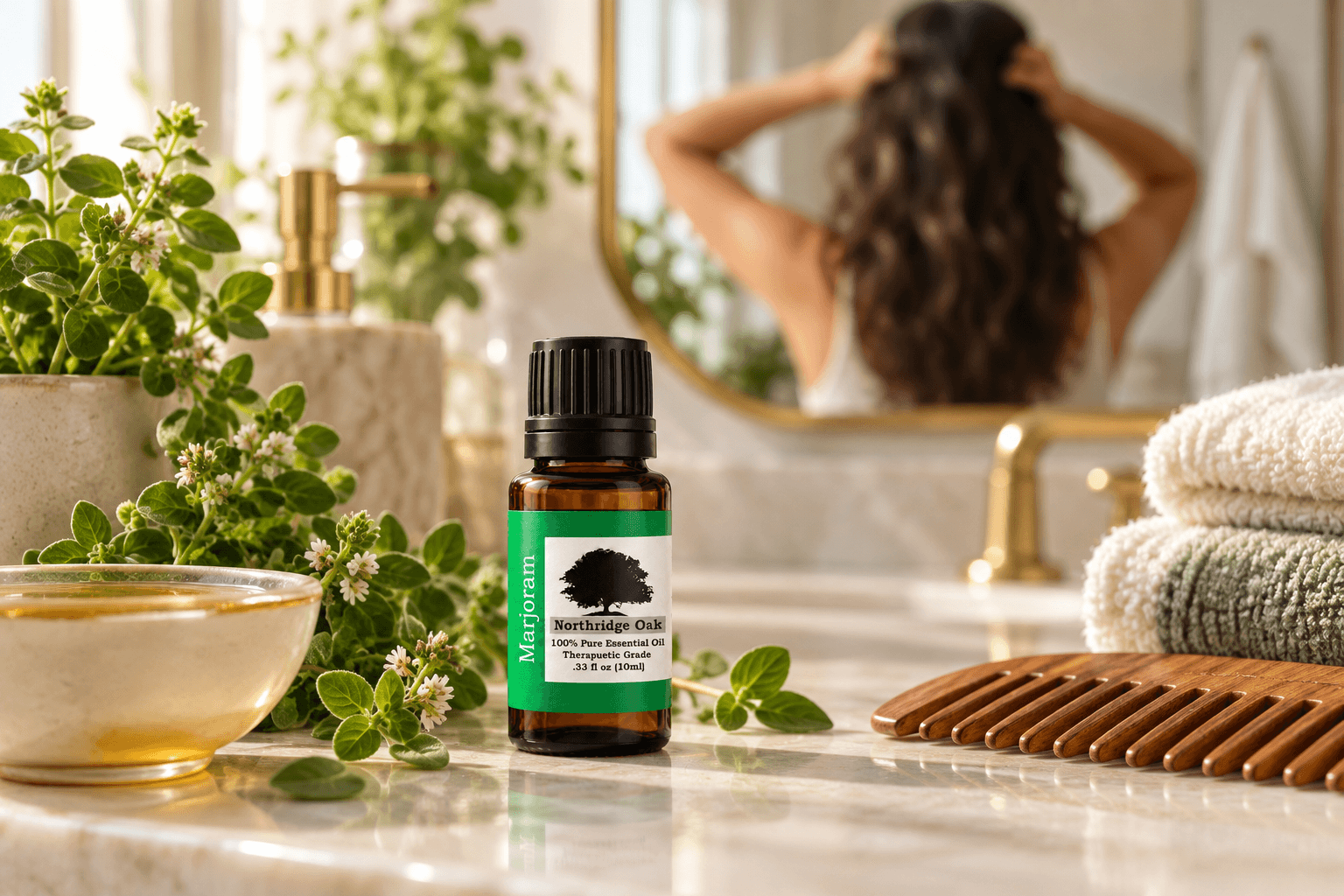
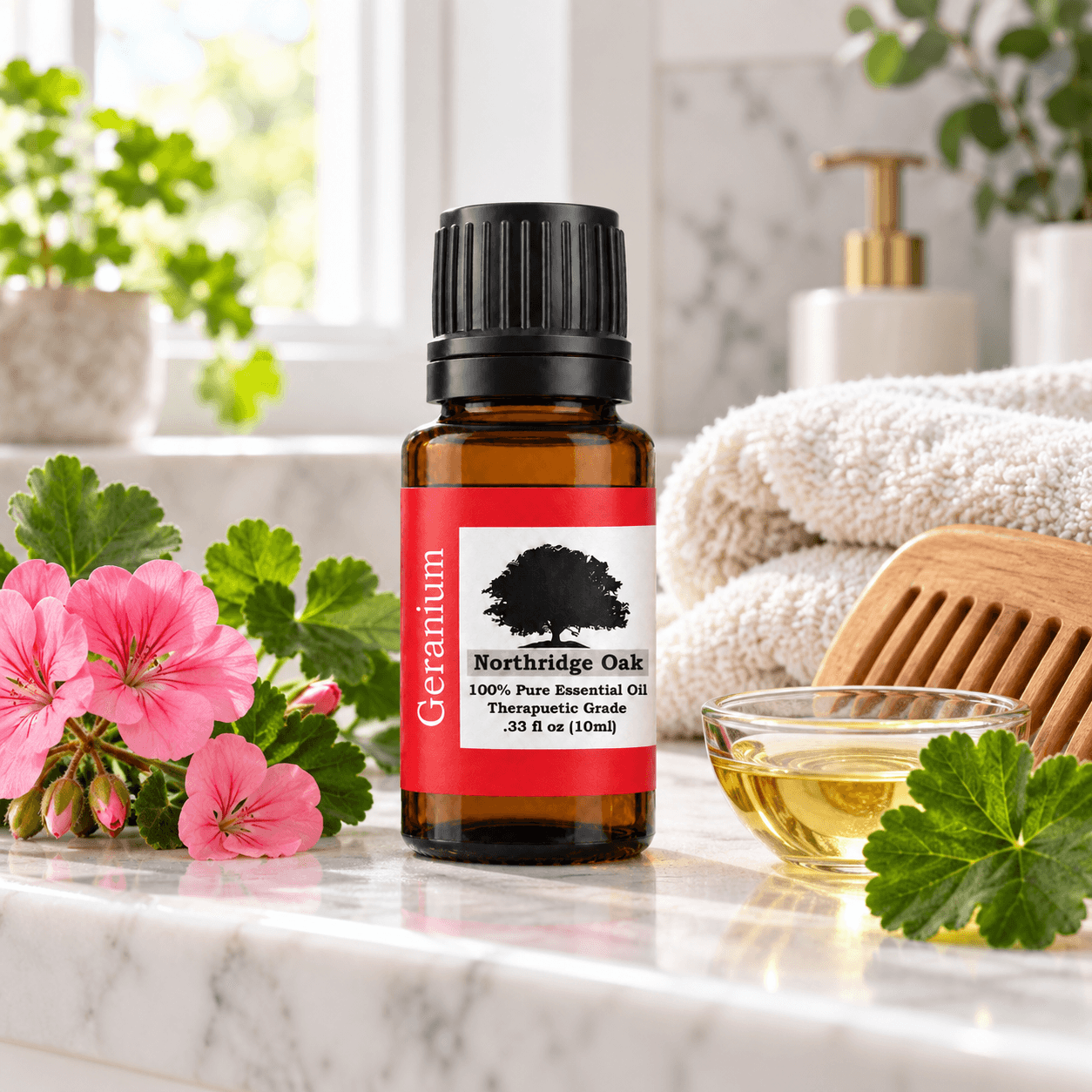
Rosemary gives the blend a crisp herbal lift. Cedarwood adds a dry woody base. Lavender softens the spice and makes the routine feel calmer. Geranium brings a green floral quality, while Lemon adds brightness. Keep the total essential-oil dilution the same when combining oils.
For a fresh scalp oil, mix two drops Ginger Root, two drops Rosemary and two drops Lavender into two tablespoons carrier oil. For a warmer aroma, use two drops Ginger Root, two drops Cedarwood and one drop Blood Orange in two tablespoons carrier. Learn more in our Ginger Essential Oil pairing guide.
Can Ginger Oil Help With Dryness or Flakes?
A carrier-oil massage may temporarily soften a dry-feeling scalp and loosen surface buildup before washing. That is different from treating dandruff, psoriasis, seborrheic dermatitis or infection. Persistent flaking, sores, pain or sudden changes deserve evaluation from a qualified professional.
Simple formulas make it easy to appreciate each ingredient. Begin with one carrier and Ginger Root Essential Oil, then add a companion oil after you understand the aroma and skin feel.
Should Ginger Oil Be Left in the Hair Overnight?
A short pre-shampoo application is an approachable starting point. Ten to twenty minutes gives you time to enjoy the aroma and massage before washing the blend out.
If you already tolerate a diluted formula and enjoy a leave-in approach, use a very small amount on the hair lengths rather than saturating the scalp. Avoid contact with eyes, and wash your hands after application.
How Often Can You Use Ginger Oil on the Scalp?
Once a week is enough to learn whether you enjoy the routine. If your scalp remains comfortable, you might use it up to twice weekly. More frequent use may simply add buildup, especially on fine hair or an oily scalp.
Take notes on dilution, carrier, contact time and how easily the blend shampoos out. Small adjustments make a routine more useful than adding more drops.
How Does Ginger Compare With Rosemary or Peppermint?
Ginger offers a spicy, grounding scalp ritual; Rosemary provides a crisp herbal profile; and Peppermint creates a strong cooling sensation. Choose according to the experience and aroma you want.
Our Rosemary Essential Oil hair guide, Lavender hair guide and Cedarwood hair and scalp guide offer useful comparisons.
How to Use Ginger Scalp Oil with Confidence
Use Ginger Root Essential Oil only after dilution. Patch test every new formula, keep it away from eyes, do not apply to broken skin and discontinue use if irritation appears. Keep the blend labeled and out of reach of children and pets. Do not ingest it.
Pregnancy, nursing, childhood, medication use and diagnosed scalp conditions call for individualized guidance. Essential oils are optional cosmetic ingredients; they should never delay evaluation of sudden shedding, bald patches, infection or persistent inflammation.
Continue Learning About Ginger Root
Once you understand the dilution, Ginger Root becomes an easy aroma to place inside a broader self-care routine.
- Start with the complete Ginger oil benefits and uses guide.
- Use Ginger Root thoughtfully in skin and body care.
- Create a warming Ginger Essential Oil massage blend.
- Choose complementary citrus, herb and wood oils.
- Explore Geranium Essential Oil for hair and scalp.
- Compare Eucalyptus scalp-care ideas.
- Build safer essential-oil habits from the beginning.
- View Northridge Oak Ginger Root Essential Oil.
These statements have not been evaluated by the Food and Drug Administration. This product and the information in this article are not intended to diagnose, treat, cure or prevent any disease. Essential oils are highly concentrated. Dilute before topical use, patch test first, and keep out of reach of children and pets. Consult a qualified healthcare professional before use during pregnancy or nursing, with young children, while taking medication or when managing a medical condition.