Table of Contents
- What Is Ginger Root Essential Oil?
- What Are the Most Practical Ginger Oil Benefits?
- How Can Ginger Oil Be Used in a Diffuser?
- What Blends Well With Ginger Essential Oil?
- How Do You Use Ginger Oil on the Skin?
- Can Ginger Oil Be Used for Massage?
- What Does Research Say About Ginger and Digestive Comfort?
- Is Ginger Oil Useful for Hair and Scalp Care?
- How Is Ginger Essential Oil Different From Homemade Ginger Oil?
- How Much Ginger Essential Oil Should You Use?
- Why Choose Northridge Oak Ginger Root Essential Oil?
- Continue Exploring Ginger Root Essential Oil
- Frequently Asked Questions
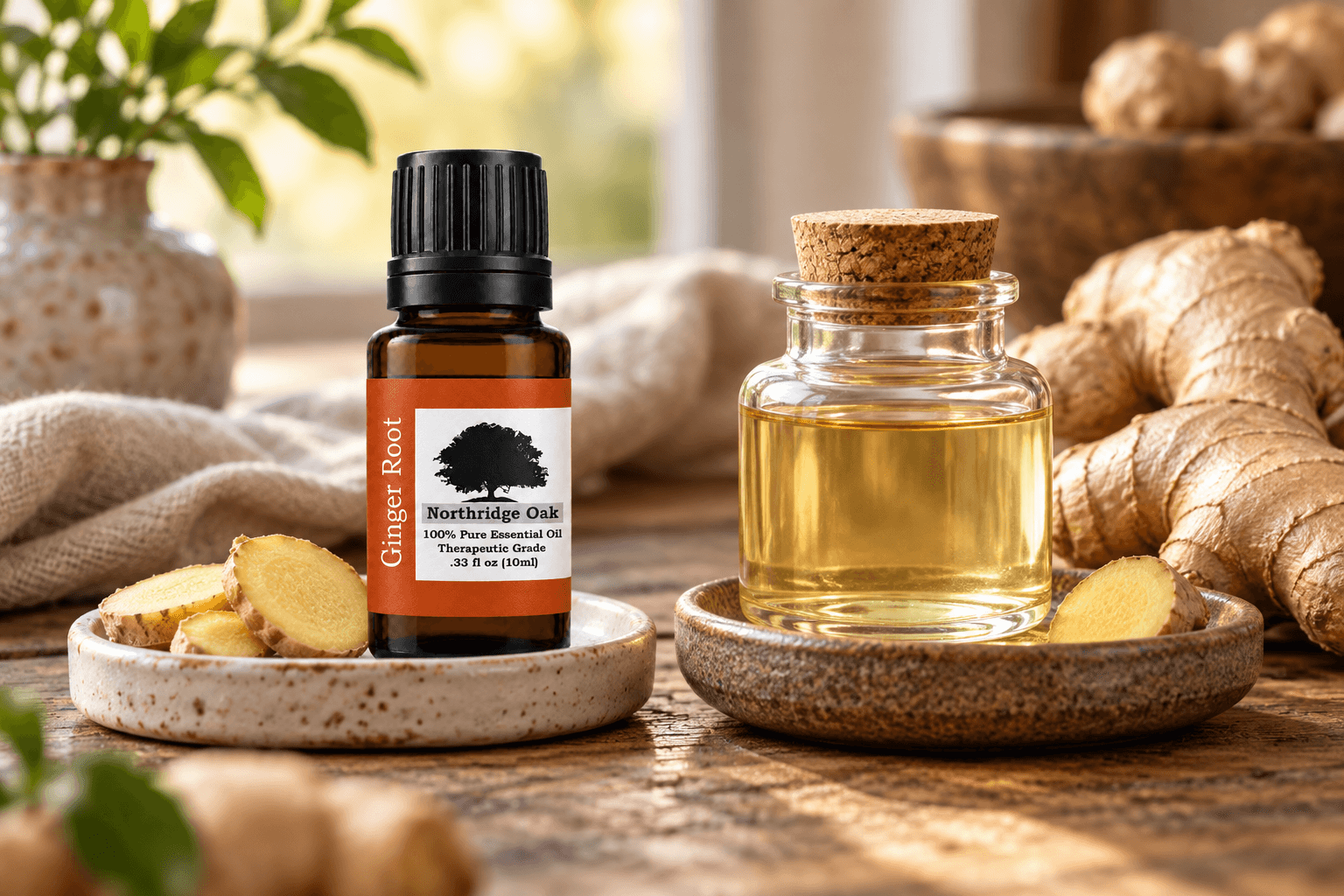
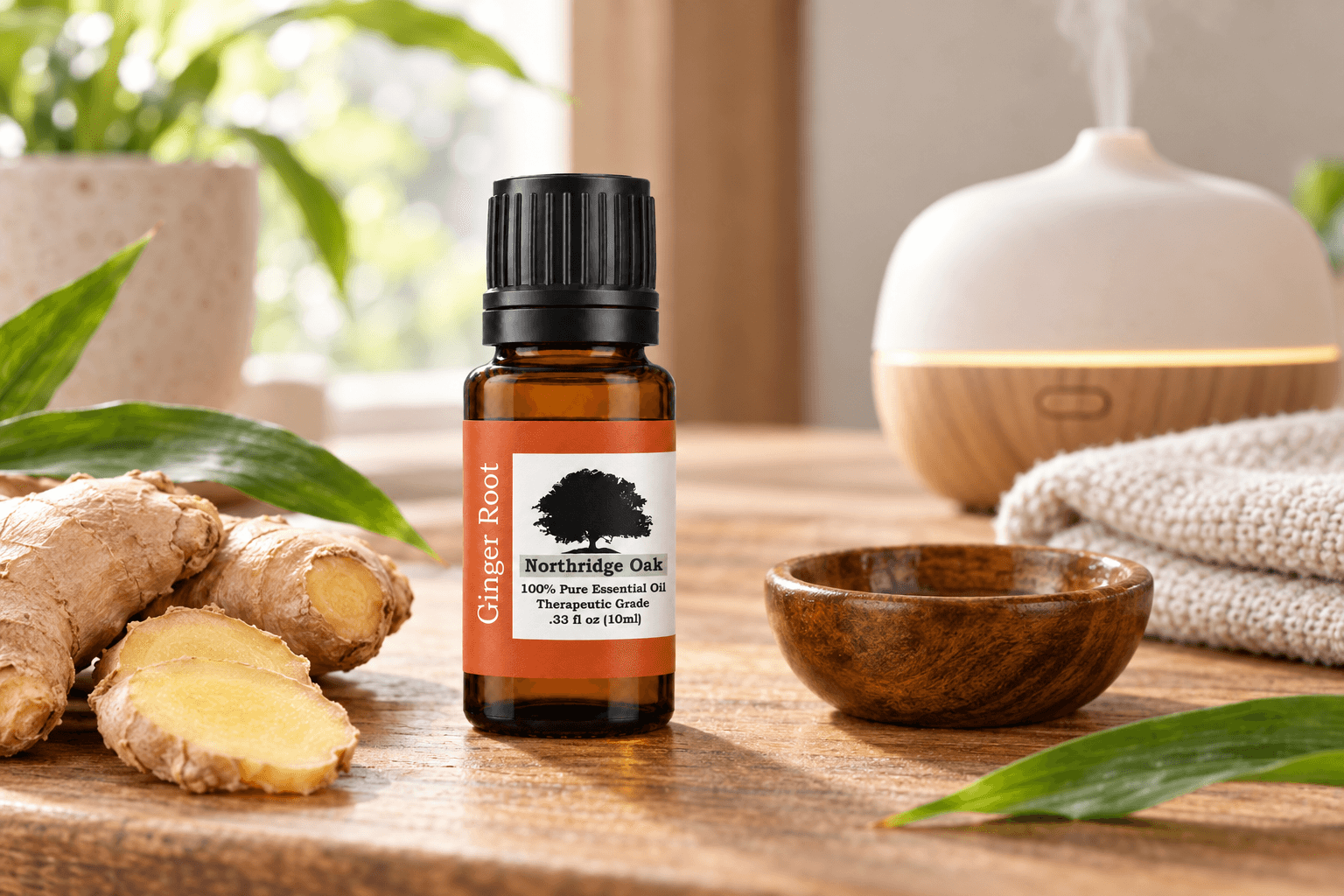
Ginger oil benefits begin with an aroma that feels warm, lively and immediately familiar. Steam-distilled from the rhizome of Zingiber officinale, Ginger Root Essential Oil carries the spicy, earthy character of fresh ginger without being a cooking oil or flavored extract. It can brighten a diffuser blend, add warmth to a properly diluted massage oil and bring an energizing botanical note to personal-care routines.
This guide focuses on pure Ginger Root Essential Oil—the concentrated aromatic oil Northridge Oak bottles in small batches and third-party GC/MS tests. Because “ginger oil” can also mean ginger-infused carrier oil, hair oil or culinary flavoring, knowing what is in the bottle is the first step toward using it confidently.
What Is Ginger Root Essential Oil?
Ginger Root Essential Oil is produced by steam-distilling ginger rhizomes. Steam carries the plant’s volatile aromatic molecules into a condenser, where the essential oil separates from the water. The finished oil is highly concentrated, undiluted and intended for aromatic use or carefully diluted topical applications.
Northridge Oak Ginger Root Essential Oil comes from India and has a warm, spicy, earthy aroma with a fresh ginger character. It is different from the fresh root, powdered spice, ginger tea and homemade ginger-infused oil. Those products contain different constituents and should not be treated as interchangeable. Our detailed guide to ginger oil versus Ginger Essential Oil makes those differences easy to understand.
What Are the Most Practical Ginger Oil Benefits?
The most dependable benefits are experiential. Ginger Root brings warmth and energy to aromatic routines. Its scent can make citrus blends feel fuller, soften the sweetness of orange, deepen seasonal spice combinations and give massage oils an inviting warming character.
Researchers have studied ginger foods, supplements, extracts and essential oil in different ways. Knowing the preparation makes the findings easier to understand. Ginger Root Essential Oil has its own growing body of aroma research, including human studies of inhalation for nausea and digestive comfort.
How Can Ginger Oil Be Used in a Diffuser?
Add two to four drops to a typical ultrasonic diffuser, adjusting for room size, diffuser capacity and personal preference. Begin lightly; Ginger Root has presence even at a low drop count. Diffuse for shorter periods in smaller rooms, provide fresh airflow and take breaks rather than running the diffuser continuously.
For a bright start, combine two drops Ginger Root, three drops Blood Orange and two drops Lemon. For a cozy evening aroma, try two drops Ginger Root, three drops Cedarwood and two drops Blood Orange. For a crisp seasonal blend, use two drops Ginger Root, two drops Cinnamon Leaf and three drops Sweet Orange. Find more measured recipes in our Ginger Essential Oil diffuser blends.
What Blends Well With Ginger Essential Oil?
Ginger is a versatile bridge between bright top notes and deeper woods or resins. Citrus oils—especially Blood Orange, Lemon, Bergamot FCF and Grapefruit—make it sparkle. Cedarwood, Patchouli, Frankincense and Vetiver emphasize its earthy base. Cinnamon Leaf, Clove and Cardamom create a rich spice profile, while Eucalyptus or Rosemary can make it feel fresher.
Start with one drop of Ginger Root for every two or three drops of the leading oil. Smell the blend on a paper strip before increasing the ginger. Our complete guide to what blends well with Ginger Essential Oil includes pairing logic and ready-to-use formulas.
How Do You Use Ginger Oil on the Skin?
Always dilute Ginger Root Essential Oil before applying it to skin. For a gentle everyday body oil, a 1% dilution is a sensible starting point: about six drops total essential oil in one fluid ounce of carrier oil. For smaller batches, one drop in one teaspoon of carrier oil is approximately a 1% dilution.
Choose a carrier that fits the routine. Fractionated Coconut Oil feels light and works well in roll-ons. Grapeseed absorbs quickly. Sweet Almond and Apricot Kernel offer a little more cushion for massage. Patch test the finished blend and discontinue use if discomfort develops. Explore a gentler approach in our Ginger oil for skin guide.
Can Ginger Oil Be Used for Massage?
Yes, when it is properly diluted. Ginger’s warm, spicy aroma pairs naturally with massage, especially after gardening, exercise, travel or a long workday. The massage itself supplies touch, pressure and time to slow down; the essential oil contributes scent and a warming sensory impression.
Try six drops Ginger Root, four drops Lavender and two drops Eucalyptus in one ounce of carrier oil. This creates a 2% total dilution for a short-term adult massage blend. Use less for sensitive skin and avoid broken or irritated areas. Our Ginger Essential Oil massage guide includes additional recipes and realistic research context.
What Does Research Say About Ginger and Digestive Comfort?
One 2017 study compared 30 abdominal-surgery patients who inhaled Ginger Essential Oil with 30 who inhaled normal saline. The Ginger group reported significantly lower nausea and vomiting scores, with the clearest improvement during the first six hours. In plain English, the people who inhaled Ginger Essential Oil felt noticeably better than the comparison group during early recovery.
This encouraging human study helps explain why Ginger aroma is often associated with digestive comfort. At home, a scent strip, personal inhaler or lightly scented diffuser provides an approachable way to experience the aroma.
Is Ginger Oil Useful for Hair and Scalp Care?
Ginger oil for hair is a popular search, but shoppers often encounter several different products under that name. Pure Ginger Root Essential Oil must be diluted; it is not a ready-to-use hair oil. A properly diluted pre-shampoo scalp oil can add a warm botanical aroma and make scalp massage feel more intentional.
For hair care, Ginger’s strongest everyday appeal is its warm botanical aroma and the way a diluted pre-shampoo oil encourages a slow, comfortable scalp massage. See our Ginger oil for hair and scalp guide for practical formulas.
How Is Ginger Essential Oil Different From Homemade Ginger Oil?
Many “how to make ginger oil” recipes place fresh or dried ginger into olive, coconut or another fixed oil. That creates an infusion. It may be useful as a culinary or cosmetic preparation when made and stored correctly, but it is not essential oil. True essential oil requires distillation equipment, substantial plant material and careful quality control.
Homemade infusions also carry moisture and spoilage considerations, particularly when fresh ginger is placed in oil. Our how to make ginger oil guide explains the distinction without encouraging readers to imitate commercial steam distillation at home.
How Much Ginger Essential Oil Should You Use?
Begin with a light amount. For diffusion, try two drops of Ginger Root within a four-to-seven-drop blend. For topical use, begin around 0.5% for facial products and 1% for general body care.
Keep recipes simple, label homemade blends with ingredients and date, and store them away from heat and light. Never ingest essential oils. Avoid eyes, mucous membranes and damaged skin. The Essential Oils for Beginners guide offers a friendly foundation for building safe habits.
Why Choose Northridge Oak Ginger Root Essential Oil?
Northridge Oak Ginger Root Essential Oil is 100% pure and undiluted. It is bottled in small batches, identified as Zingiber officinale, sourced from India and third-party GC/MS tested. The 10 mL bottle gives you a concentrated single oil for diffusion and properly diluted DIY use.
A good bottle should make the identity of the oil clear. Look for the botanical name, plant part, extraction method and practical safety information rather than vague promises. Store the cap tightly closed in a cool, dark location to protect the aroma.
Continue Exploring Ginger Root Essential Oil
Ginger Root is easy to explore one small routine at a time. Begin with the use that feels most natural, then follow your curiosity into another part of the Ginger Root Learning Center.
- Create a thoughtful Ginger oil hair and scalp routine.
- Learn how to dilute Ginger oil for skin and body care.
- Understand homemade ginger-infused oil and true essential oil.
- Compare Ginger oil, infused oil and Ginger Essential Oil.
- Try warm and fresh Ginger Essential Oil diffuser blends.
- Discover Ginger Root’s best citrus, spice and wood pairings.
- Make a properly diluted warming massage blend.
- Read what research says about ginger aroma and digestive comfort.
- Explore another warm, spicy essential oil.
- View Northridge Oak Ginger Root Essential Oil.
These statements have not been evaluated by the Food and Drug Administration. This product and the information in this article are not intended to diagnose, treat, cure or prevent any disease. Essential oils are highly concentrated. Dilute before topical use, patch test first, and keep out of reach of children and pets. Consult a qualified healthcare professional before use during pregnancy or nursing, with young children, while taking medication or when managing a medical condition.