Table of Contents
- What Is Geranium Essential Oil?
- What Does Geranium Essential Oil Smell Like?
- Why People Reach for Geranium Essential Oil
- Geranium Essential Oil for Diffusers
- What Blends Well With Geranium?
- Geranium Essential Oil for Skin and Face
- Geranium Essential Oil for Hair and Scalp
- Geranium in Midlife and Menopause Self-Care
- Natural Perfume and Personal Aroma
- Everyday Geranium Recipes
- Safety, Dilution and Phototoxicity
- How to Choose a Geranium Essential Oil
- A Beautiful Oil to Keep Within Reach
- How to Begin With Your First Bottle
- One Oil, Many Beautiful Directions
- Continue Exploring Geranium Essential Oil
- Frequently Asked Questions
Geranium Essential Oil has a lovely way of making an ordinary room feel freshly gathered together. Its rosy floral heart is softened by green leaves and a clean, gently sweet finish, so it feels bright rather than heavy. Distilled from Pelargonium graveolens grown in Egypt, Northridge Oak Geranium Essential Oil is the bottle to reach for when you want a welcoming diffuser blend, an elegant body oil, a fresh scalp ritual or a simple aromatic pause in the day.
This complete guide brings the entire geranium experience into one place. You will learn what the oil smells like, why people enjoy it, how to blend it, where it fits into skin and hair care, what research can—and cannot—tell us, and how to dilute it with confidence. Geranium is easy to love because it can be floral, green, citrusy or softly grounded depending on the oils beside it.
What Is Geranium Essential Oil?
Geranium Essential Oil is steam-distilled from the fragrant leaves and stems of the geranium plant. Although its aroma often reminds people of rose, geranium has its own personality: greener, airier and a little more herbal. That balance is why perfumers and home blenders value it. It can make lavender feel more polished, give citrus oils a floral heart and help deeper woods feel softer.
Northridge Oak’s geranium is Pelargonium graveolens, sourced from Egypt and bottled at full strength. The botanical name matters because the common names “geranium” and “rose geranium” are sometimes used loosely in the marketplace. If you enjoy understanding those distinctions, our Geranium vs. Rose Geranium guide explains them in approachable terms.
What Does Geranium Essential Oil Smell Like?
Imagine brushing past scented green leaves in a sunlit garden just after the air has warmed. The first impression is fresh and leafy. Then a rosy floral note unfolds, followed by a softly sweet, clean finish. It is more garden-fresh than bouquet-like and more rounded than a sharp green herb.
That aroma makes geranium especially useful when you want a floral oil that still feels lively. Read our full guide to what Geranium Essential Oil smells like for scent comparisons, buying guidance and blend ideas.
Why People Reach for Geranium Essential Oil
Most people begin with the aroma. Geranium can make a room feel cared for without becoming overly perfumed. In a diffuser, it is a beautiful companion for morning routines, quiet afternoons and relaxed evenings. In a properly diluted topical blend, it lends a graceful botanical scent to body oils, facial oils, bath rituals and scalp massage.
Research also gives us an encouraging reason to keep exploring aromatic routines. In a randomized clinical trial published in the Journal of Caring Sciences, women who inhaled geranium aroma during labor reported lower anxiety scores after the intervention. The study does not turn a pleasant aroma into medical treatment, but it does support a positive, practical idea: intentional scent can be a meaningful part of a comforting environment. Our geranium mood and relaxation guide explains the study and turns that idea into gentle everyday rituals.
Geranium Essential Oil for Diffusers
Geranium is an adaptable middle note, which means it helps the brighter opening of a blend flow into its warmer base. For a cheerful garden blend, try 3 drops geranium, 3 drops sweet orange and 2 drops lavender. For something greener, combine 3 drops geranium, 2 drops lemon and 2 drops rosemary. For a calm evening atmosphere, use 3 drops geranium, 3 drops lavender and 1 drop cedarwood.
Begin with fewer drops in a small room and adjust for room size and diffuser instructions. The goal is a clear, inviting aroma rather than intensity. You will find more seasonal and mood-based ideas in 20 Geranium Essential Oil diffuser blends.
What Blends Well With Geranium?
Geranium is generous with other aromas. Citrus oils such as bergamot, lemon, grapefruit and sweet orange make it sparkle. Lavender and clary sage draw out its soft floral side. Cedarwood, frankincense and patchouli create depth. Rosemary and eucalyptus make the leafy notes feel crisp and open.
A useful blending rhythm is three parts bright or familiar aroma, two parts geranium and one part grounding oil. Treat that as a starting point, not a rule. Your nose is the best guide. The complete what blends well with Geranium Essential Oil guide includes pairing notes and formulas for different rooms and occasions.
Geranium Essential Oil for Skin and Face
In skin care, geranium’s greatest immediate pleasure is sensory: it gives a plain carrier oil a fresh, polished floral aroma and turns application into a small ritual. For the face, keep the dilution especially gentle. A 0.5% blend is about 1 drop of essential oil in 2 teaspoons, or 10 mL, of carrier oil. Jojoba and squalane are elegant, lightweight choices.
Apply a small amount to clean, slightly damp skin and let the aroma encourage a slower, more attentive routine. Patch test first and keep the blend away from eyes. Our detailed Geranium Essential Oil for skin and face guide offers formulas for facial oil, body oil and hand care.
Geranium Essential Oil for Hair and Scalp
A scalp massage can feel wonderfully restorative even when it is simple. Add geranium at an appropriate dilution to jojoba or another favorite carrier, massage gently into the scalp before washing and enjoy the fresh green-floral aroma. It pairs especially well with rosemary, lavender and cedarwood for a scent that feels clean and botanical.
This is cosmetic, aromatic self-care—not a promise of hair growth or treatment. The value is in creating a pleasant routine that supports consistent, gentle care. Explore formulas and wash-day ideas in our Geranium Essential Oil for hair and scalp guide.
Geranium in Midlife and Menopause Self-Care
Comforting rituals can be particularly welcome during life transitions. Clinical researchers have explored geranium within aromatherapy massage and inhalation routines for women in midlife. The studies are small and do not establish geranium as a hormone therapy, yet they offer a positive invitation to use aroma, massage and intentional rest as supportive parts of personal well-being.
A diffuser beside a favorite chair, a diluted hand oil or a brief evening inhalation ritual can become a gentle cue to pause. Our geranium and menopause self-care guide discusses the research carefully and keeps the focus on realistic, enjoyable aromatic use.
Natural Perfume and Personal Aroma
Geranium is one of the easiest essential oils for beginning natural perfume because it already feels complete: green at the top, rosy in the heart and softly sweet as it settles. Pair it with bergamot and cedarwood for a bright woody floral, or with lavender and frankincense for something serene and refined.
A roll-on perfume at 2% dilution is about 4 drops total essential oil in a 10 mL bottle of carrier oil. Apply sparingly to pulse points after patch testing. Visit our Geranium Essential Oil natural perfume guide for blend structures and ready-to-make recipes.
Everyday Geranium Recipes
Try a simple body oil with 6 drops geranium, 4 drops lavender and 2 drops sweet orange in 30 mL carrier oil. For a linen mist, combine essential oils with high-proof alcohol and distilled water using a properly formulated recipe, then shake before use and avoid delicate surfaces. For bath time, first disperse geranium in an appropriate solubilizer or bath base; essential oil should not be dropped directly into water.
The most rewarding recipes are the ones you will genuinely use. Our collection of approachable Geranium Essential Oil recipes emphasizes atmosphere, pleasure and clear directions rather than an endless checklist.
Safety, Dilution and Phototoxicity
Geranium Essential Oil is concentrated, so a few thoughtful habits keep the experience enjoyable. Dilute before skin application, patch test a new blend, avoid eyes and mucous membranes, keep bottles away from children and pets, and use diffusers in a ventilated room with breaks.
Geranium is generally not considered phototoxic, which makes it convenient for properly diluted daytime body products. Still, every person and formula is different. If you are pregnant, nursing, managing a health condition or making a blend for a child, seek individualized professional guidance. See the full Geranium Essential Oil safety and dilution guide for dilution tables and practical examples.
How to Choose a Geranium Essential Oil
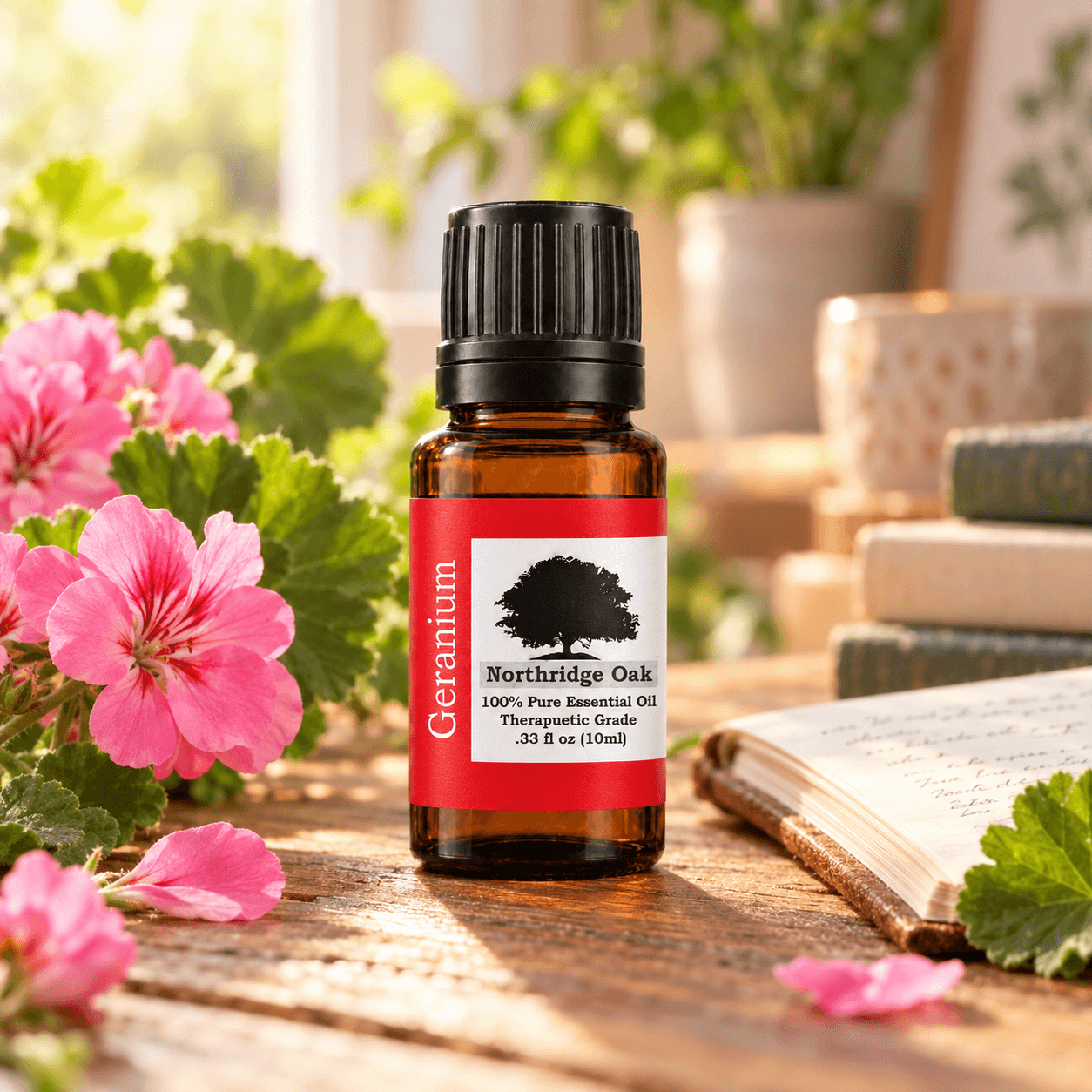
Look for a bottle that names the botanical species, plant part, extraction method and origin. The aroma should feel fresh and dimensional rather than flat or candy-like. Store it tightly capped in a cool, dark place. Northridge Oak Geranium Essential Oil is pure Pelargonium graveolens from Egypt in a 10 mL bottle, ready for the diffuser or for thoughtful dilution into a personal-care blend.
A Beautiful Oil to Keep Within Reach
Geranium earns its place in a collection by making so many routines feel more intentional. It can brighten citrus, soften woods, elevate a facial oil and bring the impression of a flowering garden into the room. Begin with one simple diffuser blend or one small diluted roll-on. Once you learn how geranium changes beside different companions, it becomes a creative favorite rather than a bottle saved for special occasions.
How to Begin With Your First Bottle
Open the bottle when you have enough time to notice it. Smell from a short distance, then place one drop on a paper scent strip and return after ten minutes. The first green impression will begin to soften, and the rosy center will become easier to recognize. That small exercise teaches you more about geranium than rushing into a complicated formula.
Next, choose the format you already enjoy. If you use a diffuser often, blend geranium with sweet orange and lavender. If you prefer personal aroma, make a one-percent hand oil. If natural perfume is the goal, begin with geranium, bergamot FCF and cedarwood. Keeping the first experience familiar lets geranium add delight without asking you to build an entirely new routine.
Write down the blend and how it felt in the room or on the skin. Aroma preferences become clearer through use, and your notes will help you adjust with confidence. A little more citrus creates brightness; lavender adds softness; cedarwood adds quiet depth. In this way, one bottle becomes a creative companion rather than another ingredient waiting for the perfect occasion.
One Oil, Many Beautiful Directions
The most complete way to understand geranium is to experience it in more than one setting. In the diffuser, it feels expansive and leafy. In a facial or body oil, it becomes softer and closer. In perfume, its rosy heart can connect a sparkling citrus opening to a warm woody finish. None of these uses needs to be elaborate. Each simply reveals a different facet of the same plant.
That versatility is also what makes geranium a thoughtful first floral essential oil. It can satisfy someone who loves flowers, yet its green character welcomes people who usually reach for rosemary, cedarwood or citrus. Start where your preferences already live, and let the oil meet you there.
Continue Exploring Geranium Essential Oil
Geranium is one of the most versatile oils to keep within reach. Continue through the Northridge Oak Geranium Learning Center to discover more research, practical recipes and approachable ways to bring this fresh botanical into your everyday routine.
- Create a bright home atmosphere with 20 Geranium Essential Oil diffuser blends.
- Discover what blends well with Geranium Essential Oil.
- Bring geranium into a gentle skin and face routine.
- Refresh your hair and scalp ritual with geranium.
- Create a comforting pause with geranium for mood and relaxation.
- Explore geranium in an aromatic menopause self-care routine.
- Take geranium outside for fresh-air living.
- Make a naturally rosy geranium perfume.
- Learn what Geranium Essential Oil smells like.
- Shop Northridge Oak Geranium Essential Oil.
These statements have not been evaluated by the Food and Drug Administration. Northridge Oak products are not intended to diagnose, treat, cure or prevent disease.