Table of Contents
- Why the Names Overlap
- Start With the Botanical Name
- How Geranium Usually Smells
- How Rose Geranium May Smell
- Are the Uses Different?
- Geranium in the Diffuser
- Geranium in Natural Perfume
- Comparing Two Bottles at Home
- What to Look for When Shopping
- Safety Similarities and Important Details
- Which One Should You Choose?
- Continue Exploring Geranium Essential Oil
- Frequently Asked Questions
Geranium and Rose Geranium Essential Oil are often discussed as though they are clearly separate products, yet the names on the market can overlap. One seller may use “rose geranium” to describe a rosy chemotype or origin; another may place the same common name on Pelargonium graveolens. The simplest path to clarity is to look beyond the marketing name and read the botanical details.
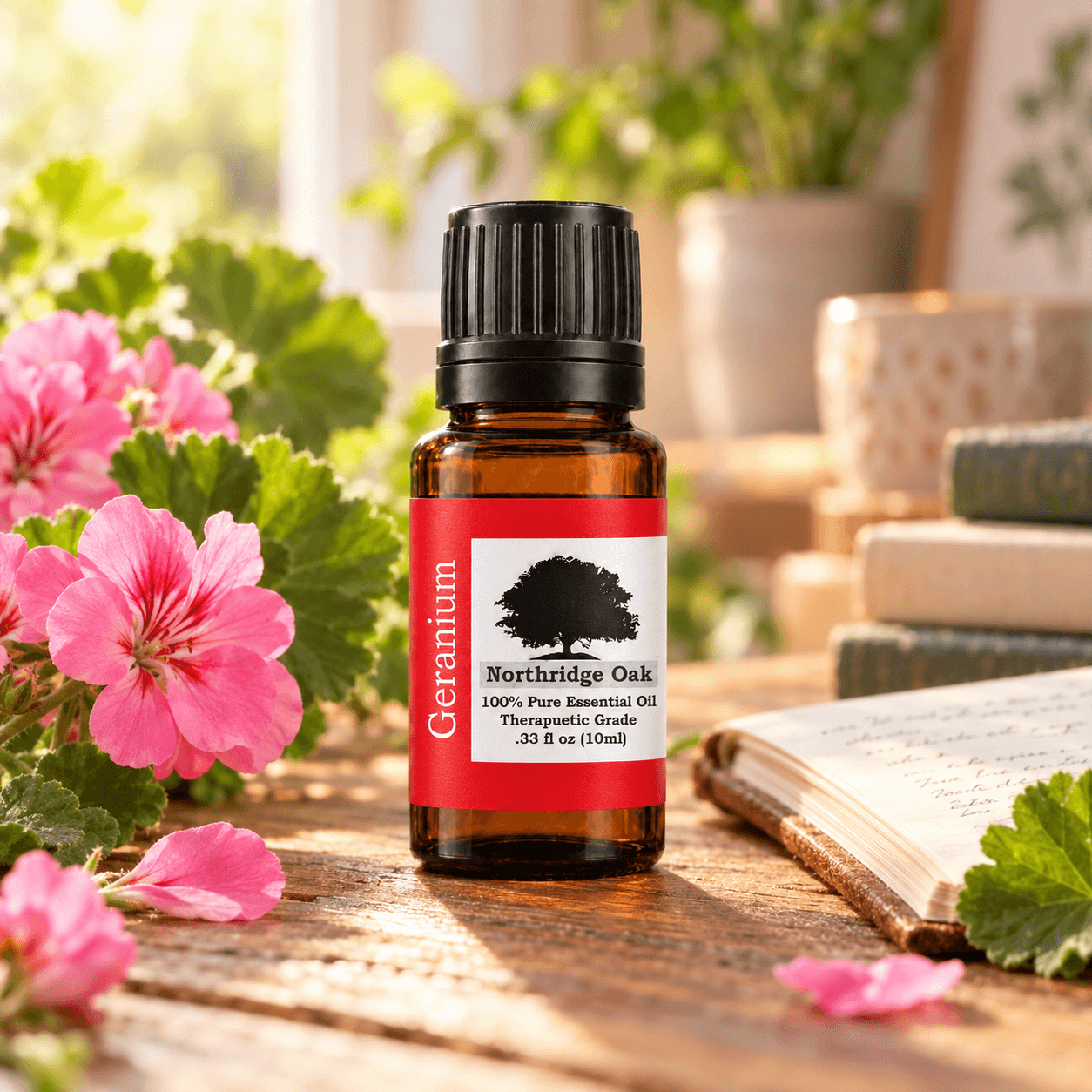
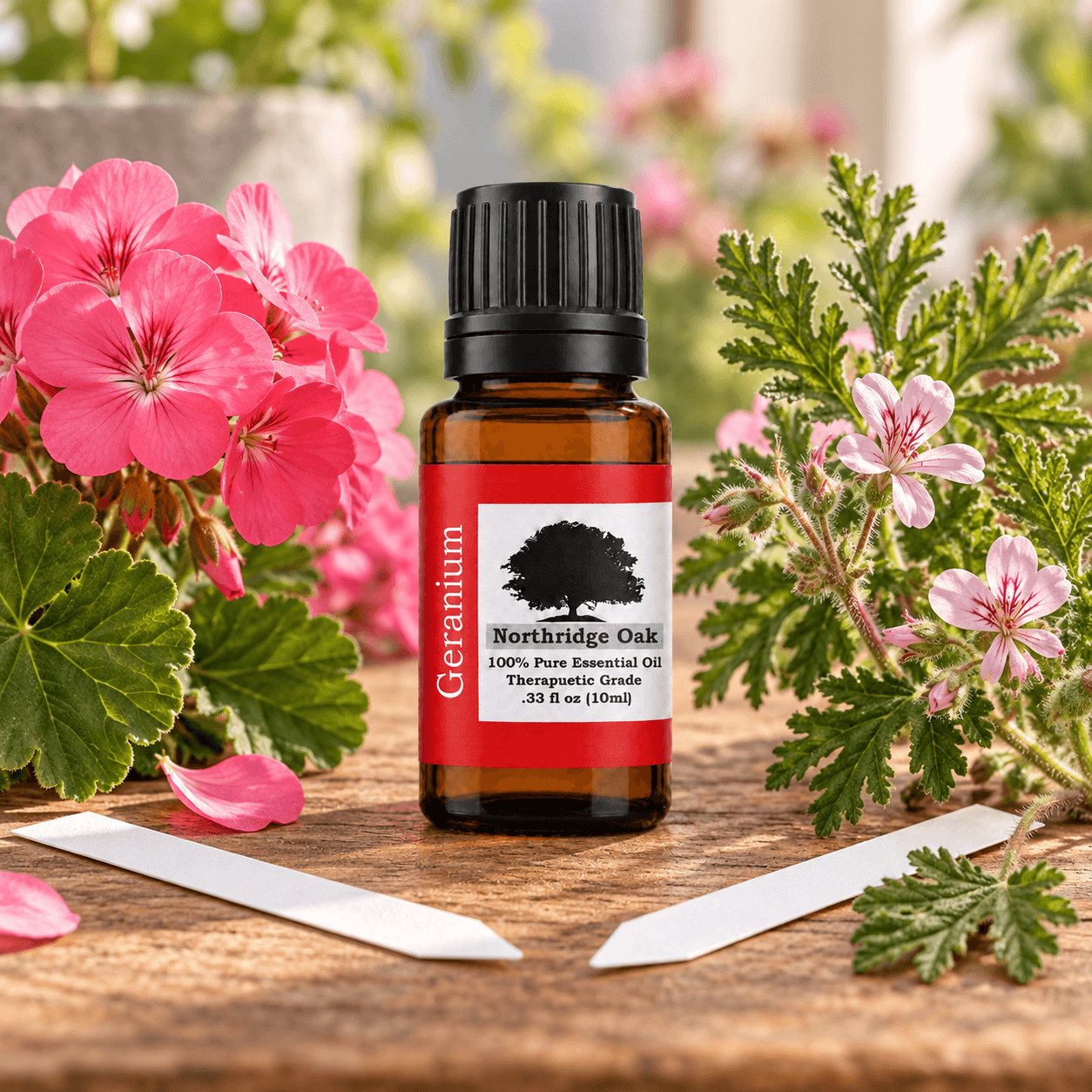
Northridge Oak Geranium Essential Oil is Pelargonium graveolens from Egypt. Its aroma is fresh, rosy, green and softly sweet. This guide explains how to compare any two bottles thoughtfully, without assuming the common name tells the whole story.
Why the Names Overlap
The scented-geranium family includes many cultivated varieties and a history of botanical reclassification. Trade names developed alongside regional production and perfumery traditions. As a result, “geranium,” “rose geranium” and regional names are not always used consistently from one supplier to the next.
That does not make either bottle less appealing. It simply means the Latin name, origin and aroma description provide more reliable buying information than the common name alone.
Start With the Botanical Name
Look for Pelargonium graveolens, Pelargonium roseum, Pelargonium asperum or another clearly stated species or accepted trade designation. Botanical taxonomy and industry usage do not always line up neatly, so responsible suppliers should provide enough detail to identify the material they are selling.
If two bottles share the same botanical name but carry different common names, their aroma can still differ because of origin, cultivar, climate and distillation. The label is the beginning of the comparison, not the end.
How Geranium Usually Smells
Geranium commonly has a rosy floral heart with an obvious green, leafy or lightly herbal opening. It can feel clean, bright and somewhat sharp when smelled neat, then soften as it diffuses or dilutes.
Northridge Oak’s Egyptian Pelargonium graveolens follows this inviting pattern. Read the full guide to what Geranium Essential Oil smells like for step-by-step scent testing.
How Rose Geranium May Smell
A material marketed as rose geranium often emphasizes its rosy, sweet or minty-floral qualities. Depending on its botanical identity and growing region, the green notes may feel softer or the rose impression more pronounced. But the name alone cannot guarantee that scent profile.
Ask for the botanical name and origin, then compare samples if possible. Your nose may prefer the greener geranium for diffusing and the more rose-forward material for perfume—or the same oil may serve both roles beautifully.
Are the Uses Different?
Both are commonly enjoyed in diffusers, properly diluted body oils, personal perfumes and aromatic routines. The best choice is often sensory. A greener geranium suits rosemary, lemon and cedarwood. A very rosy material may shine beside bergamot, lavender, palmarosa or sandalwood.
Use and safety decisions should follow the exact oil’s documentation, not a general assumption based on the common name. Review supplier guidance and make appropriately diluted batches.
Geranium in the Diffuser
For a fresh garden atmosphere, combine 3 drops geranium, 3 drops lemon and 2 drops lavender. The lemon pulls forward the leaves, while lavender makes the floral heart smooth and familiar.
For a rose-forward material, try 3 drops rose geranium, 3 drops bergamot and 2 drops cedarwood. The bright top and dry base frame the rosy center. More ideas await in 20 Geranium Essential Oil diffuser blends.
Geranium in Natural Perfume
Geranium creates a green floral heart that feels contemporary and botanical. A very rosy geranium can help build the impression of rose without requiring true rose to carry the entire accord. Neither is a perfect substitute for rose absolute; each has its own beauty.
In a 10 mL roll-on, try 2 drops geranium, 1 drop bergamot FCF and 1 drop cedarwood in jojoba. Our geranium natural perfume guide offers several variations.
Comparing Two Bottles at Home
Place one drop of each oil on separate labeled scent strips. Smell from a distance after five minutes, thirty minutes and two hours. Write down the first three words that come to mind without looking for a “correct” answer.
Next, pair each strip with the same third oil—perhaps lavender or cedarwood. One geranium may disappear into the companion while the other remains distinct. That tells you which bottle better suits the blend you want to create.
What to Look for When Shopping
A helpful product page names the botanical, origin, extraction method, plant part and volume. It should describe the aroma without promising that the oil diagnoses or treats health conditions. Packaging should protect the concentrated oil from light and allow controlled dispensing.
Price alone does not explain aroma quality, and “rose” in the name does not automatically make a geranium more luxurious. Transparency and your intended use are better guides.
Safety Similarities and Important Details
Both products are concentrated essential oils and should be diluted before skin use, patch tested and kept away from eyes. Geranium is generally not considered phototoxic, but the exact composition and full blend still matter. Ask a qualified professional about use during pregnancy, with children or alongside medical concerns.
See the Geranium Essential Oil safety and dilution guide for practical percentages and common questions.
Which One Should You Choose?
Choose the bottle whose botanical information is clear and whose aroma matches your purpose. If you want a fresh, green floral for broad everyday blending, Egyptian Pelargonium graveolens is wonderfully versatile. If a supplier’s rose geranium has a softer, more petal-rich aroma you love, it may be the right perfume heart for you.
The winning choice is not the name with the most romance. It is the oil you understand, enjoy and will use confidently.
Continue Exploring Geranium Essential Oil
Geranium is one of the most versatile oils to keep within reach. Continue through the Northridge Oak Geranium Learning Center to discover more research, practical recipes and approachable ways to bring this fresh botanical into your everyday routine.
- Start with the complete Geranium Essential Oil benefits, uses, blends and safety guide.
- Create a bright home atmosphere with 20 Geranium Essential Oil diffuser blends.
- Discover what blends well with Geranium Essential Oil.
- Bring geranium into a gentle skin and face routine.
- Refresh your hair and scalp ritual with geranium.
- Create a comforting pause with geranium for mood and relaxation.
- Explore geranium in an aromatic menopause self-care routine.
- Take geranium outside for fresh-air living.
- Make a naturally rosy geranium perfume.
- Shop Northridge Oak Geranium Essential Oil.
These statements have not been evaluated by the Food and Drug Administration. Northridge Oak products are not intended to diagnose, treat, cure or prevent disease.