Table of Contents
- The First Impression: Fresh Green Leaves
- The Heart: Rosy Without Being Rose
- The Finish: Softly Sweet and Clean
- Does Every Geranium Oil Smell the Same?
- How Geranium Smells With Citrus
- How Geranium Smells With Lavender and Herbs
- How Geranium Smells With Woods and Resins
- Who Is Most Likely to Enjoy Geranium?
- How to Smell Geranium Before Making a Blend
- How Geranium Changes in Use
- The Simplest Way to Decide
- Continue Exploring Geranium Essential Oil
- Frequently Asked Questions
Geranium Essential Oil smells like a flowering garden with the leaves still attached. There is a recognizable rosy quality, but it arrives with fresh green stems, a lightly herbal edge and a softly sweet finish. The result is more alive and airy than a bouquet of cut roses—and that is precisely what makes geranium so versatile.
If you are deciding whether to buy geranium, imagine the space between lavender, rose and a freshly crushed leaf. It is floral enough to feel graceful, green enough to feel clean and complex enough to change beautifully with citrus, herbs and woods.
The First Impression: Fresh Green Leaves
When the bottle first opens, many people notice the green side before the flower. It can suggest stems, leaves or an herb garden warmed in the sun. This freshness keeps geranium from feeling syrupy and helps it suit kitchens, workspaces and daytime blends as naturally as personal care.
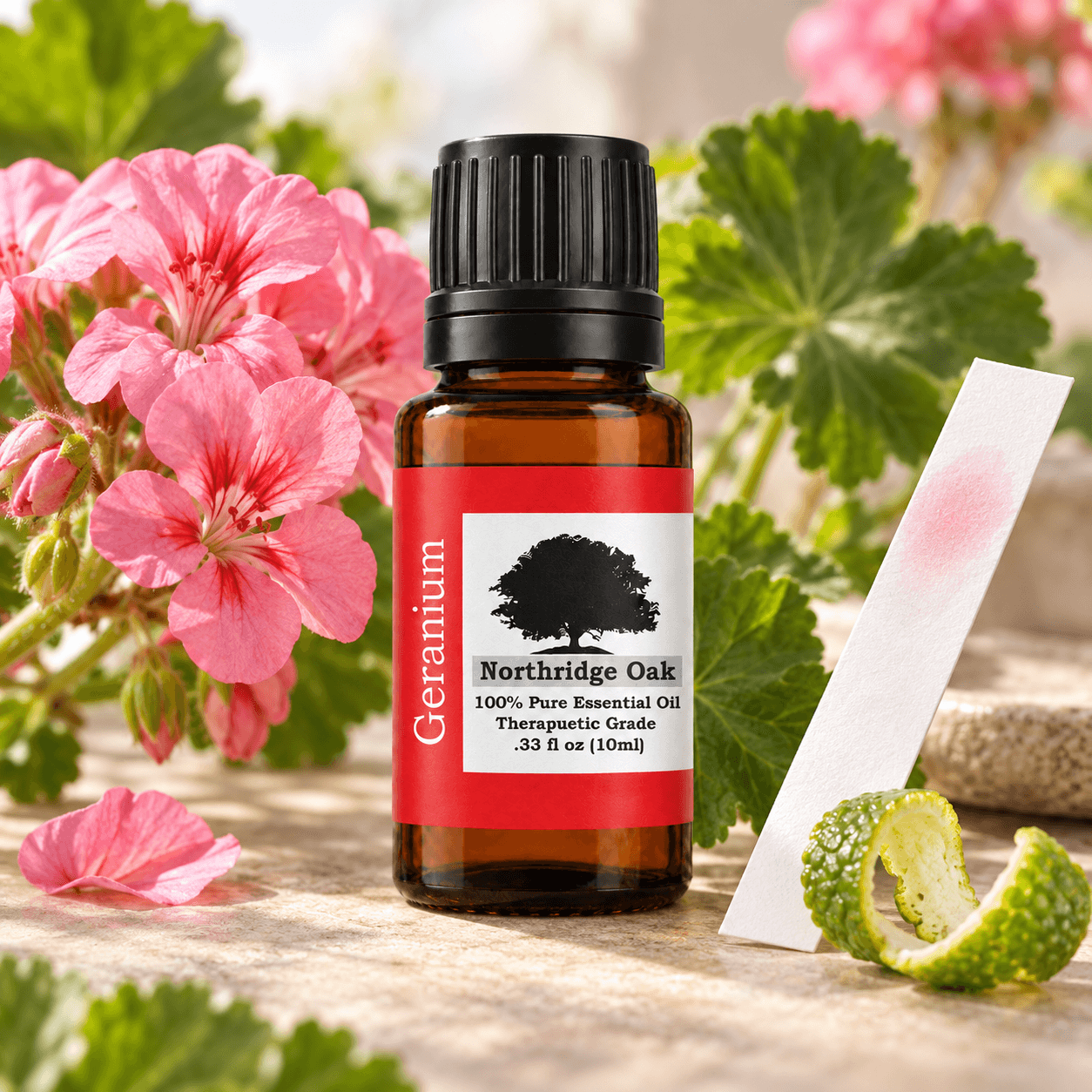
On a scent strip, give it room. A neat essential oil is concentrated, and the bottle opening can make any aroma feel intense. Place one drop on the strip, step away and smell from a comfortable distance after a few minutes.
The Heart: Rosy Without Being Rose
As the bright green opening softens, geranium’s rosy heart becomes clear. It shares some aromatic molecules and impressions with rose, which is why it is often used to create affordable rosy accords. Yet it does not smell identical to true rose essential oil or rose absolute.
Rose may feel deeper, more petal-rich or honeyed depending on the material. Geranium is usually greener, sharper and more herbal. Think of rose as the flower in a vase and geranium as the whole fragrant plant in the garden.
The Finish: Softly Sweet and Clean
Geranium settles into a gentle sweetness with a clean botanical character. It is not a heavy base note, so it will not linger like patchouli or cedarwood. In a blend, those deeper materials can give its rosy heart a longer, warmer finish.
This evolving aroma explains why geranium works so well in natural perfume. It already has movement from fresh to floral, and companion oils can emphasize whichever stage you enjoy most.
Does Every Geranium Oil Smell the Same?
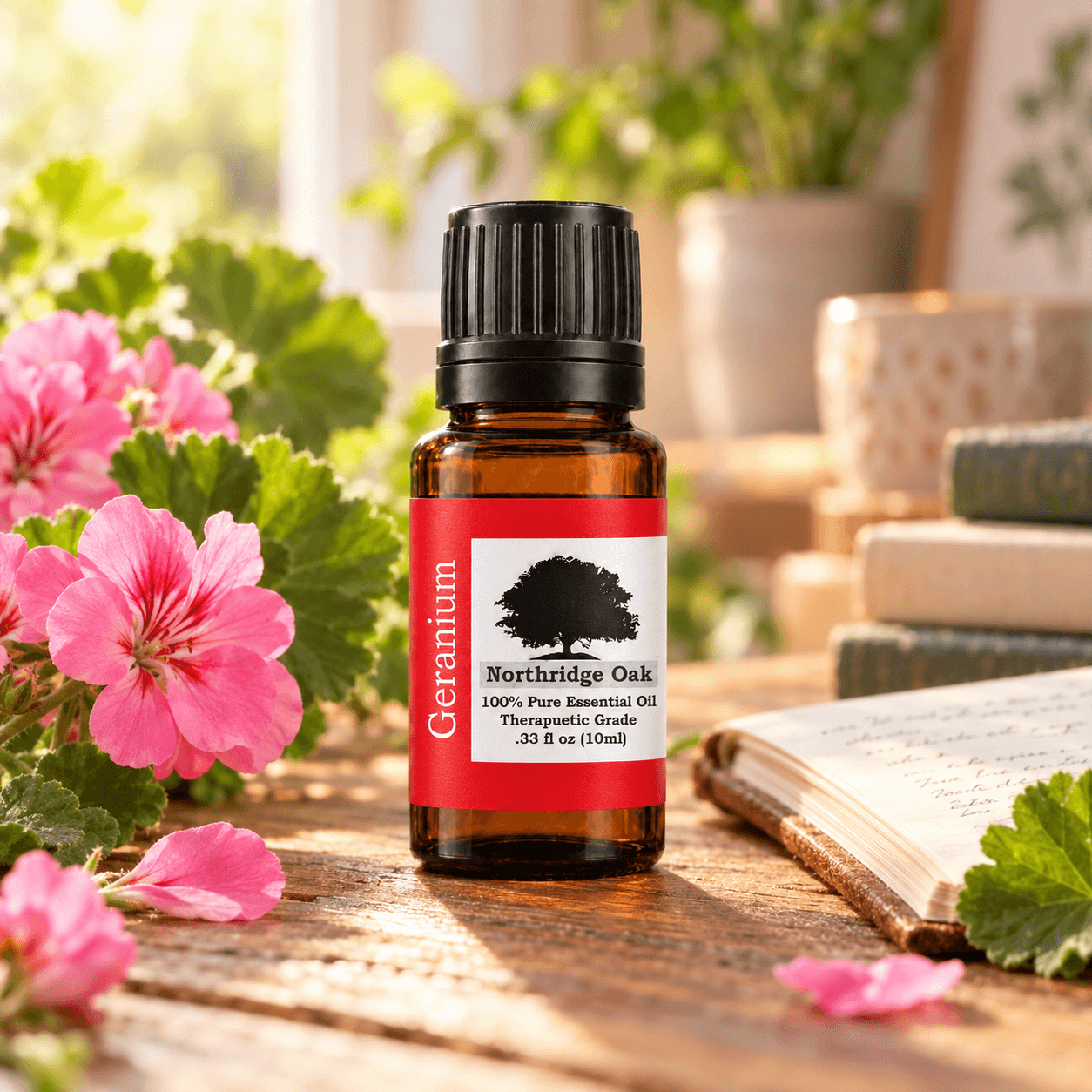
No. Botanical species, growing region, climate, harvest and distillation all influence the aroma. Northridge Oak Geranium Essential Oil is Pelargonium graveolens from Egypt, with a fresh, rosy, green and softly sweet profile.
Some materials sold under “rose geranium” may have a more pronounced rosy or mint-like nuance. Common names overlap, so check the botanical name rather than relying on the front label alone. Our Geranium vs. Rose Geranium Essential Oil guide explains why the naming can be confusing.
How Geranium Smells With Citrus
Sweet orange makes geranium warmer and friendlier. Bergamot brings an elegant sparkle. Lemon emphasizes the green edge, while grapefruit adds a tart, colorful lift. If geranium seems too floral from the bottle, citrus is often the easiest way to discover its brighter side.
Try 3 drops geranium, 3 drops sweet orange and 2 drops lemon in a suitable diffuser. The result feels like morning light in a garden room.
How Geranium Smells With Lavender and Herbs
Lavender smooths geranium and makes the floral character feel familiar. Rosemary does the opposite: it highlights the leaf and creates a crisp herbal garden. Clary sage adds a softer herbal-floral note, while basil can give the blend an intriguing green accent.
Use 3 drops geranium, 3 drops lavender and 1 drop rosemary for a balanced botanical blend. It feels freshly gathered rather than formally perfumed.
How Geranium Smells With Woods and Resins
Cedarwood gives geranium a dry, warm foundation. Frankincense makes it smooth and spacious. Patchouli adds earth and depth. These companions are especially useful if you enjoy geranium’s flower but want a less sweet finish.
For a quiet living-room blend, use 3 drops geranium, 3 drops cedarwood and 2 drops frankincense. The flower remains present, but the overall impression is calm and grounded.
Who Is Most Likely to Enjoy Geranium?
Geranium is a strong choice if you enjoy rose but want something greener and more affordable; if lavender feels too familiar on its own; or if you like botanical fragrances that cross between floral and herbal. It is also a useful “bridge” oil for people whose collections contain both citrus and woods.
If you avoid sweet florals, do not dismiss geranium before trying it with rosemary, lemon or cedarwood. The right partner can reveal an entirely different side.
How to Smell Geranium Before Making a Blend
Place one drop on a paper scent strip and label it. Smell after five minutes, thirty minutes and several hours. Then prepare separate strips for two companion oils and fan them together beneath the nose. Move one closer or farther away to imagine different proportions.
This method saves oil and teaches you more than smelling repeatedly from the bottle. Once a combination feels appealing, turn it into an exact recipe using the geranium blending guide.
How Geranium Changes in Use
In a diffuser, geranium feels airy and green. In a carrier oil on warm skin, it becomes softer and more floral. Outdoors, breezes make the leafy notes more apparent. In a stored perfume, the oils marry over a day or two and the edges become smoother.
That adaptability is why one description can never capture every experience. Geranium is not just “rose-like.” It is a fresh botanical heart note with many directions waiting inside it.
The Simplest Way to Decide
Begin with one uncomplicated blend: equal parts geranium and lavender for softness, or geranium and sweet orange for brightness. Give the aroma ten minutes. If you find yourself returning to the room to smell it again, geranium may be exactly the versatile floral your collection has been missing.
Continue Exploring Geranium Essential Oil
Geranium is one of the most versatile oils to keep within reach. Continue through the Northridge Oak Geranium Learning Center to discover more research, practical recipes and approachable ways to bring this fresh botanical into your everyday routine.
- Start with the complete Geranium Essential Oil benefits, uses, blends and safety guide.
- Create a bright home atmosphere with 20 Geranium Essential Oil diffuser blends.
- Discover what blends well with Geranium Essential Oil.
- Bring geranium into a gentle skin and face routine.
- Refresh your hair and scalp ritual with geranium.
- Create a comforting pause with geranium for mood and relaxation.
- Explore geranium in an aromatic menopause self-care routine.
- Take geranium outside for fresh-air living.
- Make a naturally rosy geranium perfume.
- Shop Northridge Oak Geranium Essential Oil.
These statements have not been evaluated by the Food and Drug Administration. Northridge Oak products are not intended to diagnose, treat, cure or prevent disease.