Table of Contents
- Why Use Ginger Essential Oil in Massage?
- Choose the Right Carrier Oil
- How to Dilute Ginger Essential Oil for Massage
- Ginger Root Essential Oil for a Simple Massage Blend
- Three Ginger Massage Oil Recipes
- How to Massage Tired Muscles Safely
- Ginger Essential Oil for Post-Activity Body Care
- Can You Add Ginger Essential Oil to Lotion?
- Can You Use Ginger-Infused Oil Instead?
- Blending Ginger for Massage
- Using Ginger Thoughtfully
- Continue Exploring
- Frequently Asked Questions
Ginger Essential Oil for massage adds a warm, earthy aroma to a slow body-care ritual for tired muscles. Its fresh-spicy scent pairs naturally with comfortable massage techniques and a nourishing carrier oil, creating a grounded routine that feels especially welcome after an active day.
The recipes below pair Ginger Root Essential Oil with nourishing carriers and comfortable massage techniques. Begin at 1%, use slow pressure and let the warm, earthy aroma turn an ordinary body-care step into a grounded ritual.
Why Use Ginger Essential Oil in Massage?
Ginger Root Essential Oil smells warm, dry, spicy and slightly woody. In massage, aroma and touch work together to create a deliberate pause. Ginger can add character to a plain carrier oil without making the blend floral or overly sweet, and it pairs well with woods, citrus, lavender and evergreen oils.
Ginger foods, supplements and distilled essential oil are different preparations. For massage, Ginger Root Essential Oil contributes its concentrated aroma while the carrier and massage technique provide glide and touch.
Choose the Right Carrier Oil
The carrier controls slip, absorption and skin feel. Fractionated coconut oil stays fluid and gives long-lasting glide. Jojoba feels lighter and is technically a liquid wax, which helps it resist oxidation. Sweet almond oil is cushiony, though people with nut sensitivities may prefer another option. Sunflower oil is light and accessible but should be stored carefully and used fresh.
For a quick shoulder or hand massage, make only one ounce at a time. Small batches are easier to label, use and replace. A pump bottle also reduces repeated contact with the blend.
How to Dilute Ginger Essential Oil for Massage
A 1% adult body dilution is about six total drops of essential oil per one ounce (30 mL) of carrier. This light starting point keeps the aroma balanced and leaves room to personalize future blends.
Dilution estimates vary with dropper and oil viscosity, so these recipes are sensible starting points rather than laboratory measurements. Do not use undiluted ginger essential oil on skin. Patch test a small amount of the finished blend and wait before broader application. Avoid eyes, mucous membranes and broken or freshly shaved skin.
Ginger Root Essential Oil for a Simple Massage Blend
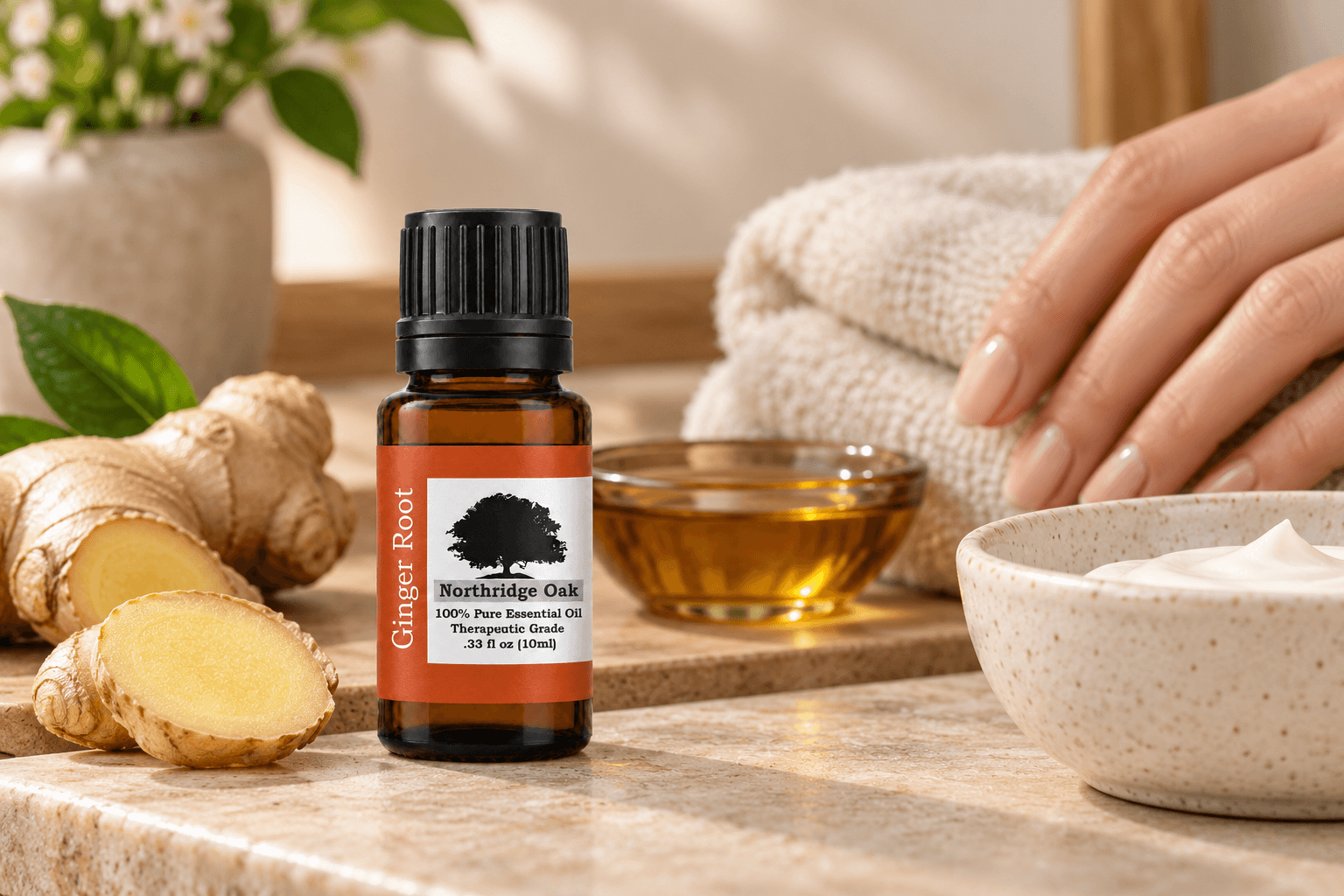
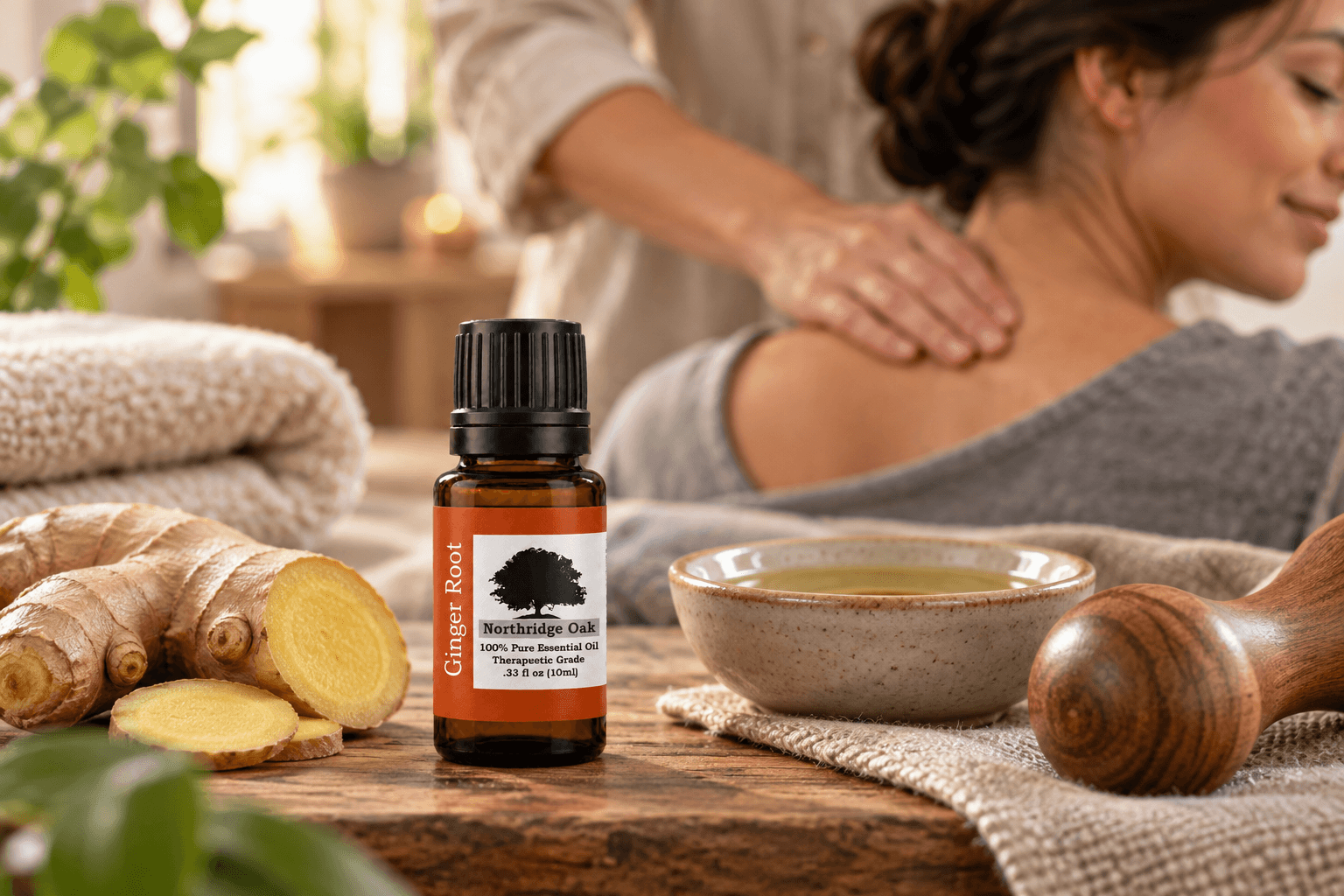
Northridge Oak’s 100% Pure Ginger Root Essential Oil is undiluted, GC/MS tested and identified as Zingiber officinale. Because it is a concentrated single oil, it gives you control over the final strength and carrier.
Simple Ginger Body Oil — 1%
- 1 ounce fractionated coconut oil or jojoba
- 6 drops Ginger Root Essential Oil
Add the ingredients to a clean amber bottle, cap and roll gently. Label with the ingredients, dilution and date. Apply a small amount to intact skin and massage slowly. Store cool and dark, and replace the blend if its scent or appearance changes.
Three Ginger Massage Oil Recipes
1. Ginger and Cedarwood Grounding Oil
- 1 ounce jojoba
- 3 drops Ginger Root Essential Oil
- 3 drops Cedarwood Essential Oil
Cedarwood smooths ginger’s sharp edge and gives the blend a dry, quiet finish. This works well for shoulders, forearms, hands or feet after normal daily activity.
2. Ginger Citrus Body Oil
- 1 ounce fractionated coconut oil
- 3 drops Ginger Root Essential Oil
- 3 drops Blood Orange Essential Oil
Blood Orange makes the aroma brighter and friendlier. Some citrus essential oils can be phototoxic depending on species and extraction, so follow the specific product label and avoid UV exposure when required. Read our Blood Orange skin and body-care guide.
3. Ginger Lavender Wind-Down Oil
- 1 ounce jojoba
- 2 drops Ginger Root Essential Oil
- 4 drops Lavender Essential Oil
Lavender softens the formula while ginger keeps it from becoming too floral. Use a light touch and a small amount, especially before bedtime if stimulating aromas affect your sleep.
How to Massage Tired Muscles Safely
Warm a teaspoon or less of the diluted blend between clean palms. Use broad, slow strokes over hands, forearms, shoulders, calves or feet and stay within a comfortable range of pressure.
Stop if the skin becomes hot, itchy or uncomfortable. Do not massage over swelling, unexplained bruising, suspected injury, infection, a blood clot, recent surgery or a medical device without professional guidance. Sudden severe pain, weakness, numbness, chest pain or shortness of breath needs prompt medical attention, not an essential-oil blend.
Ginger Essential Oil for Post-Activity Body Care
A good post-activity routine begins before the oil: hydrate, cool down gradually and change out of damp clothing. Then apply a modest amount of diluted body oil with comfortable strokes. A warm shower, rest and adequate sleep may matter more than adding extra drops.
If you like comparing aroma styles, review Balsam Fir massage oil, Basil massage blends, Eucalyptus massage blends and Rosemary massage ideas. Each offers a different aromatic profile while following the same need for dilution.
Can You Add Ginger Essential Oil to Lotion?
You can make a small single-use portion rather than altering an entire commercial bottle. Place about one tablespoon of unscented lotion in a clean dish and mix in no more than one drop of Ginger Root Essential Oil for an approximate 1% dilution. Stir thoroughly, patch test and use only on intact body skin.
Adding essential oil to a full bottle can disrupt a tested formula, make distribution uneven and obscure the final concentration. It is easier to keep the essential oil and base separate until use.
Can You Use Ginger-Infused Oil Instead?
Yes, a well-made ginger infusion can serve as a gentle massage base, but it is not the same as distilled essential oil. The infusion’s strength, shelf life and aroma depend on the carrier and process. Learn the distinction in ginger oil vs. ginger essential oil and follow the dried-ginger method in how to make ginger oil.
Blending Ginger for Massage
For a brighter blend, add Blood Orange or Lemon. For grounding, use Cedarwood or Patchouli. For a softer aroma, add Lavender or Geranium. The six-drop total in a 1% one-ounce recipe includes every essential oil; do not add six drops of each.
Our guide to what blends well with Ginger Essential Oil provides ratios for aroma testing. If you prefer room scent instead of topical use, see ginger diffuser blends.
Using Ginger Thoughtfully
Ask a qualified clinician before use during pregnancy or nursing, with young children, while taking medication or when managing a health condition. People with very sensitive skin, fragrance-triggered symptoms or a history of reactions should use particular care. Keep bottles away from children and pets.
For a broader checklist, read the complete essential oil safety guide.
Continue Exploring
Read Ginger Root Essential Oil benefits and everyday uses for the full overview. For other topical routines, visit ginger oil for skin and Patchouli massage and body oils.
These statements have not been evaluated by the Food and Drug Administration. This product and the information in this article are not intended to diagnose, treat, cure or prevent any disease. Essential oils are highly concentrated. Dilute before topical use, patch test first, and keep out of reach of children and pets. Consult a qualified healthcare professional before use during pregnancy or nursing, with young children, while taking medication or when managing a medical condition.