Table of Contents
- Why Use Marjoram Essential Oil for Skin?
- What Studies Say About Marjoram Essential Oil and Skin
- How to Dilute Marjoram Essential Oil for Skin
- Choosing the Right Carrier Oil
- Simple Ways to Use Marjoram Essential Oil for Skin
- Marjoram Essential Oil Body Oil
- Marjoram Essential Oil for Hand Care and Massage
- What Blends Well with Marjoram for Skin Care?
- How to Choose a Quality Marjoram Essential Oil
- Marjoram Essential Oil Safety
- Bring Marjoram into Your Skin-Care Routine
- Research References
- Continue Learning
- Frequently Asked Questions
Marjoram Essential Oil brings together a warm, comforting aroma and a fascinating natural chemistry that has attracted attention in antioxidant, antibacterial, biofilm and antifungal research. When properly diluted, it makes an inviting addition to body oils, facial oils, hand care, massage blends and everyday moisturizing rituals.
Steam-distilled from Origanum majorana, Marjoram Essential Oil has an herbaceous, gently woody scent that feels especially at home in evening skin care. A few carefully measured drops can transform an ordinary carrier oil or unscented lotion into a botanical blend that feels relaxing, personal and easy to enjoy.
Why Use Marjoram Essential Oil for Skin?
Marjoram is best known for its warm herbal aroma, but its natural compounds have also made it an exciting subject for skin-related research.
Here are the main reasons people add Marjoram Essential Oil to their skin-care routines:
- Antioxidant activity: Laboratory testing has measured Marjoram Essential Oil’s ability to interact with oxidation-related processes.
- Antibacterial activity: Researchers have tested the oil against several bacteria, including common and drug-resistant strains.
- Biofilm-inhibiting activity: One study found that Marjoram Essential Oil substantially reduced the formation of a protective bacterial layer called biofilm.
- Antifungal activity: Published research has measured activity against multiple fungal strains.
- A comforting botanical aroma: Marjoram’s warm, green and lightly woody scent complements evening body oils, hand massage and after-shower care.
- Easy blending: Marjoram pairs beautifully with jojoba, squalane, fractionated coconut oil and sweet almond oil.
The essential oil supplies the aroma and naturally occurring plant compounds. The carrier oil provides most of the softness, glide and moisture-sealing effect. Together, they create a balanced botanical skin-care experience.
What Studies Say About Marjoram Essential Oil and Skin
Researchers have studied the complete Marjoram Essential Oil, its individual aromatic components and its performance in laboratory and animal models. These studies help explain why Origanum majorana continues to generate interest for botanical skin and body-care formulations.
Marjoram Essential Oil Reduced Bacterial Growth and Biofilm Formation
In the 2022 study Antimicrobial, Multidrug Resistance Reversal and Biofilm Formation Inhibitory Effect of Origanum majorana Extracts, Essential Oil and Monoterpenes, researchers analyzed Marjoram Essential Oil with GC-MS and tested it against sensitive and drug-resistant strains of Staphylococcus aureus and Escherichia coli.
GC-MS is a laboratory method that identifies the natural compounds inside an essential oil. The leading constituents in the tested Marjoram oil included trans-sabinene hydrate at 25.18% and terpinen-4-ol at 24.92%. Together, these two compounds accounted for approximately half of the oil.
The complete essential oil slowed visible bacterial growth at concentrations between 0.125% and 0.250% in the laboratory tests.
One of the most interesting findings involved biofilm. Biofilm is a protective layer bacteria can build to help them remain attached to a surface. In one tested strain of Staphylococcus aureus, Marjoram Essential Oil reduced biofilm formation by approximately 69%.
The researchers also found activity involving an efflux pump in one E. coli strain. An efflux pump works somewhat like a tiny disposal system that bacteria use to push unwanted substances out of their cells. The results suggest that Marjoram interacted with one of the defensive systems bacteria use to protect themselves.
The complete essential oil sometimes behaved differently from its individually tested compounds. In everyday language, that means the natural components in Marjoram may perform differently when they remain together in the complete oil. This helps explain why researchers are interested in the oil’s full aromatic chemistry rather than focusing on only one isolated component.
These findings make Marjoram Essential Oil an exciting subject for continued research and help explain its appeal in properly diluted botanical body-care formulas.
Researchers Measured Antioxidant and Antifungal Activity
Another 2022 study, Chemical Composition, Enantiomeric Distribution, Antimicrobial and Antioxidant Activities of Origanum majorana L. Essential Oil from Nepal, examined Marjoram Essential Oils produced from plants collected in two areas of Nepal.
The researchers used GC-MS to identify the oils’ natural compounds. They also used laboratory tests called DPPH and FRAP assays to measure antioxidant activity.
Put simply, these tests help researchers evaluate how a substance responds to free radicals and oxidation-related chemical reactions. One of the Marjoram samples produced measurable antioxidant activity in both tests, with a DPPH IC50 of 225.61 micrograms per milliliter and a FRAP EC50 of 372.72 micrograms per milliliter.
The scientific measurements allow other researchers to compare the oil’s performance with future samples and formulations. For the everyday reader, the important point is that Marjoram Essential Oil demonstrated measurable antioxidant behavior under controlled laboratory conditions.
The researchers also tested the oils against fungi. One sample stopped visible growth of Aspergillus niger and Candida albicans at a concentration of 78.1 micrograms per milliliter. This measurement is known as the minimum inhibitory concentration, or MIC—the lowest tested concentration that prevented visible growth in the laboratory.
Terpinen-4-ol was one of the predominant compounds in both Marjoram samples. The chemical differences between the two samples also demonstrate why botanical identity, sourcing and analytical testing matter. Essential oils are natural products, and their exact chemical profiles can vary with growing conditions, geography and distillation.
Marjoram Produced Encouraging Results in a Skin-Related Animal Study
A study published in Natural Product Research, In Vivo Protection of the Marjoram (Origanum majorana Linn.) Essential Oil in the Cutaneous Sporotrichosis by Sporothrix brasiliensis, explored Marjoram Essential Oil in a skin-related fungal model.
Researchers worked with 30 Wistar rats infected with an itraconazole-resistant strain of Sporothrix brasiliensis. The animals were divided into groups receiving saline, itraconazole or Marjoram Essential Oil during the 30-day study.
The researchers reported remission of the visible skin lesions in the Marjoram group. They also found mild-to-absent yeast in the footpad tissue and a lower fungal burden in systemic organs compared with the other groups.
The tested oil contained terpinen-4-ol at 34.09%, gamma-terpinene at 14.28% and alpha-terpinene at 9.6%.
Researchers administered the oil orally in this animal study. Its value in this article is the insight it provides into Marjoram’s biological activity and chemical composition. The skin-care recipes below use properly diluted topical applications designed for an enjoyable home routine.
What These Studies Mean for Your Skin-Care Routine
Together, the three studies provide several reasons for the continuing interest in Marjoram Essential Oil:
- The complete oil slowed bacterial growth in laboratory testing.
- It reduced biofilm formation by approximately 69% in one tested bacterial strain.
- Researchers measured antioxidant activity using two established laboratory methods.
- The oil demonstrated antifungal activity against several tested organisms.
- A chemically analyzed Marjoram oil produced encouraging results in a skin-related animal model.
- Terpinen-4-ol and sabinene-related compounds appeared prominently across the tested oils.
These findings give us a much clearer picture of Marjoram than simply describing it as an oil with a pleasant aroma. They reveal an essential oil with measurable laboratory activity, a complex natural chemical profile and genuine potential for continued skin-care research.
How to Dilute Marjoram Essential Oil for Skin
A 1% dilution is an approachable starting point for many adult body-care routines.
For an approximately 1% dilution, combine:
- 6 total drops of essential oil
- 1 fluid ounce, or 30 milliliters, of carrier oil
For a gentler approximately 0.5% facial blend, combine:
- 3 total drops of essential oil
- 1 fluid ounce, or 30 milliliters, of carrier oil
Drop sizes can vary slightly between bottles. These measurements work well for small personal-use blends, while larger batches benefit from being measured by weight.
Label each finished blend with its ingredients, dilution and blending date. This makes a favorite formula easy to recreate.
Choosing the Right Carrier Oil
The carrier oil determines much of the finished blend’s texture and skin feel.
- Jojoba: Light, stable and versatile for the face, hands and body.
- Squalane: Silky and quick-spreading with a light finish.
- Fractionated coconut oil: Fluid and smooth with generous massage glide.
- Sweet almond oil: Soft and cushiony for richer body oils.
- Apricot kernel oil: A lightweight choice for facial and body-care blends.
- Grapeseed oil: Fast-absorbing and appealing for lighter daytime formulas.
Choose jojoba or squalane when you want a streamlined facial blend. Fractionated coconut and sweet almond oils work especially well for massage and after-shower body care.
Simple Ways to Use Marjoram Essential Oil for Skin
The easiest way to begin is to choose one recipe that fits naturally into your current routine. Marjoram can be used after a shower, during an evening hand massage or as part of a simple facial-oil blend.
Marjoram Essential Oil Body Oil
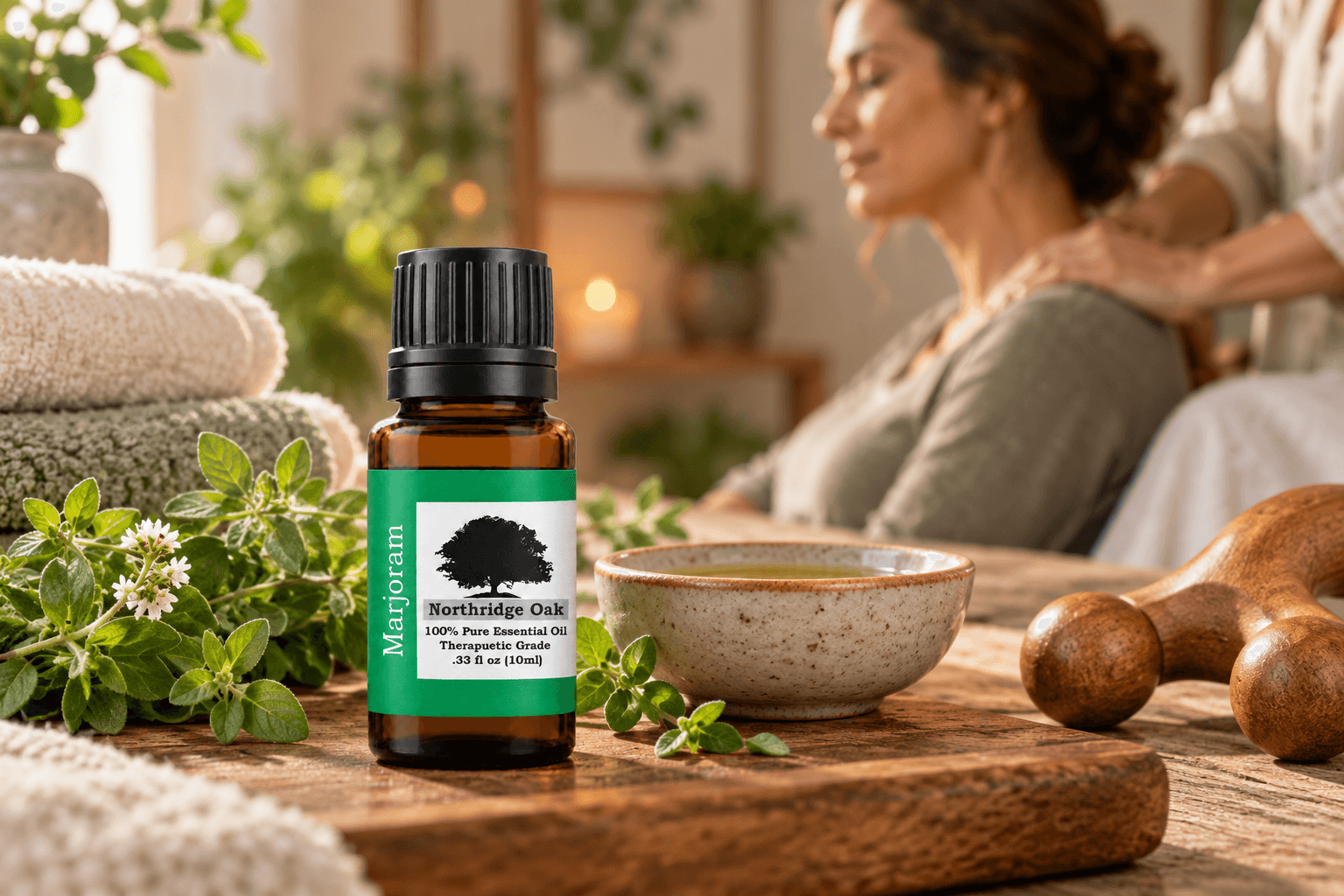
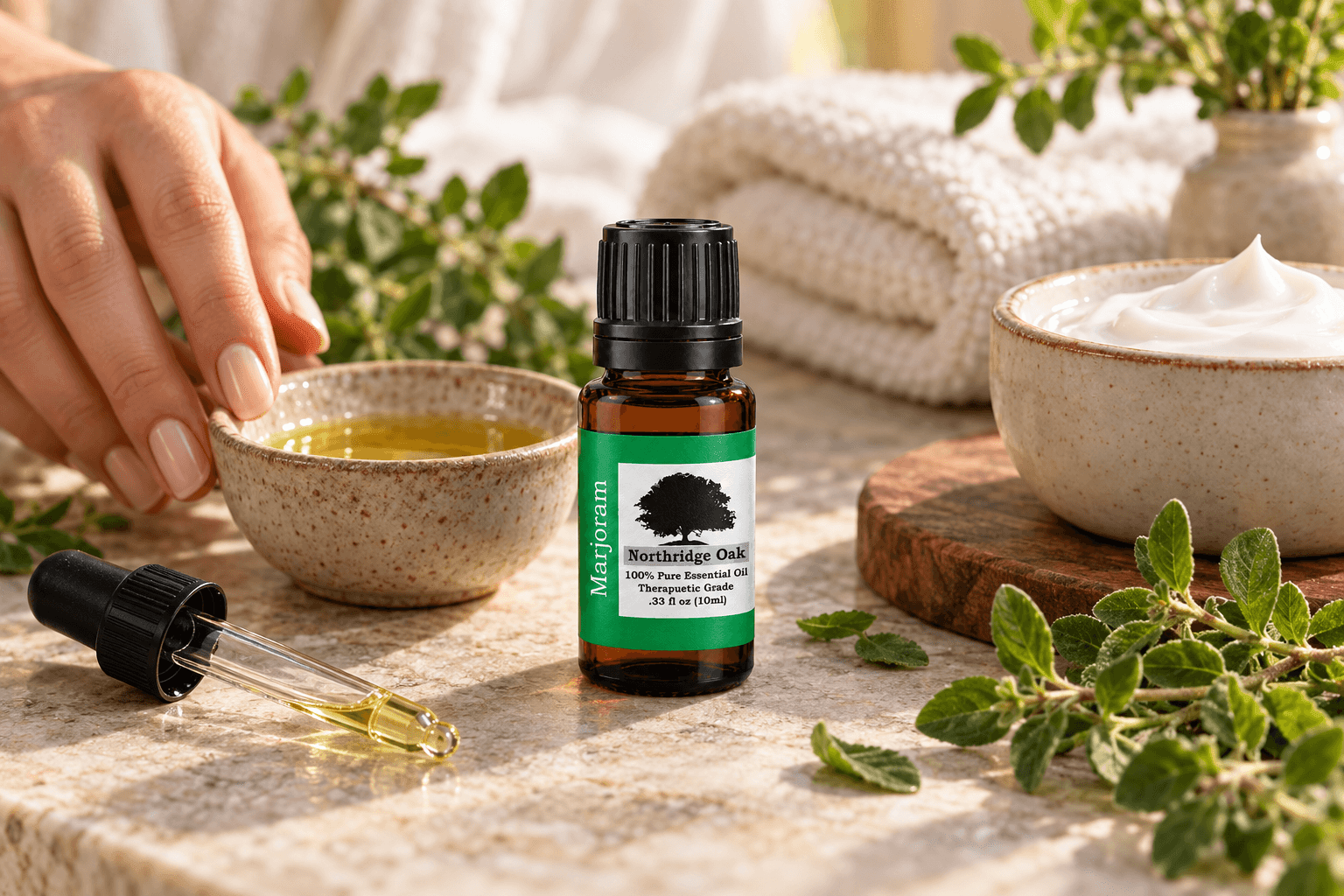
Northridge Oak 100% Pure Marjoram Essential Oil is undiluted, botanically identified as Origanum majorana and supported by third-party GC/MS testing. That analytical testing is especially valuable because published studies show that Marjoram’s chemical profile can vary according to source and growing conditions.
Everyday Marjoram Body Oil
- 1 fluid ounce jojoba oil
- 6 drops Marjoram Essential Oil
Add both ingredients to a clean amber bottle. Cap the bottle and roll it gently between your hands to combine.
Massage a small amount over the arms, legs, hands or shoulders. Applying it after bathing allows the carrier oil to help seal in moisture while Marjoram adds its warm botanical aroma.
Marjoram and Lavender Evening Body Oil
- 1 fluid ounce jojoba or sweet almond oil
- 3 drops Marjoram Essential Oil
- 3 drops Lavender Essential Oil
This approximately 1% blend combines the herbaceous warmth of Marjoram with the familiar floral softness of Lavender. Explore more ideas in our guide to Lavender Essential Oil for skin.
Smooth the blend over the arms, shoulders or legs as part of an evening body-care ritual.
Marjoram Hand and Cuticle Oil
- 1 fluid ounce jojoba oil
- 4 drops Marjoram Essential Oil
- 2 drops Geranium Essential Oil
Combine the oils in a bottle with a reducer or treatment pump. Massage one or two drops over the backs of the hands and around the cuticles.
Geranium contributes a fresh green-floral note that complements Marjoram’s warmer character. Learn more about Geranium Essential Oil for skin and face.
Gentle Marjoram Facial Oil
- 1 fluid ounce jojoba or squalane
- 3 drops Marjoram Essential Oil
This creates an approximately 0.5% dilution. Combine the ingredients in a clean amber bottle and roll gently.
After cleansing, warm two or three drops of the finished facial oil between your fingertips and press it lightly over the skin. Jojoba creates a balanced feel, while squalane produces a lighter and silkier finish.
Single-Use Marjoram Body Lotion
- 1 teaspoon unscented body lotion
- 1 drop Marjoram Essential Oil
Blend the ingredients thoroughly in a small dish or the palm of your hand, then smooth the lotion over the hands, arms or legs. One drop in one teaspoon of lotion creates an approximate 1% single-use blend.
This is an easy way to enjoy Marjoram without preparing an entire bottle of body oil.
Marjoram Essential Oil for Hand Care and Massage
Marjoram’s warm herbal scent makes it a natural choice for massage. A 1% body oil provides comfortable glide for the hands, feet, shoulders and legs while surrounding the routine with a welcoming botanical aroma.
For a simple evening ritual, place a small amount of diluted oil in your palms, rub your hands together and massage it over the desired area using slow, comfortable strokes.
Visit our complete guide to Marjoram Essential Oil for massage for additional recipes and blending ideas.
You can also compare Marjoram with other popular botanical skin-care oils, including Tea Tree Essential Oil, Ginger Essential Oil, Lavender Essential Oil and Geranium Essential Oil.
What Blends Well with Marjoram for Skin Care?
Marjoram is an excellent blending oil because its warm herbaceous aroma can move in several directions.
- Lavender softens Marjoram with a familiar floral note.
- Geranium contributes a fresh green-floral character.
- Cedarwood deepens the blend with a dry woodland aroma.
- Frankincense creates a warm, resinous and contemplative blend.
- Bergamot FCF brightens Marjoram with a fresh citrus note.
- Ginger adds warmth and gentle spice.
Count every essential-oil drop toward the formula’s total dilution. For example, three drops of Marjoram and three drops of Lavender in one ounce of carrier oil still equal approximately a 1% total dilution.
Discover more combinations in What Blends Well with Marjoram Essential Oil?
How to Choose a Quality Marjoram Essential Oil
Look for the botanical name Origanum majorana on the label or product page. The plant part, extraction method, country of origin and testing information provide additional insight into the oil inside the bottle.
Third-party GC/MS testing helps confirm an oil’s identity and chemical composition. This is especially helpful for Marjoram because the published research shows meaningful chemical differences among oils grown and distilled in different locations.
Store Marjoram Essential Oil tightly closed in a cool, dark place. Keep finished body and facial oils in clean amber bottles and add the blending date to the label.
Marjoram Essential Oil Safety
Dilute Marjoram Essential Oil before topical use and patch test the finished blend on a small area of skin. Apply it to intact skin and keep it away from the eyes and other sensitive areas.
Keep essential oils out of reach of children and pets. Consult a qualified healthcare professional before use during pregnancy or nursing, with young children, while taking medication or when managing a medical condition.
For more everyday guidance, visit our complete essential-oil safety guide.
Bring Marjoram into Your Skin-Care Routine
Marjoram Essential Oil offers more than a warm and comforting aroma. Published studies have measured antioxidant, antibacterial, biofilm-inhibiting and antifungal activity, giving researchers several promising reasons to continue exploring its natural chemistry.
At home, Marjoram fits easily into a properly diluted body oil, hand treatment, facial oil or single-use lotion blend. Start with the recipe that best matches your routine and discover how naturally its herbaceous aroma fits into everyday botanical care.
Research References
- Abu Ghazal TS, et al. Antimicrobial, Multidrug Resistance Reversal and Biofilm Formation Inhibitory Effect of Origanum majorana Extracts, Essential Oil and Monoterpenes. Plants. 2022;11(11):1432.
- Paudel PN, et al. Chemical Composition, Enantiomeric Distribution, Antimicrobial and Antioxidant Activities of Origanum majorana L. Essential Oil from Nepal. Molecules. 2022;27(18):6136.
- Waller SB, et al. In Vivo Protection of the Marjoram (Origanum majorana Linn.) Essential Oil in the Cutaneous Sporotrichosis by Sporothrix brasiliensis. Natural Product Research. 2021;35(17):2977–2981.
Continue Learning
Build on what you have learned with these Marjoram guides:
- Marjoram Essential Oil Benefits and Uses — Discover the oil’s aroma, natural chemistry and most popular everyday applications.
- Marjoram Essential Oil for Hair and Scalp — Explore diluted scalp oils, hair-care blends and relevant research.
- Marjoram Essential Oil for Massage — Create warming massage blends for shoulders, legs, hands and feet.
- What Blends Well with Marjoram Essential Oil? — Pair Marjoram with floral, citrus, herbal and woody essential oils.
- Marjoram Essential Oil Diffuser Blends — Enjoy Marjoram’s warm herbaceous aroma throughout your home.
These statements have not been evaluated by the Food and Drug Administration. This product and the information in this article are not intended to diagnose, treat, cure or prevent any disease. Essential oils are highly concentrated. Dilute before topical use, patch test first, and keep out of reach of children and pets. Consult a qualified healthcare professional before use during pregnancy or nursing, with young children, while taking medication or when managing a medical condition.