Table of Contents
- Why Marjoram Works in Massage Blends
- Choose a Carrier Oil
- How to Dilute Marjoram Essential Oil
- Marjoram Essential Oil Massage Blend
- Three Marjoram Massage Recipes
- How to Massage Tired Muscles
- How to Add Marjoram to Lotion
- How to Formulate a Marjoram Bath Product
- Best Oils to Blend with Marjoram for Massage
- Using Marjoram Thoughtfully
- Continue Exploring
- After the Massage
- Designing a Comfortable Home Massage Session
- Tracking Tolerance and Freshness
- Frequently Asked Questions
Marjoram Essential Oil for massage adds a warm, green and softly woody aroma to a slow body-care routine after a demanding day. Blended into a suitable carrier, it complements the comfortable glide and mindful touch of massage while pairing beautifully with Lavender, Cedarwood, Bergamot and Rosemary.
The recipes below begin at an approachable 1% dilution and pair Marjoram with carriers that provide comfortable glide. Gentle pressure, slow movement and a warm herbal aroma turn a simple body oil into a restorative home ritual.
Why Marjoram Works in Massage Blends
Sweet Marjoram smells warm and herbaceous without the forceful phenolic edge associated with many oregano oils. It pairs naturally with Lavender, Cedarwood, Bergamot, Rosemary and Eucalyptus. In massage, those partners can make the aroma softer, deeper or brighter.
Marjoram has a long traditional association with comforting body-care rituals, and modern readers often explore it after activity or during evening massage. Its strongest everyday value comes from the combination of aroma, a well-chosen carrier and slow, comfortable massage techniques.
Choose a Carrier Oil
Fractionated coconut oil offers long glide and remains liquid. Jojoba feels lighter and resists oxidation well. Sweet almond oil feels cushiony, though anyone with nut sensitivity should choose another carrier. Sunflower oil is light but should be used fresh.
Make one ounce at a time. Small batches are easier to label and use before the carrier changes. Store the blend in amber glass, tightly closed and away from sunlight.
How to Dilute Marjoram Essential Oil
An approximate 1% adult body dilution is six total essential-oil drops per one ounce (30 mL) of carrier. Count every essential oil in that six-drop total so the formula remains balanced and easy to repeat.
Mix in a clean bottle, label the ingredients, date and dilution, then patch test a small area. Wait before broader use. Avoid eyes, mucous membranes, broken skin and freshly shaved areas.
Marjoram Essential Oil Massage Blend
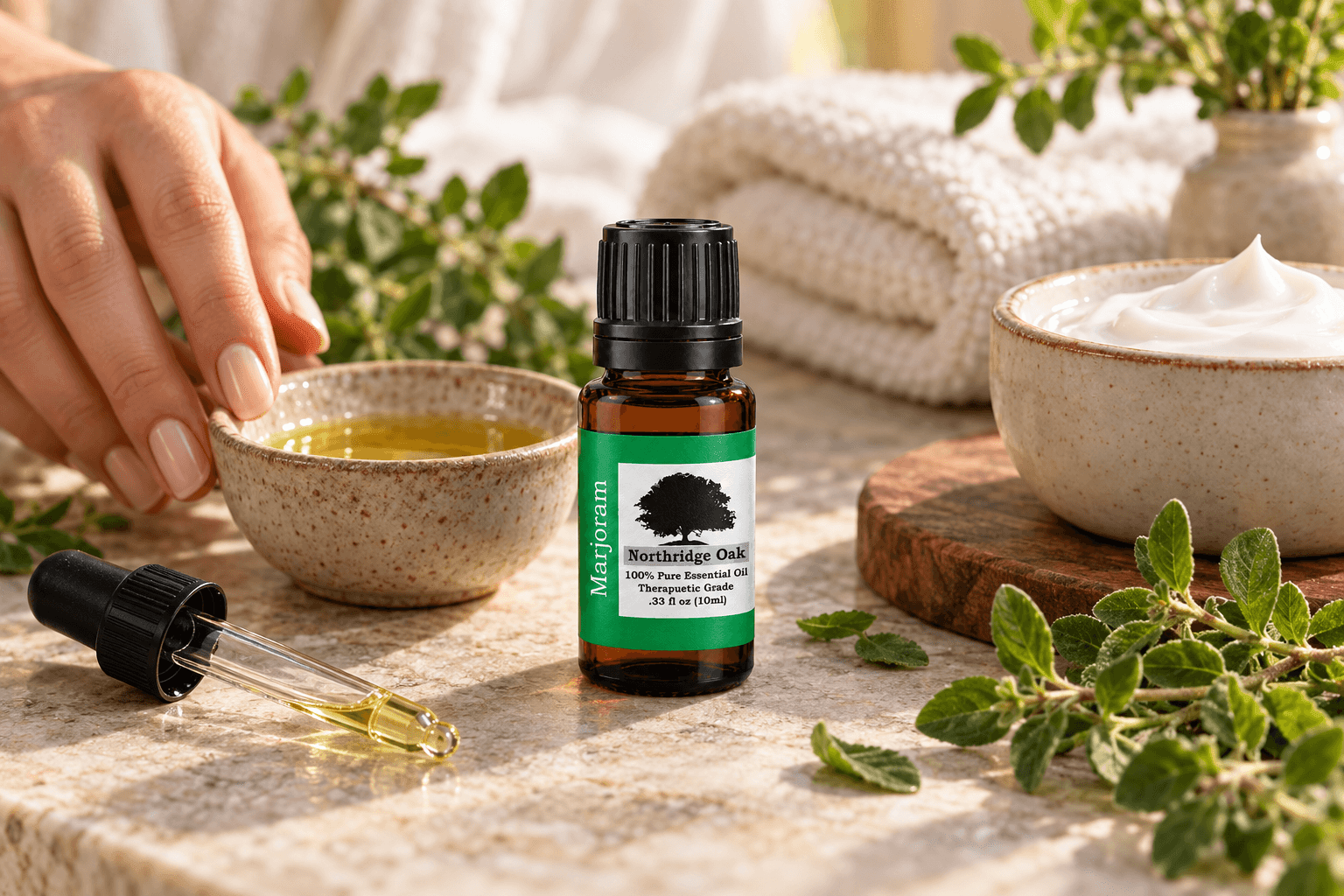
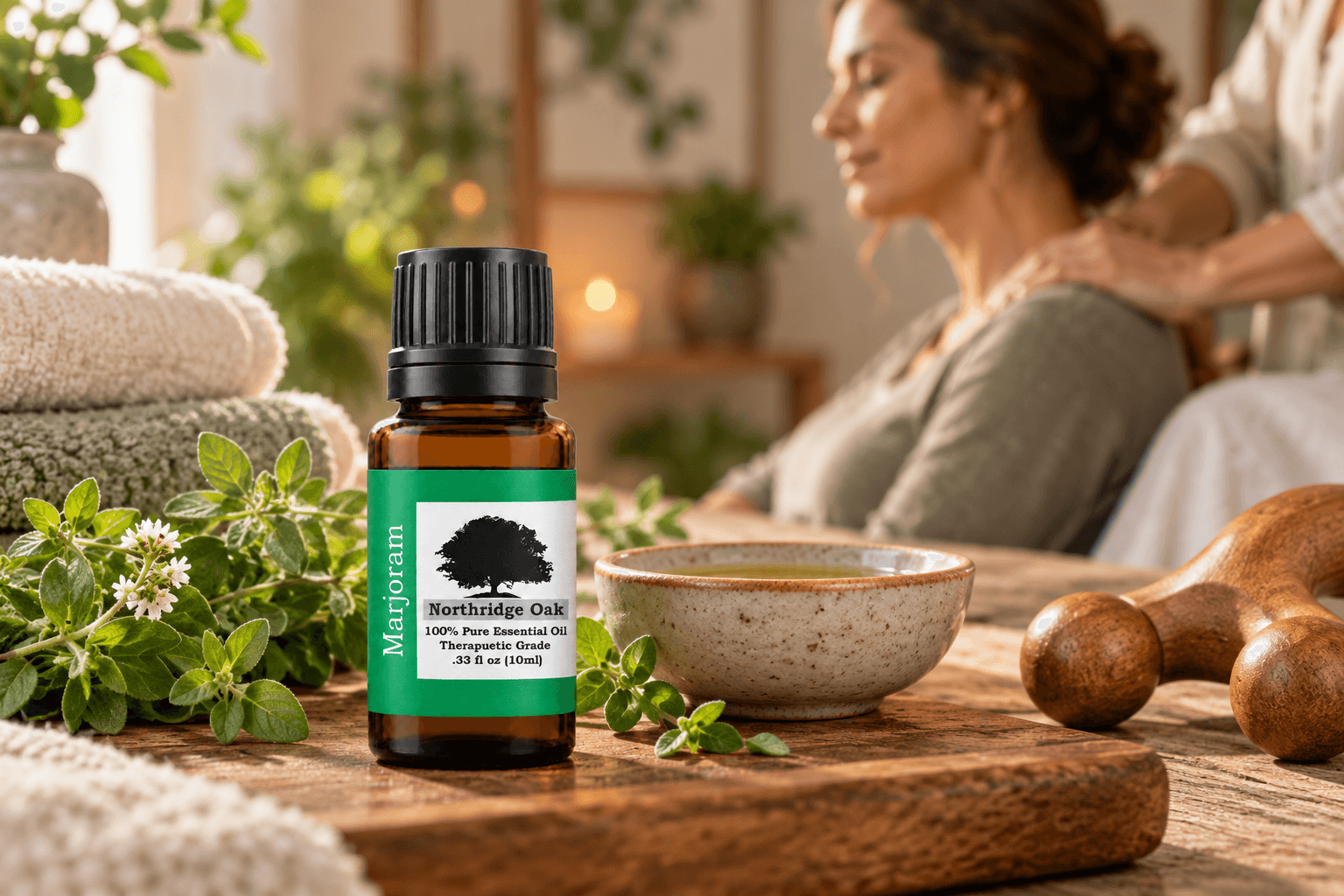
Northridge Oak’s 100% Pure Marjoram Essential Oil is undiluted, third-party GC/MS tested and identified as Origanum majorana. Its single-ingredient format lets you select the carrier and final strength.
Simple Marjoram Body Oil — 1%
- 1 ounce jojoba or fractionated coconut oil
- 6 drops Marjoram Essential Oil
Roll the closed bottle gently to mix. Apply a small amount to intact body skin and use broad, comfortable strokes.
Three Marjoram Massage Recipes
1. Marjoram and Lavender
- 1 ounce carrier oil
- 3 drops Marjoram
- 3 drops Lavender
Lavender softens marjoram’s green edge. This balanced aroma works for shoulders, hands or feet.
2. Marjoram and Cedarwood
- 1 ounce jojoba
- 3 drops Marjoram
- 3 drops Cedarwood
Cedarwood creates a drier, grounded finish. It is a useful option for people who do not want a floral massage oil.
3. Fresh Herbal Body Oil
- 1 ounce fractionated coconut oil
- 3 drops Marjoram
- 2 drops Lavender
- 1 drop Rosemary
Rosemary is the accent, not the lead. Review individual precautions before combining oils.
How to Massage Tired Muscles
Warm a teaspoon or less of the finished blend between clean palms. Begin with broad, slow strokes and use comfortable pressure over shoulders, arms, hands, calves or feet.
Stop if massage increases pain or if the skin burns, itches or reddens. Seek prompt care for chest pain, shortness of breath, weakness, numbness, a hot swollen limb or major trauma.
How to Add Marjoram to Lotion
Mix a single-use portion rather than changing a whole bottle. One drop in one tablespoon of unscented lotion is approximately 1%. Stir thoroughly and patch test. Altering the original container can make distribution uneven and disrupt a tested formula.
How to Formulate a Marjoram Bath Product
Essential oil does not disperse in bathwater by itself and can contact skin at full strength. A tested bath product needs an appropriate solubilizing system, not just drops mixed with water or salt. If you do not have a validated formula, choose a pre-formulated product.
Best Oils to Blend with Marjoram for Massage
Lavender creates softness, Cedarwood adds depth, Frankincense adds resinous dryness and Sweet Orange adds brightness. Bergamot can be phototoxic depending on extraction, so check the label before topical use. Learn proportions in what blends well with Marjoram.
Compare other body-care profiles in Ginger massage oil, Balsam Fir massage oil and Patchouli body oils.
Using Marjoram Thoughtfully
Ask a qualified professional before use during pregnancy or nursing, with young children, while taking medication or when managing a medical condition. People with fragrance allergy or highly reactive skin may prefer an unfragranced carrier.
Do not ingest. Keep the bottle away from children and pets. Review the complete safety guide.
Continue Exploring
Read Marjoram benefits and uses, then explore Marjoram for skin and Marjoram bedtime aromatherapy.
After the Massage
Give skin time to absorb the blend before dressing in delicate fabric. Wipe slippery floors and launder oily towels according to fabric directions; residual oil can stain and should not be exposed to excessive dryer heat. Store used linens safely before washing.
Reassess the next day. Comfortable skin and a pleasant aroma are better signs of a suitable formula than tingling or heat. If soreness is worsening, recurring or limiting movement, shift attention from DIY care to a qualified healthcare professional.
For the most repeatable result, measure the carrier rather than estimating by bottle size. Use the same dropper, write down the formula and avoid topping off an old blend with fresh ingredients. Starting clean each time protects the intended dilution and makes any skin response easier to understand.
These statements have not been evaluated by the Food and Drug Administration. This product and the information in this article are not intended to diagnose, treat, cure or prevent any disease. Essential oils are highly concentrated. Dilute before topical use, patch test first, and keep out of reach of children and pets. Consult a qualified healthcare professional before use during pregnancy or nursing, with young children, while taking medication or when managing a medical condition.
Designing a Comfortable Home Massage Session
Prepare the room before opening the bottle: comfortable temperature, stable seating, clean towels and enough time to stop without rushing. Perform a skin check and skip areas that are swollen, bruised, numb, broken or unusually warm. Ask about pressure throughout the session.
Use slow strokes toward comfort rather than chasing a knot aggressively. A five- to ten-minute hand, forearm or shoulder massage can be enough. Wipe excess oil before handling phones, children, pets or contact lenses, and wash hands well afterward.
Tracking Tolerance and Freshness
Record the carrier, drop count and date so a favorite formula is easy to reproduce. Fresh, clean-smelling ingredients help the blend retain the warm herbal character you intended.
Massage may feel good after everyday activity, but recurring pain calls for assessment. A qualified clinician can help distinguish routine soreness from injury, nerve symptoms, vascular problems or another condition.