Table of Contents
- What Is Ginger Oil for Skin?
- What Are the Practical Benefits of Ginger Oil for Skin?
- How Much Ginger Essential Oil Can You Use on Skin?
- Which Carrier Oil Works Best With Ginger?
- How Do You Make a Simple Ginger Body Oil?
- Can You Use Ginger Oil on the Face?
- How Ginger Fits into a Skin-Care Routine
- Can Ginger Oil Be Added to Lotion?
- Is Ginger Essential Oil Phototoxic?
- How Do You Patch Test a Ginger Oil Blend?
- Using Ginger Thoughtfully
- Continue Exploring Ginger Root Essential Oil
- Frequently Asked Questions
Ginger oil for skin brings a warm, spicy aroma to body oils, hand care and massage rituals when used at a gentle dilution. Pure Ginger Root Essential Oil gives you the flexibility to choose a carrier, create the right strength for your routine and pair ginger with complementary oils such as Lavender, Geranium or Blood Orange.
This guide shows how to dilute Ginger Root Essential Oil, choose a carrier and create simple body oils, hand-care blends and lotions that showcase its warm botanical aroma.
What Is Ginger Oil for Skin?
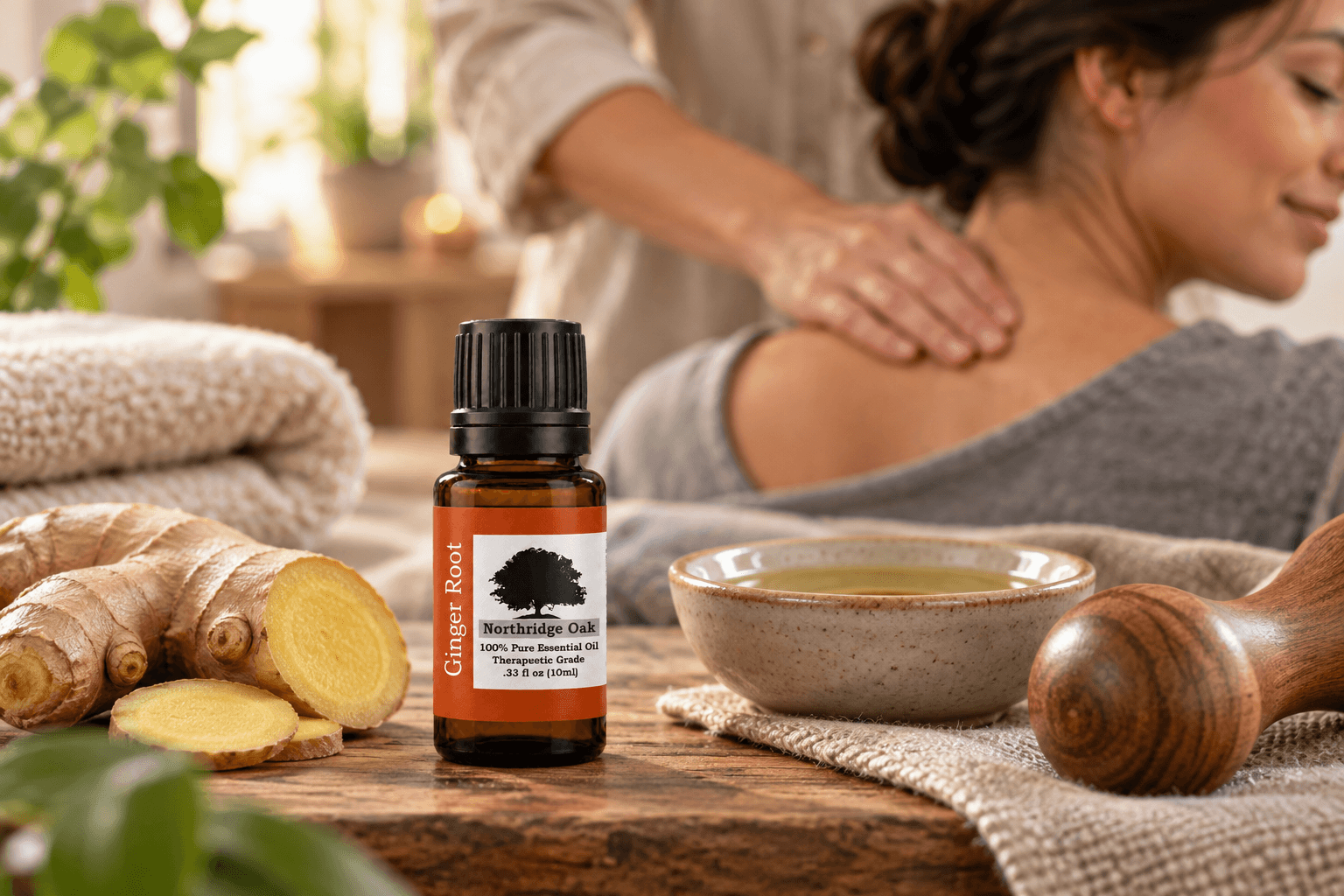
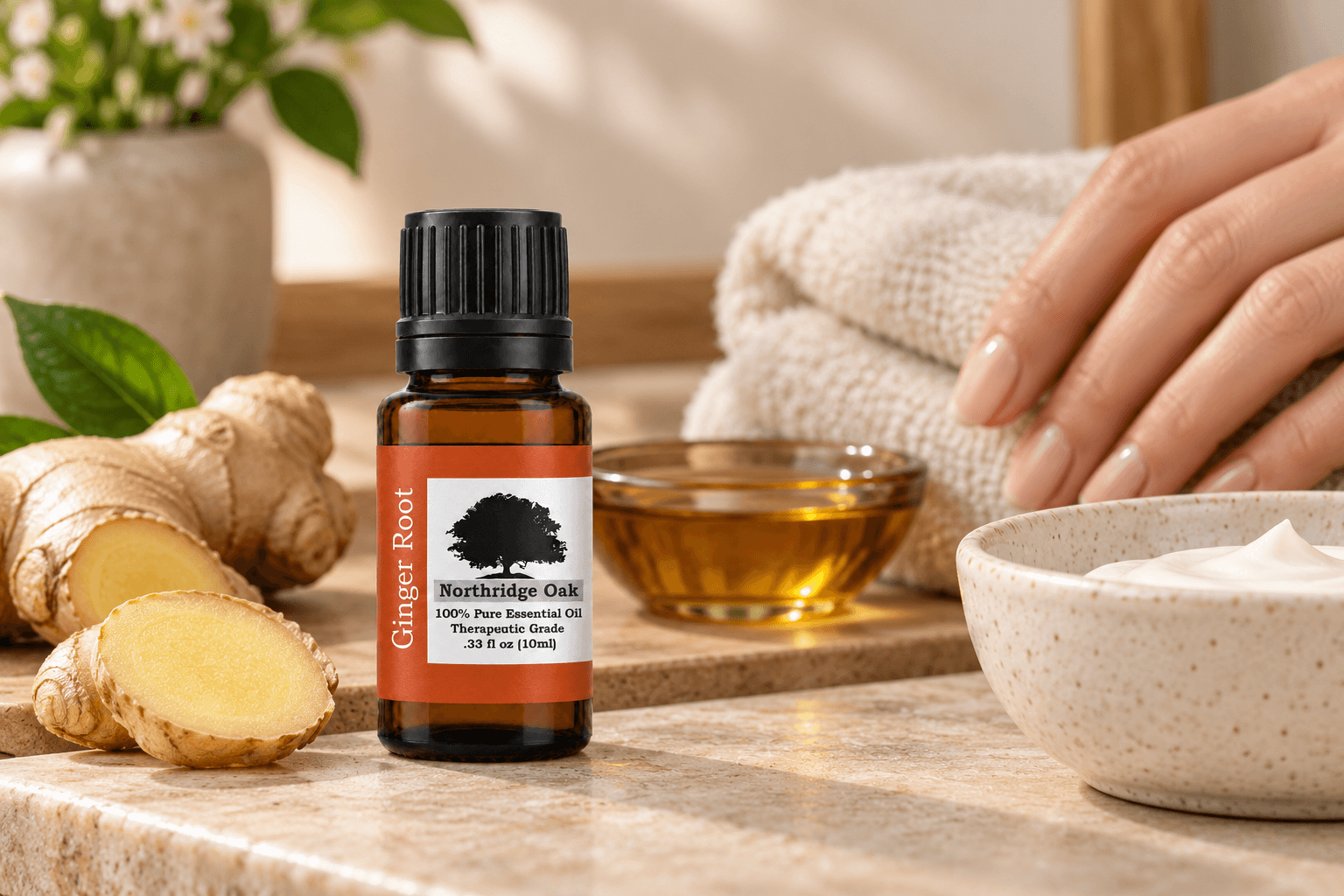
The phrase may refer to steam-distilled Ginger Root Essential Oil, a ginger-infused carrier oil or a finished cosmetic containing ginger extract. Northridge Oak Ginger Root Essential Oil is the first type: pure, undiluted Zingiber officinale essential oil. It is an ingredient that must be measured into a carrier.
If a product can be poured generously into your hand, it is probably not pure essential oil. Read labels for the full ingredient list. Our ginger oil comparison guide explains the forms in detail.
What Are the Practical Benefits of Ginger Oil for Skin?
Ginger’s most immediate benefit is aromatic. It can make a simple body oil feel warm, energizing and seasonal. The carrier oil provides the emollient effect that helps skin feel softer, while Ginger Root supplies a concentrated botanical scent.
Ginger’s naturally occurring aromatic compounds have attracted interest in antioxidant, antimicrobial and cosmetic research. For everyday body care, Ginger Root Essential Oil adds a warm, spicy aroma that pairs beautifully with carriers such as jojoba, squalane and fractionated coconut oil.
How Much Ginger Essential Oil Can You Use on Skin?
For body care, begin around 0.5% to 1%. One drop in two teaspoons, or 10 mL, of carrier oil is about 0.5%. Two drops in two teaspoons is about 1%. For one fluid ounce of carrier, six drops total essential oil is approximately 1%.
For a facial formula, use a very light concentration and select a carrier that already suits your skin. Accurate measuring, patch testing and a small batch make the finished blend easier to evaluate and repeat.
Which Carrier Oil Works Best With Ginger?
Jojoba feels light and is useful for small facial or hand-oil experiments. Grapeseed absorbs quickly and suits massage when you prefer less residue. Apricot Kernel and Sweet Almond offer a comfortable glide for body oils. Fractionated Coconut Oil is stable, light and convenient for roll-ons.
Choose a fresh carrier oil, note its shelf life and store the finished blend away from heat and sunlight. If you have a nut allergy, check the botanical source of every carrier and seek professional guidance.
How Do You Make a Simple Ginger Body Oil?
Add six drops Ginger Root Essential Oil to one fluid ounce of Apricot Kernel, Sweet Almond or Grapeseed Oil. Cap, roll the bottle gently and label it with ingredients and date. Apply a small amount to damp skin after bathing, avoiding sensitive areas.
For a softer aroma, use three drops Ginger Root, three drops Lavender and six drops Blood Orange in one ounce carrier oil. That keeps the total dilution at about 2%, so reduce the total drops if your skin prefers a gentler formula. Blood Orange also adds a cheerful citrus note; explore its body-care possibilities in our Blood Orange skin and body guide.
Can You Use Ginger Oil on the Face?
You can formulate a very low-dilution facial oil, but Ginger Root is not the first choice for every complexion. Its warming character may feel too active on sensitive, reactive or compromised skin. If you try it, use one drop in at least two teaspoons of jojoba or another suitable facial carrier, patch test and apply sparingly.
Apply a small amount of the finished facial blend where you can enjoy the aroma comfortably, keeping the formula focused on intact skin and giving yourself time to observe its feel before an important event.
How Ginger Fits into a Skin-Care Routine
Ginger’s warm aromatic profile makes it especially appealing in body oils, hand care and massage rituals. For blemish-focused routines, compare its sensory role with the different research profile discussed in our Tea Tree Oil skin and dilution guide.
Use Ginger Root Essential Oil to add botanical warmth and character to a well-designed cosmetic routine.
Can Ginger Oil Be Added to Lotion?
For a simple single-use body lotion, dispense one tablespoon of unscented lotion into a clean dish, add one drop of Ginger Root Essential Oil and stir thoroughly. This creates an approximate 1% portion without changing the original bottle.
For repeatable results, make an anhydrous body oil with measured ingredients or follow a tested cosmetic formula. Water-based creams and lotions require preservation knowledge that goes beyond mixing a few pantry ingredients.
Is Ginger Essential Oil Phototoxic?
Ginger Root Essential Oil is not generally classified among the phototoxic citrus oils, making it convenient for properly diluted daytime body-care formulas.
If you combine ginger with expressed citrus oils, check the sunlight guidance for each ingredient. Northridge Oak Bergamot is FCF, and our Bergamot FCF phototoxicity guide explains why extraction and processing can change sunlight precautions.
How Do You Patch Test a Ginger Oil Blend?
Apply a small amount of the finished diluted blend to the inner forearm. Leave the area uncovered and monitor it for at least 24 hours. Do not patch test undiluted essential oil. If redness, itching, swelling or persistent burning appears, wash the area and discontinue use.
A patch test cannot guarantee that irritation will never occur, but it is a sensible screening step. Introduce only one new formula at a time so you can identify what your skin likes.
Using Ginger Thoughtfully
People with very sensitive skin, active dermatitis, broken skin or known ginger sensitivity should avoid casual topical experimentation. Seek individualized guidance for pregnancy, nursing, children, medication use or ongoing medical conditions. Keep oils away from children and pets and never ingest them.
For a broader foundation, review Essential Oils for Beginners before making topical blends.
Continue Exploring Ginger Root Essential Oil
Ginger Root can move naturally from a small body oil into other aromatic routines. These guides keep the next steps practical.
- Read the complete Ginger oil benefits and uses guide.
- Turn Ginger Root into a measured massage blend.
- Create a gentle pre-shampoo Ginger scalp oil.
- Find the best aromatic partners for Ginger Root.
- Enjoy Ginger Root without skin application through diffusion.
- Compare gentle Lavender skin-care ideas.
- Explore Geranium for skin and face routines.
- View Northridge Oak Ginger Root Essential Oil.
These statements have not been evaluated by the Food and Drug Administration. This product and the information in this article are not intended to diagnose, treat, cure or prevent any disease. Essential oils are highly concentrated. Dilute before topical use, patch test first, and keep out of reach of children and pets. Consult a qualified healthcare professional before use during pregnancy or nursing, with young children, while taking medication or when managing a medical condition.