Table of Contents
- What Marjoram Can Do in Hair Care
- Why People Use Marjoram in Hair Care
- How to Dilute Marjoram for the Scalp
- Choose a Scalp Carrier
- Marjoram Essential Oil Pre-Shampoo Scalp Oil
- How to Add Marjoram to Shampoo
- How Often to Use Marjoram Scalp Oil
- How Long to Leave Marjoram Scalp Oil On
- What Blends Well with Marjoram for Hair?
- Supporting a Complete Scalp-Care Plan
- Safety and Storage
- Continue Exploring
- Protect Hair Lengths from Unnecessary Buildup
- A Practical Four-Week Scalp Routine
- Protect the Hairline and Eyes
- Frequently Asked Questions
Marjoram Essential Oil for hair and scalp brings a warm herbal aroma to pre-shampoo oils and simple scalp-care rituals. When properly diluted, it pairs beautifully with lightweight carriers such as jojoba and complements Lavender, Cedarwood and Rosemary. It is an inviting choice for anyone who wants to make wash day feel calmer, more intentional and naturally aromatic.
Marjoram’s naturally occurring aromatic compounds have attracted attention in antimicrobial, antioxidant and cosmetic research. For an everyday hair routine, its most immediate appeal is the warm herbal aroma it brings to scalp massage, pre-shampoo oils and wash-day rituals.
What Marjoram Can Do in Hair Care
Marjoram adds a warm, garden-fresh aroma to carrier oils and single-use shampoo portions. Combined with a suitable carrier, the ritual provides comfortable slip for a gentle scalp massage, helps loosen dry buildup before washing and leaves the hair-care experience feeling more polished and restorative.
Its aroma blends well with Lavender, Cedarwood, Rosemary and a small amount of Bergamot. Use the total blend at a low concentration and keep it out of eyes.
Why People Use Marjoram in Hair Care
Researchers have measured antimicrobial and antioxidant activity from Marjoram Essential Oil in laboratory testing. That research helps explain the growing interest in the botanical, while a well-diluted scalp blend offers an easy way to enjoy its aroma, comfortable massage glide and polished wash-day experience.
Healthy-looking hair also reflects the condition of the scalp, the gentleness of the wash routine, nutrition, hormones, genetics and everyday styling habits. Marjoram fits best as one enjoyable part of that larger picture.
How to Dilute Marjoram for the Scalp
Begin with an approximate 1% dilution: six total essential-oil drops in one ounce (30 mL) of carrier. Sensitive scalps may prefer 0.5%, about three drops per ounce. Patch test the finished blend and avoid use on broken or inflamed skin.
Gentle concentrations are the ideal place to begin. A comfortable scalp and an enjoyable aroma are better measures of a well-designed routine than intensity.
Choose a Scalp Carrier
- Jojoba: light, stable and relatively easy to wash out.
- Fractionated coconut: fluid and useful for massage slip.
- Sunflower: light, accessible and best used fresh.
- Argan: richer and useful mainly on dry lengths or ends.
Fine hair may need only a teaspoon of blend, while dense or textured hair may tolerate more carrier. The essential-oil percentage should stay conservative regardless of quantity.
Marjoram Essential Oil Pre-Shampoo Scalp Oil
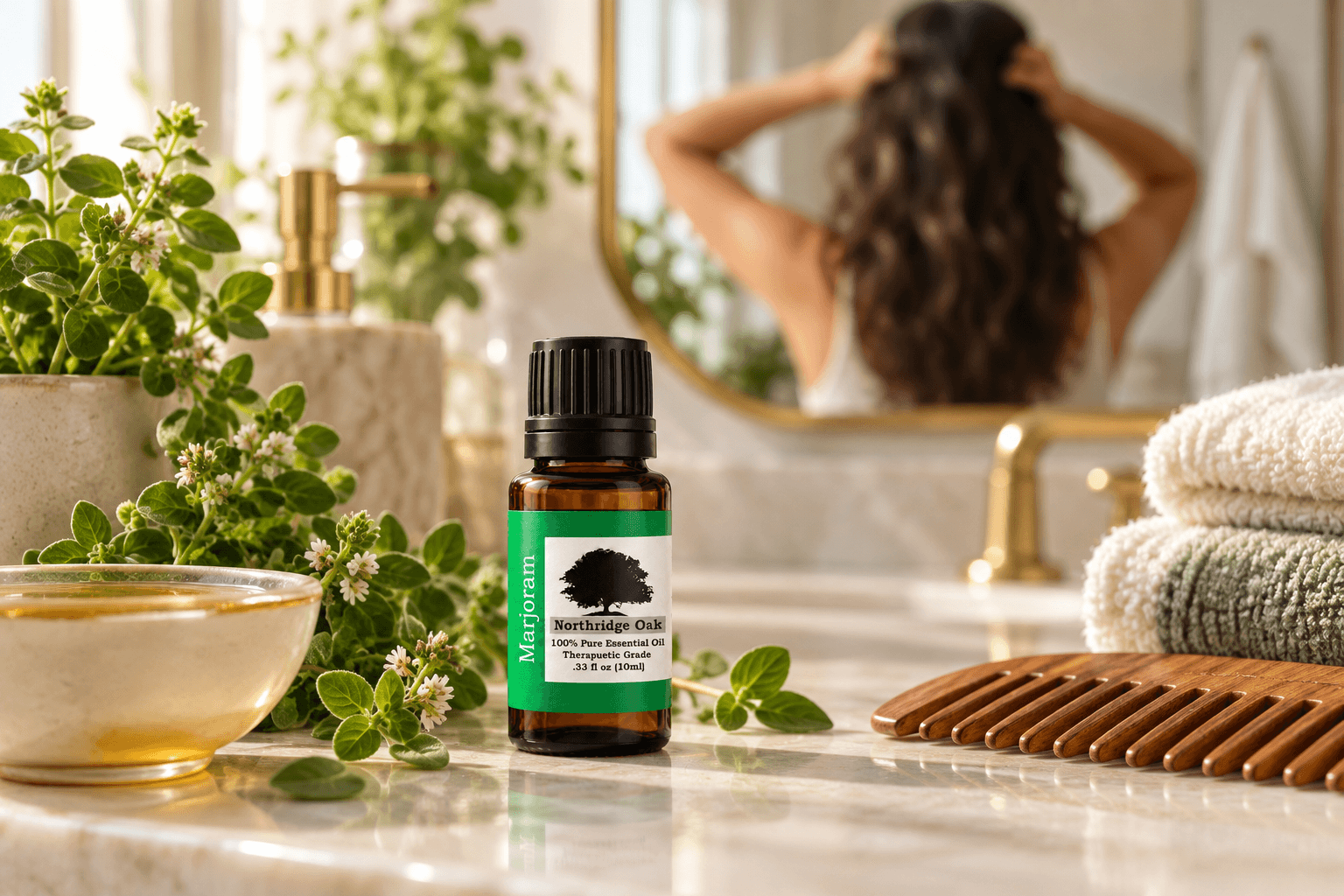
Northridge Oak Marjoram Essential Oil is 100% pure, undiluted, sourced from Egypt and third-party GC/MS tested. Measure it in drops and keep the cap closed between uses.
Simple Marjoram Scalp Oil — 1%
- 1 ounce jojoba
- 6 drops Marjoram Essential Oil
Part dry hair, apply a small amount to the scalp and massage gently with the fingertips. Leave the blend on for 10–20 minutes, then shampoo thoroughly and enjoy the fresh herbal finish.
Soft Herbal Scalp Oil — 1%
- 1 ounce jojoba
- 3 drops Marjoram
- 3 drops Lavender
Lavender softens the aroma and creates a balanced herbal-floral blend. Count both oils when calculating the total dilution.
How to Add Marjoram to Shampoo
Mix one drop into about one tablespoon of shampoo immediately before use. Keep eyes closed, rinse thoroughly and do not alter the whole commercial bottle. A single-use portion gives better control and avoids destabilizing the formula.
For a comfortable experience, begin when the scalp feels calm and use a gentle cleanser that already works well for your hair type.
How Often to Use Marjoram Scalp Oil
Start once weekly and observe how easily the oil washes out, how the scalp feels and how much aroma you enjoy. A consistent schedule makes it easier to refine the carrier, amount and contact time.
How Long to Leave Marjoram Scalp Oil On
A 10–20 minute pre-shampoo treatment gives the carrier time to spread while keeping the routine easy to wash out. This short, repeatable approach is a practical starting point and protects bedding from oily transfer.
What Blends Well with Marjoram for Hair?
Lavender softens the aroma, Cedarwood creates a dry base and Rosemary makes the blend feel brisk and botanical. Use our Marjoram pairing guidance to build a balanced formula while keeping the total concentration gentle.
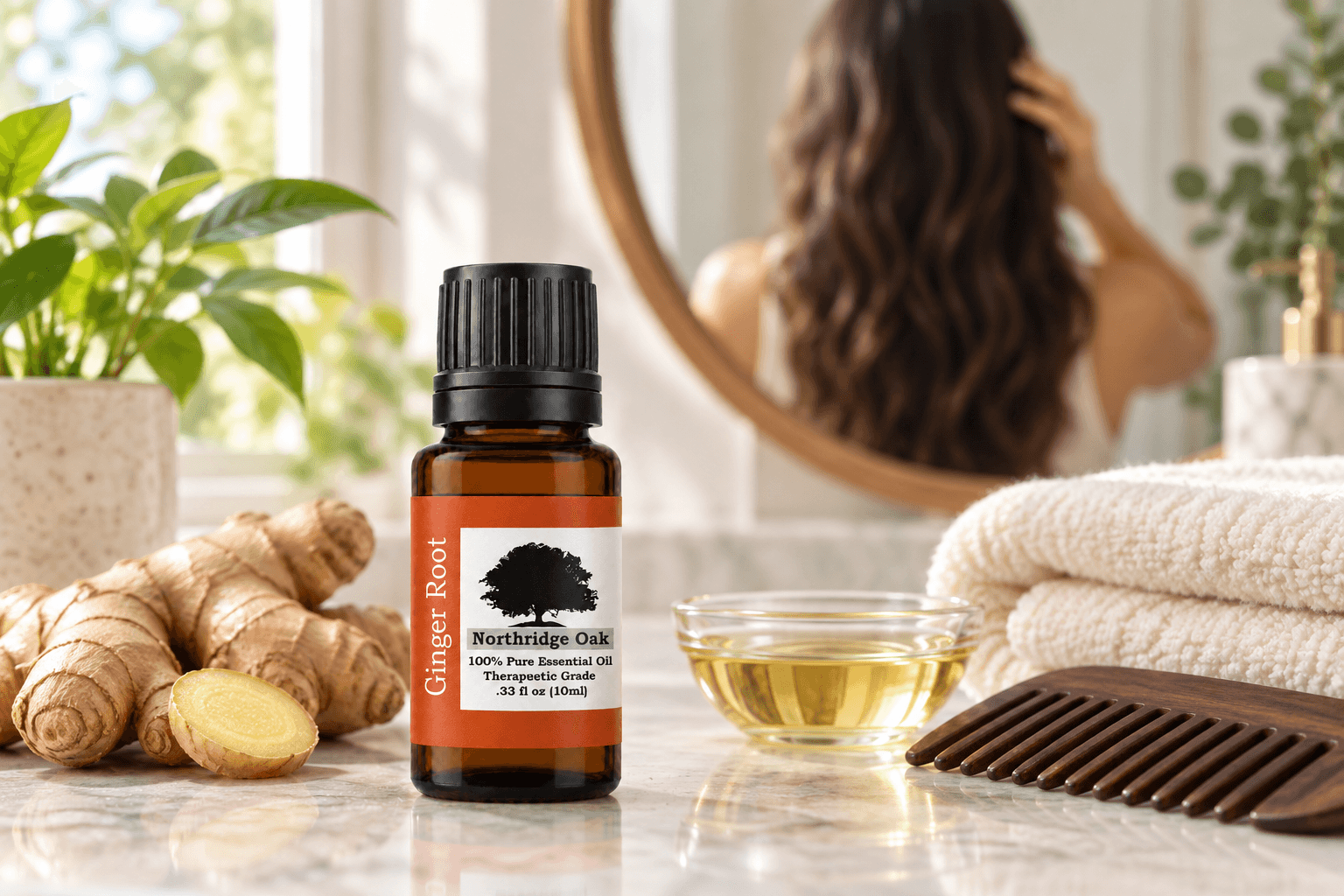
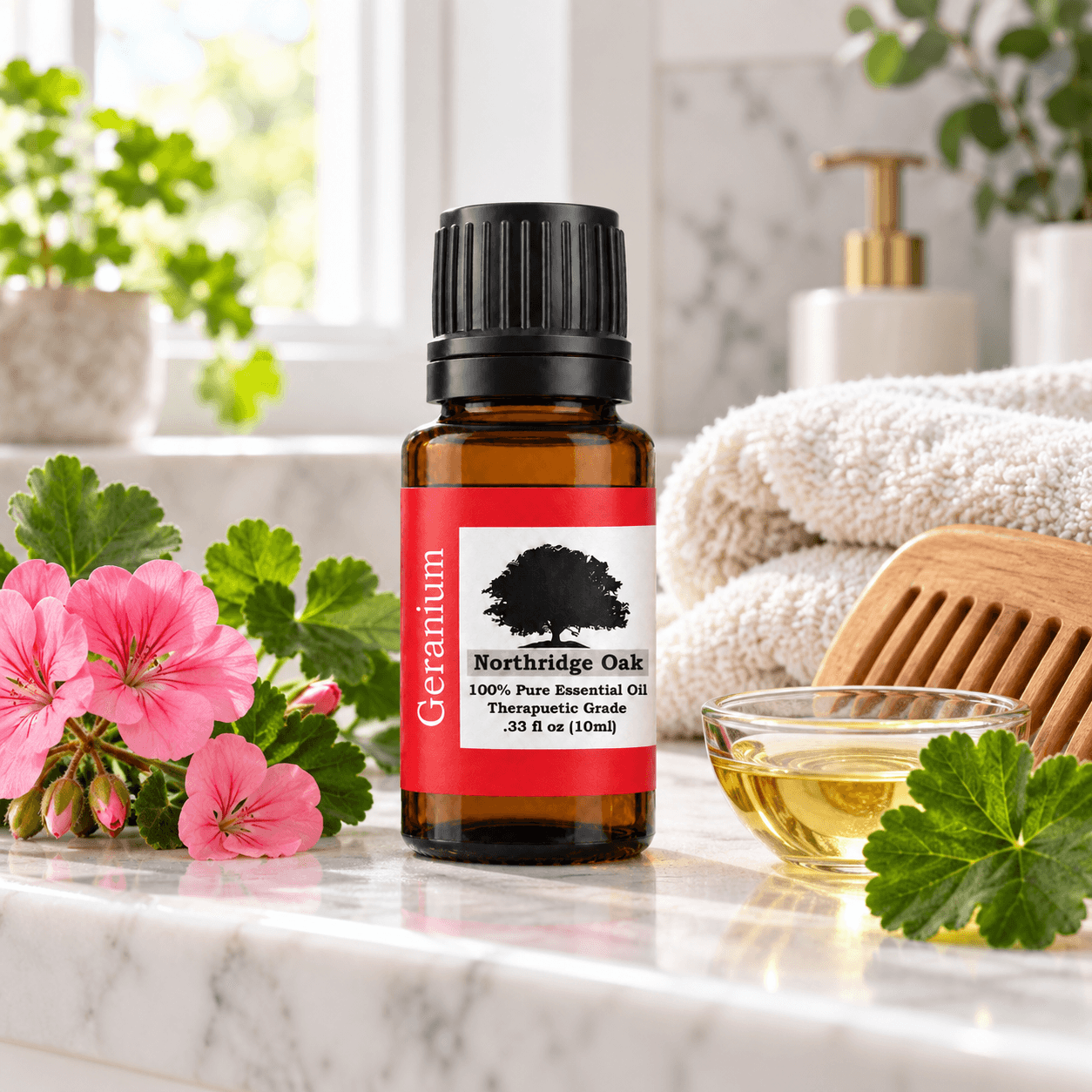
Compare carefully framed guides for Rosemary for hair, Lavender for hair, Cedarwood for scalp, Geranium for hair and Ginger for hair.
Supporting a Complete Scalp-Care Plan
Botanical care works best alongside a clear understanding of the scalp. A dermatologist or qualified clinician can help identify the cause of sudden shedding, patchy changes or ongoing scalp discomfort, allowing a Marjoram routine to complement the right overall plan.
Safety and Storage
Avoid eyes, ears and broken skin. Wash hands after use. Consult a qualified professional during pregnancy or nursing, with children, while taking medication or when managing a condition. Do not ingest. Store both oil and finished blends cool, dark and out of reach.
Read the complete safety guide.
Continue Exploring
Begin with Marjoram benefits and uses, then compare body-care dilution in Marjoram for skin or move away from topical use with Marjoram diffuser blends.
Protect Hair Lengths from Unnecessary Buildup
A scalp oil does not need to saturate every strand. Concentrate a small amount at the scalp, then use plain carrier or a formulated conditioner on dry lengths if needed. Applying too much oil can require aggressive washing, which may leave hair feeling rough.
People with protective styles, extensions or chemically treated hair should consider installation and maintenance guidance before adding oil. A professional stylist can help prevent trapped buildup or tension from being mistaken for dryness. Keep every application controlled and easy to rinse.
The carrier oil can support shine, softness and easier detangling by lightly coating the hair shaft, while Marjoram contributes its distinctive aromatic character. Recognizing each ingredient’s role makes it easier to evaluate the ritual and recreate the parts you enjoy most.
These statements have not been evaluated by the Food and Drug Administration. This product and the information in this article are not intended to diagnose, treat, cure or prevent any disease. Essential oils are highly concentrated. Dilute before topical use, patch test first, and keep out of reach of children and pets. Consult a qualified healthcare professional before use during pregnancy or nursing, with young children, while taking medication or when managing a medical condition.
A Practical Four-Week Scalp Routine
Use the four-week routine to evaluate the qualities a cosmetic oil can reveal clearly: scalp comfort, softness, washability, buildup and fragrance.
Photographs taken in the same lighting and hairstyle can reduce misleading impressions, but they do not diagnose hair loss. If shedding increases or new patches appear, stop and seek professional guidance.
Protect the Hairline and Eyes
Apply with fingertips or a controlled applicator, keeping the blend away from the forehead and temples where it may run. Use less than you think you need. Secure long hair loosely during the contact period and rinse with eyes closed.
If oil reaches the eye, follow poison-control or medical guidance rather than adding more oil or household ingredients. For ordinary external contact, wash exposed skin with gentle soap and plenty of water.