Table of Contents
- What People Mean by Ginger Oil
- How to Make Ginger-Infused Oil at Home
- How Ginger Essential Oil Is Made
- Can You Distill Ginger Essential Oil at Home?
- Ginger Root Essential Oil for Practical Aromatic Use
- Which Version Should You Choose?
- How to Create a Fresh, Reliable Ginger Infusion
- Storage and Safety
- Continue Learning
- Frequently Asked Questions
How to make ginger oil depends on what you mean by “ginger oil.” At home, you can make a gentle ginger-infused carrier oil by steeping dried ginger in a fixed oil. Ginger essential oil is different: it is a highly concentrated aromatic extract produced with specialized distillation equipment. Knowing which one you want keeps your project practical, safe and suited to its intended use.
This guide explains both products without blurring the line between them. You will learn how to prepare a small topical infusion, how professional ginger essential oil is made, what each smells and feels like, and when a ready-made essential oil is the more consistent choice. If you are new to concentrated aromatics, begin with our essential oils for beginners guide.
What People Mean by Ginger Oil
The phrase “ginger oil” is used for several very different products. A ginger-infused oil is a carrier oil—such as jojoba, sunflower or fractionated coconut oil—that has been allowed to take on some of the plant material’s character. Ginger essential oil is the volatile aromatic fraction distilled from Zingiber officinale. A third category, ginger flavoring or culinary oil, is made for food and should not be confused with either topical infused oil or aromatherapy products.
The distinction matters because strength, chemistry and directions are not interchangeable. An infusion is already diluted by its carrier. An essential oil must be measured in drops and diluted before skin use. For a full side-by-side explanation, see ginger oil vs. ginger essential oil.
How to Make Ginger-Infused Oil at Home
A simple infusion is the realistic home method. Use thoroughly dried ginger rather than fresh ginger. Fresh root contains water, and moisture can shorten shelf life or encourage spoilage. Clean and fully dry your jar, utensils and work surface before beginning.
What You Need
- One clean, completely dry glass jar with a tight lid
- About 2 tablespoons of dried ginger slices or coarse dried ginger pieces
- About 1 cup of a fresh carrier oil
- A fine strainer or cheesecloth
- A clean amber bottle and a dated label
Jojoba offers excellent oxidative stability and a dry skin feel. Fractionated coconut oil stays liquid and works well for massage. Sunflower oil is light and widely available, but should be used while fresh. Choose an unfragranced oil so the ginger character is easy to judge.
Slow Infusion Method
- Place the dried ginger in the dry jar.
- Pour in enough carrier oil to cover it completely, leaving a little room at the top.
- Seal, label and place the jar in a dark cupboard for two to three weeks.
- Gently turn the jar every day or two.
- Strain carefully, pressing lightly, then transfer the clear oil to a clean amber bottle.
Discard the batch if you notice cloudiness, bubbles, off odors or visible moisture. A home infusion does not have a laboratory-verified shelf life, so make a modest amount and treat changes in smell or appearance as a reason to replace it. Never assume the carrier oil’s original expiration date still applies after plant material has been introduced.
Low-Heat Shortcut
You can shorten the process by setting the closed infusion jar in a warm-water bath for a few hours. Keep the heat low and steady; frying or cooking the ginger is not the goal. Allow the jar to cool fully before straining. This method may produce a quicker aroma, while a slow infusion often feels easier to monitor.
How Ginger Essential Oil Is Made
Commercial ginger essential oil is generally produced by steam distillation of ginger rhizomes. Steam moves through prepared plant material and carries volatile compounds into a condenser. The cooled liquid separates into aromatic essential oil and hydrosol. Producers then collect, filter and store the essential oil away from heat and light.
Infusion and steam distillation are two distinct processes. An infusion remains soft and carrier-forward, while professionally distilled Ginger Root Essential Oil is concentrated, warm, earthy and spicy. A jar of ginger steeped in carrier oil creates an infusion; steam-distillation equipment creates essential oil.
Can You Distill Ginger Essential Oil at Home?
Botanical distillation uses purpose-built equipment, carefully controlled steam, substantial plant material and precise separation. For most households, a dried-ginger infusion is the approachable hands-on project, while a professionally distilled and tested essential oil provides the concentrated aroma.
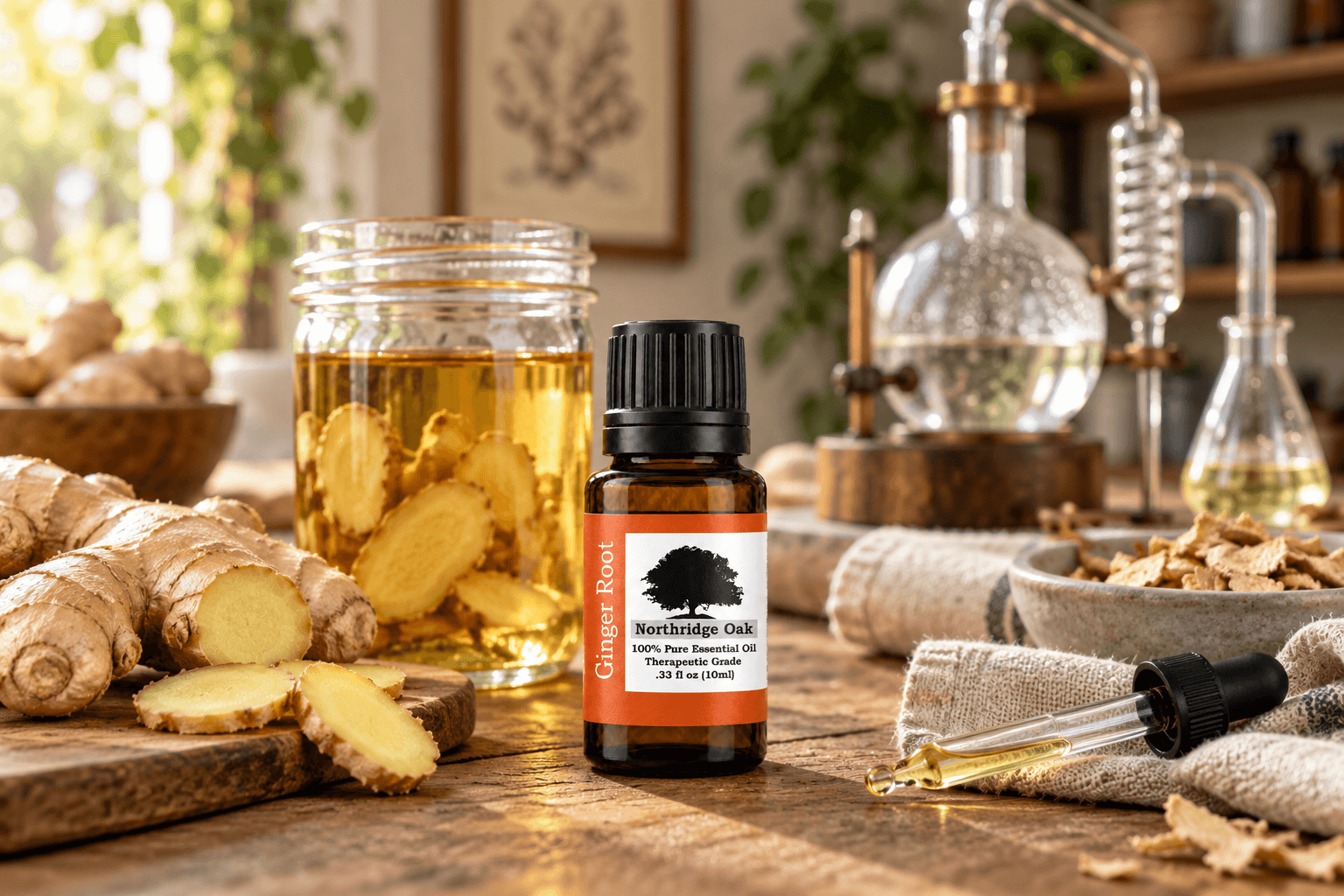
For dependable aromatic use, choose a clearly labeled, batch-tested product. Northridge Oak’s 100% Pure Ginger Root Essential Oil is undiluted, GC/MS tested and bottled in a 10 mL amber bottle. Its botanical name is Zingiber officinale, and its origin is India.
Ginger Root Essential Oil for Practical Aromatic Use
A ready-made essential oil is useful when you want predictable drop-by-drop blending. Add it to a diffuser with brighter citrus oils, or dilute it in a carrier for a warming massage ritual. Explore tested starting points in our ginger essential oil diffuser blends and ginger massage guide.
For an adult body oil, blend about six drops of Ginger Root Essential Oil into one ounce of carrier oil for an approximate 1% dilution. Patch test the finished blend before broader use. For face care, follow the lighter ranges in our Ginger oil for skin guide.
Which Version Should You Choose?
Choose an infused oil when you enjoy a slow botanical project and want a mild, already-carried preparation for body oil or massage. Choose ginger essential oil when you want a concentrated aroma for a diffuser or precise blend. Neither is universally “better”; they solve different problems.
- For a subtle body oil: make a dried-ginger infusion.
- For diffuser recipes: choose ginger essential oil.
- For repeatable blending: a tested essential oil is easier to measure.
- For culinary use: use a product specifically sold as food, not an aromatherapy essential oil.
How to Create a Fresh, Reliable Ginger Infusion
Dried ginger, clean tools, complete straining, a dated label and cool dark storage create the most reliable home infusion. Keeping culinary and body-care recipes separate also makes each finished product easier to use as intended.
When blending aroma, ginger works especially well with citrus, woods and selected spices. Our guide to what blends well with ginger essential oil explains how to keep its earthy heat balanced. You can also compare its spicy personality with cinnamon leaf essential oil.
Storage and Safety
Store both products tightly closed in a cool, dark cabinet. Keep infused oil away from water and use clean hands or a clean pump. Keep undiluted essential oil away from eyes and mucous membranes. Ginger’s warming aroma does not justify aggressive topical concentrations. Stop use if irritation develops.
Diffusers also benefit from restraint. Begin with fewer drops, ensure ventilation and run intermittently, especially around children or pets. Read our complete essential oil safety guide before building a new routine.
Continue Learning
Next, read Ginger Root Essential Oil benefits and everyday uses for the cluster overview. For adjacent practical ideas, explore Blood Orange diffuser blends and Patchouli massage and body oils.
These statements have not been evaluated by the Food and Drug Administration. This product and the information in this article are not intended to diagnose, treat, cure or prevent any disease. Essential oils are highly concentrated. Dilute before topical use, patch test first, and keep out of reach of children and pets. Consult a qualified healthcare professional before use during pregnancy or nursing, with young children, while taking medication or when managing a medical condition.