Table of Contents
- Marjoram vs. Oregano Essential Oil at a Glance
- What Is Sweet Marjoram Essential Oil?
- What Is Oregano Essential Oil?
- What Is Spanish Marjoram?
- How Their Aromas Differ
- Choosing Between Oregano and Marjoram
- Marjoram Essential Oil for Predictable Blending
- Which Oil Is Better for a Diffuser?
- Which Oil Is Better for Massage?
- How to Read the Label
- How to Navigate Common Product Names
- Safety
- Continue Exploring
- Buying the Right Oil for a Recipe
- Why Chemistry Can Vary Within a Species
- A Safe Comparison Exercise
- Frequently Asked Questions
Marjoram vs. Oregano Essential Oil is a fascinating comparison between two related herbs with distinct aromatic personalities. Both belong to the Origanum genus, while Sweet Marjoram and Oregano offer different botanical identities, scent profiles, blending roles and topical considerations that make each oil useful in its own way.
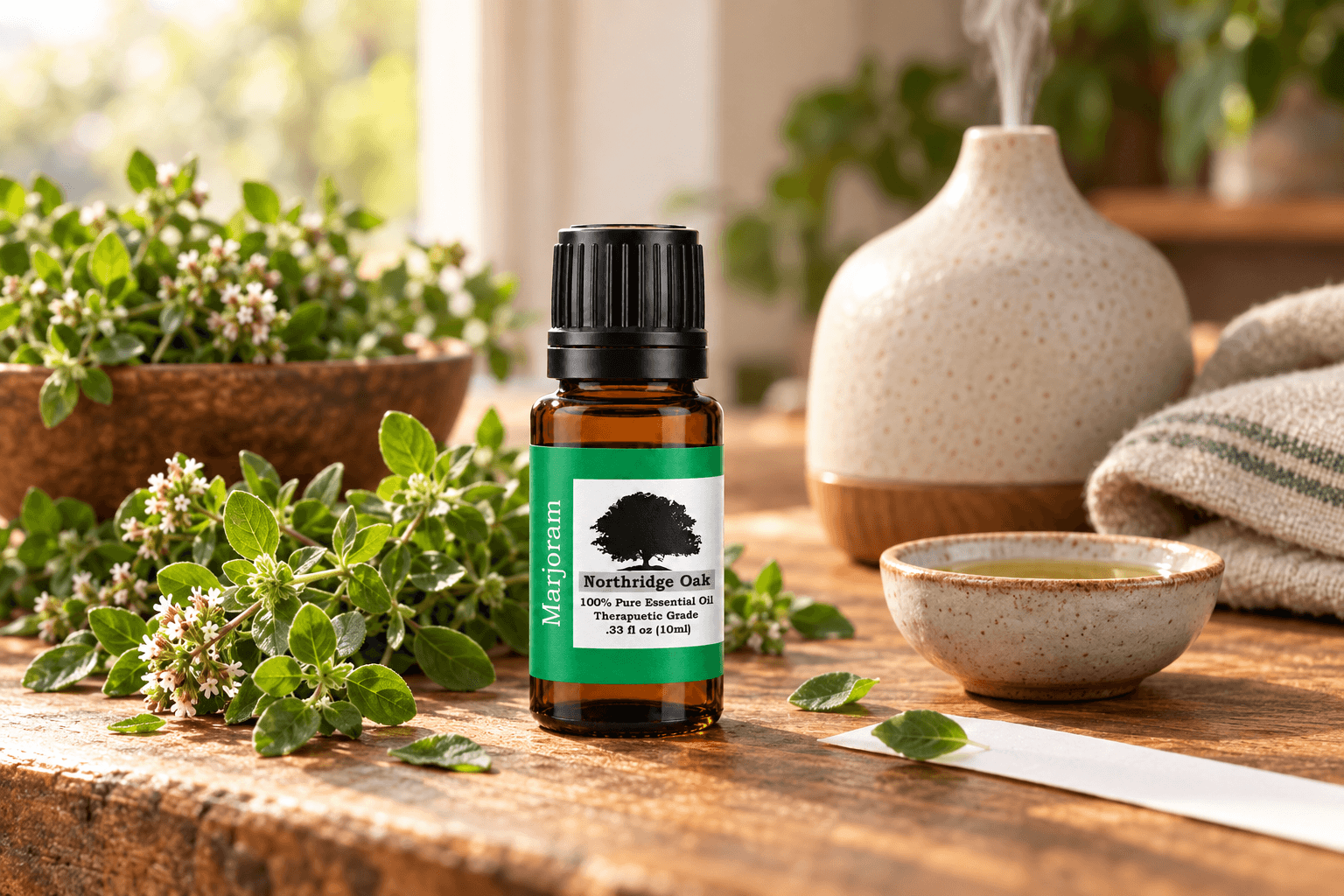
Northridge Oak Marjoram is Origanum majorana, a warm, herbaceous and softly woody oil from Egypt. Oregano products may be Origanum vulgare or another species and often smell much sharper. Spanish Marjoram may refer to yet another plant, commonly Thymus mastichina.
Marjoram vs. Oregano Essential Oil at a Glance
- Sweet Marjoram: Origanum majorana; warm, green, softly woody.
- Oregano: often Origanum vulgare; intense, pungent and phenolic.
- Spanish Marjoram: often Thymus mastichina; a different genus and a more camphoraceous profile.
Common names are not enough. The Latin name is the clearest first check.
What Is Sweet Marjoram Essential Oil?
Sweet Marjoram oil is distilled from the aerial parts of Origanum majorana. Its balanced aroma works beautifully in diffuser formulas and properly diluted cosmetic body oils.
It pairs well with Lavender, Bergamot and Cedarwood. Learn the broad range in Marjoram Essential Oil benefits and uses.
What Is Oregano Essential Oil?
Oregano oil is typically more forceful, with a hot, sharp, phenolic character. Composition varies by botanical species, chemotype, growing conditions and distillation, giving Oregano a distinctly different aromatic role from Sweet Marjoram.
Oregano essential oil often needs greater topical caution. Follow its own label and professional guidance rather than copying a Marjoram recipe.
What Is Spanish Marjoram?
Spanish Marjoram is a confusing common name frequently associated with Thymus mastichina. Despite the word “marjoram,” it is botanically distinct from Origanum majorana. Its aroma may be more eucalyptus-like or camphoraceous.
Always verify the exact species. A supplier should state the botanical name rather than relying on a common name alone.
How Their Aromas Differ
Sweet Marjoram is warm, herbal and rounded. Oregano is usually hotter, more pungent and more demanding. Spanish Marjoram tends to be sharper and more camphoraceous. On scent strips, the difference is apparent without skin exposure.
For a calm Lavender blend, Sweet Marjoram is usually the most intuitive choice. For a crisp, powerful herbal aroma, Oregano may be recognizable—but its strength changes both blend balance and safety.
Choosing Between Oregano and Marjoram
Use each oil according to its own botanical identity and strength. Sweet Marjoram fits recipes designed for a soft herbal note, while Oregano brings a much sharper presence and requires its own blend proportions and topical guidance.
If a recipe gives only a common name, identify the Latin name before proceeding. When that information is unavailable, choose a better-documented formula.
Marjoram Essential Oil for Predictable Blending
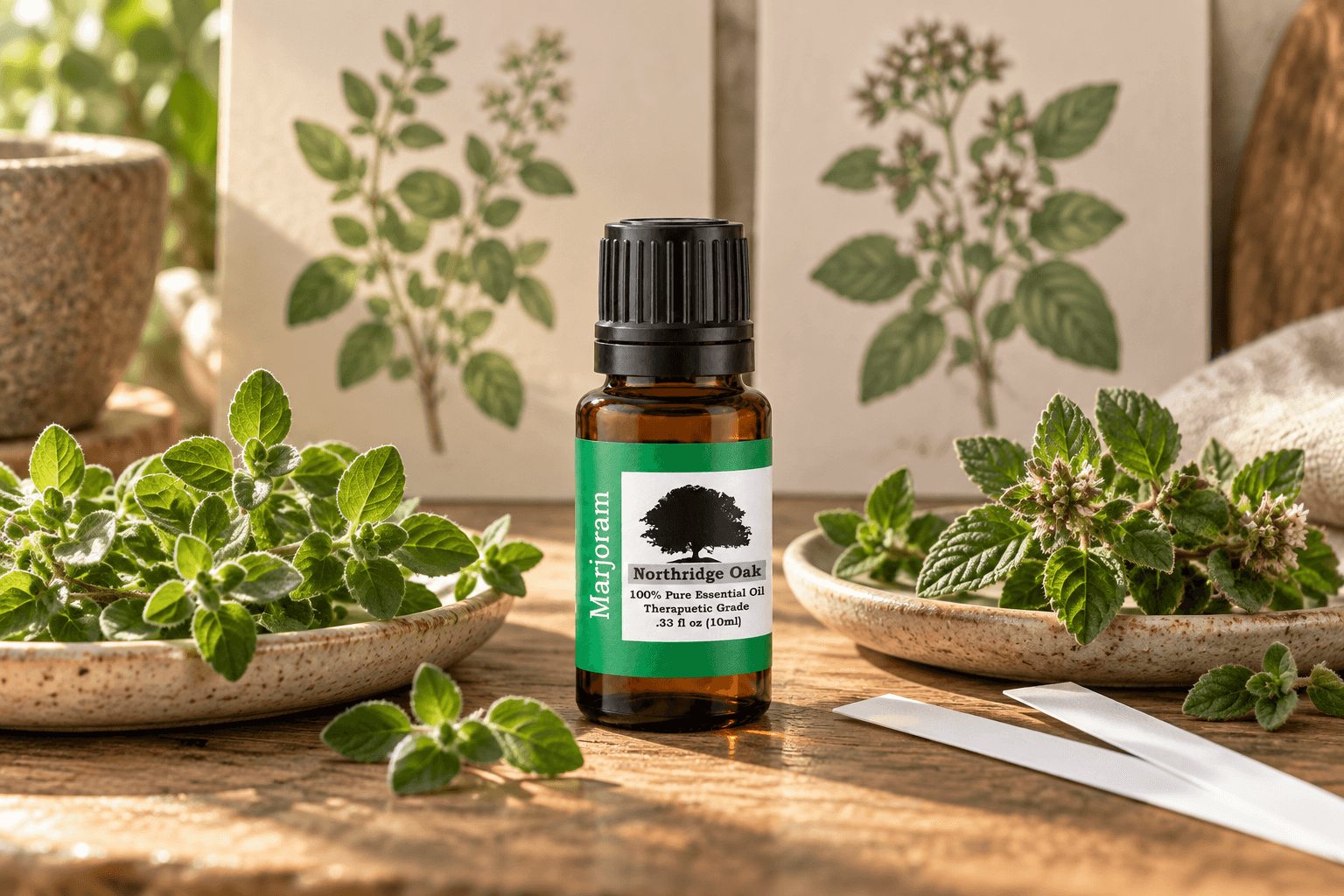
Northridge Oak Marjoram Essential Oil is labeled Origanum majorana, 100% pure and undiluted, sourced from Egypt and third-party GC/MS tested. That identity supports repeatable recipes and more meaningful comparisons.
Which Oil Is Better for a Diffuser?
“Better” depends on the desired aroma and the household. Sweet Marjoram is easier to balance with Lavender, citrus and woods. Oregano is extremely assertive and may be unpleasant for scent-sensitive people. Begin with one drop of any strong herb and ventilate.
Try recipes in Marjoram diffuser blends and learn proportion in Marjoram pairings.
Which Oil Is Better for Massage?
Sweet Marjoram’s softer aroma makes it a natural choice for a diluted adult massage oil, especially when paired with Lavender, Cedarwood or Bergamot.
Use the 1% starting formulas in Marjoram massage oil. Never substitute a stronger oil without recalculating and reviewing its safety limits.
How to Read the Label
- Find the Latin botanical name.
- Confirm whether the bottle is undiluted or carrier-based.
- Look for country of origin and lot information.
- Read the intended-use directions and cautions.
- Prefer a supplier that discusses independent testing.
Botanical identity, third-party GC/MS testing and transparent directions provide the clearest way to evaluate an essential oil.
How to Navigate Common Product Names
Common names such as “wild marjoram” or “Spanish Marjoram” can refer to different species. Checking the Latin name makes it easy to select genuine Sweet Marjoram and match it with the correct recipe.
Safety
Dilute Sweet Marjoram before topical use and patch test. Keep all essential oils away from eyes, children and pets. Do not ingest. Ask a professional during pregnancy, nursing, medication use or health conditions. Strong Oregano oils may require stricter limits.
Read the complete safety guide and our beginner guide.
Continue Exploring
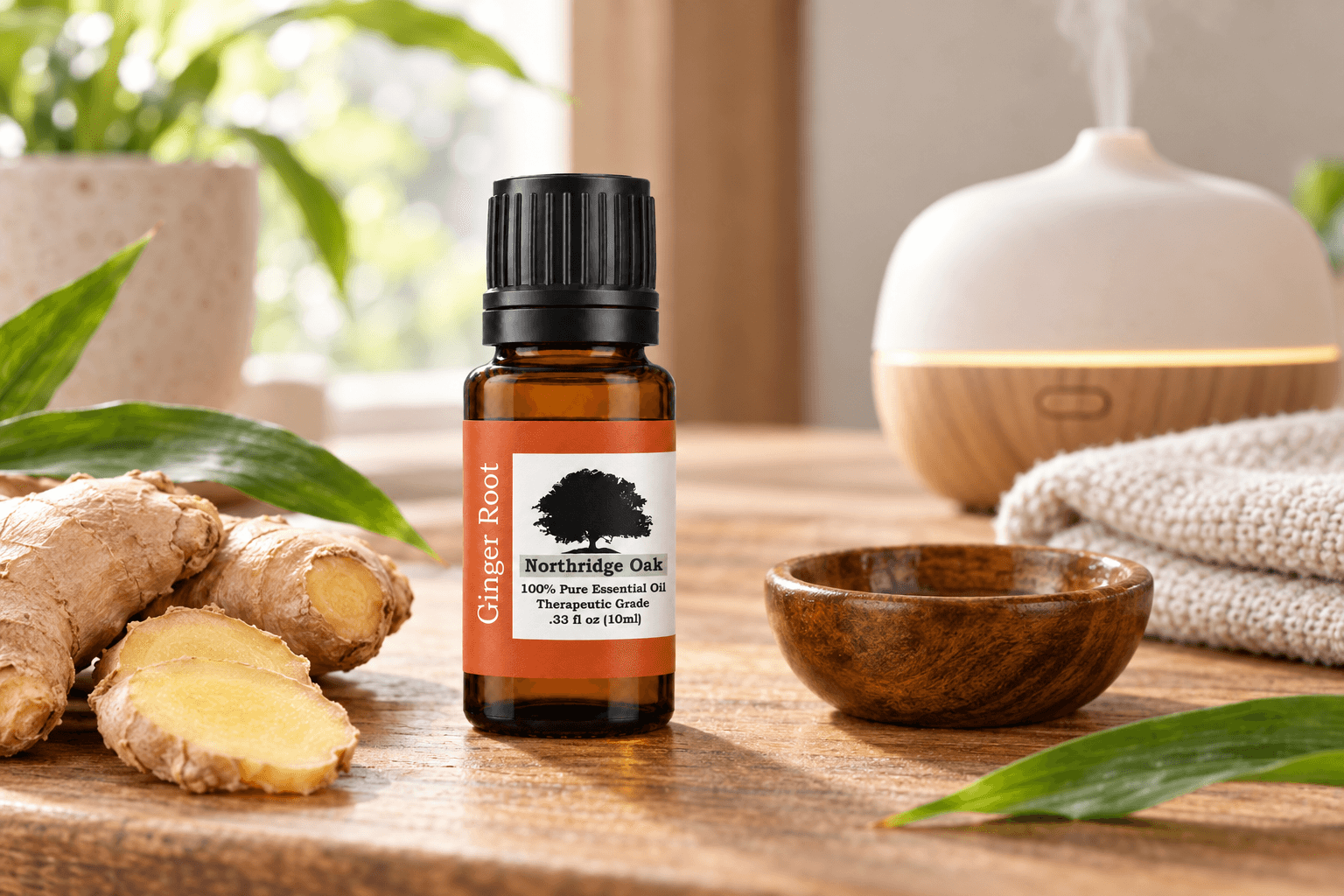
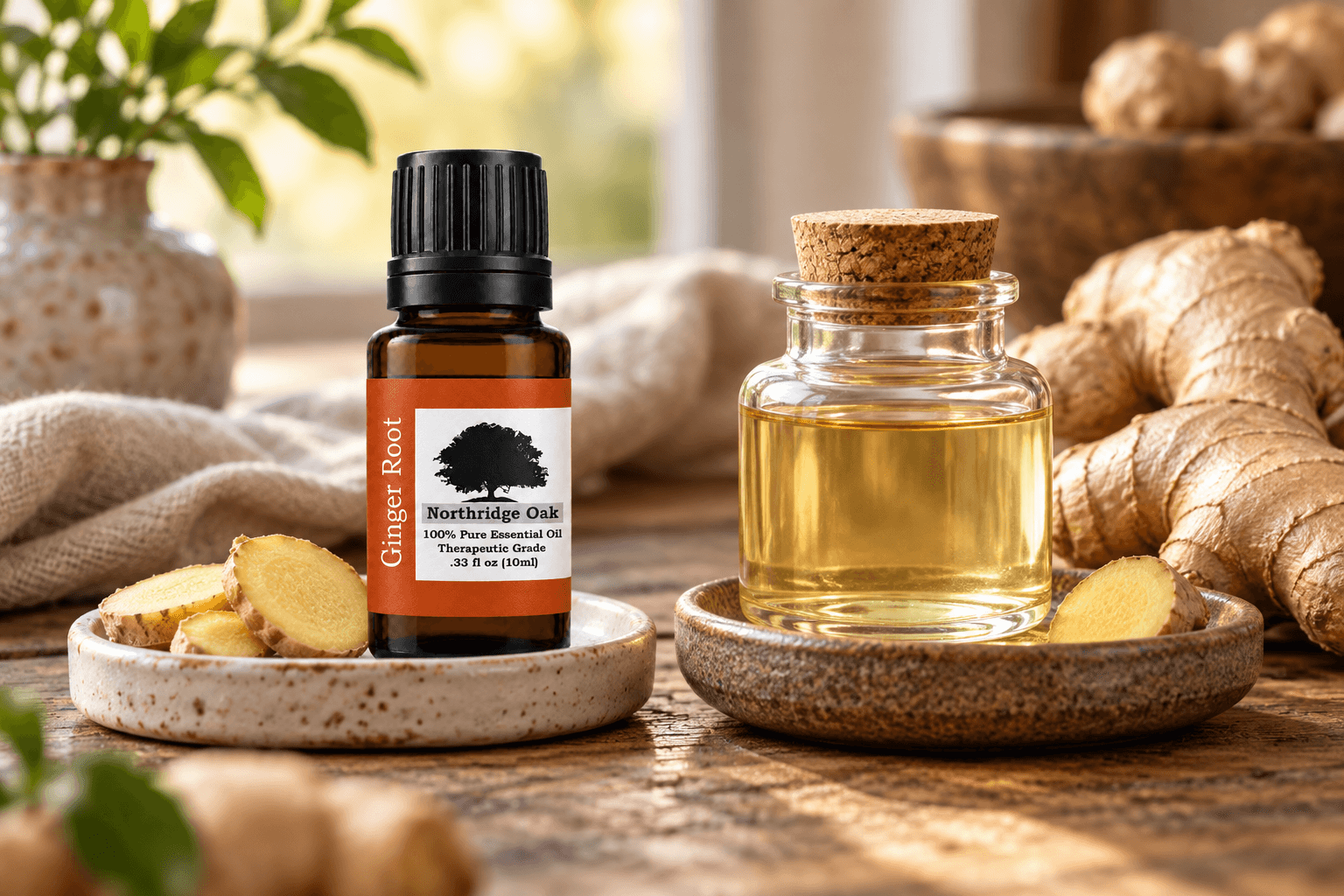
Explore another herb comparison through Rosemary Essential Oil, then compare Marjoram’s softness with Cinnamon Leaf Essential Oil and Ginger oil vs. Ginger Essential Oil.
Buying the Right Oil for a Recipe
Match four details before purchasing: common name, Latin name, plant part and extraction method. A recipe specifying Sweet Marjoram should not be filled with “wild marjoram,” Spanish Marjoram or a fragrance oil simply because the front label looks similar.
Confirm whether the bottle is pure or pre-diluted. A roll-on already mixed with carrier cannot be measured like undiluted essential oil in a diffuser formula. If product information is incomplete, contact the supplier or choose a better documented bottle.
When comparing online advice, give more weight to sources that name the exact botanical species and route of use. A claim about an oregano extract, food seasoning or laboratory culture does not automatically apply to Sweet Marjoram Essential Oil on human skin or in household diffusion.
These statements have not been evaluated by the Food and Drug Administration. This product and the information in this article are not intended to diagnose, treat, cure or prevent any disease. Essential oils are highly concentrated. Dilute before topical use, patch test first, and keep out of reach of children and pets. Consult a qualified healthcare professional before use during pregnancy or nursing, with young children, while taking medication or when managing a medical condition.
Why Chemistry Can Vary Within a Species
Even when two bottles share a Latin name, their chemical profiles may vary with geography, climate, harvest timing, plant part and distillation. This is one reason batch documentation and GC/MS testing are useful. They do not turn an oil into medicine, but they help confirm identity and reveal whether a product resembles the expected profile.
Chemotypes are especially important in strongly aromatic herbs. Never assume a recipe written for one species, chemotype or supplier applies unchanged to another bottle.
A Safe Comparison Exercise
Compare Marjoram and Oregano on separate paper scent strips, not on skin. Use one drop per strip, label them and smell from a comfortable distance in fresh air. Notice intensity, sweetness, sharpness and how each changes after fifteen minutes. Do not press the strips to the nose.
This exercise demonstrates why common-name substitution fails. One oil may dominate the air while the other integrates easily with Lavender or citrus. Dispose of strips where children and pets cannot reach them and wash hands after handling.