Table of Contents
- The Aroma Profile of Patchouli
- Why Patchouli Smells Different in a Blend
- Is Patchouli Sweet, Musky or Spicy?
- Why Patchouli Is a Base Note
- Does Patchouli Smell Better as It Ages?
- How to Smell Patchouli with Fresh Ears—or Rather, a Fresh Nose
- Three Easy Aroma Introductions
- What We’re Learning About Patchouli’s Aroma
- Continue Exploring Patchouli Essential Oil
- Meet Patchouli Again
- Frequently Asked Questions
What does Patchouli smell like? The short answer is earthy, woody and softly sweet—but that description only opens the door. Patchouli has a layered aroma that can suggest damp forest soil, polished wood, green leaves, balsamic warmth and a whisper of cocoa. Its personality changes with dilution, age and the oils beside it, which is why people who think they dislike Patchouli are often delighted by a well-made blend.
Smelling it straight from the bottle gives you the loudest, most concentrated version. Give one drop room to breathe on a scent strip or place it beneath bright citrus in a diffuser, and its smoother character begins to appear.
The Aroma Profile of Patchouli
Patchouli opens with a green, camphoraceous edge, then settles into an earthy heart and a persistent woody-sweet base. Natural materials vary from harvest to harvest, so one bottle may feel darker and drier while another leans rounder and more balsamic. High-quality Pogostemon cablin should smell complex and alive rather than like a flat fragrance imitation.
The word “earthy” sometimes sounds heavy, yet Patchouli can be remarkably elegant. In a restrained amount it behaves like the dark line in a painting: it gives the brighter colors definition. That grounding effect is central to both blending Patchouli with other essential oils and using it as a base note in perfume.
Why Patchouli Smells Different in a Blend
Aroma is relational. Sweet Orange lifts Patchouli’s sweetness and makes the earthiness feel sun-warmed. Lavender draws out its soft herbal side. Cedarwood emphasizes dry wood, while Ylang Ylang turns Patchouli plush and floral. Frankincense gives it a resinous, contemplative quality. None of those combinations erases Patchouli; each reveals a different facet.
Proportion matters just as much as the pairing. A beginner-friendly ratio is one drop Patchouli to four or five drops of lighter oils. Let the blend sit for ten minutes, smell again and adjust only if necessary. This small pause prevents the common habit of adding too much before the base note has had time to unfold.
Is Patchouli Sweet, Musky or Spicy?
Patchouli can seem sweet, but it is not sugary. Its sweetness is closer to aged wood, dry cocoa or warm resin. People often call it musky because it has depth and persistence, though true musk is a different aroma category. Patchouli may also feel lightly spicy or smoky depending on its origin and companions.
This range explains why it works in such different moods. With Grapefruit and Bergamot, it can feel crisp and modern. With Rose or Geranium, it feels romantic. With Pine and Cedarwood, it becomes a forest scent. With Cinnamon Leaf and Orange, it slips naturally into a cozy autumn atmosphere.
Why Patchouli Is a Base Note
Perfumers group aromas by how quickly they appear and fade. Citrus top notes sparkle first, heart notes form the center, and base notes linger. Patchouli is a classic base note because its heavier aromatic molecules evaporate slowly. It helps a composition last and gives lighter notes somewhere to land.
In practical terms, you may still smell Patchouli on a scent strip long after the citrus has softened. That is useful in a natural Patchouli perfume, a closet sachet or a diffuser blend intended to feel grounded rather than fleeting. It also means restraint produces a more balanced result.
Does Patchouli Smell Better as It Ages?
Patchouli has an unusual reputation for improving with time. Proper storage can allow the aroma to become smoother, rounder and less sharply green. This does not mean leaving the cap loose or placing the bottle in sunlight. Keep it tightly closed, upright and protected from heat. The gradual maturation happens inside a well-kept bottle.
If an older bottle still smells rich and pleasant and has been stored correctly, it can remain a beautiful blending oil. Always inspect the aroma and bottle condition. When in doubt, reserve it for diffusion rather than skin use and replace it with a fresh, well-documented bottle.
How to Smell Patchouli with Fresh Ears—or Rather, a Fresh Nose
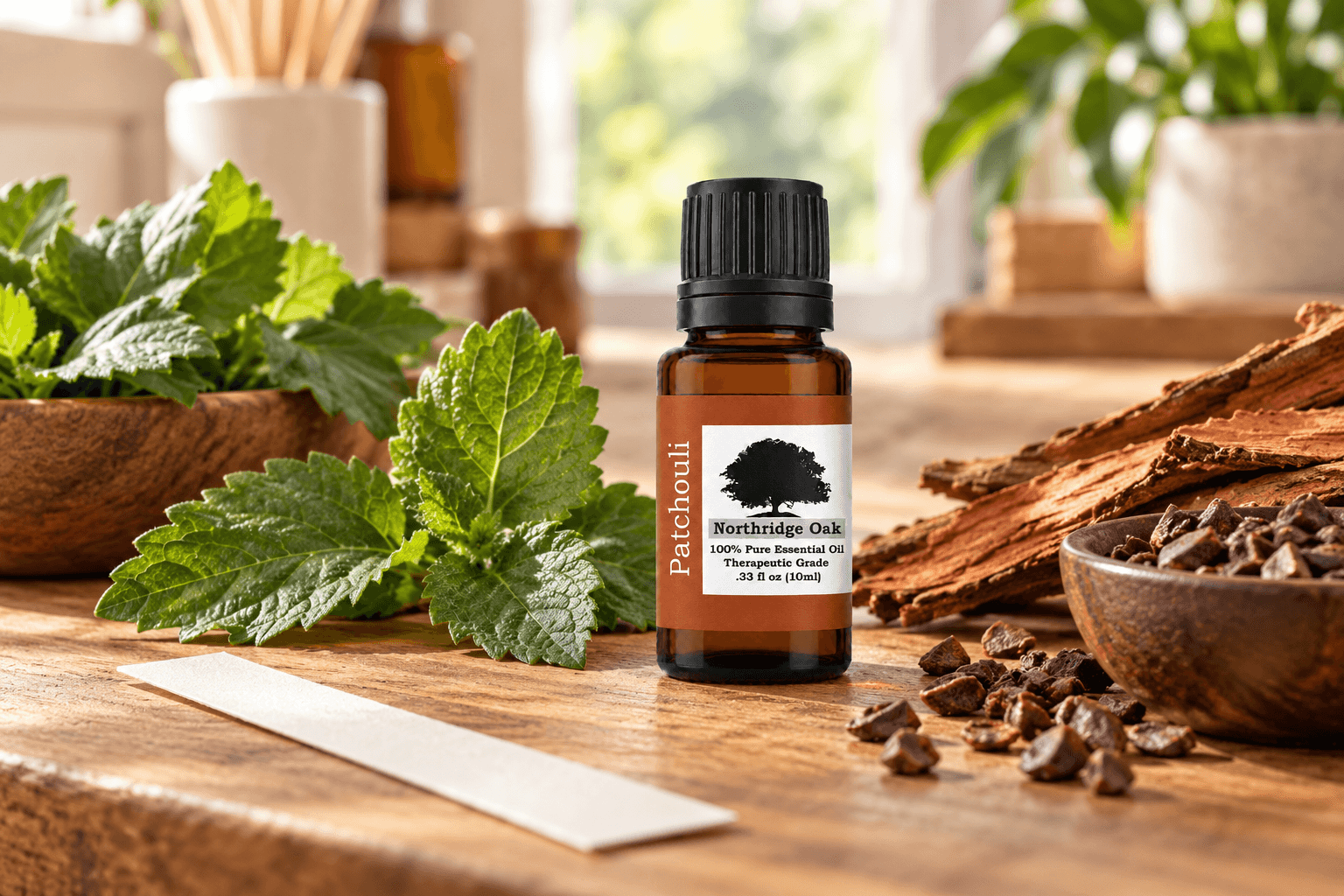
Place one drop on a paper scent strip. Smell from several inches away instead of pressing it directly under your nose. Write down the first three words that come to mind. Return after fifteen minutes, one hour and the next morning. You may notice the green opening recede while woody sweetness becomes more obvious.
Next, compare two simple strips. On one, use Patchouli alone. On the other, place one drop Patchouli beside three drops Sweet Orange. The exercise shows how a familiar citrus can make the base note easier to understand. A third strip with Lavender reveals yet another side.
Three Easy Aroma Introductions
Bright and Grounded
Diffuse one drop Patchouli, three drops Sweet Orange and two drops Bergamot. The result feels cheerful but composed—a lovely daytime introduction for someone unsure about Patchouli.
Soft Woodland
Try one drop Patchouli, two drops Cedarwood and three drops Lavender. It suggests a clean, quiet cabin rather than dense incense and works beautifully during reading or an evening reset.
Warm Floral
Combine one drop Patchouli, two drops Geranium and two drops Sweet Orange. The citrus opens the blend, Geranium fills the heart and Patchouli creates a smooth finish.
What We’re Learning About Patchouli’s Aroma
The most useful lesson is that Patchouli should be experienced in context. Bottle-sniffing shows intensity; blending shows artistry. Dilution uncovers softness, time reveals the dry-down, and thoughtful partners make its sweetness or woodiness easier to notice.
If you are curious but cautious, begin with a citrus-led recipe from our 20 Patchouli diffuser blends. One drop is enough to discover why this oil has remained important in fragrance for generations.
Continue Exploring Patchouli Essential Oil
Patchouli is one of those oils that becomes more interesting the more you explore it. Continue through the Northridge Oak Patchouli Learning Center to discover encouraging research, inviting aroma combinations and practical ways to bring this warm, earthy botanical into your everyday routine.
- Start with the complete Patchouli Essential Oil benefits, uses, research, recipes and safety guide.
- Create a warm, welcoming atmosphere with 20 Patchouli Essential Oil diffuser blends.
- Discover what blends well with Patchouli Essential Oil and how different pairings reveal its softer side.
- Learn how Patchouli can become a lasting base note in a natural perfume or personal aroma blend.
- Bring Patchouli into thoughtful self-care with guides for skin, hair and scalp, and massage and body oils.
- Create a peaceful aromatic routine with Patchouli for relaxation and sleep.
- Use Patchouli confidently with the Patchouli Essential Oil safety guide and the Complete Essential Oil Safety Guide.
- Shop Northridge Oak Patchouli Essential Oil.
Meet Patchouli Again
Patchouli does not have to be loud, nostalgic or mysterious. It can be bright, polished, calm and surprisingly modern. Give it air, pair it with an aroma you already love and allow the dry-down to tell the full story. That patient first experience is often the moment Patchouli changes from an idea into a favorite.
These statements have not been evaluated by the Food and Drug Administration. Northridge Oak products are not intended to diagnose, treat, cure or prevent disease.