Table of Contents
- From Desert Resin to Aromatic Essential Oil
- What Myrrh Really Smells Like
- The Everyday Benefits of Myrrh Essential Oil
- What Modern Research Adds to an Ancient Story
- Bring Myrrh Into the Room
- Make Myrrh Part of Skin and Body Care
- Discover Myrrh as a Natural Perfume Note
- Create a Quiet Aromatic Ritual
- What Blends Well With Myrrh?
- Enjoy Myrrh With Confidence
- Why Myrrh Belongs in Your Collection
- Continue Exploring Myrrh Essential Oil
- Begin With One Drop
- Frequently Asked Questions
Myrrh has the kind of aroma that seems to hold a story. Open the bottle and you may notice warm resin, polished wood, dry earth and the softest trace of smoke. Give it a little air, pair it with something bright, and an entirely different side appears—smooth, balsamic, quietly elegant and surprisingly easy to bring into everyday life.
Myrrh Essential Oil benefits and uses become much more interesting when they are connected to real moments. This is an oil for making a room feel warmer, turning a simple body oil into a personal ritual, giving a botanical perfume genuine depth and adding a sense of intention to the few quiet minutes you claim for yourself.
If Myrrh has ever felt mysterious, let this guide be the friendly introduction you were looking for. We will explore where the oil comes from, what it smells like, how research adds to its story and, most importantly, how to experience it in ways you will want to repeat.
From Desert Resin to Aromatic Essential Oil
Myrrh begins with trees and shrubs in the Commiphora genus. These resilient plants grow in dry landscapes and release an aromatic oleo-gum-resin through their bark. As the resin meets the air, it hardens into amber, golden and reddish-brown tears—the form that traveled through ancient trade routes and became prized in perfume, cosmetics and aromatic traditions.
Steam distillation captures the volatile portion of that resin in the essential oil. The result is concentrated, complex and often more viscous than familiar oils such as Lavender or Blood Orange. If the bottle is slow to drop, hold it tightly closed between your palms for a minute. Gentle warmth helps the oil flow and gives you a moment to anticipate the aroma.
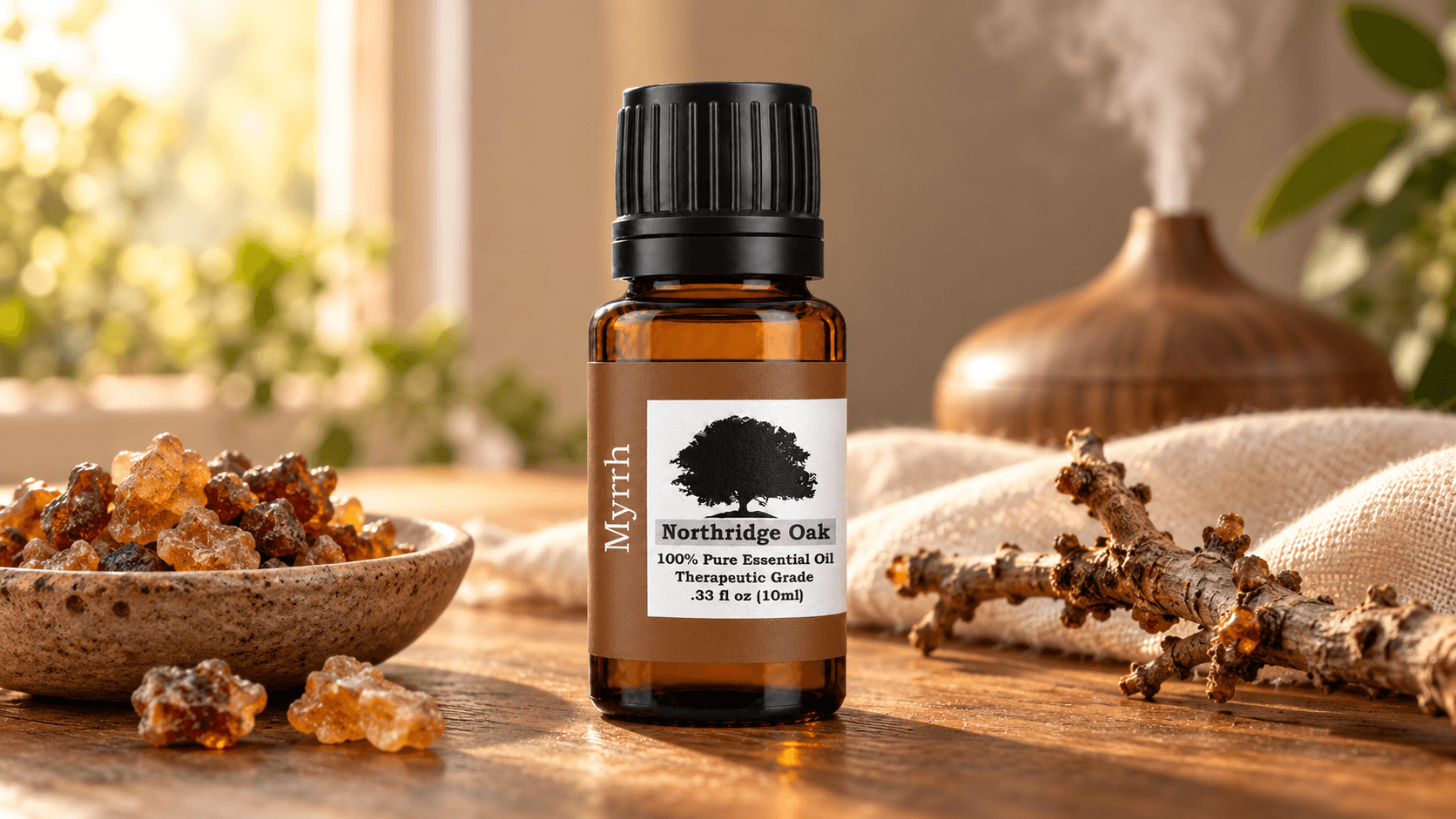
Northridge Oak Myrrh is Commiphora myrrha, sourced from India, 100% pure and undiluted. We bottle it in small batches and use third-party GC/MS testing so the oil you explore is clearly identified and true to its natural character.
What Myrrh Really Smells Like
Myrrh is usually described as earthy, resinous, woody, balsamic and gently smoky. Those words are accurate, but they do not quite capture the way the aroma develops. Directly from the bottle, it can feel dark and concentrated. On a paper strip, in a diffuser or blended into carrier oil, it becomes rounder and warmer. Notes that seemed austere begin to suggest amber, antique wood and sun-warmed resin.
That transformation is worth experiencing for yourself. Place one drop on a scent strip and smell it from several inches away. Return after five minutes, then again after half an hour. Myrrh is a base note, so it stays with you and changes slowly. The full Myrrh aroma guide will help you recognize those layers and understand why perfumers value them.
The Everyday Benefits of Myrrh Essential Oil
Myrrh’s most immediate benefit is aromatic. It changes the feeling of a space and the personality of a blend. One drop beneath citrus can make the room feel warmer. One drop beside Lavender can give a familiar evening aroma more depth. In natural perfume, it helps the fragrance linger and gives the brighter notes somewhere to settle.
It also has a remarkable ability to make simple routines feel more intentional. A facial oil becomes a quiet evening ritual. A hand oil feels like a small luxury kept beside the sink. A diffuser blend can signal that work is over and the slower part of the day has begun.
These experiences are personal, which is part of their value. Myrrh does not have to create the same mood for everyone. What matters is that its distinctive aroma gives you something memorable to return to.
What Modern Research Adds to an Ancient Story
Researchers continue to be interested in Myrrh because its chemistry is genuinely complex. A broad 2022 review of Commiphora myrrha describes terpenoids, sesquiterpenes and other constituents, along with the plant’s long use in cosmetics, perfumery and aromatic preparations. That is an encouraging foundation: it shows why this botanical remains relevant to formulators and scientists rather than existing only as a historical curiosity. You can read the open-access Myrrh phytochemistry and pharmacology review.
Laboratory researchers have also examined Myrrh extracts in skin-relevant cellular pathways. In one human mast-cell study, Myrrh extract influenced several signaling compounds researchers were following. Because the experiment used an extract in cultured cells, it offers encouraging early laboratory context for Myrrh’s chemistry and a useful reason to keep following the research. Its positive contribution is more focused: it identifies promising pathways, gives researchers specific questions to pursue and helps explain why Myrrh continues to attract interest in personal-care formulation.
For someone using essential oils at home, the most honest and persuasive reason to try Myrrh remains beautifully simple. It smells unlike anything else in the collection, and a properly diluted formula can make an ordinary care routine feel rich, thoughtful and personal.
Bring Myrrh Into the Room
The diffuser is the easiest place to begin because air gives Myrrh room to open. Start with one drop rather than asking the oil to carry the whole blend. Frankincense makes it feel more spacious, Blood Orange brings a golden brightness and Lavender softens the finish.
Golden Resin
Blend: 3 drops Frankincense, 2 drops Blood Orange and 1 drop Myrrh.
This is the Myrrh blend I would offer first. The orange reaches you with warmth, Frankincense creates an open resinous heart and Myrrh settles beneath them like amber light on wood. Diffuse it in the living room on a slow afternoon or near the kitchen while everyone is beginning to gather.
Quiet Evening
Blend: 3 drops Lavender, 2 drops Frankincense and 1 drop Myrrh.
Lavender keeps the aroma familiar and gentle, while the resins make it feel more polished. Try it while reading, journaling or letting the pace of the house soften. When you are ready for more, the collection of 20 Myrrh diffuser blends is organized around the atmosphere you want to create.
Make Myrrh Part of Skin and Body Care
Myrrh feels especially natural in personal care because dilution reveals its smoother side. In a carrier oil, the dry resin note becomes warm and balsamic, and body heat helps the fragrance unfold gradually.
A Gentle Facial Oil
Combine 1 fluid ounce of a face-friendly carrier oil with 2 drops Frankincense and 1 drop Myrrh. Apply one or two drops to slightly damp skin, keeping clear of the immediate eye area. Frankincense leads with a lighter resin aroma while Myrrh creates a beautiful finish.
A Warm Hand and Cuticle Oil
Combine 1 fluid ounce fractionated coconut oil with 3 drops Lavender, 2 drops Frankincense and 1 drop Myrrh. Keep the bottle somewhere you will actually use it. The recipe is practical, but the aroma is what turns a quick application into a moment of care.
Our complete Myrrh skin and face guide explains the research, dilution and recipes in greater depth.
Discover Myrrh as a Natural Perfume Note
Myrrh is a base note, which means it gives botanical fragrance depth and staying power. Bergamot and Blood Orange sparkle above it. Lavender and Geranium soften the heart. Cedarwood, Patchouli and Vetiver can make the finish even more earthy and sophisticated.
For an approachable first perfume, add 5 drops Bergamot, 3 drops Frankincense, 2 drops Lavender and 1 drop Myrrh to a 10 mL roller, then fill with fractionated coconut oil. Let the blend rest for a day before deciding what you think. The citrus appears first; Myrrh becomes clearer as the perfume settles.
If you enjoy fragrances that reveal themselves slowly, the Myrrh natural perfume guide may become your favorite branch of the learning center.
Create a Quiet Aromatic Ritual
Myrrh is wonderfully suited to routines that already ask you to slow down: opening a journal, reading a few pages, sitting quietly before the day begins or taking five minutes between work and home life.
Start the diffuser shortly before you sit down. Use one drop Myrrh, three drops Frankincense and two drops Lavender. The aroma does not need to become the focus. Let it remain in the background as a warm, familiar cue that this is your time to pause.
What Blends Well With Myrrh?
Begin with the feeling you want. For brightness, choose Blood Orange, Bergamot, Lemon or Grapefruit. For softness, reach for Lavender or Geranium. For dry woodland depth, use Cedarwood or Vetiver. For an earthy perfume, add Patchouli. And when you want the classic resin pairing, let Frankincense lead with Myrrh underneath it.
A ratio of two or three parts brighter oil to one part Myrrh is an excellent starting point. Smell the combination, allow it to settle and adjust only one drop at a time. The full guide to what blends well with Myrrh Essential Oil organizes eighteen pairings by the atmosphere they create.
Enjoy Myrrh With Confidence
A gentle amount is often the most beautiful. Dilute Myrrh before applying it to the skin, begin with a modest concentration and patch test a new formula. In the diffuser, provide fresh airflow and choose a shorter session when anyone present prefers a lighter aroma.
During pregnancy or nursing, for young children, around pets, or when managing a health condition, individualized guidance can help you choose the most comfortable routine. The Myrrh safety and dilution guide keeps the information clear and practical.
Why Myrrh Belongs in Your Collection
Myrrh may not be the oil you understand in one quick smell, and that is part of its charm. It rewards a little curiosity. Give it air. Pair it with orange. Let Lavender soften it. Wear it in a perfume and notice what remains after the brighter notes fade.
What begins as a dark resin aroma can become one of the most personal oils in your collection—the drop that gives your home blends warmth, your body oils depth and your quiet routines a fragrance all their own.
Continue Exploring Myrrh Essential Oil
Myrrh is an oil that becomes more interesting each time you use it. Continue through the Northridge Oak Myrrh Learning Center to discover the aroma from a new angle and find the routines that feel most natural in your home.
- Create a warm home atmosphere with 20 Myrrh Essential Oil diffuser blends.
- Discover what blends well with Myrrh Essential Oil.
- Explore Myrrh for skin and face and Myrrh massage and body oils.
- Create a personal fragrance with the Myrrh natural perfume guide.
- Learn how this remarkable resin traveled through history in Myrrh Through History.
- Use it confidently with the Myrrh safety and dilution guide and our complete Essential Oil Safety Guide.
- Shop Northridge Oak Myrrh Essential Oil.
Begin With One Drop
Start with Golden Resin in the diffuser. Let the blend move through the room and notice how Myrrh changes the oils around it. If that warm balsamic finish draws you back, follow it into skincare, perfume or a personal evening ritual.
Northridge Oak Myrrh Essential Oil is 100% pure and undiluted, third-party GC/MS tested and bottled in small batches by our family-owned company in Pea Ridge, Arkansas. One thoughtful drop is enough to begin discovering why this resin has fascinated people for centuries.
These statements have not been evaluated by the Food and Drug Administration. Northridge Oak products are not intended to diagnose, treat, cure or prevent disease.