Table of Contents
- First, Give Myrrh Room to Open
- For a Bright, Golden Myrrh Blend
- For a Soft, Welcoming Myrrh Blend
- For a Dry, Woody Myrrh Blend
- For a Deep, Earthy Myrrh Blend
- For a Warm, Spiced Myrrh Blend
- Three Blends to Try First
- Make the Blend Your Own
- Enjoy Every Blend With Confidence
- Continue Exploring Myrrh Essential Oil
- Begin With the Direction That Sounds Like You
- Frequently Asked Questions
Myrrh becomes much easier to love when you stop asking which oils belong on a list and begin with a better question: how do you want the finished blend to feel? Bright and golden? Soft and floral? Dry and woody? Deep enough to linger like a natural perfume?
What blends well with Myrrh Essential Oil depends on the atmosphere you want to create. Frankincense opens it. Citrus makes it glow. Lavender and Geranium soften it. Cedarwood, Patchouli and Vetiver lean into its earthy depth. Once you understand those directions, Myrrh changes from a challenging bottle into one of the most useful base notes in your collection.
First, Give Myrrh Room to Open
Myrrh is concentrated, resinous and slow to unfold. Smelling directly from the bottle gives you the darkest version of the aroma. Place one drop on a paper strip and let it breathe for a few minutes. The dry earth and smoke begin to smooth into amber, wood and balsamic warmth.
For a second strip, choose one possible partner. Hold the strips together, then change which one is closer to your nose. This simple exercise lets you experience the relationship before using a diffuser or making a perfume.
A useful starting ratio is two or three parts brighter oil to one part Myrrh. Myrrh does not need to be the largest part of a blend to shape the whole experience.
For a Bright, Golden Myrrh Blend
Citrus gives Myrrh light. These pairings are friendly, welcoming and especially helpful when you want the resin to feel warm rather than dark.
1. Blood Orange
Blood Orange is one of the easiest ways to meet Myrrh. Its sweet, juicy warmth makes the resin feel rounder and more approachable. Try three drops Blood Orange with one drop Myrrh on a scent strip or in a small diffuser blend. The result feels like amber lit from within.
2. Bergamot
Bergamot brings a softer, more elegant citrus character. It has a gentle floral quality that works beautifully in natural perfume. Pair four drops Bergamot with one drop Myrrh when you want a fragrance that begins with light and finishes with polished resin.
3. Lemon
Lemon gives Myrrh a clear, sparkling opening. It is especially useful when a woody or resinous blend feels deeper than you want. Three drops Lemon, two drops Frankincense and one drop Myrrh create a home aroma that feels bright, open and warm.
4. Grapefruit
Grapefruit is drier than Blood Orange and less floral than Bergamot. It gives Myrrh an airy daytime personality. Try it at a desk or in the kitchen when you want resinous depth without losing freshness.
For a Soft, Welcoming Myrrh Blend
Floral oils reveal Myrrh’s gentler side. They smooth the dry edges and turn the resin into something comforting, graceful and easy to wear.
5. Lavender
Lavender brings familiar softness to Myrrh. The pairing feels especially natural in evening diffuser blends, hand oils and personal aroma rollers. Begin with three drops Lavender, two drops Frankincense and one drop Myrrh for a blend that feels calm, warm and complete.
6. Geranium
Geranium adds a green, rosy richness that makes Myrrh feel sophisticated. Together they create a botanical perfume character rather than a simple room fragrance. Bergamot makes an excellent third note when you want more light.
7. Clary Sage
Clary Sage has an herbal-floral quality that sits comfortably between Lavender and woods. It makes Myrrh feel creative and relaxed, especially with Bergamot. Try three drops Bergamot, two drops Clary Sage and one drop Myrrh.
8. Ylang Ylang
Ylang Ylang is lush, sweet and expressive, so one drop is plenty. Its floral richness floats above Myrrh’s resinous base and creates a perfume that feels warm and luxurious. Add Bergamot to keep the blend light on its feet.
For a Dry, Woody Myrrh Blend
Woods make Myrrh feel grounded and polished. These are the pairings to choose for body oils, massage blends and home aromas that suggest timber, forest air and warm resin.
9. Cedarwood
Cedarwood may be Myrrh’s most natural woody partner. It extends the dry wood note without making the blend complicated. Blood Orange brightens the pairing, while Lavender makes it softer. Three drops Cedarwood, two drops Blood Orange and one drop Myrrh create an easy fireside-style aroma.
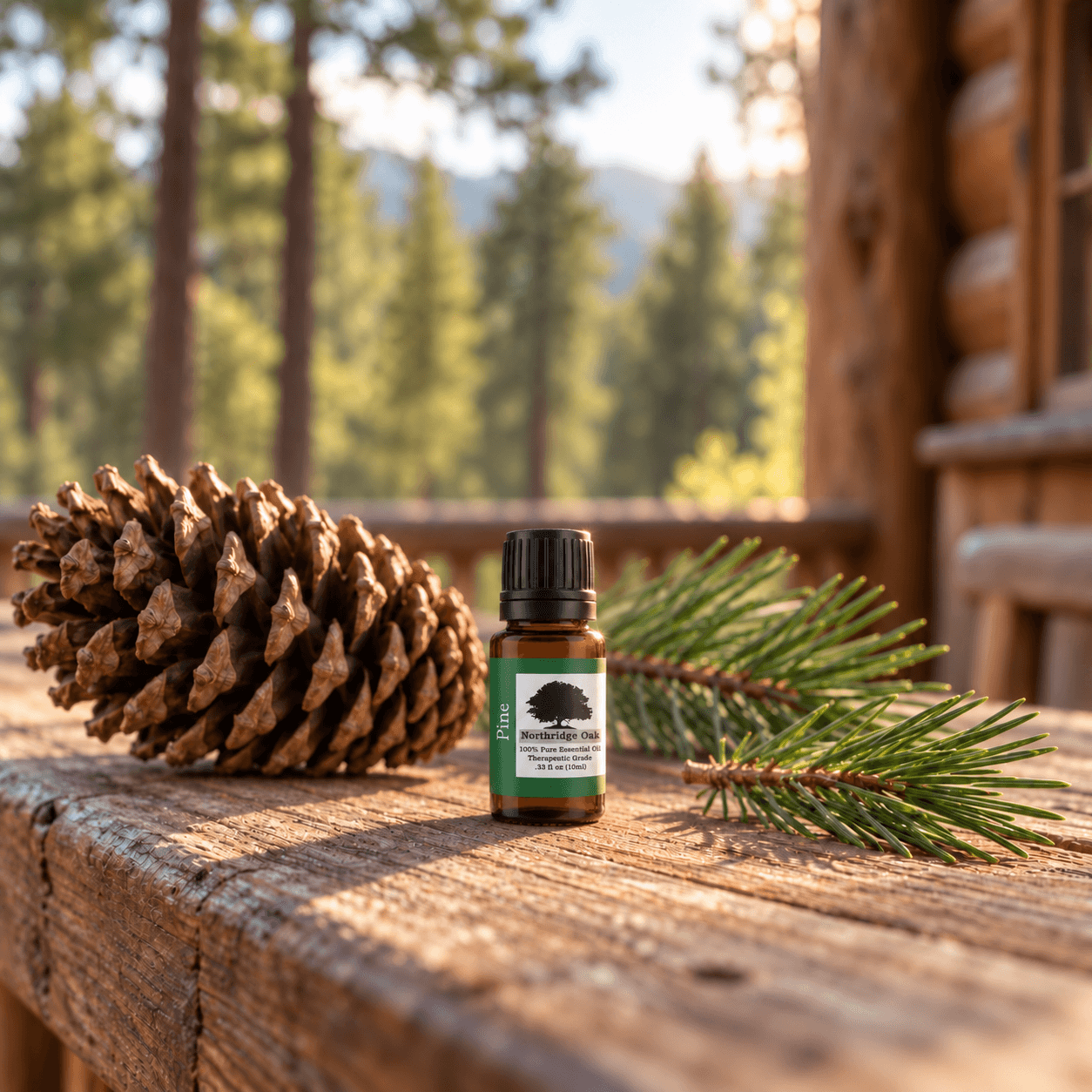
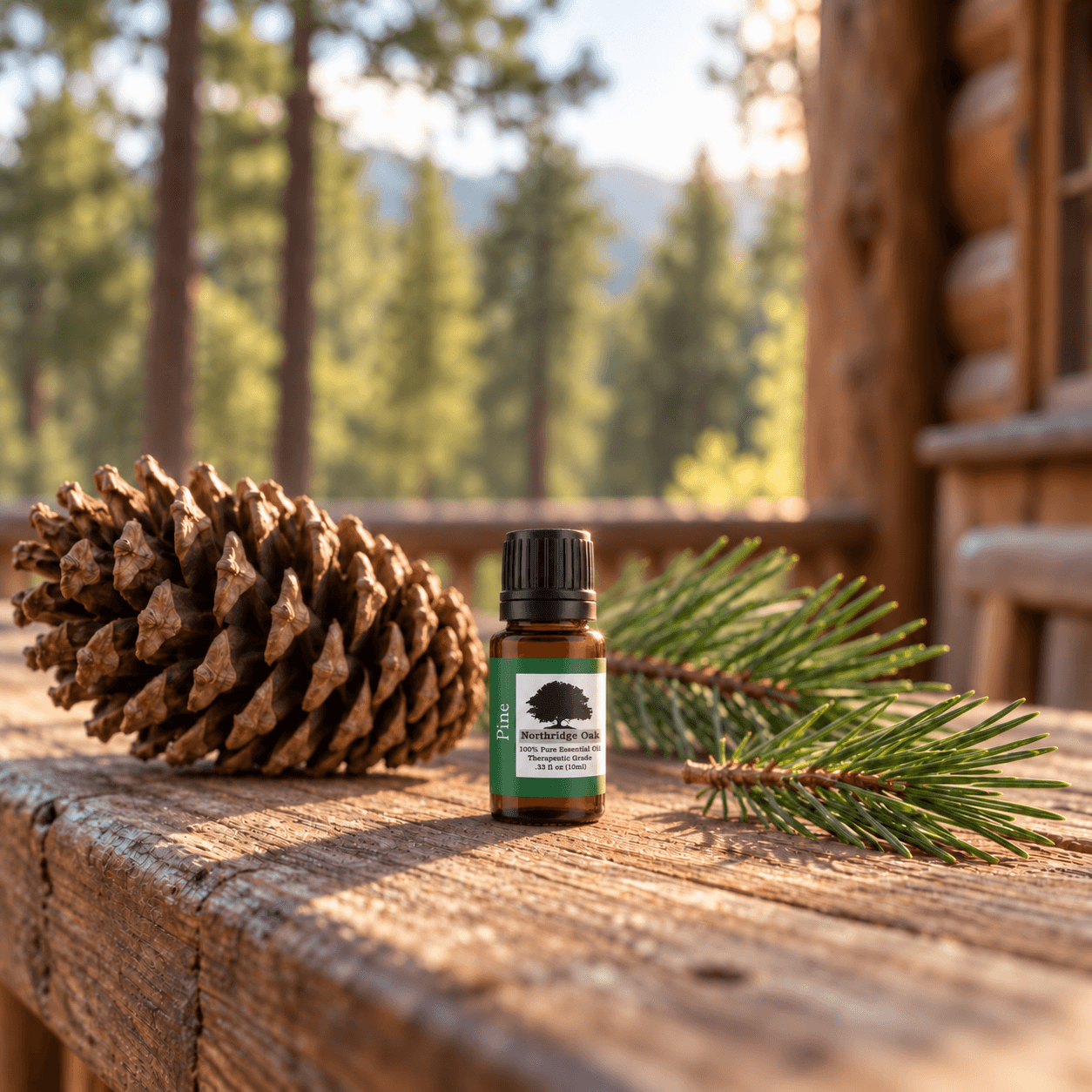
10. Pine
Pine brings green air into Myrrh’s warmth. The contrast is beautiful: fresh needles above resin and bark. Cedarwood can bridge the two for a blend that feels like standing beneath evergreens after the sun has warmed the forest floor.
11. Frankincense
Frankincense deserves a place in both the resin and wood families because of the way it changes Myrrh. It is brighter, more open and gently citrus-like. Myrrh gives it depth; Frankincense gives Myrrh space. Begin with two parts Frankincense to one part Myrrh.
12. Rosemary
Rosemary adds an herbal lift that keeps Myrrh from feeling too still. This pairing is crisp, resinous and unexpectedly lively. Add Lemon or Bergamot when you want a daytime blend for creative work.
13. Bay Laurel
Bay Laurel brings fresh spice and a green aromatic edge. It makes Myrrh feel warmer and more energetic without covering the resin. Blood Orange rounds the pairing into a welcoming diffuser blend.
For a Deep, Earthy Myrrh Blend
When you want Myrrh to feel rich, atmospheric and long-lasting, pair it with another base note. A small amount goes a long way, and citrus or floral notes can provide the lift.
14. Patchouli
Patchouli and Myrrh create an earthy perfume with real staying power. Use one drop of each beneath several drops of Bergamot or Blood Orange. The citrus appears first, then the deeper notes become warmer and smoother as the blend rests.
15. Vetiver
Vetiver adds dry root, earth and quiet depth. Together with Myrrh, it creates a contemplative aroma that works beautifully beside Frankincense. Begin lightly: one drop Myrrh and one drop Vetiver can anchor five or six brighter drops.
16. Cedarwood and Patchouli Together
Sometimes the most beautiful partner is a small accord rather than a single oil. Cedarwood gives structure, Patchouli adds earth and Myrrh brings resinous warmth. Bergamot turns the combination into a sophisticated natural perfume.
For a Warm, Spiced Myrrh Blend
Spices bring out Myrrh’s glowing side. They are naturally expressive, so one drop is usually enough to transform the entire blend.
17. Clove
Clove makes Myrrh feel festive and full. Pair one drop Clove with one drop Myrrh, two drops Frankincense and three drops Blood Orange. The orange keeps the warmth cheerful and welcoming.
18. Cinnamon Leaf
Cinnamon Leaf is drier and woodier than Clove. It blends naturally with Cedarwood and Myrrh for an aroma that feels like warm timber and spice. Add Blood Orange when you want a brighter finish.
Three Blends to Try First
Golden and Welcoming
Blend: 3 drops Blood Orange + 2 drops Frankincense + 1 drop Myrrh.
This is the easiest introduction to Myrrh. It feels bright at first and warm at the finish.
Soft and Peaceful
Blend: 3 drops Lavender + 2 drops Frankincense + 1 drop Myrrh.
Lavender gives the two resins a gentle, familiar heart. Try it when the house begins to quiet down.
Deep and Polished
Blend: 4 drops Bergamot + 2 drops Cedarwood + 1 drop Patchouli + 1 drop Myrrh.
This perfume-like blend opens with elegant citrus and settles into wood, earth and resin.
Make the Blend Your Own
Start with the feeling you want, choose one partner from that section and let Myrrh remain the base. Smell the blend after it has had time to settle. If you want more light, add citrus. If you want softness, add Lavender. If you want depth, add Cedarwood, Patchouli or Vetiver.
Change only one drop at a time and write down the combinations you love. Soon Myrrh will become less of a mystery and more of a trusted way to give any blend warmth and character.
For finished home recipes, visit 20 Myrrh Essential Oil diffuser blends. For fragrances you can wear, continue with the Myrrh natural perfume guide.
Enjoy Every Blend With Confidence
For topical use, dilute the complete blend in a suitable carrier oil and begin with a gentle concentration. In the diffuser, use fresh airflow and choose the amount that suits your room and household. The Myrrh safety and dilution guide keeps those decisions clear and approachable.
Continue Exploring Myrrh Essential Oil
Once you discover the version of Myrrh you love, there are many ways to bring it into everyday life.
- Start with the complete Myrrh Essential Oil benefits, uses, blends and safety guide.
- Create a warm home atmosphere with 20 Myrrh diffuser blends.
- Try 12 warm, enjoyable Myrrh recipes.
- Bring the aroma into personal care with Myrrh for skin and face and Myrrh massage and body oils.
- Compare the classic resin pair in Myrrh vs. Frankincense.
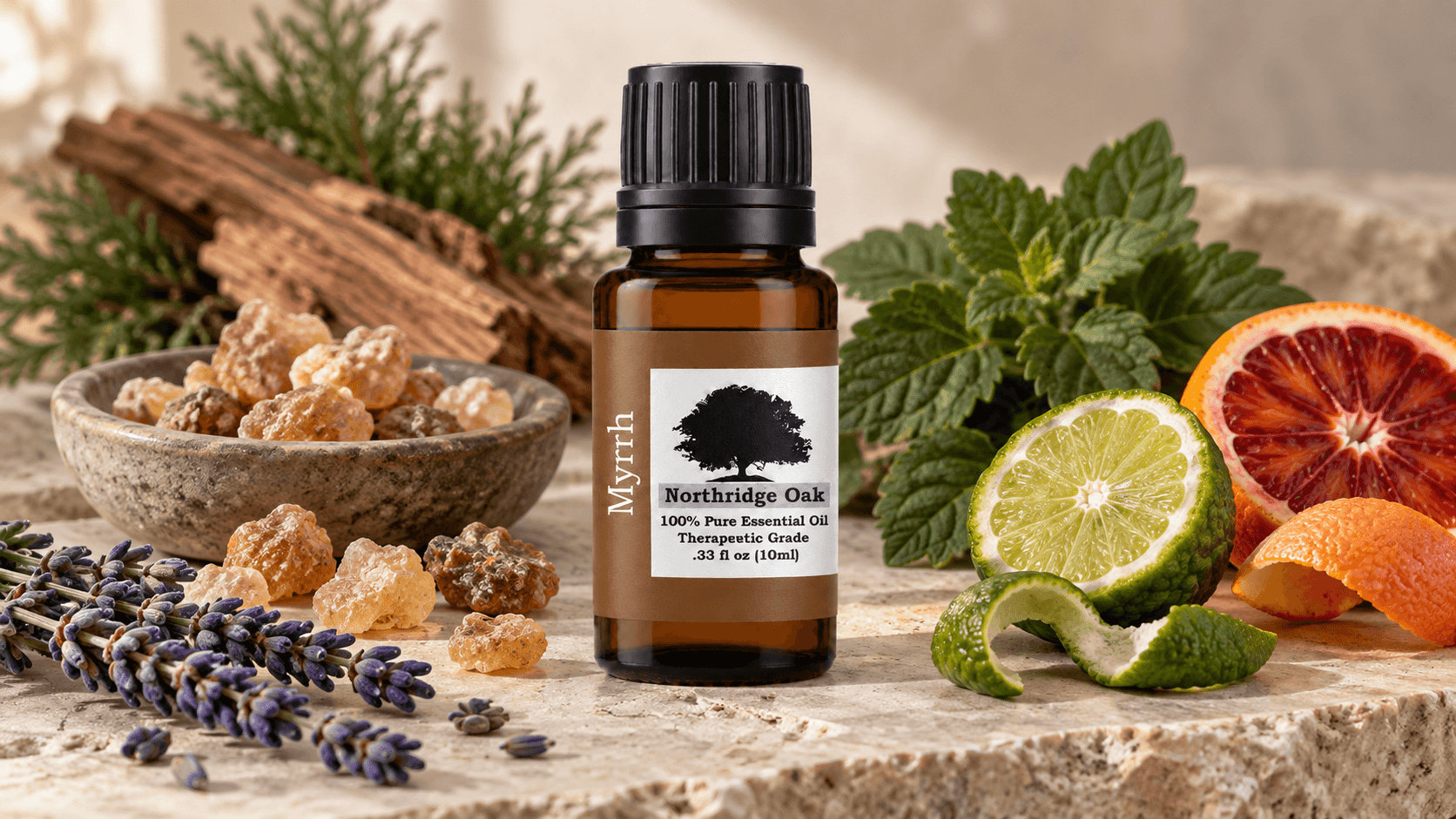
- Shop Northridge Oak Myrrh Essential Oil.
Begin With the Direction That Sounds Like You
Choose Blood Orange for a golden, friendly Myrrh; Lavender for something soft; Cedarwood for warm woods; or Frankincense for the timeless resin pairing. One drop is enough to show you how much depth Myrrh can bring.
Northridge Oak Myrrh Essential Oil is a 100% pure, undiluted oil whose small-batch quality and third-party GC/MS testing make it a beautiful foundation for thoughtful blending. Give it a bright partner, a little time and the chance to become one of the most rewarding oils in your collection.
These statements have not been evaluated by the Food and Drug Administration. Northridge Oak products are not intended to diagnose, treat, cure or prevent disease.