Table of Contents
- Where the Story Begins
- Myrrh on the Ancient Trade Routes
- Perfume and Cosmetics
- Myrrh and Frankincense: Botanical Relatives
- What Modern Science Adds
- From Resin Tear to Essential Oil Bottle
- Bring the Story Into Your Home
- Experience History Without Recreating It
- Continue Exploring Myrrh Essential Oil
- An Ancient Aroma for an Everyday Moment
- Frequently Asked Questions
Long before Myrrh became a familiar name on an essential-oil bottle, it traveled as fragrant resin through deserts, ports and ancient marketplaces. Its aroma was valuable enough to cross continents and memorable enough to remain part of perfume, cosmetics and ceremonial life for centuries.
Myrrh history is more than a timeline. It is the story of a remarkable desert plant and the people who recognized that the resin held something worth carrying, composing with and returning to. Modern Myrrh Essential Oil gives us an approachable way to experience part of that aromatic story in our own homes.
Where the Story Begins
Myrrh comes from trees and shrubs in the Commiphora genus, members of the resin-rich Burseraceae family. These plants are adapted to dry landscapes where heat, bright sun and limited water shape the way they grow.
When resin emerges through the bark, it meets the air and slowly hardens into golden, amber and reddish-brown tears. Those pieces are visually beautiful, easy to carry and intensely aromatic—the qualities that helped Myrrh become a prized trade material.
Myrrh on the Ancient Trade Routes
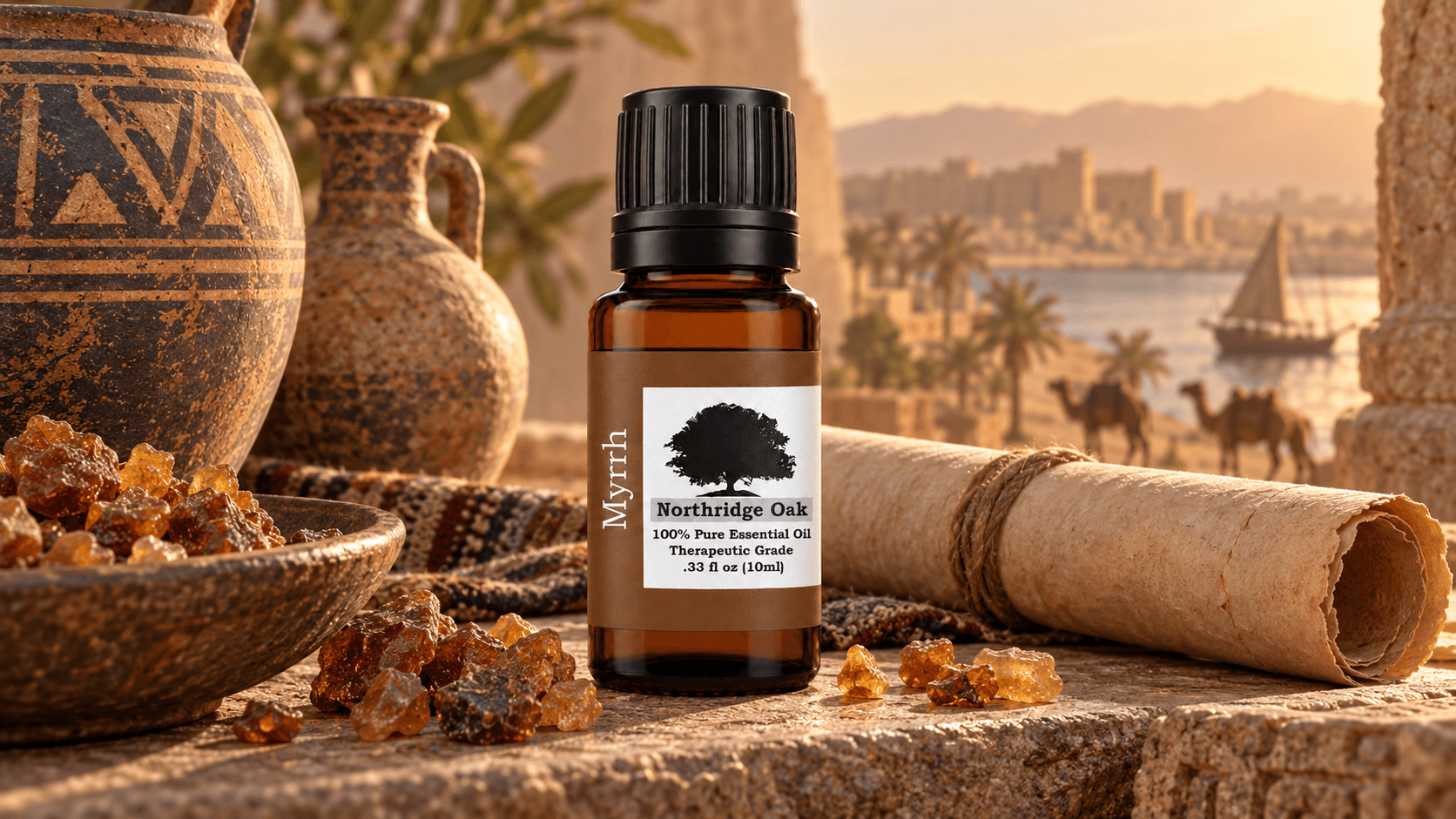
Resins moved through networks connecting the Horn of Africa and southern Arabia with Mediterranean and Asian markets. Camel caravans carried aromatic materials inland, while ports linked them to wider maritime trade.
Myrrh’s value came from more than rarity. A small amount could bring fragrance to perfume, cosmetics, incense and ceremonial preparations. The aroma was distinctive and lasting, and the hardened resin traveled well.
Imagine opening a bundle after weeks of travel and meeting that deep balsamic fragrance again. The resin connected distant landscapes through a shared appreciation for scent. That human part of the story helps Myrrh feel immediate: people valued it not only as merchandise, but as an aroma capable of making a space, preparation or personal ritual feel special.
The Metropolitan Museum of Art’s account of trade between Arabia and the empires of Rome and Asia places these aromatics within a larger story of kingdoms, routes and cultural exchange.
Perfume and Cosmetics
Myrrh has the kind of base-note character that perfumers still value today. It is warm, resinous, woody and persistent. In historical aromatic preparations, it could deepen a composition and help the fragrance feel rich and complete.
It also belonged naturally in cosmetic traditions because scent and care were often intertwined. The forms and formulas changed across cultures and centuries, but the attraction remained recognizable: Myrrh made a preparation feel precious, aromatic and memorable.
Myrrh and Frankincense: Botanical Relatives
Myrrh comes from Commiphora; Frankincense comes from Boswellia. Both belong to the Burseraceae family and both produce aromatic resin, yet their personalities are distinct.
Frankincense tends to feel brighter and more open. Myrrh is deeper and more balsamic. Together they create the aromatic equivalent of light and foundation. That complementary relationship helps explain why the pair has endured across history and why it remains so satisfying in modern diffusion and perfume.
Explore those differences in Myrrh vs. Frankincense.
What Modern Science Adds
Contemporary researchers have identified a complex mixture of terpenoids and other constituents in Commiphora myrrha. Scientific reviews connect that chemistry with the botanical’s long use in fragrance, cosmetics and traditional preparations.
The positive lesson is that Myrrh is chemically rich, worthy of continued investigation and still relevant to perfumers and formulators. Its long aromatic history now has a growing body of modern research beside it. The open-access Myrrh chemistry and pharmacology review offers a detailed look at that ongoing research.
From Resin Tear to Essential Oil Bottle
Ancient users primarily knew the resin and preparations made from it. Modern Myrrh Essential Oil is distilled from that aromatic botanical material, offering a concentrated expression of the resin’s volatile fragrance.
Essential oil gives us a convenient, concentrated way to explore the volatile aroma. We can measure one drop into a diffuser, dilute it in a personal perfume or place it on a scent strip and follow how it changes over time.
That connection makes the history even more interesting. The modern bottle allows us to experience part of the resin’s fragrance while using methods suited to contemporary home life.
Bring the Story Into Your Home
A Modern Heritage Diffuser Blend
Blend: 3 drops Frankincense + 2 drops Blood Orange + 1 drop Myrrh.
Frankincense creates a bright resinous heart, Blood Orange adds a golden opening and Myrrh leaves the warm finish. Diffuse it while reading about the ancient trade routes or simply while enjoying a quiet evening at home.
A Simple Scent-Strip Experience
Place one drop Myrrh on a paper strip and return to it over an hour. Notice the dry resin first, then the wood, amber and balsamic warmth. This small exercise may offer the clearest explanation of why people continued to value the aroma over so many centuries.
Experience History Without Recreating It
You do not need to imitate an ancient ceremony to appreciate Myrrh’s past. A diffuser blend, natural perfume or properly diluted body oil is enough to connect the modern experience with a fragrance that has traveled a remarkable distance through human history.
The history adds another layer to the aroma. Myrrh is no longer simply “earthy.” It becomes the scent of a resilient tree, hardened resin, long routes and generations of people drawn to the same warm, persistent fragrance.
Continue Exploring Myrrh Essential Oil
Follow the story from ancient resin into modern aromatic life.
- Start with the complete Myrrh benefits and uses guide.
- Learn what Myrrh smells like.
- Create a modern home aroma with 20 Myrrh diffuser blends.
- Explore Myrrh as a base note in the natural perfume guide.
- Try 12 warm Myrrh recipes.
- Shop Northridge Oak Myrrh Essential Oil.
An Ancient Aroma for an Everyday Moment
Open the bottle, give Myrrh air and notice the warm resinous depth. The history may be grand, but experiencing the fragrance can be wonderfully simple.
Northridge Oak Myrrh Essential Oil brings this historic resin into modern aromatic life as a 100% pure, undiluted oil that is small-batch bottled and third-party GC/MS tested. Let one drop reveal why this aroma has held human attention for so long.
These statements have not been evaluated by the Food and Drug Administration. Northridge Oak products are not intended to diagnose, treat, cure or prevent disease.