Table of Contents
Peppermint is one of the most versatile essential oils in the bottle—icy and bright one moment, soft and refreshing the next, depending on the partners you choose. The real secret is proportion. Because Peppermint projects quickly and strongly, it usually works best as one part of the blend rather than an equal share of every note.
This guide shows you which oils love Peppermint, why they work so well together, and the simple ratios that keep the mint bright without letting it take over. When you want exact ready-to-use recipes, head to our collection of peppermint essential oil diffuser blends. For the full range of projects, start with the pillar guide to 20 peppermint essential oil uses and everyday recipes.
Quick answer: What blends well with peppermint?
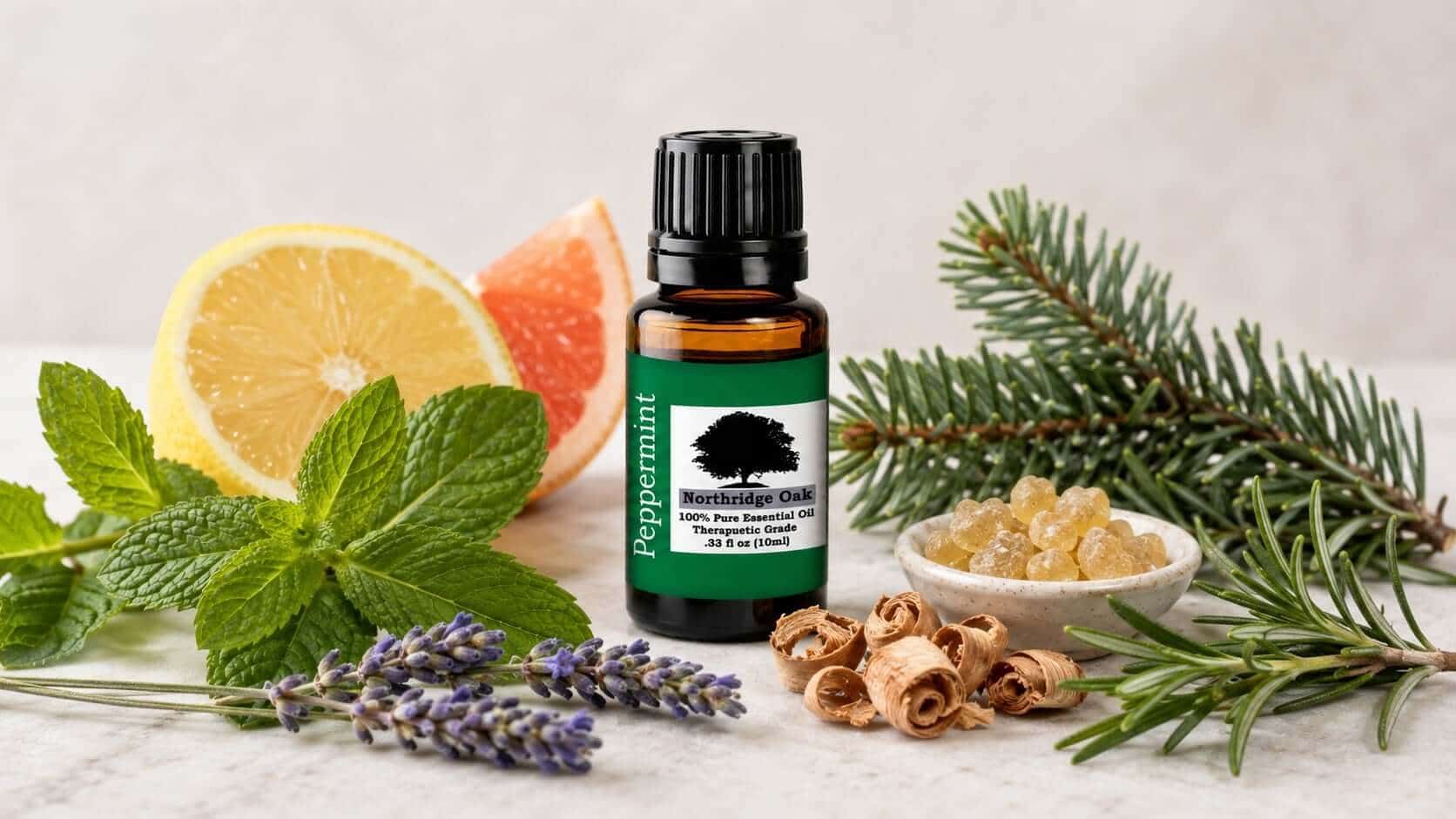
Peppermint pairs beautifully with citrus (Lemon, Grapefruit, Bergamot), florals (especially Lavender), herbs (Rosemary, Eucalyptus, Spearmint), evergreens (Pine, Balsam Fir), woods (Cedarwood), and resins (Frankincense). Start with a simple ratio of 1 part Peppermint : 2 parts main partner : 1 part grounding oil, then adjust by nose. This keeps the mint crisp and lively without overwhelming the rest of the blend.
Why you’ll love blending with peppermint
- Endless creative freedom – One bottle of Peppermint can create bright morning blends, soft evening blends, forest blends, spa blends, and everything in between.
- Reliable starting ratios – You no longer have to guess. A simple 1:2 framework works for almost every pairing.
- Better balance every time – Learn how to keep Peppermint as a sparkling accent instead of letting it dominate.
- Mood-based confidence – Match the right partners to the feeling you want—optimistic, focused, calming, or outdoorsy.
- Smoother DIY results – Whether you are filling a diffuser, making a roller, or creating a shower steamer, the same principles apply.
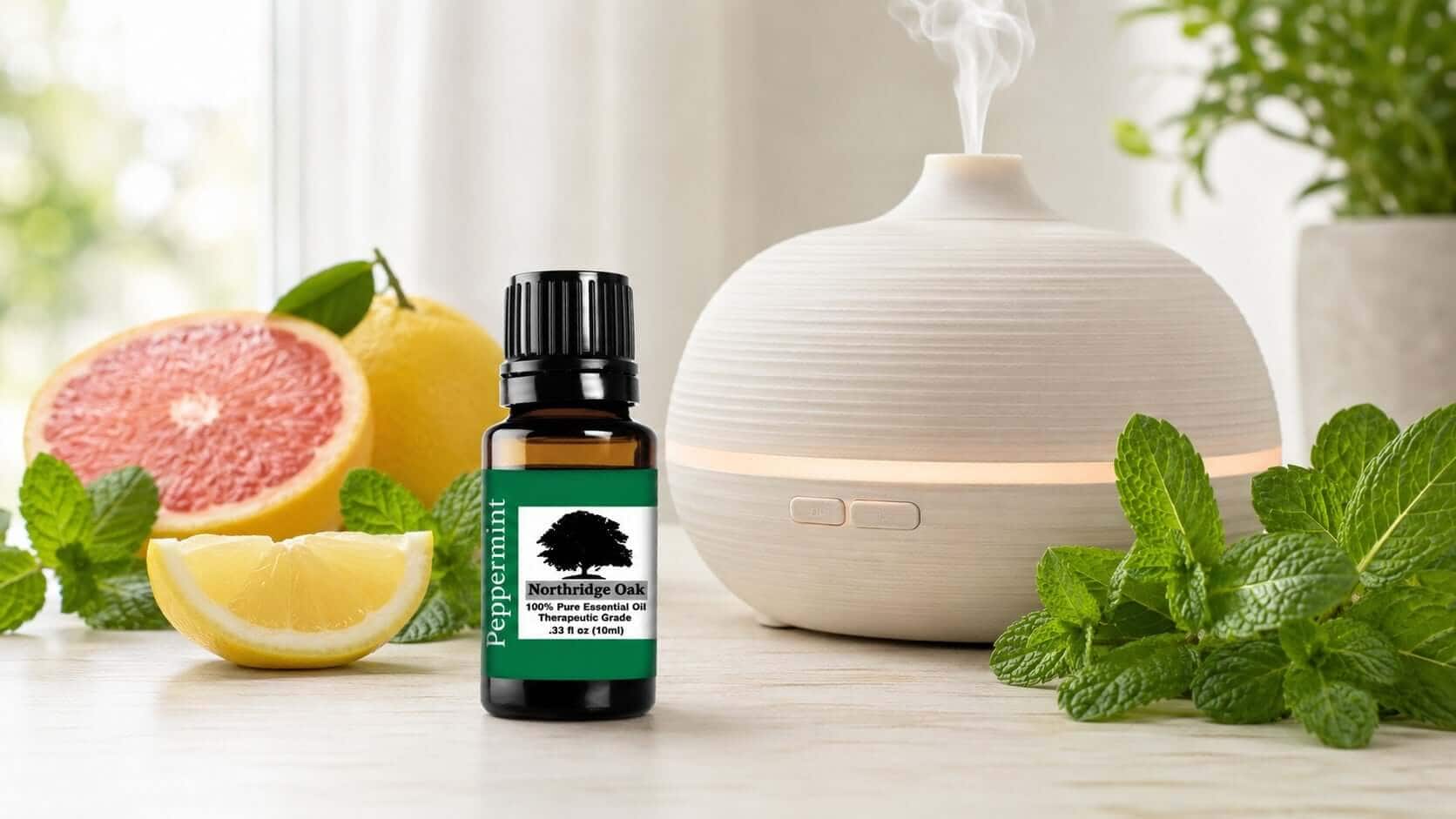
Ready to start blending? Reach for Northridge Oak Peppermint Essential Oil—100% pure, undiluted Mentha piperita and third-party GC/MS tested—so every drop you add is true to the plant.
The easiest peppermint blending ratio
Start with this friendly framework:
- 1 part Peppermint
- 2 parts of your main partner
- 1 part of a grounding or smoothing oil
Example:
- 2 drops Peppermint
- 4 drops Grapefruit
- 2 drops Frankincense
If Peppermint still feels too strong, simply halve it. Blending is sensory—ratios are helpful starting points, not rigid rules.
Quick peppermint pairing chart
| Partner oil | What it adds | Starting ratio (Peppermint : partner) |
|---|---|---|
| Lemon | Clean, bright citrus | 1:2 |
| Grapefruit | Sparkling, bittersweet lift | 1:2 |
| Blood Orange | Juicy sweetness | 1:2 |
| Bergamot | Soft citrus-floral complexity | 1:2 |
| Lavender | Floral softness | 1:2 or 1:3 |
| Eucalyptus | Bracing, camphoraceous freshness | 1:1 |
| Rosemary | Clear herbal character | 1:1 |
| Spearmint | Sweet green mint | 1:2 |
| Pine | Dry evergreen air | 1:2 |
| Balsam Fir | Rounded forest depth | 1:2 |
| Cedarwood | Dry, quiet wood | 1:2 |
| Frankincense | Resinous, smooth grounding | 1:2 |
| Tea Tree | Sharp green medicinal aroma | 1:1 |
| Geranium | Rosy-green fullness | 1:2 |
| Vanilla-style aroma | Sweet, creamy contrast | 1:3 |
These ratios describe aromatic balance only. They do not establish a safe skin dilution.
Citrus oils that blend with peppermint
Lemon
The classic “fresh and clean” pairing. Lemon adds sparkle; Peppermint extends the crispness. Perfect for daytime diffusion and home-care aromas.
Grapefruit
Rounder and less sharp than Lemon. It makes Peppermint feel cheerful, modern, and uplifting.
Blood Orange
Brings a juicy sweetness that pulls Peppermint toward a bright, almost candy-like profile—without needing a fragrance oil.
Bergamot
Bridges citrus and floral notes, making Peppermint feel more polished and sophisticated.
Note: Some expressed citrus oils can increase sun sensitivity in leave-on skin products. Always check the specific extraction method and safety information before topical use.
Florals that soften peppermint
Lavender
The easiest and most forgiving floral partner. Use two or three parts Lavender to one part Peppermint so the mint stays present without leading.
Geranium
Creates a rosy-green combination with more personality. A touch of citrus helps connect the floral heart to Peppermint’s cool opening.
Roman Chamomile
Its soft, apple-like aroma can gently round Peppermint, but it is distinctive—usually only a small amount is needed.
Herbs and mints that amplify freshness
Eucalyptus
Both oils are strong. Start at equal parts, then add citrus, Lavender, or a forest note to keep the blend dimensional and interesting.
Rosemary
Gives Peppermint a clear herb-garden character. Ideal for daytime diffuser blends and fresh scalp aromas.
Spearmint
Fills out the mint profile with natural sweetness. Let Spearmint be the main note and use Peppermint as the cool accent. Our Peppermint vs. Spearmint comparison explains their chemistry and how to substitute wisely.
Tea Tree
Creates a very sharp, green profile. Citrus or Lavender softens the pair and makes it more approachable.
Evergreen oils that create cool forest blends
Pine
Peppermint supplies the sensation of cool air; Pine supplies dry needles and forest structure.
Balsam Fir
Fuller and slightly sweeter than dry pine. Excellent for winter and holiday blends.
Cedarwood
Slows the composition down. Its quiet, dry base gives Peppermint room to sparkle without rushing the whole blend.
Resins that ground peppermint
Frankincense
One of Peppermint’s most versatile partners. Its resinous, lightly citrus character connects mint to woods, florals, and citrus with ease.
Try this simple three-part structure:
- 1 part Peppermint
- 2 parts Frankincense
- 2 parts citrus or Lavender
Build a blend by mood
Bright and optimistic
Peppermint + Grapefruit + Bergamot
Crisp and task-oriented
Peppermint + Rosemary + Lemon
(Explore more ideas in peppermint essential oil for focus and energy.)
Soft and balanced
Peppermint + Lavender + Frankincense
Outdoorsy and fresh
Peppermint + Pine + Cedarwood
Sweet mint
Peppermint + Spearmint + Blood Orange
Spa-like
Peppermint + Eucalyptus + Lavender
How to test a blend before filling the diffuser
Use a fragrance test strip or two separate cotton swabs:
- Place one drop of each oil on separate ends of the strips.
- Hold them together below your nose without touching the skin.
- Move the Peppermint strip farther away if it dominates.
- Write down the ratio you prefer.
- Make a small diffuser test before creating a larger master bottle.
Smell the blend right away and again after 15–30 minutes. Top notes change quickly; woods and resins linger.
Turning an aroma ratio into a topical blend
A pleasing aromatic ratio does not equal a safe skin dilution. First decide the total concentration, then divide those essential-oil drops among the partners.
Example: a 1% blend in 30 mL of carrier uses approximately six total essential-oil drops. For a 1:2 Peppermint-to-Lavender ratio:
- 2 drops Peppermint
- 4 drops Lavender
- 30 mL carrier oil
Always use the complete peppermint essential oil dilution chart before making any leave-on product.
Common peppermint blending mistakes (and how to avoid them)
Using equal parts of everything
Peppermint can easily overwhelm Lavender, citrus, and woods at a 1:1 ratio. Begin with less mint.
Adding more oil before taking an aroma break
Your nose adapts quickly. Step away, return later, and reassess before increasing any oil.
Ignoring the project
A diffuser blend, cleaning spray, shower steamer, and skin oil each have different formulation and safety needs. Never copy drop counts from one format to another.
Choosing by common name alone
Always check botanical names. Peppermint, Spearmint, Cornmint, and Pennyroyal are not interchangeable “mint oils.”
100% Pure Peppermint Essential Oil – 10 mL
$7.50
100% Pure Peppermint Essential Oil Bright, crisp and unmistakably minty, Northridge Oak Peppermint Essential Oil brings a refreshing aroma to diffuser blends, personal-care routines and household DIY recipes. Its naturally cool, invigorating scent is a favorite when you want your… read more

Start blending with confidence
Peppermint is far more versatile than many people realize. With a simple ratio, a few favorite partners, and a quick aroma test, you can create bright morning blends, soft evening blends, forest walks in a bottle, and everything in between.
Shop Northridge Oak Peppermint Essential Oil and begin exploring these pairings today. One 10 mL bottle opens the door to countless diffuser recipes, rollers, and aromatic rituals—all while helping you live the life you love.
Continue your Peppermint Learning Center
Start with the pillar guide to 20 peppermint essential oil uses, DIY recipes, and refreshing aromatherapy, then explore every supporting guide:
- Peppermint essential oil diffuser blends
- Peppermint oil for hair and scalp
- Peppermint essential oil for headaches
- Peppermint essential oil for focus and energy
- Peppermint essential oil cleaning recipes
- Peppermint oil spray for bugs
- DIY peppermint shower steamers
- How to dilute peppermint essential oil
- Peppermint vs. Spearmint essential oil
Sources
- Wu et al.: Chemical Composition and Antioxidant Properties of Essential Oils from Peppermint, Native Spearmint, and Scotch Spearmint
- Tisserand Institute: Dilution for Essential Oils
- NCCIH: Peppermint Oil—Usefulness and Safety
Essential oils are highly concentrated. Always follow appropriate usage and dilution guidance for each individual oil. Some oils require additional precautions, so familiarize yourself with an oil’s safety information before use. Keep essential oils out of reach of children and pets.
These statements have not been evaluated by the Food and Drug Administration. This content is for educational purposes and is not intended to diagnose, treat, cure, or prevent any disease.
Frequently Asked Questions
What is the best essential oil to mix with peppermint?
There is no single winner for every blend. Grapefruit is excellent for brightness, Lavender for softness, Eucalyptus for a brisk spa aroma, Frankincense for depth, and Cedarwood for grounding.
Does peppermint blend with Lavender?
Yes. Start with one part Peppermint to two or three parts Lavender so the floral note can soften the mint.
Does peppermint blend with Frankincense?
Very well. Frankincense makes Peppermint smoother and connects it to citrus, florals, or woods.
What citrus works best with peppermint?
Lemon is crisp, Grapefruit is bright and rounded, Blood Orange is sweet, and Bergamot is softly floral.
What wood oil works with peppermint?
Cedarwood is the easiest. It adds a dry base without competing with Peppermint’s top note.
Can peppermint and spearmint be mixed?
Yes. Use more Spearmint than Peppermint for a layered mint aroma that is sweet as well as cool.
How much peppermint should be in a blend?
Start with one part Peppermint to two parts of the main partner. Reduce it further when blending with delicate florals.
Can I use diffuser blend ratios on skin?
Not directly. Recalculate the total dermal concentration and check the safety guidance for every oil in the formula.