Table of Contents
- Quick answer
- Before you mix peppermint essential oil cleaning recipes
- 1. Everyday peppermint surface spray
- 2. Peppermint sink and stovetop scrub
- 3. Quick peppermint glass spray
- 4. Peppermint carpet and rug freshener
- 5. Peppermint trash-can freshening tabs
- 6. Peppermint closet freshener jar
- 7. Peppermint cleaning-day diffuser blend
- Cleaning and disinfecting are different jobs
- Surface combinations to avoid
- Continue your Peppermint Learning Center
- Sources
- FAQs
Peppermint is one of the easiest essential oils to associate with a clean space. Its brisk, green aroma feels especially satisfying in kitchens, mudrooms, closets, and anywhere the air has become stale. These peppermint essential oil cleaning recipes combine that fresh aroma with practical formulas for routine household care.
These recipes are designed for routine cleaning and freshening. They do not claim to sterilize or disinfect. When you need disinfection, use an EPA-registered product for the target organism and surface, following the label’s contact time and directions.
Quick answer
Peppermint oil can add a crisp aroma to routine household cleaning, but it does not turn a homemade formula into a disinfectant. The seven peppermint essential oil cleaning recipes below cover compatible sealed surfaces, sinks, glass, carpets, trash cans, closets, and cleaning-day diffusion. Always spot-test first and follow the surface or material manufacturer’s directions.
For the broader collection of household and self-care projects, start with 20 peppermint essential oil uses and DIY recipes.
Before you mix peppermint essential oil cleaning recipes
Essential oil and water separate. A small amount of liquid soap helps disperse oil during use, but the bottle should still be shaken before every spray. Label every container with the ingredients and date. If you are new to using peppermint oil for cleaning, start with a small batch so you can test the formula on the intended surface before making more.
Choose a 100% pure oil whose identity and quality are clear. Northridge Oak Peppermint Essential Oil is undiluted Mentha piperita and third-party GC/MS tested.
Always spot-test an inconspicuous area. Avoid spraying essential-oil mixtures on unfinished wood, natural stone, waxed finishes, delicate paint, acrylic, electronics, or any surface whose manufacturer warns against the ingredients.
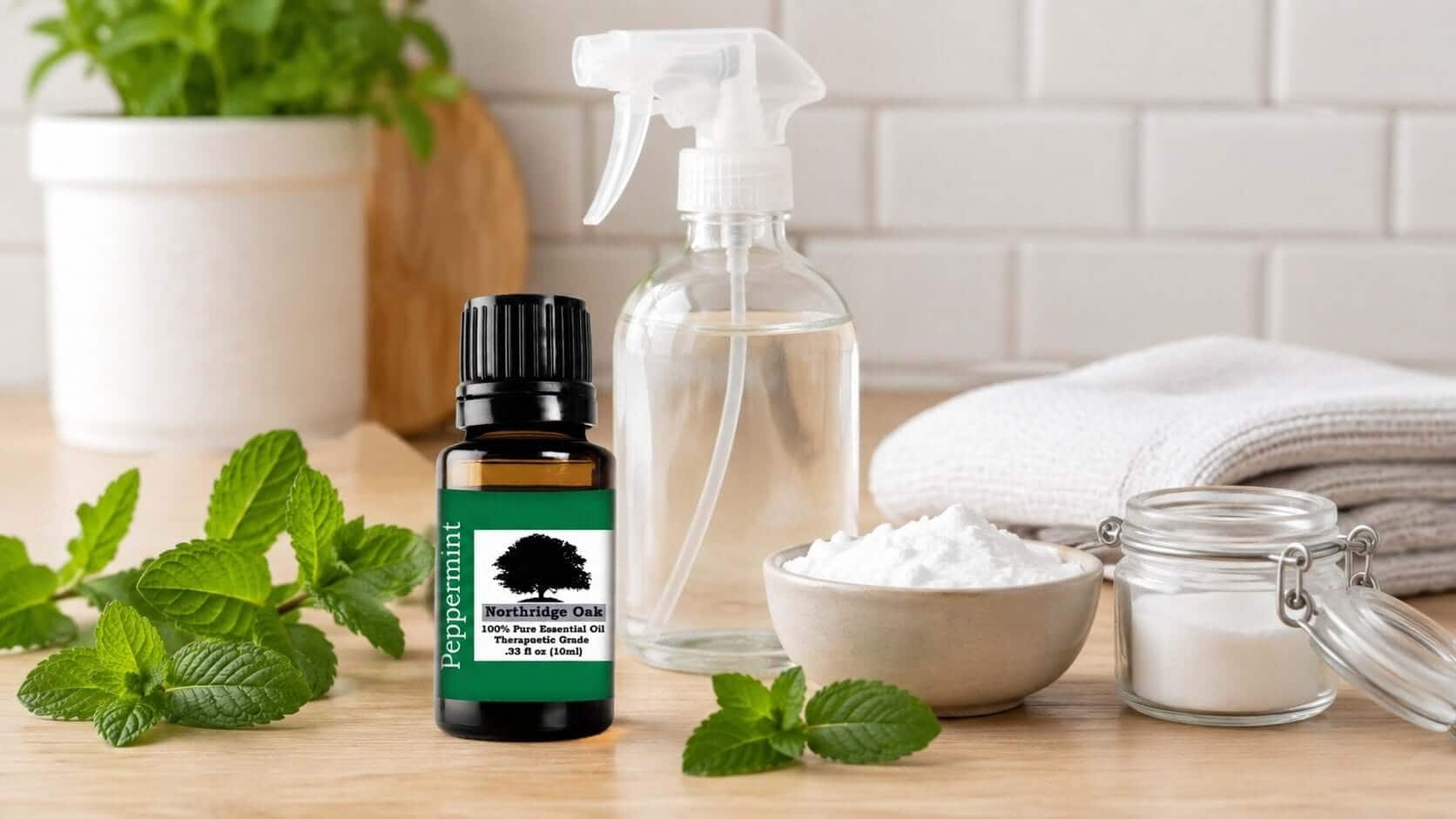
1. Everyday peppermint surface spray
Ingredients
2 cups distilled water
2 tablespoons unscented liquid castile soap
15 drops Peppermint Essential Oil
15 drops Lemon Essential Oil
16-ounce glass or chemical-resistant spray bottle
Directions
Add the water and soap to the bottle.
Add the essential oils.
Close gently and turn the bottle several times. Avoid creating excess foam.
Shake before each use.
Spray onto a cloth, wipe the surface, and dry.
Use this for compatible sealed counters, cabinet fronts, and other washable hard surfaces. Do not use on natural stone unless the manufacturer approves every ingredient.
2. Peppermint sink and stovetop scrub
Ingredients
1 cup baking soda
1 tablespoon unscented liquid castile soap
8 drops Peppermint Essential Oil
6 drops Lemon Essential Oil
Enough water to make a soft paste
Directions
Combine the baking soda, soap, and oils. Add water a teaspoon at a time. Apply with a damp non-scratch sponge, rub gently, and rinse completely.
Test first. Baking soda can scratch delicate or highly polished finishes.
3. Quick peppermint glass spray
Ingredients
1 1/2 cups distilled water
1/2 cup 70% isopropyl alcohol
1 teaspoon mild liquid dish soap
8 drops Peppermint Essential Oil
Directions
Combine in a labeled spray bottle and shake before use. Spray lightly on the cloth rather than saturating the glass, then buff with a clean lint-free cloth.
Avoid tinted films, coated screens, and device displays unless the manufacturer specifically approves the formula. This recipe is for streak-free cleaning and aroma; it is not a registered disinfectant.
4. Peppermint carpet and rug freshener
Ingredients
1 cup baking soda
10 drops Peppermint Essential Oil
10 drops Lavender Essential Oil
Jar with a shaker lid
Directions
Add the baking soda and oils to the jar.
Close and shake thoroughly.
Let the closed jar rest for several hours so the aroma distributes.
Patch test the rug.
Sprinkle lightly, keep people and animals out of the area, wait 15 minutes, and vacuum thoroughly.
Check your vacuum and carpet manufacturer’s guidance first. Skip this project if a child or pet could contact or ingest the powder.
5. Peppermint trash-can freshening tabs
Ingredients
1 cup baking soda
1/4 cup water, added gradually
15 drops Peppermint Essential Oil
10 drops Grapefruit Essential Oil
Silicone mini-muffin mold
Directions
Mix the baking soda and essential oils.
Add water slowly until the mixture holds together when pressed.
Pack into the mold.
Air-dry completely for 24–48 hours.
Store in a labeled, closed container.
Place one tab beneath a clean trash bag, where children and pets cannot reach it. Replace when the aroma fades. Do not put a tab into a sink disposal.
6. Peppermint closet freshener jar
Ingredients
1/2 cup baking soda
8 drops Peppermint Essential Oil
8 drops Cedarwood Essential Oil
Small jar with a vented lid
Mix, close, and place upright on a stable shelf. Refresh with a few drops as needed. Cedarwood gives the mint a dry, grounded finish. For more pairing ideas, see what blends well with peppermint essential oil.
Keep the jar inaccessible to children and pets, and do not allow the powder to contact clothing directly.
7. Peppermint cleaning-day diffuser blend
3 drops Peppermint
3 drops Lemon
2 drops Eucalyptus
Diffuse according to your appliance directions while you clean, then ventilate the room. The blend freshens the atmosphere but does not clean airborne pathogens. Browse more peppermint diffuser recipes.
Cleaning and disinfecting are different jobs
Cleaning removes soil and many germs from a surface. Disinfecting uses a product registered and labeled to kill specified microorganisms when used exactly as directed. Adding peppermint oil to water, vinegar, alcohol, or soap does not automatically create a disinfectant.
That distinction matters most in kitchens after raw meat, bathrooms during illness, and homes where a clinician has advised a specific infection-control routine. Clean first when directed, then use the appropriate registered disinfectant.
Surface combinations to avoid
Do not mix castile soap with vinegar in the same bottle; the acid disrupts the soap and can leave residue.
Do not use vinegar or acidic cleaners on marble, granite, limestone, or other acid-sensitive stone.
Do not combine household cleaners unless their labels explicitly permit it.
Never mix bleach with ammonia, vinegar, alcohol, or other cleaners.
Do not use essential oils on food-contact surfaces without washing and rinsing afterward.
100% Pure Peppermint Essential Oil – 10 mL
$7.50
100% Pure Peppermint Essential Oil Bright, crisp and unmistakably minty, Northridge Oak Peppermint Essential Oil brings a refreshing aroma to diffuser blends, personal-care routines and household DIY recipes. Its naturally cool, invigorating scent is a favorite when you want your… read more

Continue your Peppermint Learning Center
Start with the pillar guide to 20 peppermint essential oil uses, DIY recipes, and refreshing aromatherapy, then explore every supporting guide:
Sources
Essential oils are highly concentrated. Always follow appropriate usage and dilution guidance for each individual oil. Some oils require additional precautions, so familiarize yourself with an oil’s safety information before use. Keep essential oils out of reach of children and pets.
These statements have not been evaluated by the Food and Drug Administration. This content is for educational purposes and is not intended to diagnose, treat, cure, or prevent any disease.
Frequently Asked Questions
Is peppermint essential oil a disinfectant?
Laboratory research on essential-oil constituents does not make a homemade recipe an EPA-registered disinfectant. Use these formulas for routine cleaning and aroma, not for a germ-kill claim.
Can I mix peppermint oil with vinegar?
You can add it to some vinegar-based surface cleaners, but vinegar is unsuitable for natural stone and several finishes. Do not combine vinegar with castile soap or bleach.
Why does the oil float in my spray bottle?
Oil and water do not naturally mix. A little soap helps dispersion, but you still need to shake the bottle before every use.
Can I use peppermint cleaner on granite?
Only if the stone and sealer manufacturer approves every ingredient. When in doubt, use a cleaner specifically formulated for natural stone.
How long do homemade cleaners last?
Make small batches, label the date, and store away from heat and sunlight. Water-based DIY products lack a validated preservative system; discard them if appearance, odor, or texture changes.
Can peppermint oil remove mold?
Do not rely on a DIY peppermint spray for a mold problem. Moisture control, safe removal, and correction of the underlying leak or humidity are the priorities.
Is peppermint cleaning spray safe around pets?
Prevent animals from contacting wet spray or licking treated surfaces. Ventilate, store supplies securely, and ask a veterinarian about species-specific concerns.
Can I spray this formula to keep bugs away?
Cleaning removes crumbs and residue that attract pests. For a targeted entry-point formula and realistic expectations, use our guide to peppermint oil spray for bugs.