Table of Contents
- What the research says about peppermint aroma
- Why aroma can become a focus cue
- Three peppermint focus diffuser blends
- Make a personal peppermint aroma inhaler
- A five-minute peppermint focus ritual
- Peppermint does not create physical energy
- Pairing peppermint with different work moods
- Safety for workspaces and study rooms
- Continue your Peppermint Learning Center
- Sources
- FAQs
Peppermint smells like a fresh start. Its cool, bright aroma cuts through a stale room and can make the transition into work or study feel immediate. Many people use peppermint essential oil for focus and energy because its cool, bright aroma can make a workspace feel fresh and purposeful. That experience is not the same as a medical treatment or a replacement for sleep—but researchers have found interesting associations between peppermint aroma, alertness, memory, and task performance.
The practical opportunity is to use peppermint as an environmental cue: when this aroma appears, it is time to clear the desk, silence distractions, and begin. For more ways to use the same bottle, see our pillar guide to peppermint essential oil uses and DIY recipes.
What the research says about peppermint aroma
In a small human study published in the International Journal of Neuroscience, participants completed cognitive tests under peppermint aroma, ylang-ylang aroma, or no aroma. The peppermint condition was associated with improved aspects of memory and increased subjective alertness.
That is promising, but it should be interpreted at the correct scale. A single small study cannot establish that peppermint reliably increases productivity for everyone. Aroma studies are difficult to blind completely, expectations can affect mood, and an appealing scent may work partly by changing the experience of the room.
The honest takeaway is still useful: peppermint aroma has been studied in people, early findings are encouraging, and it is easy to test as part of a sensible work routine.
Why aroma can become a focus cue
Human brains learn associations. If you consistently pair a distinct aroma with a specific behavior, the scent can become part of your transition ritual. The effect does not need to be dramatic to be valuable.
Try connecting peppermint to one well-defined action:
planning the day;
beginning a 25-minute work block;
reviewing notes before a study session;
resetting the room after lunch; or
taking a brief movement break during a long task.
The oil does not complete the task for you. It marks the moment you begin.
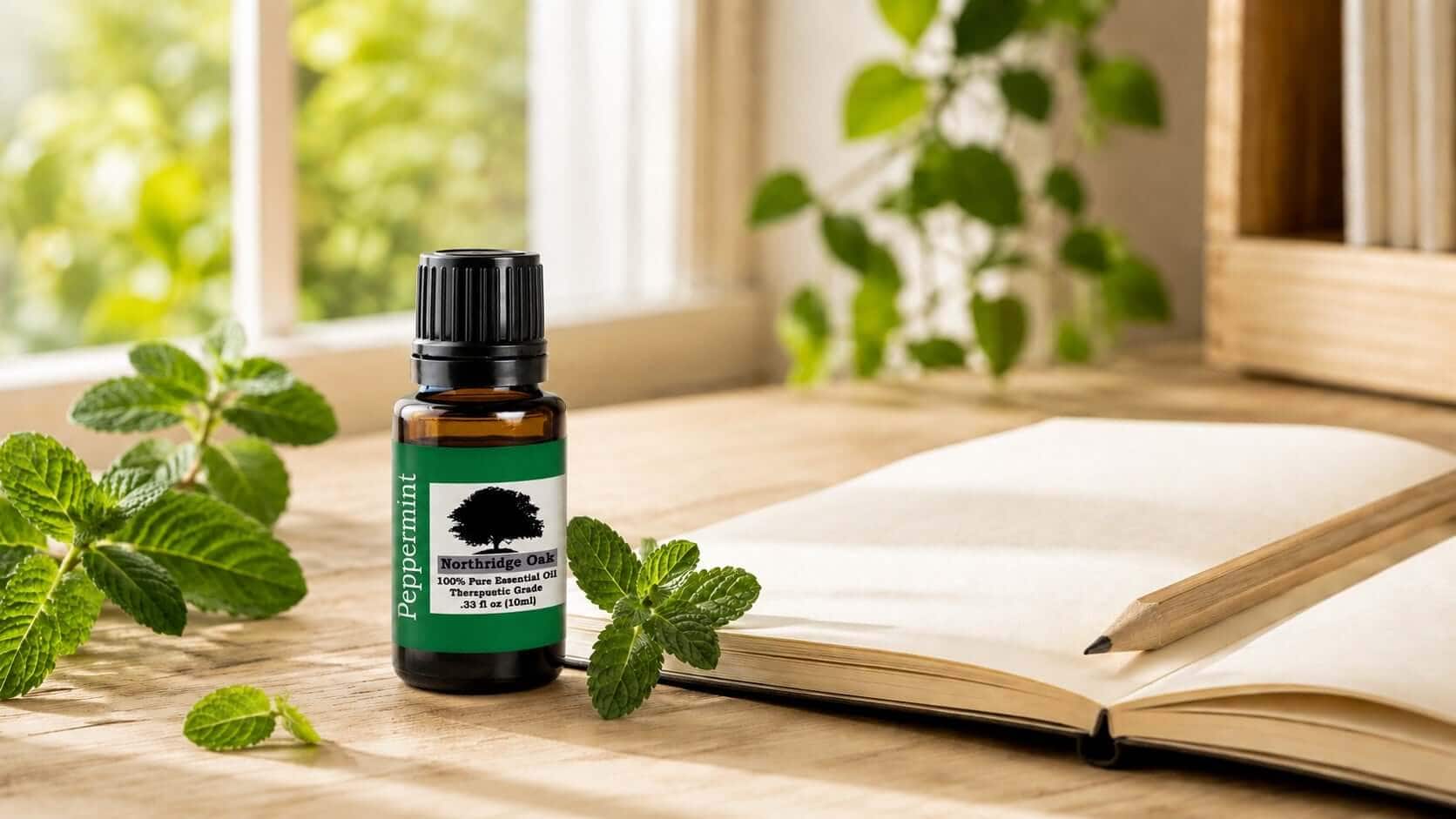
Use a clearly identified Mentha piperita oil. Northridge Oak Peppermint Essential Oil is 100% pure, undiluted, and third-party GC/MS tested.
Three peppermint focus diffuser blends
These recipes suit a typical 100–200 mL diffuser. Follow your device instructions and reduce the total in a small room.
Clear Desk
2 drops Peppermint
3 drops Lemon
2 drops Rosemary
This clean herbal-citrus blend has a crisp, purposeful character.
Deep Work
2 drops Peppermint
3 drops Frankincense
2 drops Cedarwood
Frankincense and Cedarwood soften peppermint’s sharpness and give the blend more depth.
Afternoon Lift
2 drops Peppermint
3 drops Grapefruit
2 drops Bergamot
Bright citrus keeps this blend cheerful without becoming overly sweet.
Find more combinations in 20 peppermint essential oil diffuser blends.
Make a personal peppermint aroma inhaler
A personal inhaler offers a brief, contained aroma without scenting an entire room.
You will need
8–10 drops Peppermint Essential Oil
5–7 drops Lemon or Grapefruit Essential Oil
1 blank aromatherapy inhaler with a cotton wick
Directions
Place the wick in a small glass dish.
Add the essential oils and let the wick absorb them.
Insert the wick into the inhaler and secure the cap.
Hold the inhaler below the nose and take one or two gentle breaths.
Replace the cap and store away from heat and children.
Do not insert it into the nostril. The goal is a brief aroma cue, not continuous or direct intranasal exposure.
A five-minute peppermint focus ritual
Put your phone on silent or move it out of reach.
Write down the single task you will finish next.
Start your diffuser or use the personal inhaler briefly.
Set a timer for 25 minutes.
Work only on the written task.
When the timer ends, stand up, drink water, and let the room air out.
Repeating this sequence is more important than increasing the amount of oil.
Peppermint does not create physical energy
Peppermint can smell awakening, but it does not supply calories, correct dehydration, repay sleep debt, or diagnose the cause of fatigue. If you feel tired, the basics still matter:
eat regular, nourishing meals;
drink water;
take movement and eye breaks;
get adequate sleep; and
seek appropriate care for persistent or unexplained fatigue.
Framing peppermint as a sensory tool makes it more useful, not less. You can enjoy the aroma without expecting it to perform a job it was never designed to do.
Pairing peppermint with different work moods
Peppermint changes character depending on its partner:
Peppermint + citrus: bright, optimistic, and fast-moving.
Peppermint + Rosemary: crisp, herbal, and task-oriented.
Peppermint + Frankincense: clear but grounded.
Peppermint + Cedarwood: fresh with a calm, woody base.
Peppermint + Lavender: softer and less stimulating.
Peppermint + Spearmint: sweet, green, and unmistakably minty.
Use our complete guide to oils that blend well with peppermint to design a signature work blend.
Safety for workspaces and study rooms
Begin with fewer drops than you think you need.
Diffuse intermittently and keep fresh air available.
Do not point diffuser mist directly at anyone.
Stop if the aroma causes nausea, coughing, headache, or eye irritation.
Keep peppermint away from the face of infants and young children because inhaled menthol can cause serious effects.
Give pets a way to leave the room and never apply essential oil to an animal.
Do not swallow essential oil in an attempt to increase energy.
Continue your Peppermint Learning Center
Start with the pillar guide to 20 peppermint essential oil uses, DIY recipes, and refreshing aromatherapy, then explore every supporting guide:
Sources
Essential oils are highly concentrated. Always follow appropriate usage and dilution guidance for each individual oil. Some oils require additional precautions, so familiarize yourself with an oil’s safety information before use. Keep essential oils out of reach of children and pets.
These statements have not been evaluated by the Food and Drug Administration. This content is for educational purposes and is not intended to diagnose, treat, cure, or prevent any disease.
Frequently Asked Questions
Does peppermint oil help you focus?
A small human aroma study found improvements in aspects of memory and subjective alertness under a peppermint condition. The evidence is encouraging but not strong enough to promise a consistent effect for everyone.
Is peppermint good for studying?
It can be a useful study cue. Pair a low-intensity aroma with the same repeatable routine—clear the desk, set a timer, and start one defined task.
How can I use peppermint essential oil for focus and energy?
Try brief intermittent diffusion or a personal inhaler used at a comfortable distance. Use the smallest amount that creates a pleasant aroma.
Is peppermint better than coffee for energy?
They are not equivalent. Coffee contains caffeine and peppermint aroma does not. Peppermint may make a room feel fresh, while sleep, food, hydration, and movement address physical energy more directly.
Can too much peppermint make focus worse?
Yes. An overpowering aroma can be distracting and may cause discomfort. Reduce the drops or turn the diffuser off if you keep noticing the scent instead of your work.
What blends best with peppermint for focus?
Lemon, Grapefruit, Rosemary, Frankincense, Bergamot, and Cedarwood are all useful partners. Choose citrus for brightness and woods or resins for a steadier atmosphere.
Can I put peppermint oil on my wrists while studying?
Only in a properly diluted topical formula and after a patch test. Diffusion or a personal inhaler is simpler if the goal is aroma rather than skin use.
Will using the same aroma every time make it stop working?
You may become less aware of a continuous scent. Use it briefly at the start of a session, take ventilation breaks, and let the routine—not constant aroma—do the heavy lifting.