Table of Contents
- Quick answer: Is peppermint worth trying?
- Why people use peppermint oil around entry points
- DIY peppermint entry-point spray
- Try peppermint oil spray for bugs for yourself
- Another easy option: peppermint cotton disks
- Four ways to help peppermint work its best
- Why people try peppermint oil for spiders
- Using peppermint around ant trails
- Using peppermint near suspected mouse entry points
- Is this a mosquito repellent for skin?
- Use peppermint thoughtfully around your home
- Know when to add more support
- A brief note about this DIY recipe
- Ready to put peppermint to work?
- Continue your Peppermint Learning Center
- Sources
- FAQs
Peppermint has the kind of bold, refreshing aroma you notice immediately. That unmistakable scent is one reason people love using it around window frames, doors, baseboards, and other places where unwanted visitors tend to appear.
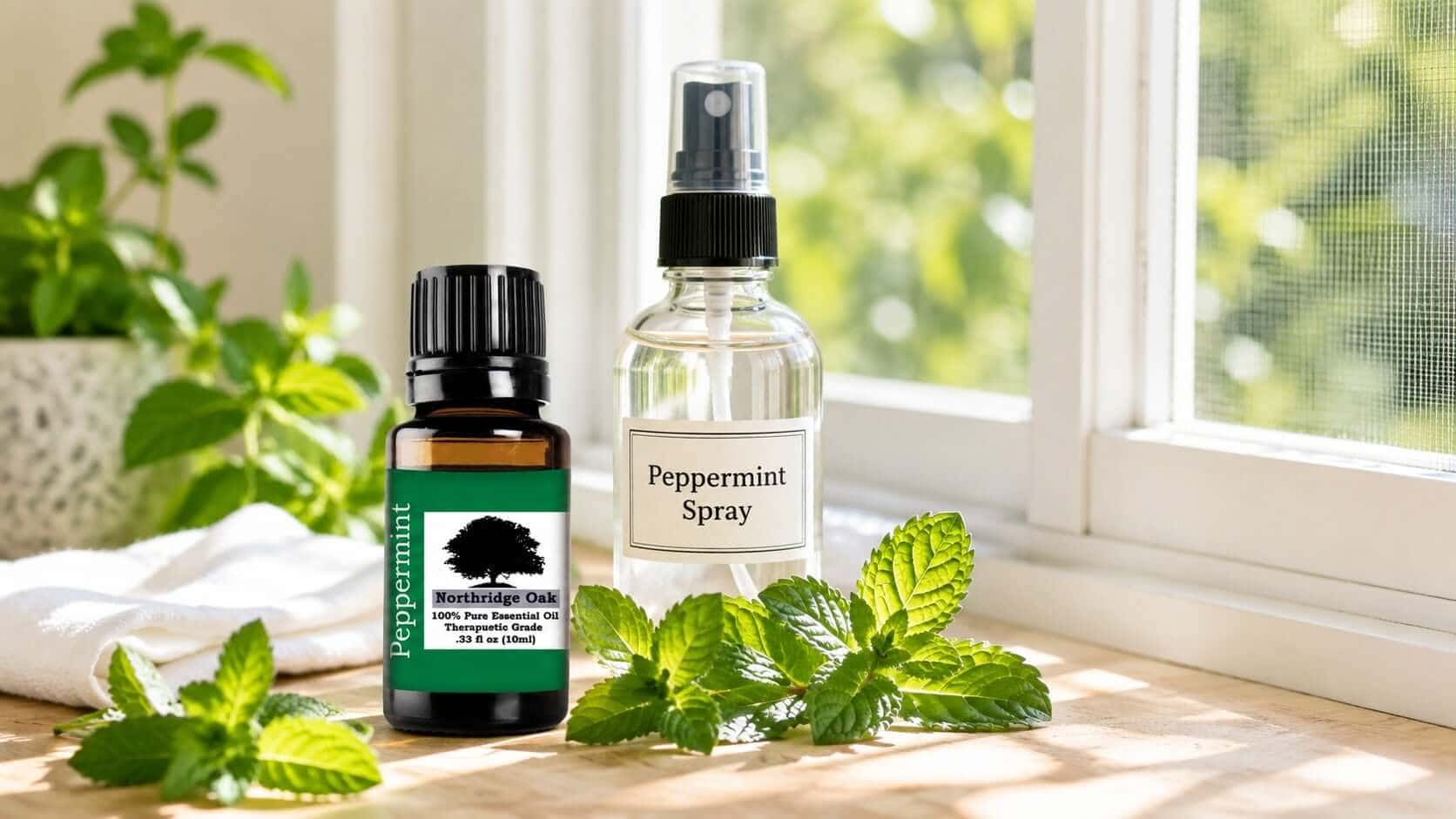
A peppermint oil spray for bugs gives you a simple, affordable way to try peppermint around your own home. It takes only a few ingredients, makes the room smell fresh, and lets you begin with a plant-based option before deciding whether you need something more involved.
Research on plant essential oils supports their repellent potential against some arthropods. Results can vary by pest, formula, concentration, and setting, but peppermint is easy enough to try—and your own home is where you will see whether it makes a difference for you.
Quick answer: Is peppermint worth trying?
Yes—peppermint is worth trying as a fresh, inexpensive first step for minor activity around household entry points. A homemade peppermint oil spray for bugs brings its strong aroma exactly where you want it, and you can refresh the application whenever the scent fades. Pair it with a clean home and sealed gaps to give the routine its best chance of success.
You do not have to assume that the strongest or most expensive option is the only place to begin. Make a small batch, use it carefully, and see what happens in your space.
For other ways to use the bottle, visit our pillar guide to 20 peppermint essential oil uses and DIY recipes.
Why people use peppermint oil around entry points
Peppermint contains highly aromatic, volatile compounds that create the cool, powerful scent people associate with the oil. Reviews of plant-based repellents have identified peppermint among essential oils showing repellent activity in laboratory or controlled settings. Peppermint oil has also been studied against selected insects, including agricultural pests and mosquito species.
Those findings give people a real reason to be curious about peppermint at home. Because the aromatic compounds naturally evaporate, refreshing the spray when the scent fades is part of the routine. Different pests and homes respond differently, which is why trying it in one selected area is more useful than relying on someone else’s experience.
Peppermint also offers something many pest-control approaches do not: even while you are testing it, your home gets that unmistakably crisp, clean aroma.
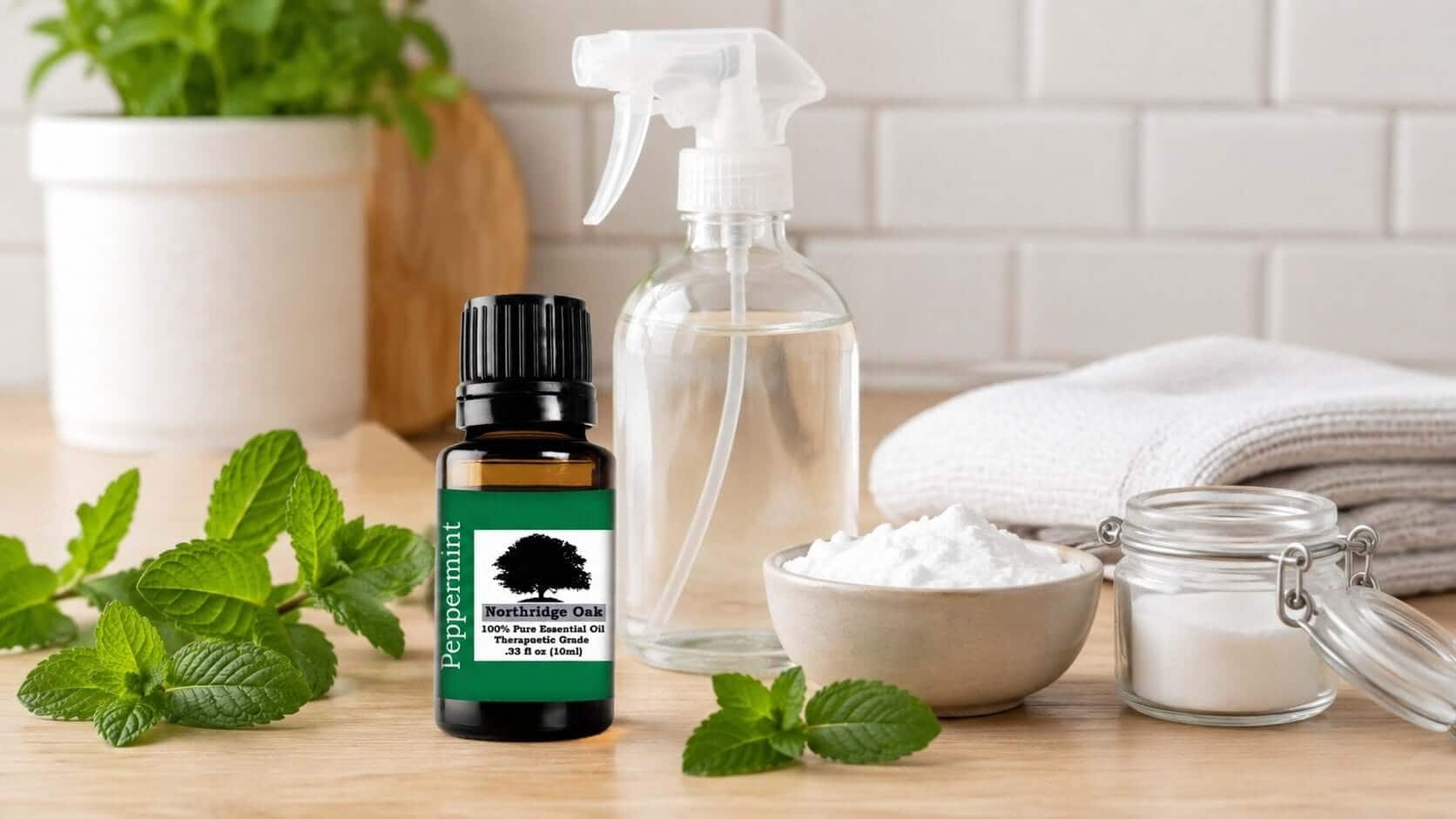
DIY peppermint entry-point spray
Ingredients
1 cup distilled water
1 teaspoon mild unscented liquid soap
10–15 drops Peppermint Essential Oil
8-ounce glass or chemical-resistant spray bottle
Directions
Add the water and soap to the labeled bottle.
Add Peppermint Essential Oil.
Close and shake before every use.
Spot-test an inconspicuous area.
Spray lightly onto a cloth and wipe compatible window frames, door thresholds, baseboards, or other suspected entry points.
Reapply after cleaning or when the aroma has faded.
Choose a clearly identified oil such as Northridge Oak Peppermint Essential Oil, a 100% pure, undiluted Mentha piperita oil that is third-party GC/MS tested.
Ready to try it? Shop Northridge Oak Peppermint Essential Oil.
Do not spray directly onto insects, animals, people, food, dishes, toys, bedding, plants, or porous valuables.
Try peppermint oil spray for bugs for yourself
The best way to decide whether peppermint belongs in your home routine is to try it in one selected area and pay attention to the result:
Choose one low-risk entry point where you have noticed minor pest activity.
Note what you see for two or three days before applying anything.
Clean the area, spot-test the surface, and apply the spray as directed.
Check the same location once a day for the next three to five days.
Notice whether activity decreases, stays the same, or moves elsewhere.
Reapply only after cleaning or when the aroma has faded.
If the area stays quieter, continue refreshing the spray as needed. If it does not, keep the concentration the same and add another appropriate step such as sealing the opening.
That simple before-and-after check gives you something valuable: firsthand experience from your own home instead of another person’s blanket opinion.
Another easy option: peppermint cotton disks
For a spot where moisture is undesirable:
Put 2–3 drops of Peppermint Essential Oil on a cotton disk.
Place it in a vented jar or perforated container.
Set the container near a dry, inaccessible entry point.
Refresh only when the aroma fades.
The container prevents direct contact with painted surfaces and helps keep the saturated cotton away from children and pets. Never leave oil-soaked cotton loose where it can be handled, chewed, or swallowed.
Four ways to help peppermint work its best
1. Seal the entry
Repair screens, add door sweeps, caulk appropriate gaps, and close openings around pipes or utility lines. Peppermint brings the aroma; a physical barrier helps keep the entry point closed.
2. Remove food and water
Clean crumbs and spills, close food containers, empty trash, repair leaks, and avoid leaving pet food out overnight. Our peppermint cleaning recipes can help make the entire routine smell fresh.
3. Reduce hiding places
Move cardboard and clutter away from walls, trim vegetation touching the house, and store firewood away from the foundation.
4. Identify the pest
Different pests require different responses. An unidentified trail, droppings, wood damage, or repeated bites should not be treated as a generic “bug problem.”
Why people try peppermint oil for spiders
Spiders are arachnids rather than insects, but peppermint oil for spiders remains one of the most popular household uses people want to try. Apply the spray to compatible window frames, door thresholds, and other likely entry points. Pair it with sealing gaps, clearing webs, improving screens, and reducing the insects spiders feed on.
Household experiences differ, so the most practical answer is to test one area and watch what happens in your own space.
Using peppermint around ant trails
Start by wiping the trail clean and removing the food source. Then use the peppermint spray around the entry point and nearby compatible surfaces. Follow the line when possible so you can combine the aroma with a closed gap and a clean area.
Using peppermint near suspected mouse entry points
Peppermint’s strong mint aroma makes it a popular first step near suspected mouse entry points. Place a covered peppermint cotton disk near a dry, inaccessible location, then seal openings, protect food, and remove nesting material. For recurring signs or large openings, add established control methods or professional help.
Is this a mosquito repellent for skin?
No. This recipe is for selected household surfaces, not skin. Reviews note that many essential oils evaporate quickly and provide limited-duration mosquito repellency. For protection from mosquito- and tick-borne illness, choose a repellent registered for skin use and follow its label.
Use peppermint thoughtfully around your home
Spot-test every surface.
Avoid unfinished wood, natural stone, delicate paint, acrylic, and other sensitive finishes.
Do not spray around animal food, water, cages, terrariums, bedding, or litter areas.
Keep animals and children away until treated surfaces are dry.
Store the bottle locked or out of reach.
Never apply peppermint essential oil to a pet.
Do not apply peppermint near the face of infants or young children because menthol inhalation can cause serious effects.
Stop using the spray if anyone experiences irritation, coughing, nausea, or discomfort.
Know when to add more support
Peppermint is an appealing first step for minor activity around entry points. Add targeted help when you find structural damage, a nest, repeated droppings, stinging insects in a wall, bed bugs, termites, a large infestation, or any pest that may affect health or safety. The goal is to use the simplest approach that fits the actual problem.
A brief note about this DIY recipe
This homemade formula is shared as an educational household recipe. It has not been evaluated or registered by the U.S. Environmental Protection Agency as a pesticide, and Northridge Oak Peppermint Essential Oil is sold as a 100% pure essential oil—not as an EPA-registered pesticide product. Use the recipe for low-risk household experimentation rather than public-health pest protection.
Ready to put peppermint to work?
A 10 mL bottle gives you enough peppermint oil to make multiple batches of this easy entry-point spray, refresh cotton disks, and explore many other home and diffuser recipes.
Northridge Oak Peppermint Essential Oil is 100% pure, undiluted Mentha piperita and third-party GC/MS tested, so you know exactly which oil you are bringing into your home.
100% Pure Peppermint Essential Oil – 10 mL
$7.50
100% Pure Peppermint Essential Oil Bright, crisp and unmistakably minty, Northridge Oak Peppermint Essential Oil brings a refreshing aroma to diffuser blends, personal-care routines and household DIY recipes. Its naturally cool, invigorating scent is a favorite when you want your… read more

Helping You Live The Life You Love.
Continue your Peppermint Learning Center
Start with the pillar guide to 20 peppermint essential oil uses, DIY recipes, and refreshing aromatherapy, then explore every supporting guide:
Sources
Maia and Moore: Plant-based insect repellents—review of efficacy, development and testing
Gospodarek et al.: Contact and gastric effect of peppermint oil on selected pests
Essential oils are highly concentrated. Always follow appropriate usage and dilution guidance for each individual oil. Some oils require additional precautions, so familiarize yourself with an oil’s safety information before use. Keep essential oils out of reach of children and pets.
These statements have not been evaluated by the Food and Drug Administration. This content is for educational purposes and is not intended to diagnose, treat, cure, or prevent any disease.
Frequently Asked Questions
Does peppermint oil keep bugs away?
Research supports peppermint’s repellent potential against some arthropods under certain conditions. Its powerful aroma is easy to apply around selected entry points, making it a practical option to try at home. Refresh it when the scent fades.
How many drops go in a peppermint oil bug spray for home use?
For this DIY peppermint spray, start with 10–15 drops in an 8-ounce household entry-point formula. That creates a noticeable peppermint aroma without making the mixture unnecessarily strong.
How often should I reapply it?
Reapply after cleaning or whenever the aroma is no longer noticeable. Regular refreshing keeps peppermint’s bold scent present around the selected entry point.
Does peppermint kill insects?
Some concentrated essential-oil preparations have shown insecticidal activity in laboratory studies. This diluted home recipe is designed to use peppermint’s aroma around entry points rather than to spray insects directly.
Will peppermint oil get rid of spiders?
Many people use peppermint around the entry points where spiders appear. Apply it to compatible surfaces, then strengthen the routine by sealing gaps, clearing webs, and reducing the insects spiders feed on.
Can I spray peppermint oil on plants?
Not with this recipe. Essential oils and soap can damage foliage. Use a product labeled for the plant and target pest.
Is peppermint spray safe around dogs and cats?
Prevent contact with wet spray, ingestion, and access to the bottle. Because species and individual health vary, ask your veterinarian about use in your specific home.