
Table of Contents
- Why Eucalyptus Is Associated With Sinus Comfort
- What 1,8-Cineole Does
- Traditional Use Through History
- 5 Ways to Use Eucalyptus for a Stuffy-Feeling Day
- Eucalyptus, Peppermint or Rosemary?
- Build a Repeatable Sinus-Comfort Ritual
- Why Choose Northridge Oak Eucalyptus Essential Oil?
- Eucalyptus Essential Oil Safety
- Continue Learning About Eucalyptus Essential Oil
- References
- Practical Tips for a Better Eucalyptus Routine
- Why Purity Matters in Aromatic Recipes
- Pair the Aroma With Everyday Self-Care
- Frequently Asked Questions
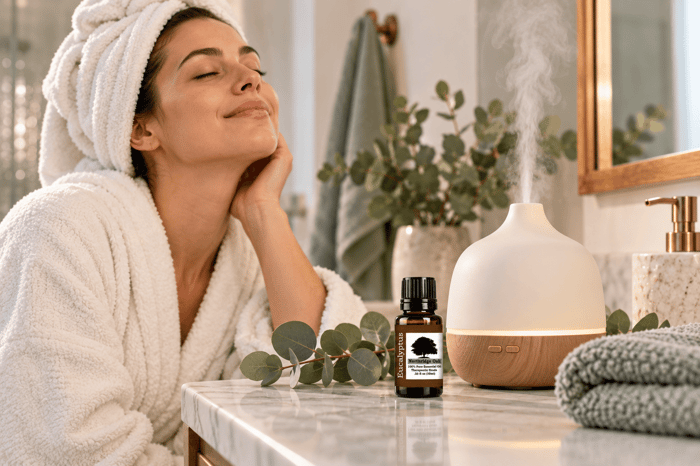
Eucalyptus essential oil for sinus pressure is a refreshing natural choice when your nose feels stuffy and the space around you needs a crisp, clean reset. Its camphoraceous aroma has made eucalyptus a cold-season favorite for generations, while modern studies of its primary constituent, 1,8-cineole, provide encouraging insight into its relationship with nasal obstruction, frontal pressure and respiratory comfort.
Northridge Oak uses Eucalyptus radiata, an Australian species with a clean, penetrating aroma that is somewhat softer than several other eucalyptus varieties. A few drops can transform a shower, diffuser session or properly diluted massage blend into a refreshing self-care ritual.
100% Pure Eucalyptus Essential Oil – 10 mL

$7.50
100% Pure Eucalyptus Essential Oil Fresh, clean and beautifully clarifying, Northridge Oak Eucalyptus Essential Oil brings the unmistakable aroma of eucalyptus into diffuser blends, shower rituals, massage oils, scalp-care recipes and naturally fresh home routines. Our Eucalyptus radiata is 100%… read more
Why Eucalyptus Is Associated With Sinus Comfort
The sinuses are air-filled spaces around the nose, cheeks and forehead. Seasonal irritation can leave these areas feeling full or pressured. Eucalyptus aroma creates a cooling sensory experience, while 1,8-cineole has been examined for mucus-clearing and anti-inflammatory activity.
A double-blind, randomized, placebo-controlled trial involving people with acute nonpurulent rhinosinusitis evaluated symptoms including headache, nasal obstruction, frontal pressure, facial pressure-point sensitivity and nasal secretions. Participants receiving standardized cineole experienced faster symptom improvement than the placebo group. This result gives people a compelling reason to explore eucalyptus as part of an aromatic sinus-comfort routine.
What 1,8-Cineole Does
1,8-Cineole, also called eucalyptol, is responsible for much of eucalyptus oil’s familiar aroma. Research reviews describe mucolytic and anti-inflammatory actions and discuss its study in rhinosinusitis, acute bronchitis, asthma and COPD. It also interacts with sensory pathways associated with cooling and airway comfort.
The research used standardized cineole preparations, while an aromatherapy routine uses the whole essential oil. Together with eucalyptus’s long history, these findings help explain why its aroma remains so closely associated with clear, fresh breathing.
Traditional Use Through History
Eucalyptus is native to Australia, where Aboriginal communities developed many uses for its aromatic leaves. Eucalyptus preparations later became common in baths, steam routines, chest applications and seasonal household care around the world. The European Medicines Agency recognizes the long-standing traditional use of eucalyptus oil for cough associated with the common cold.
5 Ways to Use Eucalyptus for a Stuffy-Feeling Day
1. Simple Eucalyptus Diffusion
Add 2–4 drops to a typical 100 mL ultrasonic diffuser. Begin with less in a small room and allow comfortable airflow.
2. Clear Morning Blend
- 2 drops Eucalyptus
- 1 drop Peppermint Essential Oil
- 1 drop Lemon Essential Oil
This combination feels bright, cooling and clean.
3. Gentle Evening Blend
- 2 drops Eucalyptus
- 2 drops Lavender Essential Oil
- 1 drop Cedarwood Essential Oil
Lavender and cedarwood soften eucalyptus for an evening atmosphere.
4. Warm Shower Routine
Use a properly formulated eucalyptus shower steamer, or place one drop on the corner of a damp washcloth and hang it away from direct skin contact. Warm shower air carries the aroma comfortably.
5. Adult Chest and Shoulder Oil
- 1 ounce jojoba or fractionated coconut oil
- 4 drops Eucalyptus
- 2 drops Lavender
Combine, patch test and massage a small amount into intact skin on the adult chest, back or shoulders.
Eucalyptus, Peppermint or Rosemary?
Eucalyptus offers the classic fresh, camphoraceous profile. Peppermint brings a sharper cooling sensation, while rosemary adds an herbal, energizing character. Try all three together in a diffuser or learn more in Eucalyptus and Peppermint Essential Oil and the Rosemary Essential Oil guide.
Build a Repeatable Sinus-Comfort Ritual
Keep the routine simple: take a warm shower, diffuse eucalyptus for a short period, drink something warm and give yourself time to rest. Consistency turns a bottle of essential oil into an approachable wellness habit. For broader breathing ideas, visit Eucalyptus Essential Oil for Congestion and Breathing Comfort.
Why Choose Northridge Oak Eucalyptus Essential Oil?
Northridge Oak Eucalyptus Essential Oil is Eucalyptus radiata from Australia. It is 100% pure and undiluted, third-party GC/MS tested, bottled in small batches and made without fillers or synthetic fragrance. Our family-owned company has helped customers build practical natural-living routines since 2016.
Eucalyptus Essential Oil Safety
Eucalyptus is concentrated, so use a small amount. Dilute it before topical application, patch test new blends, keep it away from eyes and sensitive areas, and use diffusers with comfortable airflow. Use age-appropriate guidance around children and consider pets, pregnancy and individual health circumstances. Read the complete eucalyptus safety guide and our Essential Oil Safety Guide.
Continue Learning About Eucalyptus Essential Oil
- Eucalyptus Essential Oil: Benefits, Uses, Spa Recipes, Blends and Safety
- Eucalyptus Essential Oil for Congestion and Breathing Comfort
- Eucalyptus Essential Oil for Cough and Cold Season
- Eucalyptus Essential Oil for Sinus Pressure and a Stuffy Nose
- Eucalyptus Shower Steamers: Benefits and 5 Easy Recipes
- How to Use Eucalyptus Essential Oil in the Shower
- Eucalyptus Essential Oil Diffuser Blends: 20 Fresh Recipes
- What Blends Well With Eucalyptus Essential Oil? 18 Pairings
- Eucalyptus Essential Oil Safety: Dilution, Kids, Pets and Pregnancy
References
- Kehrl W, Sonnemann U, Dethlefsen U. “Therapy of acute nonpurulent rhinosinusitis with cineole.” Laryngoscope. 2004. PubMed.
- Juergens LJ. “New Perspectives for Mucolytic, Anti-inflammatory and Adjunctive Therapy With 1,8-Cineole.” 2020. Read the review.
- European Medicines Agency. Eucalyptus oil monograph.
Practical Tips for a Better Eucalyptus Routine
Begin with the simplest version of the routine and notice what you enjoy. Eucalyptus has a naturally strong aromatic presence, so adding more is rarely the first adjustment needed. Instead, change the distance, timing or supporting oils. Lemon makes the aroma brighter, lavender makes it softer, rosemary makes it more herbal and peppermint makes it feel especially cool and invigorating.
Keep a brief record of the number of drops, room size and blend proportions. This is useful because the same recipe can feel different in a small bathroom than it does in an open living room. Recording successful combinations also prevents wasted oil and makes a favorite seasonal routine easy to repeat.
Why Purity Matters in Aromatic Recipes
A pure essential oil gives you the botanical aroma expected from the plant without synthetic fragrance or unnecessary fillers changing the experience. Check the botanical name, bottle size and company testing information. Northridge Oak Eucalyptus Essential Oil is identified as Eucalyptus radiata, bottled undiluted and supported by third-party GC/MS testing.
Because eucalyptus is concentrated, one 10 mL bottle can support many diffuser sessions, shower recipes and diluted adult topical blends. Starting with a few drops lets you explore several combinations before deciding which routine feels best for you.
Pair the Aroma With Everyday Self-Care
Eucalyptus works best when it becomes part of something you already do. Add a diffuser session while tidying, prepare a shower recipe before a busy morning or choose a softer eucalyptus-and-lavender blend while winding down. The goal is to make natural wellness approachable enough to use regularly.
When you are ready to branch out, compare eucalyptus with tea tree, peppermint and rosemary. Each oil has its own character, and linking the oils through purposeful blends gives you more ways to use every bottle in your collection.
These statements have not been evaluated by the Food and Drug Administration. This content is for educational purposes and is not intended to diagnose, treat, cure or prevent any disease.


