Table of Contents
- What Is Rosemary Essential Oil?
- What Does Rosemary Essential Oil Smell Like?
- 10 Everyday Uses for Rosemary Essential Oil
- Rosemary Essential Oil for Hair & Scalp Care
- Rosemary Hair & Scalp DIY Recipes
- 6 More Rosemary DIY Recipes
- 7 Rosemary Essential Oil Diffuser Blends
- What Essential Oils Blend Well With Rosemary?
- Feeling Adventurous? Try These Unexpected Rosemary Pairings
- Rosemary Essential Oil Safety
- Explore Rosemary Essential Oil
- FAQs
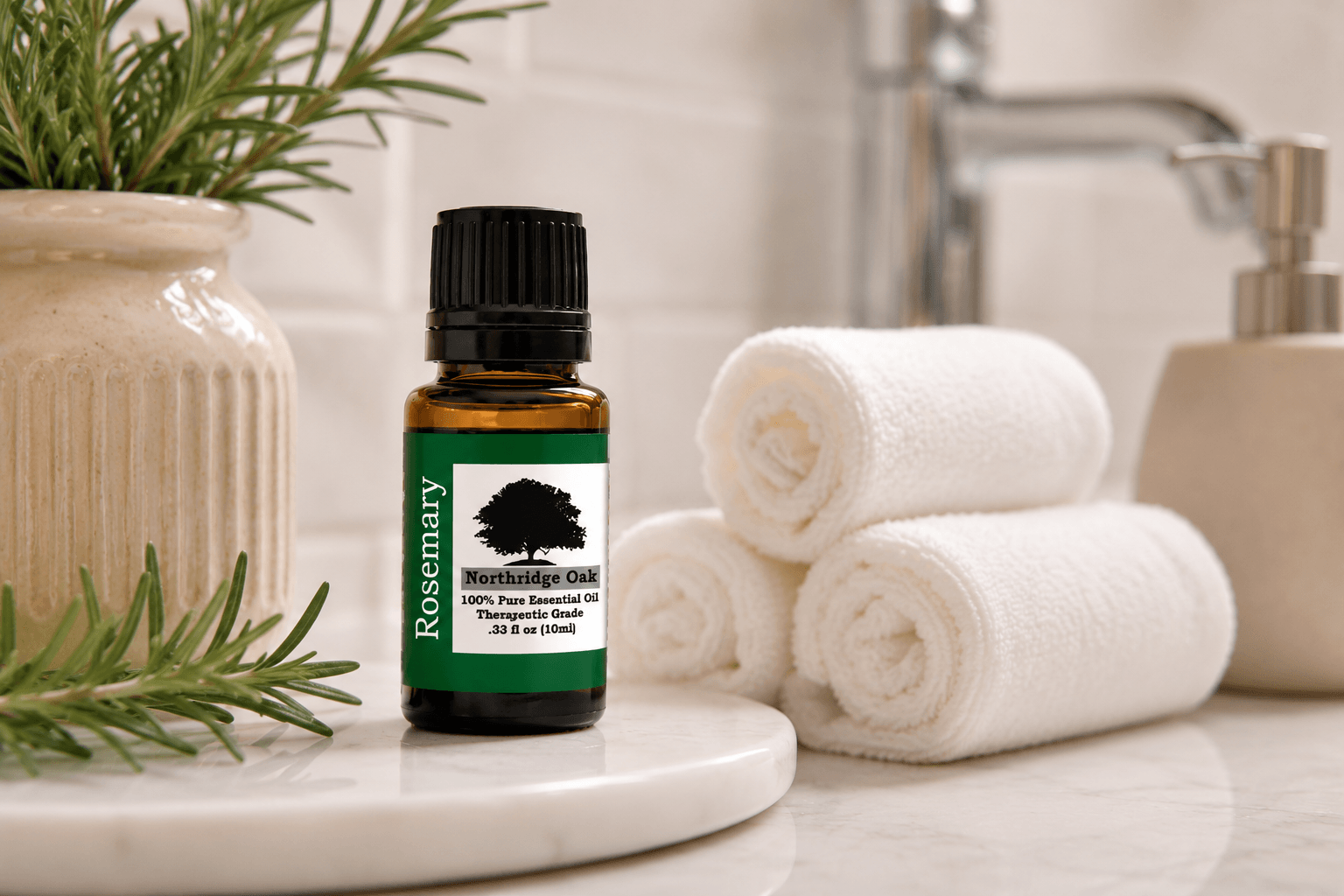
You may know rosemary as the fragrant herb growing in the garden or tucked into your favorite recipes. But when its aromatic compounds are captured as an essential oil, rosemary takes on an entirely different role.
From hair and scalp care to massage oils, home freshening, shower steamers, cleaning DIYs, and diffuser blends, there are plenty of ways to explore this familiar herb.
And Rosemary doesn't have to smell the same every time you use it.
Pair it with Lemon and it becomes bright and fresh. Add Lavender and it softens. Combine it with Balsam Fir and Cedarwood and suddenly you're headed toward the forest.
Let's explore.
What Is Rosemary Essential Oil?
Rosemary is an aromatic evergreen shrub native to the Mediterranean region. Its needle-like leaves have been valued for centuries in culinary, aromatic, and traditional applications.
Its currently accepted botanical name is Salvia rosmarinus, although you'll frequently see the older name Rosmarinus officinalis on essential-oil labels and in reference materials.
Rosemary Essential Oil is produced through steam distillation of the plant's aromatic leaves and flowering tops.
During steam distillation, steam passes through the plant material, carrying its volatile aromatic compounds with it. The vapor is then cooled and condensed, allowing the essential oil to separate from the water.
The result is an intensely aromatic essential oil that smells considerably more concentrated than the fresh herb growing in your garden.
What Does Rosemary Essential Oil Smell Like?
Rosemary has a fresh, herbaceous, sharp, slightly woody and camphoraceous aroma.
You may also notice subtle evergreen and citrus-like characteristics.
Its aroma can feel clean and invigorating on its own, but Rosemary becomes especially interesting when you begin blending it.
Rosemary pairs beautifully with citrus, floral, minty, herbal, woodsy, and resinous essential oils.
That's why you'll see Rosemary appear in some very different diffuser blends later in this guide.
10 Everyday Uses for Rosemary Essential Oil
Looking for somewhere to start?
Here are 10 practical ways to explore Rosemary Essential Oil.
1. Pre-Shampoo Scalp Oil
Dilute Rosemary in a carrier oil and massage it gently into the scalp before shampooing.
We'll give you the complete recipe below.
2. Add Rosemary to a Hair Mask
Give an unscented hair mask or conditioner an herbal Rosemary boost. Mix 1 drop Rosemary Essential Oil into approximately 1 tablespoon of product immediately before use. Apply according to the product directions, avoiding the eyes, then rinse thoroughly.
Tip: Mix only what you plan to use at that time rather than adding essential oil directly to the entire container.
3. Diffuse It
Add Rosemary to your diffuser on its own or combine it with citrus, floral, herbal, or woodsy oils.
4. Add Rosemary to Your Shower Routine
Use Rosemary in a properly formulated shower steamer to bring its fresh herbal aroma into a warm, steamy shower.
5. Create a Massage Oil
Combine Rosemary with a carrier oil for an aromatic massage oil.
6. Freshen Your Workspace
Diffuse Rosemary with Lemon when you want a bright, herbaceous aroma in your office, craft room, or study area.
7. Freshen Closets
Add a few drops to a cotton ball or felt pad and place it in a small open dish on a closet shelf, away from clothing and finished surfaces.
8. Freshen Gym Bags
Add Rosemary to a removable aroma sachet or other passive scent medium and tuck it into an empty gym bag between uses.
9. Add an Herbal Aroma to Cleaning DIYs
Rosemary pairs especially well with Lemon in simple household cleaning recipes.
10. Create an Herbal Home Aroma
Combine Rosemary with complementary oils to make your home smell fresh without relying on synthetic fragrance.
Rosemary Essential Oil for Hair & Scalp Care
This deserves its own section.
Rosemary has become incredibly popular in hair-care routines, particularly among people interested in supporting the appearance of fuller, healthy-looking hair.
But what does the research actually say?
Can Rosemary Oil Help With Hair Growth?
Rosemary oil has received attention for its potential role in supporting hair growth, and there is some promising research behind the interest.
A 2015 randomized comparative trial followed 100 participants with androgenetic alopecia for six months. Participants were assigned to use either rosemary oil or 2% minoxidil.
After three months, neither group showed a significant change in hair count. However, after six months, both groups experienced a statistically significant increase in hair count compared with baseline, and researchers found no significant difference in hair count between the rosemary oil and 2% minoxidil groups.
The rosemary group also reported less scalp itching than the minoxidil group.
It's an encouraging finding, but it's important to keep the research in perspective. This was a single study involving 100 participants, so it doesn't establish rosemary oil as a proven treatment for hair loss or guarantee that everyone will experience hair growth.
For everyday use, we prefer to think of Rosemary Essential Oil as an interesting addition to a healthy hair and scalp-care routine, while recognizing that more research is needed.
Research: Panahi Y, et al. Rosemary oil vs minoxidil 2% for the treatment of androgenetic alopecia: a randomized comparative trial. SKINmed. 2015;13(1):15–21. PMID: 25842469.
Source: PubMed — Rosemary Oil vs. Minoxidil 2% Study
Rosemary Hair & Scalp DIY Recipes
1. Rosemary Pre-Shampoo Scalp Oil
A simple oil treatment to massage into your scalp before washing your hair.
You'll Need:
- 1 oz jojoba oil
- 6 drops Rosemary
- 2 drops Lavender
- 1 oz dropper bottle
Add the essential oils to the dropper bottle. Fill with jojoba oil, secure the cap, and gently roll or shake to combine. Before shampooing, apply a small amount to the scalp. Massage gently with your fingertips for several minutes. Allow the oil to remain on the scalp for approximately 10–15 minutes, then shampoo thoroughly. Start with occasional use and see how your scalp and hair respond.
2. Rosemary Nourishing Hair Oil
Give dry-looking lengths and ends a little extra care with this simple pre-shampoo hair oil. Argan and jojoba oils provide lightweight conditioning, while Rosemary, Geranium, and Ylang Ylang create a fresh herbal-floral aroma. Use a small amount before shampooing to help leave hair feeling soft, smooth, and conditioned.
You'll Need:
- 1 tablespoon argan oil
- 1 tablespoon jojoba oil
- 2 drops Rosemary Essential Oil
- 1 drop Geranium Essential Oil
- 1 drop Ylang Ylang Essential Oil
- 1 oz bottle
Combine the argan and jojoba oils in a clean 1 oz bottle.
Add the Rosemary, Geranium, and Ylang Ylang essential oils. Secure the cap and gently roll the bottle between your hands to combine.
Before shampooing, place a small amount of the oil in your palms and lightly work it through the mid-lengths and ends of dry hair. Start with less than you think you'll need, especially if you have fine hair.
Allow it to remain on the hair for approximately 10–20 minutes, then shampoo thoroughly. A second shampoo may be needed for finer hair.
Tip: Concentrate primarily on dry-looking lengths and ends rather than saturating the scalp.
6 More Rosemary DIY Recipes
3. Rosemary Herbal Massage Oil
You'll Need:
- 2 oz fractionated coconut oil
- 8 drops Rosemary
- 4 drops Lavender
- 2 drops Frankincense
Combine everything in a 2 oz bottle and shake gently. Massage a small amount into the desired area as part of your normal massage routine.
4. Rosemary Herbal Room Spray
You'll Need:
- 4 oz glass spray bottle
- 3 oz distilled water
- 1 oz witch hazel
- 8 drops Rosemary
- 6 drops Bergamot
- 4 drops Lavender
Add the witch hazel and essential oils to the bottle and shake well. Add the distilled water, secure the sprayer, and shake again. Shake well before each use. Mist into the air as desired. Avoid spraying directly onto people, pets, furniture, flooring, or finished surfaces.
5. Rosemary & Lemon Shower Steamers
You'll Need:
- 1 cup baking soda
- ¼ cup citric acid
- 2 tablespoons cornstarch
- 12 drops Rosemary
- 8 drops Lemon
- Witch hazel in a fine-mist spray bottle
- Silicone mold
Combine the baking soda, citric acid, and cornstarch. Add the essential oils and mix thoroughly. Very lightly mist with witch hazel while stirring until the mixture just begins to hold together when squeezed. Press firmly into silicone molds. Allow to dry completely (24 hours) before removing.
To Use: Place one shower steamer on the shower floor away from the direct stream of water. Let splashing water slowly activate it while you shower.
Do not use as a bath bomb.
6. Rosemary & Lemon Household Cleaning Spray
You'll Need:
- 16 oz spray bottle
- 1 cup distilled water
- 1 cup white vinegar
- 12 drops Lemon
- 8 drops Rosemary
Directions:
Combine the ingredients in the spray bottle and shake well. Shake before each use. Spray onto manufacturer-approved, nonporous surfaces and wipe clean.
Important: Vinegar isn't appropriate for every surface. Avoid natural stone such as marble and granite, and always follow the manufacturer's care instructions for the surface you're cleaning.
7. Rosemary Herbal Salt Aroma Jar
This is an incredibly simple way to bring Rosemary's herbal aroma into a small space.
You'll Need:
- ½ cup coarse Himalayan pink salt
- 8 drops Rosemary
- 4 drops Lemon
- 2 drops Cedarwood
- Small open glass jar
Place the Himalayan salt in the jar. Add the essential oils and stir thoroughly. Place the open jar in a small area where it won't be knocked over and is out of reach of children and pets. Stir occasionally and refresh with a few drops when the aroma begins to fade.
Tip: This works nicely on a bathroom shelf, desk, or other small space. Keep it away from moisture and finished surfaces.
8. Rosemary Herbal Foot Soak
You'll Need:
- ½ cup Epsom salt
- 1 tablespoon fractionated coconut oil
- 2 drops Rosemary
- 1 drop Lavender
First combine the essential oils thoroughly with the fractionated coconut oil. Essential oils don't dissolve in water. Mixing them with a carrier oil first helps prevent concentrated droplets of essential oil from floating directly on the surface of the water.
Stir that mixture into the Epsom salt until evenly distributed. Add the mixture to a basin of comfortably warm water and stir thoroughly before soaking your feet.
7 Rosemary Essential Oil Diffuser Blends
Now let's see how much we can change Rosemary simply by changing what's around it.
Adjust the total number of drops as needed for your diffuser size and manufacturer's instructions.
1. Clear Morning
- 3 drops Rosemary
- 2 drops Lemon
- 1 drop Peppermint
Fresh, bright, and crisp.
2. Herb Garden
- 3 drops Rosemary
- 2 drops Basil
- 2 drops Lemon
Fresh herbs meet bright citrus.
3. Into the Woods
- 3 drops Rosemary
- 2 drops Balsam Fir
- 2 drops Cedarwood
A fresh herbal aroma with a distinctly woodsy side.
4. Citrus Herb
- 3 drops Rosemary
- 3 drops Blood Orange
- 1 drop Bergamot
Blood Orange and Bergamot soften Rosemary with a sweet citrus character.
5. Quiet Focus
- 3 drops Rosemary
- 2 drops Frankincense
- 2 drops Lavender
Herbal, floral, and grounded.
6. Fresh Air
- 3 drops Rosemary
- 2 drops Eucalyptus
- 2 drops Grapefruit
Crisp herbs meet bright citrus.
7. Unexpectedly Floral
- 3 drops Rosemary
- 2 drops Geranium
- 2 drops Bergamot
Geranium takes Rosemary in a completely different direction, while Bergamot helps bridge the floral and herbal aromas.
What Essential Oils Blend Well With Rosemary?
One of Rosemary's best qualities is how easily it moves between different aromatic families.
Citrus Oils
Try Rosemary with:
Lemon • Bergamot • Grapefruit • Blood Orange
Citrus oils brighten Rosemary and soften some of its sharper herbal character.
Floral Oils
Try:
Lavender • Geranium • Ylang Ylang
Lavender is probably the easiest place to start.
Geranium creates something much more unexpected.
Herbal & Minty Oils
Try:
Basil • Peppermint • Eucalyptus • Marjoram
These combinations lean into Rosemary's fresh herbal personality rather than trying to soften it.
Woodsy & Resinous Oils
Try:
Cedarwood • Balsam Fir • Pine • Frankincense
These oils can take Rosemary toward a deeper, outdoorsy aroma.
Feeling Adventurous? Try These Unexpected Rosemary Pairings
Rosemary + Lemon may be a classic, but Rosemary is far more adventurous than you might expect. Its fresh herbal aroma can take on an entirely different personality when paired with florals, citrus oils, softer herbs, and evergreens.
Here are a few combinations you may not have thought to try.
Rosemary + Ylang Ylang
Herbal meets rich floral and citrus.
Start with:
3 Rosemary + 3 Grapefruit + 1 Ylang Ylang
Rosemary + Marjoram
This is an herb-lover's blend.
Try:
3 Rosemary + 2 Marjoram + 2 Blood Orange
The Blood Orange keeps the combination from becoming overwhelmingly herbal.
Rosemary + Clary Sage
This combination has a soft, crisp floral-herbal aroma. Clary Sage softens Rosemary's sharper edges, while Bergamot adds a bright, fresh finish.
3 Rosemary + 2 Clary Sage + 2 Bergamot
A beautiful choice when you want something herbal, fresh, and a little unexpected.
Rosemary + Balsam Fir
Fresh herbs meet evergreen.
Try:
3 Rosemary + 3 Balsam Fir + 1 Frankincense
The result is much more outdoorsy than you might expect from Rosemary.
Rosemary Essential Oil Safety
Rosemary Essential Oil is highly concentrated and should be used with appropriate care.
For Topical Use Only
Always dilute Rosemary Essential Oil appropriately in a carrier oil before applying it to the skin or scalp. Undiluted essential oils increase the risk of irritation and sensitization.
The DIYs and uses in this article are intended for aromatic and appropriately diluted topical/home applications. They are not instructions for internal use.
Patch Test New Topical Preparations
If you're trying a new Rosemary DIY, consider testing a small amount first, particularly if you have sensitive skin or scalp.
Avoid Sensitive Areas
Keep essential oils away from the eyes, inner ears, mucous membranes, and other sensitive areas.
Children
Rosemary Essential Oil can require additional age-related precautions. Don't assume that a dilution appropriate for a healthy adult is automatically appropriate for a child. Follow age-specific safety guidance.
Pregnancy, Nursing & Medical Considerations
If you are pregnant, nursing, taking medications, have a medical condition, or have specific concerns about essential-oil use, consult an appropriately qualified healthcare professional before use.
Explore Rosemary Essential Oil
From the scalp to the shower, diffuser, cleaning cabinet, and massage routine, Rosemary is much more versatile than its familiar kitchen-herb reputation might suggest.
Start simple.
Try a pre-shampoo scalp oil.
Diffuse Rosemary with Lemon.
Or pair it with something you wouldn't normally consider—like Geranium, Blood Orange, or Balsam Fir.
You might discover an entirely different side of Rosemary.
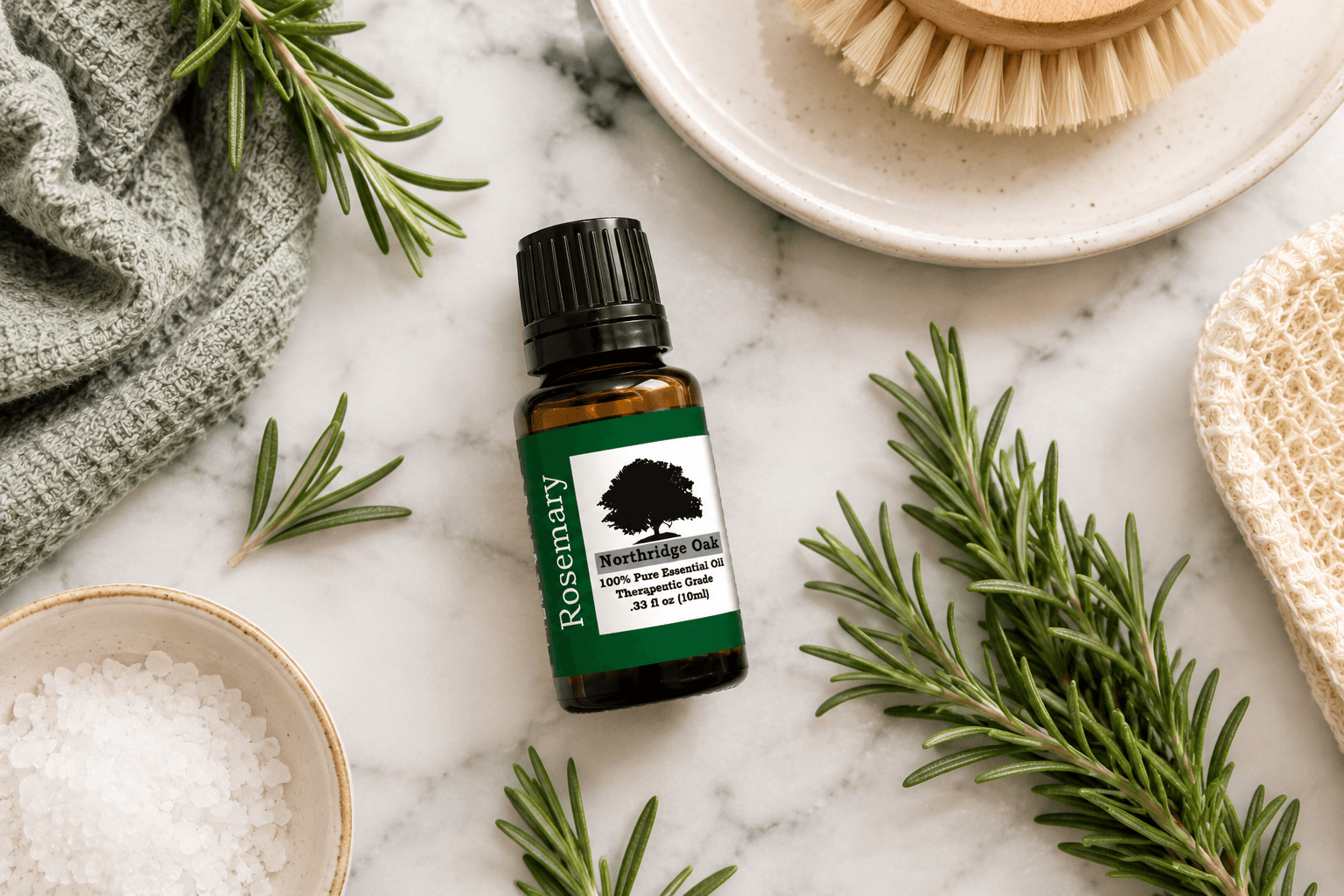
100% Pure Rosemary Essential Oil – 10 mL
$7.50
100% Pure Rosemary Essential Oil Fresh, herbaceous and unmistakably invigorating, Northridge Oak Rosemary Essential Oil makes it easy to bring this time-honored botanical into your hair and scalp routine, diffuser blends, massage oils, skin-care recipes and naturally fresh home. This… read more

Northridge Oak
Helping You Live The Life You Love.
Essential oils are highly concentrated. Always follow appropriate usage and dilution guidance for each individual oil. Some oils require additional precautions, so familiarize yourself with an oil's safety information before use. Keep essential oils out of reach of children and pets.
These statements have not been evaluated by the Food and Drug Administration. This information is for educational purposes only and is not intended to diagnose, treat, cure, or prevent any disease.
Frequently Asked Questions
Can Rosemary Essential Oil Help With Hair Growth?
Rosemary oil has been studied for its potential role in hair growth.
In one randomized trial involving 100 people with androgenetic alopecia, participants using rosemary oil experienced a statistically significant increase in hair count after six months. The study found no significant difference in hair count between the rosemary group and the 2% minoxidil group at that point.
However, this was one study and doesn't establish Rosemary Essential Oil as a guaranteed treatment for hair loss.
If you're experiencing unexplained or significant hair loss, consider talking with a healthcare professional because hair loss can have many causes.
How Do I Dilute Rosemary Essential Oil for My Scalp?
Don't apply Rosemary Essential Oil straight from the bottle to your scalp.
For the recipes in this guide, we've diluted Rosemary into carrier oils such as jojoba, fractionated coconut, and castor oil.
Always consider the total concentration of all essential oils in a recipe—not just the Rosemary.
Can I Add Rosemary Essential Oil to Shampoo?
It can be incorporated into properly formulated hair-care products, but adding drops directly to a full commercial shampoo bottle can make it difficult to know whether the essential oil is evenly dispersed or whether you've altered the product's formulation.
For an easy at-home option, we prefer a properly diluted pre-shampoo scalp oil where you control the ingredients and dilution.
How Often Can I Use Rosemary Scalp Oil?
There isn't one schedule that's appropriate for everyone.
Start conservatively with occasional use and pay attention to how your scalp responds.
Stop using the product if you experience irritation, burning, persistent itching, or another unwanted reaction.
Do I Need to Wash Rosemary Oil Out of My Hair?
For the pre-shampoo oil recipes in this guide, yes.
Apply the diluted oil before washing, allow it to sit briefly, and then shampoo thoroughly.
This is especially important for formulas containing heavier carrier oils such as castor oil.
Can I Diffuse Rosemary Essential Oil?
Yes. Rosemary's fresh herbal aroma works well in diffuser blends.
Try it with Lemon, Bergamot, Lavender, Blood Orange, Eucalyptus, Cedarwood, Balsam Fir, Frankincense, or Geranium.
Always follow your diffuser manufacturer's instructions.
What Essential Oils Blend Best With Rosemary?
There's no single answer.
For something bright, try Lemon or Grapefruit.
For something softer, try Lavender or Bergamot.
For something herbal, try Basil or Marjoram.
For something woodsy, try Balsam Fir, Cedarwood, or Frankincense.
And if you're feeling adventurous, try Geranium or Blood Orange.
What Does Rosemary Essential Oil Smell Like?
Rosemary Essential Oil has a fresh, herbaceous, sharp, somewhat camphoraceous aroma with woody, evergreen-like characteristics.
What makes Rosemary especially versatile is how dramatically its aroma changes when you begin pairing it with other essential oils.