Table of Contents
- Why Clean With Lavender Essential Oil?
- The Benefits Go Beyond the Surface
- What Lavender Brings to a Cleaning Routine
- Start With the Cleaning Job
- Everyday Lavender and Lemon Vinegar Spray
- Gentle Lavender Soap Cleaner
- Lavender Carpet Freshener
- Lavender Baking Soda Sink Scrub
- Lavender Toilet-Bowl Freshening Powder
- A Simple Lavender Dusting Routine
- Create a Lavender Cleaning Caddy
- Lavender Cleaning Blends to Try
- Make Cleaning Feel Like a Home Reset
- Homemade Cleaner Storage
- Surface-Safety Reminders
- The Bottom Line
- Lavender Essential Oil Safety
- Continue Exploring Lavender and Natural Cleaning
- FAQs
Cleaning with Lavender Essential Oil can change more than the way your home smells. Lavender contains naturally active plant compounds that researchers have studied for their antimicrobial properties and their effects on stress, mood and relaxation. That means the little bottle in your cleaning caddy may have more to offer than most household recipes ever explain—and once you understand how to use it, an ordinary cleaning day can feel completely different.
This guide shares practical Lavender cleaning recipes, explains what studies have discovered and helps you choose the right formula for each surface. You will still let soap, vinegar, baking soda and other cleaning ingredients handle the jobs they do best, while Lavender brings its own botanical qualities to the routine.
Quick answer: Add Lavender Essential Oil to compatible everyday-cleaning recipes for its fresh floral aroma, naturally occurring plant compounds and ability to make the home feel calmer and more inviting. Laboratory research has demonstrated antimicrobial activity in Lavender Essential Oil, while human studies have found meaningful benefits related to anxiety, stress and relaxation.
Why Clean With Lavender Essential Oil?
There is something instantly rewarding about walking into a freshly cleaned room and noticing the gentle aroma of Lavender. It makes the work feel finished. Instead of being greeted by the harsh smell of a conventional cleaner or a heavy synthetic fragrance, you are left with an aroma that feels clean, familiar and peaceful.
But Lavender is more than a finishing scent.
Lavender Essential Oil naturally contains linalool, linalyl acetate and other plant compounds that have been studied for biological activity. Researchers have documented antibacterial and antifungal activity against a variety of microorganisms in laboratory settings.
A 2025 study of Lavandula angustifolia Essential Oil found antimicrobial activity against every bacterial strain included in the experiment. The strength of the activity varied by organism, but the results add to the scientific evidence that Lavender’s value extends beyond fragrance. Read the Lavender antimicrobial study.
A separate scientific review examined Lavender Essential Oil’s activity against bacteria and fungi and found that it demonstrated antimicrobial potential across numerous studies. Explore the review of Lavender’s antibacterial activity.
These studies were conducted under controlled laboratory conditions, so a homemade Lavender cleaner should not be labeled as a disinfectant. They do, however, show that Lavender contains active botanical compounds and is a worthwhile ingredient in an everyday cleaning routine.
The Benefits Go Beyond the Surface
A clean home affects more than countertops and floors. It can influence how the entire space feels.
Lavender has been studied extensively for its effects on anxiety, stress and relaxation. A systematic review and meta-analysis found that Lavender aromatherapy produced a meaningful reduction in anxiety compared with placebo or no treatment. The analysis also found benefits related to depression and some physiological measurements. Read the Lavender aromatherapy meta-analysis.
That does not mean cleaning with Lavender is a medical treatment. It does help explain why so many people find the aroma reassuring and why Lavender can make routine household work feel more peaceful.
When you use Lavender during an evening reset, bedroom cleaning or laundry routine, you are creating more than a pleasant scent. You are pairing the aroma with order, comfort and the feeling of completing the day’s work. Over time, that familiar botanical cue can become part of the way your household transitions from activity to rest.
What Lavender Brings to a Cleaning Routine
When used thoughtfully, Lavender Essential Oil can contribute several things to everyday cleaning:
- A fresh floral aroma that does not rely on synthetic fragrance
- Naturally occurring compounds with demonstrated laboratory antimicrobial activity
- A calming atmosphere during and after cleaning
- A pleasant way to freshen carpets, rugs and other household areas
- A complementary aroma for Lemon, Tea Tree, Peppermint and citrus oils
- An enjoyable sensory cue that makes keeping up with household routines feel easier
- A versatile ingredient that can be used in sprays, powders and single-use scrubs
The best part is that you do not need an overpowering amount. A modest number of drops can give a recipe a recognizable Lavender aroma without leaving every room smelling heavily perfumed.
Start With the Cleaning Job
Before cleaning with Lavender Essential Oil, look at what you are trying to remove.
Dust, fingerprints and everyday household soil usually need a mild soap, detergent or compatible cleaning solution. Greasy residue needs an ingredient that can lift and carry away oil. Mineral deposits often respond well to an acidic cleaner. Carpets may simply need vacuuming and a light freshening treatment.
When a surface needs to be disinfected because of illness, raw food contamination or another higher-risk situation, use a product registered and labeled for that purpose.
The EPA explains that cleaning removes dirt and organic matter with soap or detergent, while disinfecting uses products designed to kill bacteria and viruses on surfaces. A disinfectant also needs to remain visibly wet for the contact time printed on its label.
That distinction does not reduce Lavender’s value. It simply helps you use each ingredient for the job it performs best.
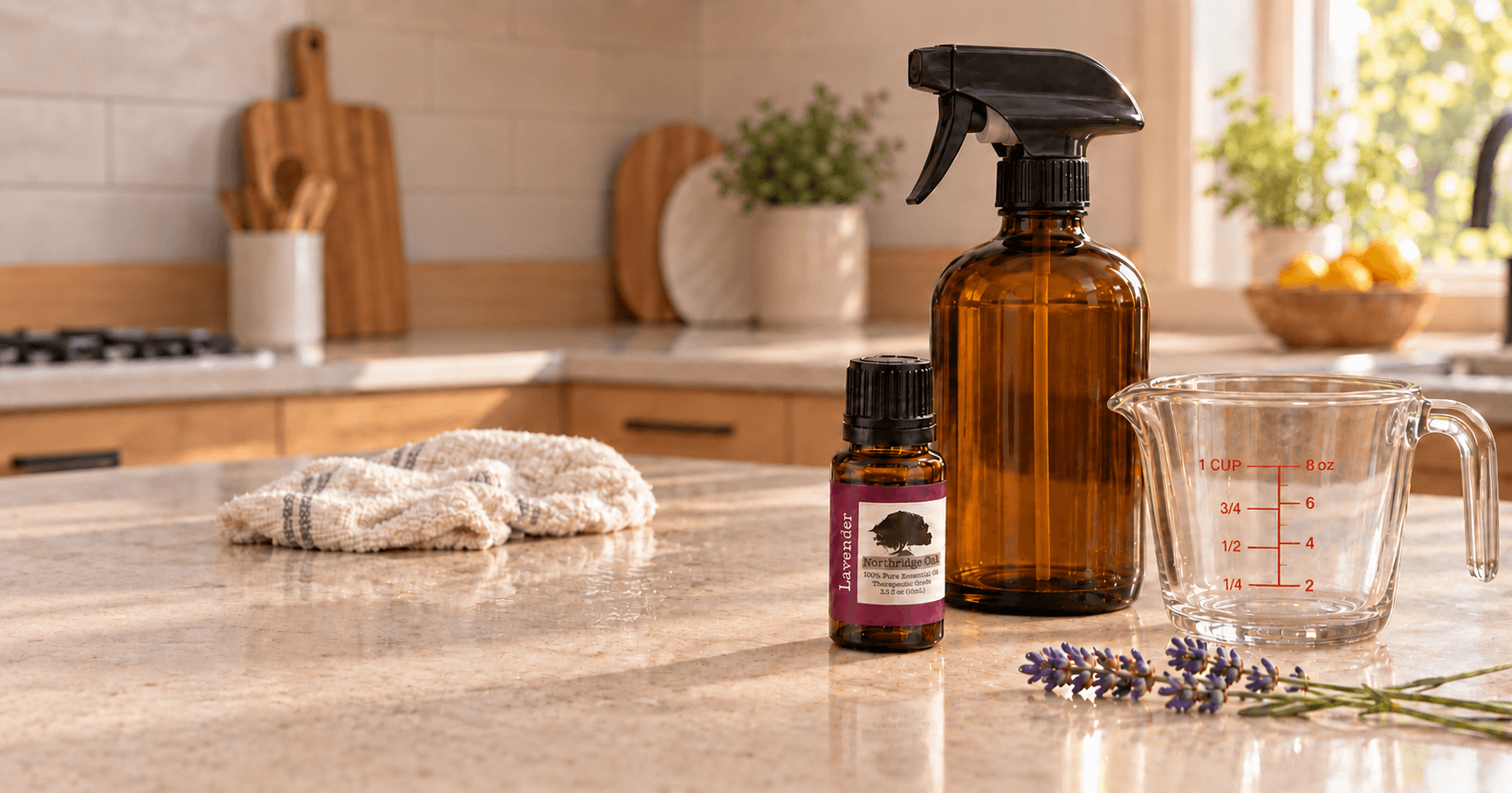
Everyday Lavender and Lemon Vinegar Spray
This is an easy cleaner for many sealed, vinegar-compatible household surfaces. Lavender softens Lemon’s bright citrus aroma, while Lemon keeps the blend feeling crisp and energetic.
Ingredients
- 1 cup distilled water
- 1 cup white vinegar
- 15 drops Lavender Essential Oil
- 10 drops Lemon Essential Oil
- 16-ounce spray bottle
Directions
- Add the distilled water and white vinegar to the bottle.
- Add Lavender and Lemon Essential Oils.
- Close the bottle and shake well.
- Spray the surface lightly and wipe with a clean microfiber cloth.
- Shake before each use to redistribute the essential oils.
Use this spray on surfaces that tolerate diluted vinegar. It works especially well for routine wiping of many sealed household surfaces, but always check the manufacturer’s care instructions first.
Do not use vinegar on marble, granite, limestone, travertine, terrazzo, natural stone, unsealed grout or another acid-sensitive finish. Avoid using it on electronics, unfinished wood and waxed surfaces.
Gentle Lavender Soap Cleaner
For surfaces that should not be cleaned with vinegar, a mild soap solution may be a better fit. This is a simple formula for a single cleaning session, so you do not have to store a water-based mixture for weeks.
Ingredients
- 1 cup warm distilled water
- 1 teaspoon unscented liquid dish soap
- 2 drops Lavender Essential Oil
- Bowl or measuring container
- Clean microfiber cloth
Directions
- Mix Lavender Essential Oil into the liquid soap.
- Stir the soap mixture into the warm water.
- Dip the cloth into the solution and wring it out thoroughly.
- Wipe the surface without saturating it.
- Follow with a clean damp cloth when rinsing is recommended.
- Discard the remaining solution after the cleaning session.
This formula is useful for many washable surfaces that tolerate mild soap. Test it in a hidden area before cleaning an entire cabinet, piece of furniture or finished surface.
Applying the solution to the cloth helps control moisture and keeps Lavender from being misted across the room.
Lavender Carpet Freshener
Carpets can hold onto stale household odors even after the room has been tidied. This dry mixture gives the carpet a light Lavender refresh before vacuuming.
Ingredients
- 2 cups baking soda
- 15 drops Lavender Essential Oil
- Bowl
- Whisk or fork
- Shaker container
Directions
- Add the baking soda to a bowl.
- Distribute the Lavender drops across the powder rather than placing them all in one spot.
- Stir thoroughly and break apart every scented clump.
- Transfer the mixture to a shaker container.
- Test a small, hidden section of carpet.
- Sprinkle a light, even layer over dry carpet.
- Allow it to sit for approximately 15 minutes.
- Vacuum slowly and thoroughly.
Keep children and pets out of the area while the powder is down, and make sure it is completely vacuumed before allowing them to return. Check the care instructions for both the carpet and vacuum, particularly if you have a specialty rug or a vacuum manufacturer that discourages fine powders.
Lavender Baking Soda Sink Scrub
When a sink needs a little more scrubbing power, this simple paste can help lift ordinary grime while leaving behind a fresh Lavender aroma.
Ingredients
- ½ cup baking soda
- 1 tablespoon unscented liquid Castile soap
- 4 drops Lavender Essential Oil
- Small amount of water, if needed
Directions
- Mix Lavender Essential Oil into the Castile soap.
- Stir the soap into the baking soda.
- Add water a few drops at a time until the mixture becomes a soft paste.
- Apply with a damp sponge or cloth.
- Scrub gently and rinse thoroughly.
- Prepare only the amount you plan to use during that cleaning session.
Baking soda is mildly abrasive, so test the paste before using it on a polished or easily scratched finish. Do not use it on delicate acrylic, natural stone or another material whose manufacturer advises against abrasive cleaners.
Lavender Toilet-Bowl Freshening Powder
This quick recipe is useful between deeper bathroom cleanings.
Ingredients
- ½ cup baking soda
- 8 drops Lavender Essential Oil
Directions
- Mix the Lavender thoroughly into the baking soda.
- Sprinkle the mixture around the inside of the toilet bowl.
- Let it sit for approximately 10 minutes.
- Scrub with a toilet brush.
- Flush.
This is a freshening and scrubbing treatment rather than a disinfecting formula. When the bathroom needs disinfection, follow with a product labeled for that purpose and use it according to its directions.
Never combine this recipe with bleach or another toilet-bowl cleaner.
A Simple Lavender Dusting Routine
You do not always need to make a bottled cleaner. For ordinary dust, a slightly damp microfiber cloth may be enough.
Prepare the Gentle Lavender Soap Cleaner, wring the cloth out very well and wipe compatible surfaces from top to bottom. Use a separate dry cloth to remove remaining moisture.
Applying the formula to the cloth instead of spraying furniture helps prevent overspray from reaching floors, electronics, picture frames and nearby fabrics. It also gives you more control over how much product touches the surface.
For unfinished, antique or specialty-finished wood, follow the furniture maker’s recommendations rather than using a general household recipe.
Create a Lavender Cleaning Caddy
Keeping a small set of useful ingredients together makes it easier to choose the right cleaner without filling a cabinet with dozens of products.
A practical Lavender cleaning caddy might contain:
- Distilled water
- White vinegar
- Baking soda
- Unscented liquid dish soap
- Unscented Castile soap
- 70% isopropyl alcohol
- Microfiber cloths
- Clearly labeled spray bottles
- A small shaker container
- Lavender Essential Oil
- Lemon Essential Oil
- Tea Tree Essential Oil
- Cleaning gloves
Lavender blends beautifully with Lemon for a bright, freshly cleaned aroma. It can also be paired with Tea Tree when you want something more herbal or with Peppermint when you want the room to feel crisp and energizing.
Use one recipe at a time rather than combining ingredients from different formulas. Never mix bleach with vinegar, ammonia, alcohol or another household cleaner.
Lavender Cleaning Blends to Try
You can vary the aroma while keeping Lavender at the center of the recipe.
For a recipe calling for 10 total drops, try:
- Fresh Lavender — 10 drops Lavender Essential Oil
- Lavender and Lemon — 6 drops Lavender + 4 drops Lemon Essential Oil
- Clean and Herbal — 7 drops Lavender + 3 drops Tea Tree Essential Oil
- Bright Morning — 5 drops Lavender + 3 drops Lemon + 2 drops Peppermint Essential Oil
- Soft Citrus — 7 drops Lavender + 3 drops Bergamot FCF Essential Oil
- Woodland Lavender — 7 drops Lavender + 3 drops Cedarwood Essential Oil
Keep the total number of drops appropriate for the original recipe. Changing the blend does not mean increasing the overall amount of essential oil.
Make Cleaning Feel Like a Home Reset
One of the strongest reasons cleaning with Lavender Essential Oil is worth trying has nothing to do with making chores more complicated. It can make an ordinary routine feel intentional.
Open the curtains. Put away the clutter. Wipe the surfaces. Vacuum the rug. Replace the hand towels. Then allow the soft Lavender aroma to become the final signal that the room is ready to enjoy again.
This approach works especially well in bedrooms, guest rooms and quiet sitting areas. It transforms cleaning from a list of unfinished jobs into a beginning-to-end ritual with a noticeable reward.
Lavender’s researched relationship with calm and relaxation makes it especially suited to an evening reset. Instead of introducing a sharp or heavily perfumed fragrance just before bedtime, you can leave the room feeling clean, orderly and gently botanical.
Homemade Cleaner Storage
Dry mixtures such as the Lavender Carpet Freshener can be stored in a clean, dry, labeled container. Keep moisture out and break apart any clumps before use.
Water-based homemade cleaners require more attention because they usually do not contain a tested broad-spectrum preservative. Make small batches, use clean equipment and avoid storing them indefinitely.
The single-use soap cleaner is designed to be prepared and discarded on the same day. For the vinegar spray, use a clean bottle, keep it clearly labeled and replace the mixture if its appearance or aroma changes.
Essential oil does not permanently dissolve in water. Shake a spray before each use so the temporarily separated ingredients are redistributed.
Surface-Safety Reminders
Before using any homemade cleaner:
- Read the surface manufacturer’s instructions.
- Test a hidden area.
- Avoid vinegar on natural stone and other acid-sensitive materials.
- Avoid abrasive powders on delicate or high-gloss finishes.
- Do not spray cleaner directly onto electronics.
- Use very little moisture on wood.
- Keep floors free of oily residue that could become slippery.
- Keep children and pets away until the surface is clean and dry.
- Label every bottle with its ingredients and intended use.
- Never transfer a cleaner into a beverage or food container.
Good cleaning is not about using the strongest formula everywhere. It is about choosing a compatible formula and using it thoroughly.
The Bottom Line
Cleaning with Lavender Essential Oil is worth trying because Lavender contributes more than a pleasant floral note. Research has documented antimicrobial activity in laboratory studies, while Lavender aromatherapy has also been studied for its effects on anxiety, stress and relaxation.
In the home, those qualities come together beautifully. Soap lifts soil. Vinegar helps with compatible surfaces and mineral residue. Baking soda provides freshening and gentle scrubbing power. Lavender brings its own botanical compounds, a clean aroma and the ability to make the entire routine feel calmer and more enjoyable.
Use the right recipe for the surface, keep the amount of essential oil modest and allow Lavender to enhance a cleaning routine that already works. The result is a home that does not merely look clean—it feels refreshed, comfortable and ready to be lived in.
Lavender Essential Oil Safety
Lavender Essential Oil is concentrated. Avoid direct contact with the eyes and mucous membranes, and wash your hands after preparing cleaning blends. Keep essential oils and homemade cleaners away from children and pets, and never ingest essential oil.
Ventilate the room while cleaning, test each recipe on a hidden area and stop using a product if it causes irritation or discomfort. Review the complete essential oil safety guide before beginning.
100% Pure Lavender Essential Oil – 10 mL
$11.67
100% Pure Lavender Essential Oil – Lavandula angustifolia Soft, floral and gently herbaceous, Northridge Oak Lavender Essential Oil is steam distilled from the flowering tops of Lavandula angustifolia grown in Bulgaria. This 100% pure, undiluted essential oil contains no fillers,… read more

Continue Exploring Lavender and Natural Cleaning
- Start with the complete Lavender Essential Oil Uses guide.
- Continue with Lavender Essential Oil for Laundry and Fresh Linens.
- Explore our complete guide to natural cleaning products for house cleaners.
- Learn why more households are choosing natural alternatives to synthetic fragrance.
- Shop Lavender Essential Oil, Lemon Essential Oil, Tea Tree Essential Oil, Peppermint Essential Oil, Bergamot FCF Essential Oil and Cedarwood Essential Oil used throughout this guide.
These statements have not been evaluated by the Food and Drug Administration. This content is educational and is not intended to diagnose, treat, cure or prevent any disease.
Frequently Asked Questions
Is Lavender Essential Oil good for cleaning?
Yes. Lavender adds a fresh botanical aroma and naturally occurring compounds that have demonstrated antimicrobial activity in laboratory research. It works well as a supporting ingredient in everyday cleaning formulas containing soap, vinegar or baking soda.
Does Lavender Essential Oil have antibacterial properties?
Studies have found that Lavender Essential Oil can inhibit or affect various bacteria under laboratory conditions. Results depend on the Lavender variety, chemical composition, concentration and organism being tested. The research supports Lavender’s value as an active botanical ingredient, although a homemade recipe should not be marketed as a registered disinfectant.
Can Lavender Essential Oil disinfect a surface?
Lavender has demonstrated antimicrobial activity in studies, but a homemade Lavender recipe has not gone through the testing required to carry a disinfectant label. When disinfection is needed, clean the surface first and use an EPA-registered disinfectant according to its labeled contact time.
How many drops of Lavender should I add to a homemade cleaner?
The amount depends on the recipe. A large 16-ounce vinegar spray may use approximately 15 drops of Lavender, while a one-cup single-use soap solution needs only about 2 drops. More oil is not automatically more effective and may leave residue on the surface.
Can I mix Lavender Essential Oil with vinegar?
Yes. Lavender can be added to a diluted vinegar cleaning spray. The oil does not dissolve permanently in vinegar and water, so shake the bottle before each use. Always avoid vinegar on natural stone and other acid-sensitive surfaces.
Can I mix Lavender Essential Oil with baking soda?
Yes. Baking soda is useful for distributing Lavender through dry carpet powders and single-use scrubbing pastes. Add the drops across the powder, mix thoroughly and break apart concentrated clumps.
Can I use Lavender cleaner on granite or marble?
Avoid vinegar-based Lavender cleaners on granite, marble and other natural stone. An acidic cleaner can damage the surface or wear away the finish. Use a cleaner approved by the stone manufacturer and add Lavender only if the formula allows it.
Is cleaning with Lavender Essential Oil safe around pets?
Use modest amounts, ventilate the room and keep pets away from wet surfaces and cleaning powders. Do not allow an animal to lick a freshly cleaned surface or walk through undiluted oil. Cats, birds and animals with respiratory conditions deserve additional consideration.
Can I add Lavender Essential Oil to a commercial disinfectant?
Do not change a registered disinfectant by adding essential oil, vinegar or another ingredient. The product’s directions and contact time apply to the formula as tested. Use the disinfectant as labeled, then enjoy Lavender separately after the task is finished.
Why use Lavender instead of synthetic fragrance?
Pure Lavender Essential Oil provides a botanical aroma created by naturally occurring plant compounds. Synthetic fragrances may contain complex fragrance mixtures and can feel overpowering to some households. Lavender also brings researched antimicrobial properties and has been studied for its effects on stress and relaxation.