Table of Contents
- TRY FRANKINCENSE FOR YOURSELF—GET A FREE BOTTLE
- What Is Frankincense Essential Oil?
- Why Frankincense Has Remained a Skincare Favorite
- Frankincense Oil Benefits for the Face and Skin
- What Modern Research Says About Frankincense and Skin
- The Best Way to Use Frankincense Oil on Your Face
- DIY Frankincense Facial Oil for Smoother-Looking Skin
- DIY Frankincense Under-Eye Beauty Oil
- DIY Frankincense Face and Neck Massage Oil
- DIY Frankincense Body Oil for Scars and Stretch Marks
- DIY Frankincense Hand and Cuticle Oil
- Choosing the Right Carrier Oil
- How to Make Frankincense Part of Your Routine
- A Few Smart Usage Tips
- Is Frankincense Oil Worth Trying on Your Face?
- Research References
- FAQs
Some ingredients become popular for a season. Frankincense Essential Oil has been treasured for thousands of years.
TRY FRANKINCENSE FOR YOURSELF—GET A FREE BOTTLE
Ready to experience frankincense for yourself? Claim your FREE bottle of Northridge Oak Frankincense Essential Oil—just pay shipping. You’ll also get access to our Frankincense Oil Uses guide, packed with DIY recipes and diffuser blends.
Across generations and cultures, the aromatic resin of Boswellia trees has held an honored place in beauty rituals, perfumery, ceremony and personal care. Today, frankincense is finding its way back into facial oils, body oils and mature-skin routines—and it is easy to understand why.
Frankincense essential oil has a warm, resinous aroma that makes even a simple skincare routine feel luxurious. When added to a nourishing carrier oil, it creates a beautiful facial blend that helps dry, tired-looking skin feel soft, conditioned and refreshed.
It is especially loved by people who want to improve the appearance of:
Fine lines and wrinkles
Dry or mature-looking skin
Puffiness and bags beneath the eyes
Uneven or tired-looking skin
Areas where scars or stretch marks are visible
Rough, dry hands and cuticles
New to Frankincense? Start with our complete Frankincense Essential Oil guide for uses, DIY recipes, diffuser blends and practical safety tips
Modern research is also exploring the antioxidant, antimicrobial, inflammatory-response and skin-recovery properties associated with frankincense preparations. Science may still be catching up with everything people have learned through generations of use, but there is already plenty to make frankincense an exciting addition to a natural skincare routine.
Best of all, you do not need an expensive or complicated formula. A bottle of pure frankincense essential oil, a carrier oil and a few minutes are enough to make your own.
What Is Frankincense Essential Oil?
Frankincense essential oil begins as aromatic resin harvested from trees in the Boswellia genus. Small cuts are made in the bark, allowing the resin to emerge and harden into fragrant tears. That resin is then steam-distilled to capture its volatile aromatic compounds.
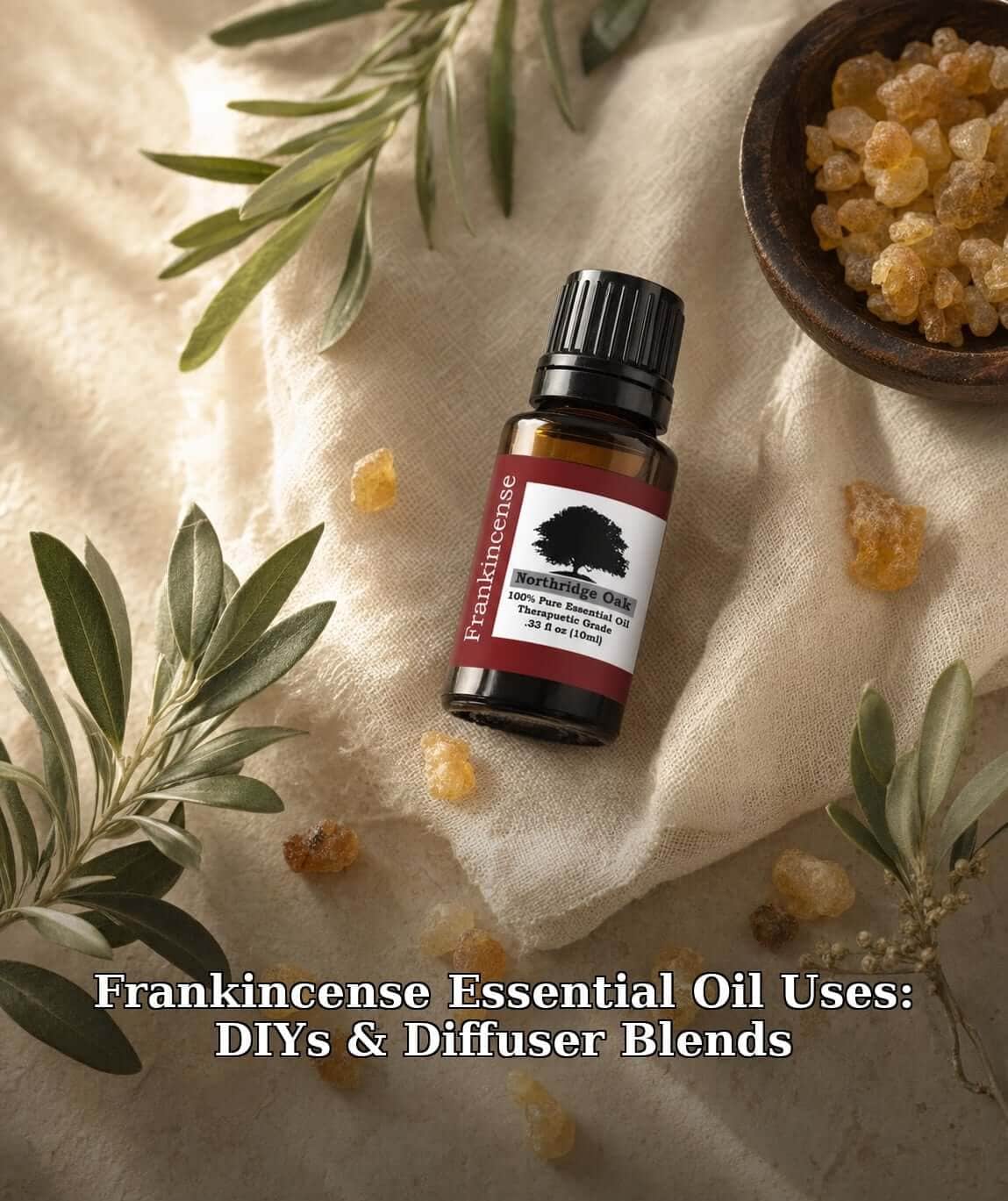
Northridge Oak Frankincense Essential Oil is steam-distilled from Boswellia serrata, a species traditionally associated with India. Its aroma is warm, woody, earthy and lightly citrus-like.
Each batch is third-party GC-MS tested to help verify its identity, purity and chemical composition. It is undiluted and contains no fillers or synthetic fragrance, giving you the freedom to create a dilution that is right for your skincare routine.
Why Frankincense Has Remained a Skincare Favorite
Frankincense did not become associated with beauty because of a recent trend. Its long history comes from generations of people observing how it complemented their personal-care rituals.
Today, many people use diluted frankincense oil to help their skin look smoother, softer and more radiant. Others love it as part of an evening facial massage or apply it around—but never in—the delicate under-eye area to help tired-looking eyes appear refreshed.
Frankincense also pairs exceptionally well with jojoba, squalane, rosehip seed oil, sweet almond oil and fractionated coconut oil. These carrier oils condition the skin while frankincense contributes its distinctive aroma and naturally occurring plant compounds.
The result is skincare that feels simple, intentional and deeply rooted in tradition.
Frankincense Oil Benefits for the Face and Skin
Helps Mature Skin Look Smooth and Supple
One of the most popular uses for frankincense oil is in mature-skin routines. A frankincense facial oil helps condition dry skin and gives it a softer, more supple appearance.
Well-moisturized skin reflects light more evenly. As dryness is softened, fine lines often appear less noticeable and the face can take on a fresher, smoother look. This is why many people make frankincense facial oil a consistent part of their evening routine rather than treating it as a one-time application.
Softens the Appearance of Fine Lines and Wrinkles
Frankincense has become especially popular in oils applied to areas where fine lines are most visible, including the forehead, between the eyebrows, beside the mouth and across the neck.
The combination of a conditioning carrier oil, gentle facial massage and frankincense can help the skin look moisturized, plump and cared for. Results vary from person to person, but this simple ritual is easy to try consistently and evaluate for yourself.
Refreshes the Look of the Under-Eye Area
Late nights, seasonal allergies, fluid retention and ordinary fatigue can leave the under-eye area looking puffy or shadowed. Many people use a very gently diluted frankincense blend along the orbital bone to help the area look conditioned and refreshed.
The application technique matters. Use only the smallest amount, tap rather than rub and keep the blend well away from the eyelids, lash line and eyes. A cool facial roller or chilled spoon can be used separately for a refreshing massage before applying the oil.
Supports Soft, Radiant-Looking Skin
Dryness can make the complexion look dull and emphasize texture. Applying a few drops of facial oil to slightly damp skin helps seal in moisture and creates an immediate glow.
Frankincense turns that practical step into a sensory ritual. Its resinous aroma feels grounding and refined, making it a natural choice for evening skincare, facial massage and quiet moments of self-care.
Complements Blemish-Prone Skincare
Frankincense preparations have attracted scientific interest for their antimicrobial and inflammatory-response activity. This is one reason frankincense is frequently discussed in connection with blemish-prone skin.
Everyone's skin is different, and essential oils are not acne medications. However, someone who wants to explore frankincense cosmetically can add a small amount to a lightweight carrier oil their skin already tolerates, introduce the blend gradually and decide how it works for them.
Conditions Skin Around Visible Scars and Stretch Marks
Body oils are often massaged into intact skin where scars or stretch marks are visible. Consistent moisturization can help the area feel softer, more flexible and better conditioned.
Frankincense has a long history of topical use, and emerging skin-recovery research continues to make it an ingredient of interest. It is a beautiful addition to a daily body oil for anyone who wants to care for the appearance and feel of these areas over time.
What Modern Research Says About Frankincense and Skin
Traditional use is part of frankincense's story, but it is not the only part. Researchers are studying Boswellia oils, resins, extracts and natural compounds in several areas relevant to skin.
Antioxidant Activity
Some frankincense preparations have demonstrated antioxidant activity in laboratory research. Antioxidants are of particular interest in skincare because environmental exposure and oxidative stress contribute to the visible signs of aging.
Inflammatory-Response Activity
Frankincense is widely studied for its interaction with inflammatory pathways. The best-known research includes compounds from the resin, but volatile compounds and frankincense essential oils have also received scientific attention.
Antimicrobial Activity
Researchers have observed antimicrobial activity from certain frankincense oils and extracts in laboratory settings. The results vary according to species, chemical profile, concentration and test method, but they help explain why frankincense remains so interesting for personal-care research.
Skin-Recovery Research
A 2025 animal study investigated frankincense essential oil in a wound model and reported results related to oxidative stress, inflammation, collagen formation and wound closure. Animal research cannot tell us exactly what a cosmetic facial oil will do for a person, but the findings provide a strong reason for continued study.
Human Research on Photoaged Skin
A randomized split-face human study examined a topical boswellic-acid formulation and reported improvement in some features of photoaged skin.
Boswellic acids come from frankincense resin but are not present in meaningful amounts in steam-distilled essential oil. That means the formulation was not the same as the bottle of frankincense essential oil used in the recipes below. Still, the study adds to the growing body of research showing why Boswellia is so compelling in skincare.
The most useful way to view the science is not to ask whether every frankincense preparation is identical. Instead, recognize that an ancient botanical is now being explored through modern methods—and that research is uncovering several promising areas worthy of much more attention.
The Best Way to Use Frankincense Oil on Your Face
Frankincense essential oil is concentrated, so a little goes a long way. For facial use, approximately 0.5% is a comfortable place to begin:
10 mL carrier oil: 1 drop Frankincense Essential Oil
1 fluid ounce/30 mL carrier oil: 3 drops Frankincense Essential Oil
Drop size varies, so these measurements are approximate. Starting low lets you experience the oil without overpowering your blend. If you enjoy it and your skin responds well, you can decide whether that dilution is right for your routine.
DIY Frankincense Facial Oil for Smoother-Looking Skin
This is the ideal first recipe. Jojoba feels light on the face, while frankincense creates a rich, elegant aroma.
You'll Need
1 fluid ounce jojoba oil
3 drops Frankincense Essential Oil
1-ounce amber glass dropper bottle
Directions
Add the frankincense to a clean, dry dropper bottle.
Fill the bottle with jojoba oil.
Cap and gently roll the bottle between your palms.
Label it with the ingredients and date.
How to Use It
After cleansing, place one or two drops in your palm. Press the oil gently over slightly damp face and neck, concentrating on dry areas and places where fine lines are visible.
Make it part of your evening routine and give yourself time to notice how your skin feels and looks with consistent use.
DIY Frankincense Under-Eye Beauty Oil
This extra-gentle blend is intended for the orbital bone surrounding the under-eye area—not the eyelids or lash line.
You'll Need
10 mL jojoba oil
1 drop Frankincense Essential Oil
10 mL roller bottle or small dropper bottle
Directions
Combine the ingredients and gently roll to mix. At night, place the tiniest amount on your ring finger and lightly tap it along the orbital bone beneath each eye. Keep it well below the lash line and away from the inner and outer corners of the eyes.
Pair the application with 30 seconds of very gentle tapping to make tired-looking eyes appear fresh and cared for.
DIY Frankincense Face and Neck Massage Oil
Facial massage makes this simple oil feel like a spa treatment at home.
You'll Need
1 fluid ounce jojoba oil
2 drops Frankincense Essential Oil
1 drop Lavender Essential Oil
1-ounce dropper bottle
Directions
Combine the oils in the bottle. Apply three or four drops to clean, damp skin so your fingers glide without pulling. Massage gently over the cheeks, forehead, jawline and neck for two to five minutes.
Frankincense is the star of the blend, while lavender adds a soft floral note that is ideal for an evening ritual.
DIY Frankincense Body Oil for Scars and Stretch Marks
Use this blend to condition intact skin where scars, stretch marks or dry patches are visible.
You'll Need
2 fluid ounces fractionated coconut oil
12 drops Frankincense Essential Oil
2-ounce pump or dropper bottle
Directions
Combine the oils. After bathing, massage a small amount into slightly damp skin using slow circular motions. Consistency is more important than using a large amount—make the application part of your daily routine.
DIY Frankincense Hand and Cuticle Oil
Hands often show dryness first. This richer blend makes them feel soft and gives cuticles a conditioned appearance.
You'll Need
1 fluid ounce jojoba or sweet almond oil
6 drops Frankincense Essential Oil
1-ounce dropper bottle
Directions
Combine the ingredients and gently roll to mix. Massage one or two drops into hands, nails and cuticles whenever they feel dry.
Choosing the Right Carrier Oil
Your carrier oil makes up nearly all of the finished blend, so choose one that suits the feel you want.
Jojoba Oil
Light, stable and easy to use, jojoba is an excellent first choice for a facial oil. It is technically a liquid wax and leaves many skin types feeling soft without an overly heavy finish.
Sweet Almond Oil
Sweet almond oil creates a nourishing body, hand or neck oil. It feels richer than jojoba and is a lovely choice for dry skin.
Fractionated Coconut Oil
Fractionated coconut oil stays liquid and spreads easily. It is especially convenient for body oils and massage blends.
How to Make Frankincense Part of Your Routine
The easiest routine is often the one you will actually continue.
In the Morning
Apply one drop of facial oil over damp skin before sunscreen and makeup. Allow it to absorb before adding the next product.
In the Evening
Press one or two drops over freshly cleansed skin. Spend a minute massaging the forehead, cheeks, jawline and neck.
Once or Twice a Week
Use the face and neck massage blend for a longer self-care ritual. Slow down, breathe in the aroma and give the oil time to glide over the skin.
After Bathing
Apply the body oil to slightly damp skin, paying extra attention to dry areas, scars, stretch marks, elbows and knees.
A Few Smart Usage Tips
Frankincense essential oil is highly concentrated. Dilute it before applying it to the face or body, patch test a new blend and keep it out of the eyes, eyelids, lash line and mucous membranes. Use facial and body recipes only on intact skin, and stop using any product that causes irritation.
Store both the essential oil and finished blend tightly closed and away from heat, moisture and direct sunlight. Keep essential oils out of reach of children and pets.
That is really all it takes: pure frankincense, a carrier oil your skin enjoys and a consistent routine.
Want to learn more before choosing an oil? Compare the different types of Frankincense Essential Oil and discover how to choose pure, high-quality Frankincense Essential Oil.
Ready to experience frankincense for yourself? Claim your FREE bottle of Northridge Oak Frankincense Essential Oil—just pay shipping.
Is Frankincense Oil Worth Trying on Your Face?
Frankincense offers something few modern skincare ingredients can match: thousands of years of use, an unmistakable aroma, a complex natural chemistry and a growing body of scientific interest.
Many people love how a frankincense facial oil makes dry or mature-looking skin feel soft, smooth and conditioned. Others reach for it around the orbital bone when the under-eye area looks tired or add it to a body oil for areas where scars and stretch marks are visible.
Your skin is personal. The best way to know whether frankincense deserves a place in your routine is to try a thoughtfully diluted blend and observe the results for yourself.
Start with the simplest recipe: one ounce of jojoba and three drops of frankincense. It takes less than five minutes to make, but it may become the part of your skincare routine you look forward to most.
100% Pure Frankincense Essential Oil – 10 mL
$35.00
Warm, woody and resinous, Northridge Oak Frankincense Essential Oil is steam distilled from Boswellia serrata resin grown in India. This 100% pure, undiluted essential oil is third-party GC–MS tested for identity and purity, then bottled in the USA. Use Frankincense in diffusers, properly… read more

Research References
Calzavara-Pinton P, et al. Effects of topical boswellic acid on photo and age-damaged skin: clinical, biochemical, and echographic findings in a double-blind, randomized, split-face study. Planta Medica. 2010. This study examined a boswellic-acid formulation rather than steam-distilled essential oil.
Venkatesan K, et al. Protective Effects of Frankincense Oil on Wound Healing: Modulation of Oxidative Stress, Inflammation, and Collagen Synthesis in a Rat Model. 2025. Preclinical animal research.
Efferth T, Oesch F. Anti-inflammatory and anti-cancer activities of frankincense: Targets, treatments and toxicities. Seminars in Cancer Biology. 2022.
Al-Yasiry ARM, Kiczorowska B. Frankincense—therapeutic properties. Postępy Higieny i Medycyny Doświadczalnej. 2016.
U.S. Food and Drug Administration. Cosmetics Labeling Claims.
Essential oils are highly concentrated. Always follow appropriate usage and dilution guidance for each individual oil. Some oils require additional precautions, so familiarize yourself with an oil's safety information before use. Keep essential oils out of reach of children and pets.
These statements have not been evaluated by the Food and Drug Administration. This information is for educational purposes only and is not intended to diagnose, treat, cure, or prevent any disease.
Frequently Asked Questions
Can I use frankincense oil on my face every day?
Many people incorporate a properly diluted frankincense facial oil into a daily routine. Begin with a small amount a few evenings per week, then decide whether you want to use it more often based on how your skin responds.
How long does it take to see results from frankincense facial oil?
The moisturizing glow from a carrier-oil blend may be noticeable immediately. Changes in how soft, smooth and conditioned the skin looks require consistent use and vary by person. Take a photo before you begin, use the same blend regularly and compare your skin after several weeks.
How do I use frankincense oil for wrinkles?
Add three drops of frankincense to one fluid ounce of jojoba, squalane or another facial carrier oil. Apply one or two drops to damp skin and gently massage areas where fine lines are visible. Consistent moisturization can help dry, mature-looking skin appear smoother and more supple.
How do I use frankincense oil for under-eye bags?
Dilute one drop of frankincense in 10 mL of jojoba or squalane. Use your ring finger to tap the tiniest amount along the orbital bone below the eye, keeping the blend away from the eyelid, lash line and eye itself. A cool roller or chilled spoon can be used separately before the oil for a refreshing massage.
Can I combine frankincense with other essential oils?
Yes. Frankincense blends beautifully with lavender, geranium, myrrh and many other oils. Keep the total number of essential-oil drops within your chosen dilution rather than adding extra drops. In a one-ounce facial oil, for example, try two drops of frankincense and one drop of lavender.
Which frankincense is used in Northridge Oak's oil?
Northridge Oak Frankincense Essential Oil is steam-distilled from Boswellia serrata. It is undiluted, third-party GC-MS tested and contains no fillers or synthetic fragrance.