Table of Contents
- What Does Self-Care Actually Mean?
- 1. Start Your Morning With an Energizing Aroma
- 2. Use Aroma to Create a Focus Routine
- 3. Create a Midday Reset
- 4. Make Body Care Part of Your Self-Care Routine
- 5. Turn an Ordinary Shower Into a Self-Care Moment
- 6. Make Massage Part of Your Evening Routine
- 7. Use Lavender When It's Time to Wind Down
- 8. Create a Bedtime Ritual You Can Actually Maintain
- 9. Create a Relaxing Weekend Ritual
- 10. Make Your Home Smell Like a Place You Want to Be
- How to Choose Essential Oils for Your Self-Care Routine
- Self-Care Doesn't Have to Look the Same Every Day
- A Simple Essential Oil Self-Care Routine
- Build a Self-Care Routine That Fits Your Life
- FAQs
Self-care doesn't have to mean an elaborate spa day, an expensive wellness routine, or finding an extra hour in a day that's already full.
Sometimes it's much simpler.
It might be taking ten quiet minutes before bed. Stepping away from your computer for a few minutes in the afternoon. Taking a warm shower after a long day. Making your bedroom feel more relaxing in the evening. Or simply creating a morning routine that helps you transition into the day.
Essential oils can fit naturally into many of these everyday moments.
Aromatherapy isn't a cure-all, and you don't need dozens of essential oils to create a meaningful self-care routine. A few oils you genuinely enjoy—used intentionally and safely—can become part of routines for relaxation, sleep, focused work, personal care, massage, and simply making your surroundings more enjoyable.
Here's how to get started.
What Does Self-Care Actually Mean?
Self-care is simply the practice of intentionally taking care of your physical, mental, and emotional well-being.
That can include the obvious things:
Getting enough sleep. Moving your body. Eating well. Spending time outside. Taking breaks. Connecting with people you care about.
But it can also include small rituals that help separate one part of your day from another.
That's where essential oils can be particularly useful. You might associate Peppermint with sitting down to work, Blood Orange with your morning routine, or Lavender with winding down before bed.
The essential oil becomes part of the environment and routine you've intentionally created.
1. Start Your Morning With an Energizing Aroma
Your self-care routine can begin before the day gets busy.
Bright citrus and mint aromas work particularly well in a morning routine because they create a fresh, lively atmosphere without requiring much effort.
Turn on your diffuser while you're making coffee, getting dressed, packing lunches, or preparing for work.
Morning Diffuser Blend
Try:
- 3 drops Blood Orange
- 2 drops Peppermint
- 2 drops Lemon
Add the oils to your diffuser according to its manufacturer's instructions.
Prefer something less minty?
Bright Morning Blend
Try:
- 3 drops Blood Orange
- 2 drops Lemon
- 2 drops Bergamot
Or, if you'd rather reach for a ready-made blend, try Northridge Oak Energize Essential Oil Blend. Energize combines Lemon and Grapefruit essential oils for a bright, fresh citrus aroma that's easy to incorporate into your morning routine.
Energize Essential Oil Blend – 100% Pure, 10 mL

$20.00
Energize Essential Oil Blend Bright, sparkling and unmistakably uplifting, Northridge Oak Energize Essential Oil Blend brings together the fresh citrus aromas of Lemon and Grapefruit in one simple, invigorating blend. Its clean, sunny fragrance is perfect for mornings, afternoon slumps,… read more
Add 6–8 drops to your diffuser, adjusting slightly for your diffuser size and preferred aroma strength.
Use it while you're getting ready for the day, starting your morning routine, or whenever you want your space to smell bright and citrusy.
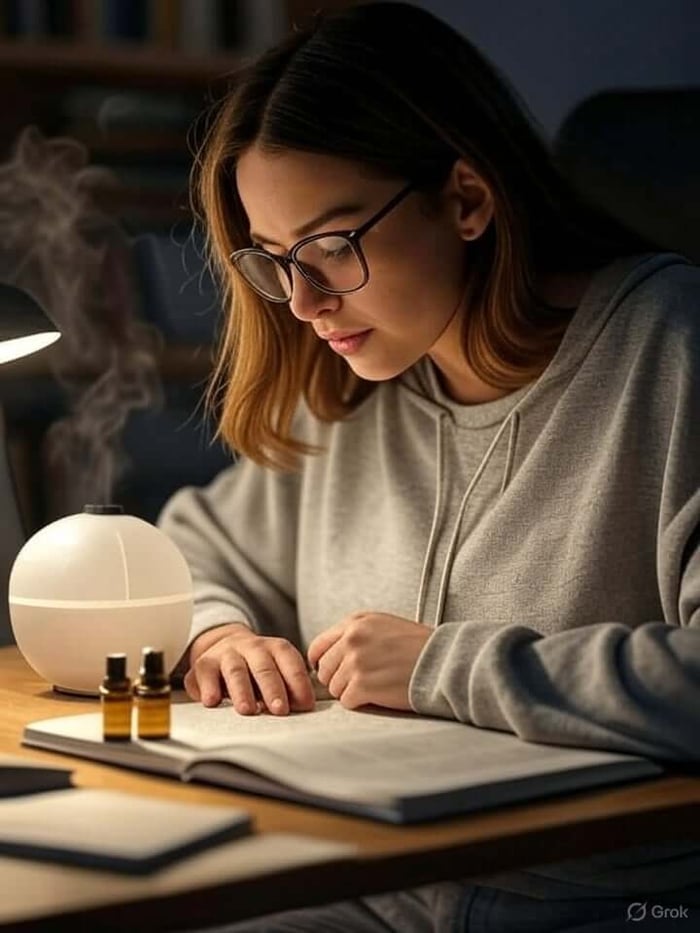
2. Use Aroma to Create a Focus Routine
Self-care isn't limited to relaxation.
Protecting your attention and creating a better working environment can be part of taking care of yourself too.
Research involving healthy adults has found interesting effects from Rosemary and Peppermint aroma on certain measures of memory, alertness, and cognitive performance.
Try using aroma as one part of a larger routine:
Clear your workspace.
Put away unnecessary distractions.
Choose what you're going to work on.
Then start your diffuser.
Focus Diffuser Blend
Try:
- 3 drops Rosemary
- 2 drops Peppermint
- 2 drops Lemon
If you'd like to explore the research behind these oils, read our Essential Oils for Memory and Focus guide.
3. Create a Midday Reset
Sometimes self-care means recognizing when you've been staring at a screen for three hours and need to stop for a few minutes. A midday reset doesn't have to take long. Step away from your desk. Refill your water. Walk outside. Stretch. Sit somewhere quiet. Take a few slow breaths.
A personal aromatherapy inhaler can easily become part of that routine.
Peppermint, Blood Orange, Lemon, Bergamot, or another aroma you enjoy can provide a simple sensory change from the environment you've been sitting in all morning.
4. Make Body Care Part of Your Self-Care Routine
Essential oils can also be incorporated into properly diluted body oils, massage oils, cuticle oils, and other personal-care products. Because essential oils are highly concentrated, dilution matters. For a simple adult body oil, start with a low dilution.
Simple Lavender Body Oil
Combine:
- 1 oz jojoba oil
- 6 drops Lavender essential oil
Mix well in a clean bottle. This creates approximately a 1% dilution. Massage a small amount onto appropriate areas of skin as part of your normal moisturizing or evening body-care routine.
Lavender + Frankincense Body Oil
For a slightly more complex aroma:
- 1 oz jojoba oil
- 4 drops Lavender
- 2 drops Frankincense
The result is floral, herbaceous, warm, and slightly resinous. If you're new to topical essential-oil use, visit our Complete Essential Oil Safety Guide for more information about dilution and safe use.
5. Turn an Ordinary Shower Into a Self-Care Moment
You don't necessarily need a bathtub—or an hour—to create a relaxing experience.
A warm shower can become a natural transition between a busy day and your evening.
You might diffuse Eucalyptus in the bathroom before showering or use an appropriately formulated essential-oil shower product.
You can also simply place your diffuser somewhere safely outside the splash zone and choose an aroma that fits the atmosphere you want.
Fresh Shower-Time Diffuser Blend
Try:
- 3 drops Eucalyptus
- 2 drops Lavender
- 1 drop Peppermint
Keep the diffuser itself away from water and follow the manufacturer's directions.
6. Make Massage Part of Your Evening Routine
Massage doesn't have to mean booking an appointment.
Even a few minutes spent massaging your hands, shoulders, feet, or legs with a properly diluted aromatic body oil can become a simple evening ritual.
Lavender Evening Massage Oil
Combine:
- 1 oz carrier oil
- 6 drops Lavender
- 3 drops Frankincense
That's approximately a 1.5% dilution.
Use a small amount during an evening massage routine.
The massage itself is part of the experience, while the essential oils provide the aroma.
This distinction matters. We don't need to claim that an essential oil “releases muscle tension” or changes circulation to appreciate an aromatic massage.
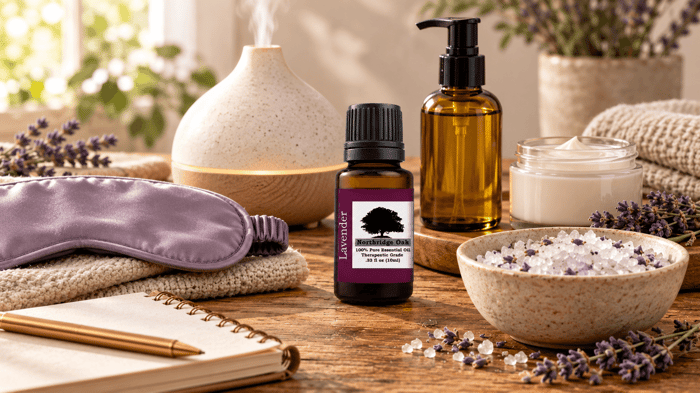
7. Use Lavender When It's Time to Wind Down
Lavender is one of the most researched essential oils in aromatherapy, particularly in connection with relaxation, anxiety, and sleep.
A systematic review examining Lavender inhalation included 11 clinical studies involving 972 participants; 10 reported significant reductions in anxiety following Lavender inhalation.
Research on sleep is also encouraging. A systematic review and meta-analysis of 11 randomized controlled trials involving 628 adults found an overall improvement in sleep quality following Lavender essential-oil interventions.
This makes Lavender a great essential oil to incorporate into an established wind-down routine.
Evening Wind-Down Blend
Try:
- 4 drops Lavender
- 2 drops Frankincense
- 1 drop Bergamot
Diffuse while reading, getting ready for bed, journaling, or simply relaxing in the evening.
For a deeper look at Lavender and the research behind its popular uses, read our Lavender Essential Oil Benefits guide.
8. Create a Bedtime Ritual You Can Actually Maintain
One of the easiest mistakes to make with self-care is creating a routine that's too complicated to maintain.
You don't need a 12-step bedtime ritual.
Try something simple:
Turn off unnecessary screens.
Dim the lights.
Start your diffuser.
Read for 15 minutes.
Then go to bed.
If you enjoy Lavender, use Lavender consistently as part of this routine.
Simple Bedtime Blend
- 4 drops Lavender
- 2 drops Frankincense
That's it.
Self-care tends to be much more useful when it's something you can realistically repeat.
9. Create a Relaxing Weekend Ritual
Self-care can also be something you deliberately make time for once or twice a week.
Maybe that's Saturday morning before everyone else is awake.
Maybe it's Sunday evening before another busy week begins.
Make coffee or tea. Put your phone somewhere else. Turn on some music. Read, journal, work on a hobby, sit outside, or simply do nothing for a while.
Then choose an essential oil you associate with that time.
Slow Morning Diffuser Blend
Try:
- 3 drops Bergamot
- 3 drops Lavender
- 1 drop Frankincense
Or create your own combination.
10. Make Your Home Smell Like a Place You Want to Be
Sometimes self-care is environmental.
A clean kitchen, freshly washed bedding, open windows, comfortable lighting, music, plants, and an aroma you love can change the way a space feels.
Essential oils give you a way to add to your environment without relying exclusively on heavily fragranced conventional products.
Fresh Home Diffuser Blend
Try:
- 3 drops Lemon
- 2 drops Lavender
- 2 drops Eucalyptus
Cozy Evening Blend
Try:
- 3 drops Blood Orange
- 2 drops Frankincense
- 1 drop Patchouli
If reducing synthetic fragrance is part of your natural-living goals, read our guide to synthetic fragrance and natural alternatives for your home.
How to Choose Essential Oils for Your Self-Care Routine
You don't need a different essential oil for every possible situation.
Start with a few versatile oils and learn how you actually like to use them.
A simple collection might include:
Lavender for evening, body-care, and relaxing aromatic routines.
Peppermint for fresh daytime aroma and work/study routines.
Blood Orange or Lemon when you want something bright and citrusy.
Frankincense for warm, resinous diffuser blends and body-care recipes.
Eucalyptus for fresh spa-inspired shower and diffuser blends.
Rosemary for work and study environments.
From those few oils alone, you can create dozens of different aromatic routines.
Self-Care Doesn't Have to Look the Same Every Day
Some mornings you might have time to diffuse oils while drinking coffee.
Other mornings you're lucky to find your shoes.
Some evenings you might take time for a body oil, book, and relaxing diffuser blend.
Other evenings self-care means going directly to bed.
That's okay.
Essential oils should fit into your life rather than becoming another thing on your list that you're supposed to do perfectly.
And build small routines that you genuinely enjoy.
A Simple Essential Oil Self-Care Routine
If you're not sure where to start, don't try everything in this article at once.
Try this for one week:
Morning: Diffuse Blood Orange + Lemon while getting ready.
Work or study: Use Rosemary + Peppermint when you need a focused work environment.
Midday: Step away from what you're doing for five minutes and use a personal aromatherapy inhaler if you enjoy one.
Evening: Apply a diluted Lavender body oil after showering.
Before bed: Diffuse Lavender + Frankincense while winding down.
That's how you build a self-care routine that has a chance of becoming part of everyday life.
Build a Self-Care Routine That Fits Your Life
Self-care doesn't need to be complicated.
A five-minute break counts.
Turning off your phone and reading counts.
Taking a walk counts.
Getting enough sleep counts.
Making your bedroom feel peaceful counts.
And if you enjoy essential oils, aroma can become another part of those moments.
Start small. Choose a few oils you genuinely enjoy. Learn how to use them safely. Then experiment with incorporating them into routines you already have.
Because the best self-care routine isn't the most elaborate one.
It's the one you'll actually use.
Essential oils are highly concentrated. Dilute appropriately for topical use and follow oil-specific safety guidance. Keep essential oils out of reach of children and pets. Avoid contact with eyes and other sensitive areas. If pregnant, nursing, taking medication, managing a medical condition, or using essential oils with children, consult an appropriate healthcare professional when needed.
These statements have not been evaluated by the Food and Drug Administration. Northridge Oak products are not intended to diagnose, treat, cure, or prevent any disease.
Frequently Asked Questions
What are the best essential oils for self-care?
There isn't one “best” oil because it depends on what you enjoy and what you're doing. Lavender, Peppermint, Lemon, Blood Orange, Frankincense, Eucalyptus, Rosemary, and Bergamot are all versatile choices for different aromatic routines.
How can I use essential oils for self-care?
Some of the easiest options are diffusion, personal aromatherapy inhalers, properly diluted body oils and massage oils, passive aroma methods, and appropriately formulated bath or shower products.
Can essential oils help with relaxation?
Essential Oils can certainly be incorporated into a relaxing environment, and Lavender has specifically been investigated in numerous human studies. Systematic reviews have reported encouraging results for Lavender aromatherapy and anxiety.
Which essential oils are good for bedtime?
Lavender is one of the most researched choices. Frankincense and Bergamot also pair beautifully with Lavender when you want a more complex evening scent.
Can I apply essential oils directly to my skin?
For routine topical use, properly dilute essential oils in a suitable carrier and follow oil-specific safety recommendations.
Do I need a diffuser to use essential oils?
No. Personal aromatherapy inhalers, passive diffusion, and properly diluted topical products are alternatives when a diffuser isn't practical.