Table of Contents
- Has Lavender historically been used against lice and insects?
- What did the Tea Tree and Lavender head-lice study find?
- What does laboratory research say about Lavender’s linalool?
- Why do Lavender and Tea Tree work so well together?
- What is the best natural head-lice routine?
- How do you comb out lice successfully?
- Can you make a gentle Lavender combing blend?
- What should you clean after finding head lice?
- How can families reduce the chance of lice returning?
- What safety points make the routine easier?
- Why choose Northridge Oak Lavender Essential Oil?
- Sources and further reading
- FAQs
Lavender Oil for head lice deserves a much closer look than it often receives. In a randomized clinical trial involving children with live head lice, a properly formulated Tea Tree and Lavender Oil product left 97.6% of participants louse-free—far outperforming the pyrethrin-based product used for comparison. Lavender’s key constituent, linalool, has also demonstrated direct activity against lice in laboratory research.
For families who would rather begin with a botanical option, that is genuinely encouraging evidence. The most effective natural plan combines a well-formulated essential-oil product, careful section-by-section combing and repeat applications timed to the lice life cycle. This article shows you how those pieces fit together and why Lavender has earned a place in the conversation.
Research snapshot: In the 2010 child clinical trial, 41 of 42 participants treated with a Tea Tree and Lavender Oil product were louse-free after the final treatment. The pyrethrin and piperonyl-butoxide comparison product left only 10 of 40 participants louse-free.
Has Lavender historically been used against lice and insects?
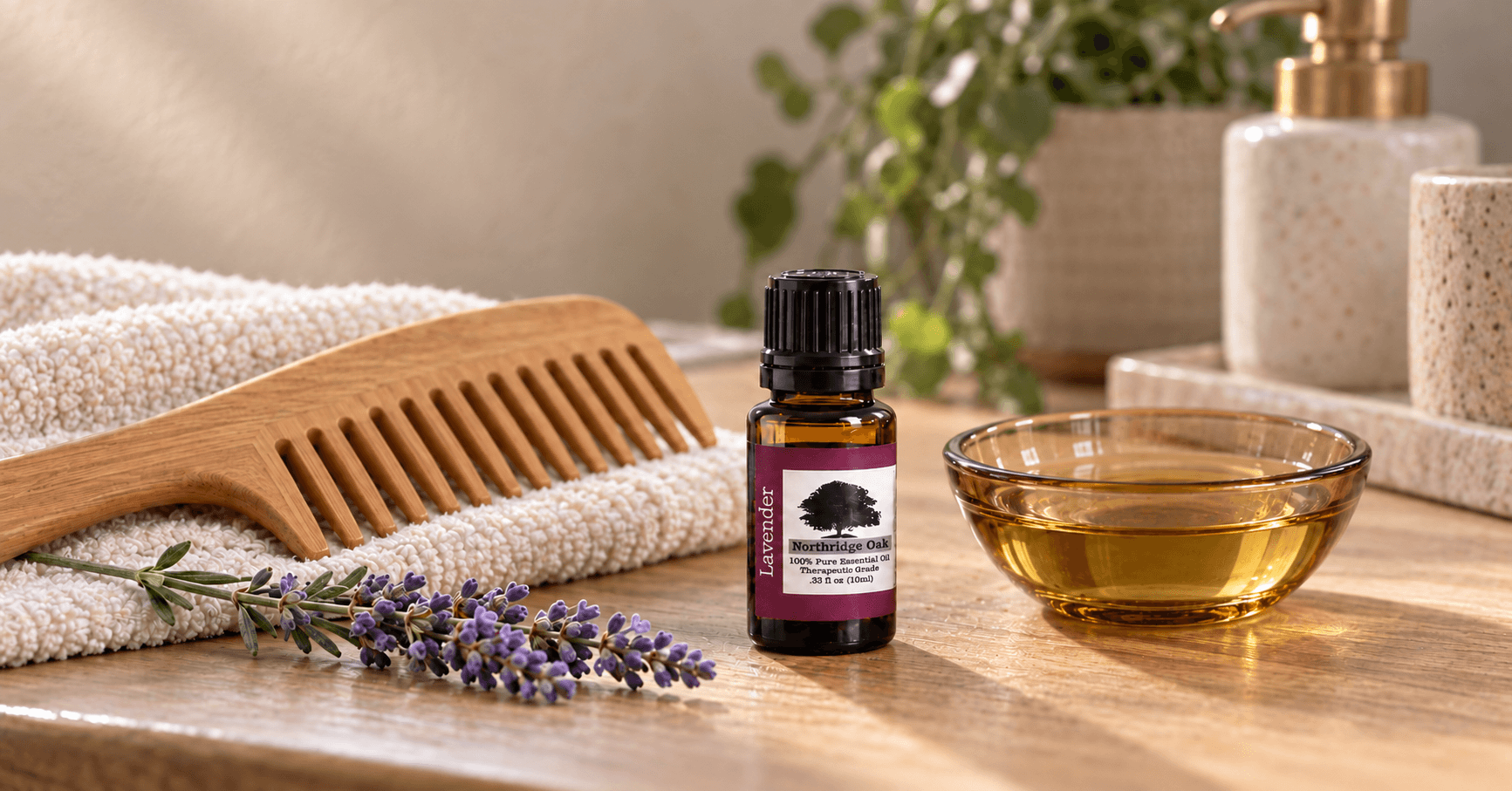
Lavender’s connection to washing, grooming and insect control reaches back centuries. Its name is commonly associated with the Latin lavare, “to wash,” and Lavender has long been used around baths, hair, clothing, bedding and household linens. Dried Lavender was tucked into wardrobes and linen chests, scattered in living spaces and valued for discouraging unwanted insects while making everyday surroundings smell fresh.
The historical record gets even more specific. North Carolina State University’s history of Lavender notes traditional references to its use for animals with lice as well as mosquitoes and other pests. Medieval herbal tradition also associated Lavender with lice and flea care. These accounts are historical use—not modern clinical trials—but they show that the idea of using Lavender around lice did not begin with an internet trend.
Modern science has now identified one reason the old practice is so interesting. Lavandula angustifolia Essential Oil naturally contains linalool, a volatile constituent researchers have tested directly against head lice.
What did the Tea Tree and Lavender head-lice study find?
The strongest human evidence comes from a 2010 randomized, assessor-blind clinical trial. Researchers enrolled 123 participants with confirmed live head lice, most of them children, and assigned them to one of three topical products:
- A product containing Tea Tree Oil and Lavender Oil
- A product designed to act through physical “suffocation”
- A conventional product containing pyrethrins and piperonyl butoxide
The botanical Tea Tree/Lavender product was applied three times—on days 0, 7 and 14—following its manufacturer’s instructions. One day after the final application, 41 of the 42 participants in that group were free of live lice. That is a 97.6% success rate.
The physically acting product also achieved 97.6%. The pyrethrin-based product achieved 25%, with 10 of 40 participants louse-free. The difference was statistically significant, and the researchers concluded that the high efficacy of the botanical and physically acting products offered an alternative to the pyrethrin-based product.
That is a powerful result for parents seeking a natural direction. It also shows why the routine matters: the successful product had a defined formula, a specific application time and three scheduled treatments designed to catch lice emerging after the first application.
What does laboratory research say about Lavender’s linalool?
Lavender’s contribution is more than its familiar floral aroma. Linalool, one of its major natural constituents, has demonstrated pediculicidal activity in direct laboratory testing.
In a 2021 study of essential-oil terpenoids, researchers exposed collected head lice to linalool, terpinen-4-ol, geraniol and beta-caryophyllene. All lice exposed to linalool in the immersion test were dead by the end of the observation period, and linalool produced 100% mortality in the filter-contact test. The authors described linalool and terpinen-4-ol—important constituents associated with Lavender and Tea Tree—as highly effective in their bioassays.
An earlier comparison of several essential oils reported Tea Tree as the most active against lice and mites, with Lavender the second most active. Together, these studies help explain why the Tea Tree/Lavender pairing made sense for a clinical product and why botanical formulas continue to attract interest when families encounter resistant or recurring lice.
Why do Lavender and Tea Tree work so well together?
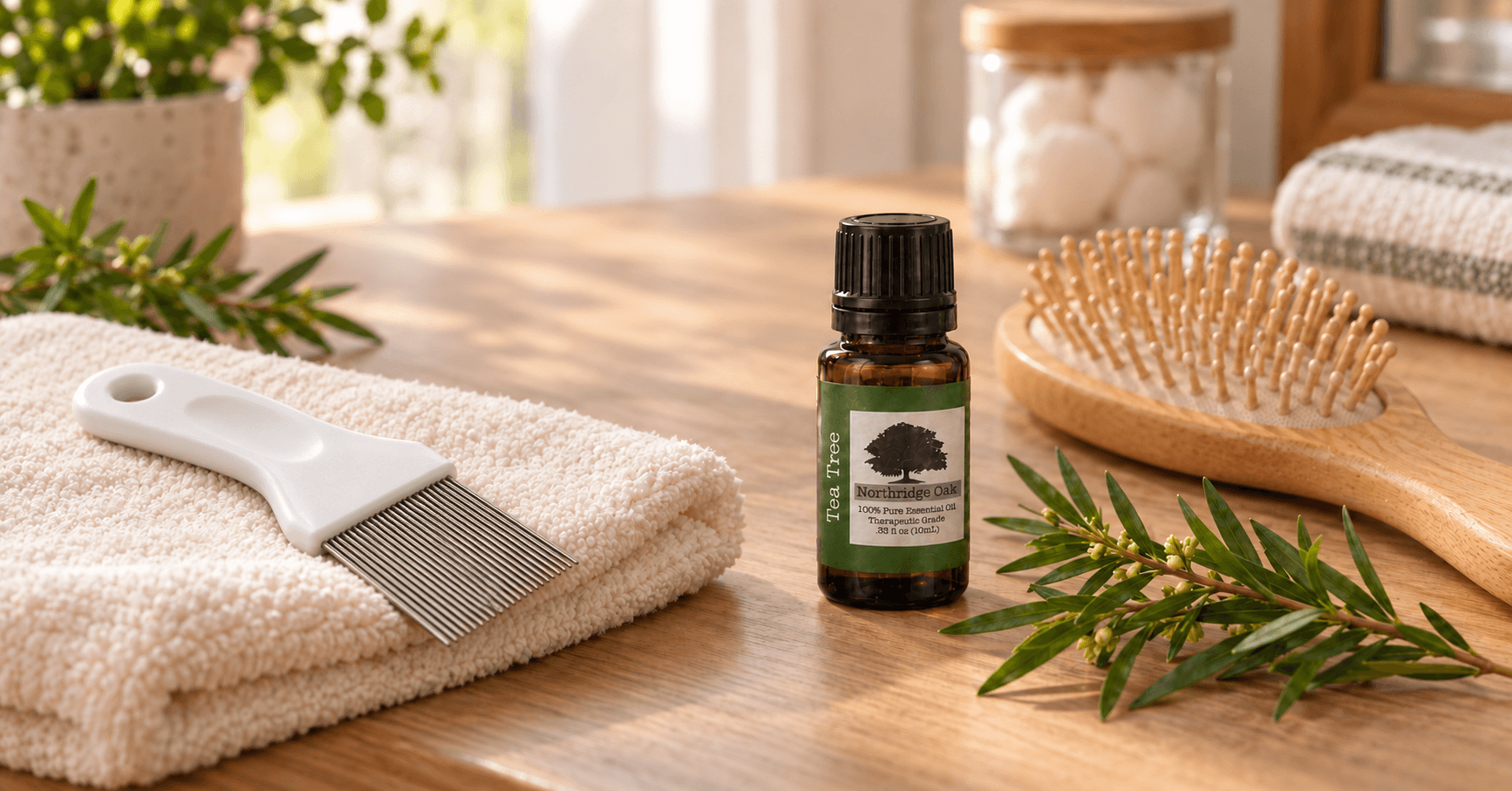
Lavender and Tea Tree are natural partners. Tea Tree contributes terpinen-4-ol and a crisp, cleansing character. Lavender contributes linalool and a softer herbaceous-floral profile that makes a scalp product far more pleasant to use. Laboratory evidence has identified activity in both of those constituents, while the 2010 human trial tested the oils together in a successful finished product.
The pairing also makes practical sense for repeated applications. A lice routine is much easier to complete when the product is comfortable to apply and the aroma is agreeable. Lavender rounds out Tea Tree without hiding it, giving the blend a clean botanical character.
Explore the companion Tea Tree Oil for head lice guide for more detail on Tea Tree research and the lice life cycle.
What is the best natural head-lice routine?
Begin by confirming that you see live lice. Nits are small eggs attached firmly to one side of a hair shaft, usually close to the scalp. Dandruff and lint tend to move or brush away; nits stay attached. Check behind the ears and along the neckline under bright light.
Once confirmed, build the routine around three dependable actions:
- Choose a properly formulated botanical lice product. Look for one with Tea Tree and Lavender Oils, clear age directions, a defined contact time and a complete treatment schedule.
- Comb methodically. Work through damp, conditioned hair in narrow sections from the scalp to the ends. Wipe or rinse the fine-toothed lice comb after every pass.
- Repeat on schedule. The successful Tea Tree/Lavender trial used treatments on days 0, 7 and 14. Following the chosen product’s schedule helps address newly hatched lice before they begin another cycle.
Check close household contacts on the same day so everyone who has live lice can begin together. This prevents the frustrating back-and-forth that can look like a product failure when it is actually reinfestation.
How do you comb out lice successfully?
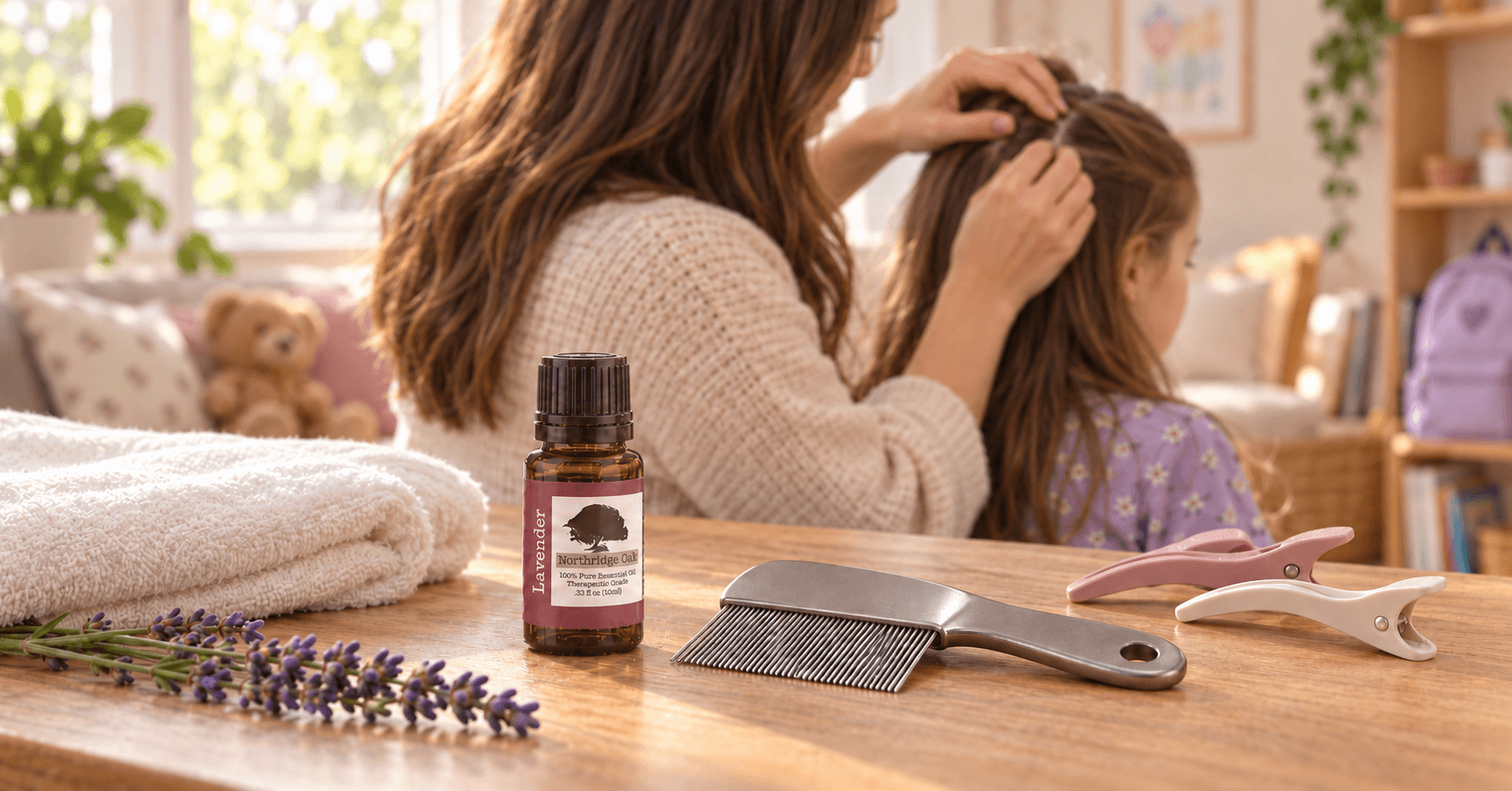
Good lighting, patience and small sections make the biggest difference. Seat the person somewhere comfortable, divide the damp hair into four or more sections and secure everything except the section you are working on.
- Apply enough conditioner or the combing base recommended by the treatment to give the comb good slip.
- Place the teeth close to the scalp and draw the comb all the way to the ends.
- Inspect and wipe the comb on a white paper towel after every stroke.
- Continue until each section has been combed in several directions.
- Rinse or clean the comb and repeat checks over the following days.
Combing removes live lice and attached eggs you can see. It also gives you a clear way to measure progress. Fewer lice and fewer newly attached nits over successive sessions are signs the routine is doing its job.
Can you make a gentle Lavender combing blend?
This simple single-use blend is designed to make combing pleasant and help the fine-toothed comb travel through the hair. It can accompany an age-appropriate, properly formulated lice product.
Lavender comb-through conditioner
- 1 tablespoon gentle, unscented hair conditioner
- 1 drop Northridge Oak Lavender Essential Oil
- Mix the conditioner and Lavender together in a small clean dish.
- Apply it evenly through damp hair, keeping it away from the eyes.
- Comb in narrow sections from the scalp to the ends.
- Rinse the hair thoroughly after the combing session.
Make it fresh each time rather than storing leftovers. For a Tea Tree and Lavender combination, use a commercially formulated lice product with directions appropriate for the user’s age. The clinical results belong to a defined finished product and are best honored by following that kind of measured formulation and schedule.
What should you clean after finding head lice?
Focus on the items that recently touched the head: pillowcases, sheets, hats, scarves, hair accessories, combs and brushes. Wash and dry washable items appropriately, and soak or clean hair tools according to current guidance. Items that cannot be washed can be placed aside in a sealed bag for the recommended period.
Head lice live on the human scalp and spread mainly through direct head-to-head contact. A focused routine gives you more time for the work that matters most—treating, combing and checking—without turning the entire home upside down.
How can families reduce the chance of lice returning?
- Avoid sharing brushes, combs, hats, helmets, hair ties and pillows.
- Keep long hair braided or tied back during an outbreak at school or camp.
- Check behind the ears and at the neckline once a week when exposure is likely.
- Teach children to avoid prolonged head-to-head contact during play and photos.
- Continue scheduled comb checks after the final treatment.
You can also add Lavender to an ordinary hair-care routine for its fresh botanical character. Our Lavender Essential Oil for hair and scalp care article includes more measured ideas.
What safety points make the routine easier?
Essential oils are concentrated, so keep the process measured. Use products that identify suitable ages and follow their directions exactly. Keep every oil and finished lice product away from eyes and mouths, and wash hands after application. Patch-test the Lavender comb-through conditioner before broader use and stop if the scalp becomes uncomfortable.
Do not swallow Lavender or Tea Tree Essential Oil. Store bottles where children cannot reach them. If the scalp is broken or infected-looking, the person is very young, or live lice remain after the complete product schedule, ask a pharmacist or clinician for individual guidance. Our complete essential-oil safety guide provides additional practical information.
Why choose Northridge Oak Lavender Essential Oil?
When an essential oil becomes part of a family hair-care routine, purity and transparency matter. Northridge Oak Lavender Essential Oil is 100% pure, undiluted and third-party GC/MS tested. We bottle it in small batches in protective amber glass with no fillers or synthetic fragrance.
Lavender’s story stretches from centuries of washing, grooming and insect-related use to modern laboratory testing and a clinical lice product that achieved a 97.6% success rate. That is a history worth taking seriously. Start with a well-designed botanical routine, comb carefully and consistently, and see how it works for your family.
The same bottle can continue working long after lice are gone. Explore our complete Lavender Essential Oil uses guide, Lavender blending guide and Lavender dilution guide.
Sources and further reading
- Barker and Altman: randomized Tea Tree and Lavender Oil head-lice trial
- Laboratory study of linalool, terpinen-4-ol and other terpenoids against head lice
- Comparison of Tea Tree, Lavender and Lemon essential oils against lice and mites
- North Carolina State University: Lavender history and traditional uses
- Tea Tree Oil for head lice: research and practical routine
Updated September 6, 2026. Educational information only; not medical advice.